The Prophetic Sunnahs of Ghusl: A Complete Guide to the Correct Procedure

Aesthetic composition of a terracotta water vessel, towels, and misk bottle on a wooden table, prepared for purification.

Worship in Islam is not merely the discharge of obligations through mechanical movements, but a spiritual path to draw closer to the Creator. In the chapter of Thaharah (ritual purification) from major ritual impurity, the major bath (Ghusl) holds a highly esteemed position. When examining the fundamental meaning of thaharah according to classical scholars, you … Read more

Ghusl Intention Timing: The Correct Time to Make Niyyah in Shafi’i Fiqh

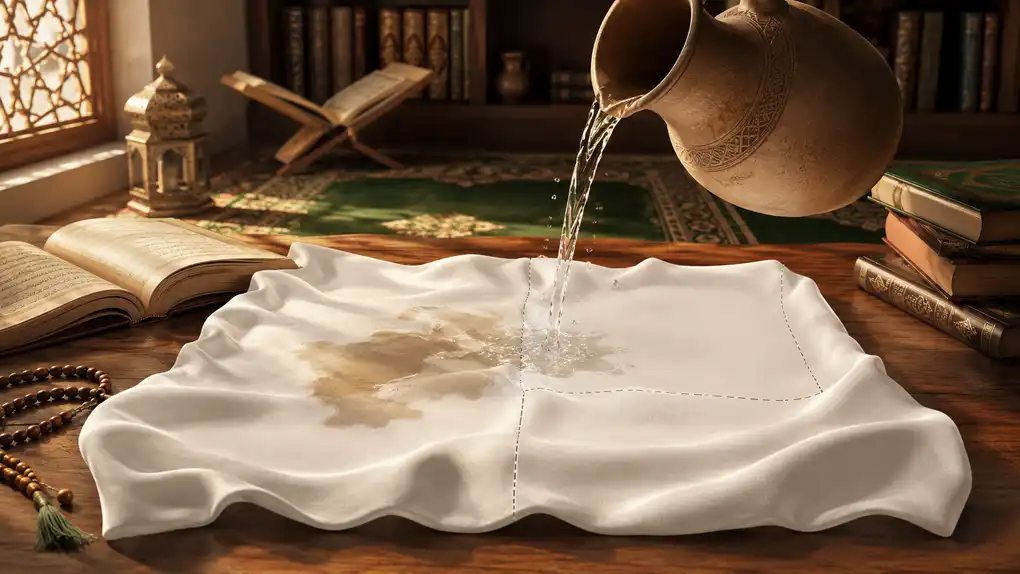
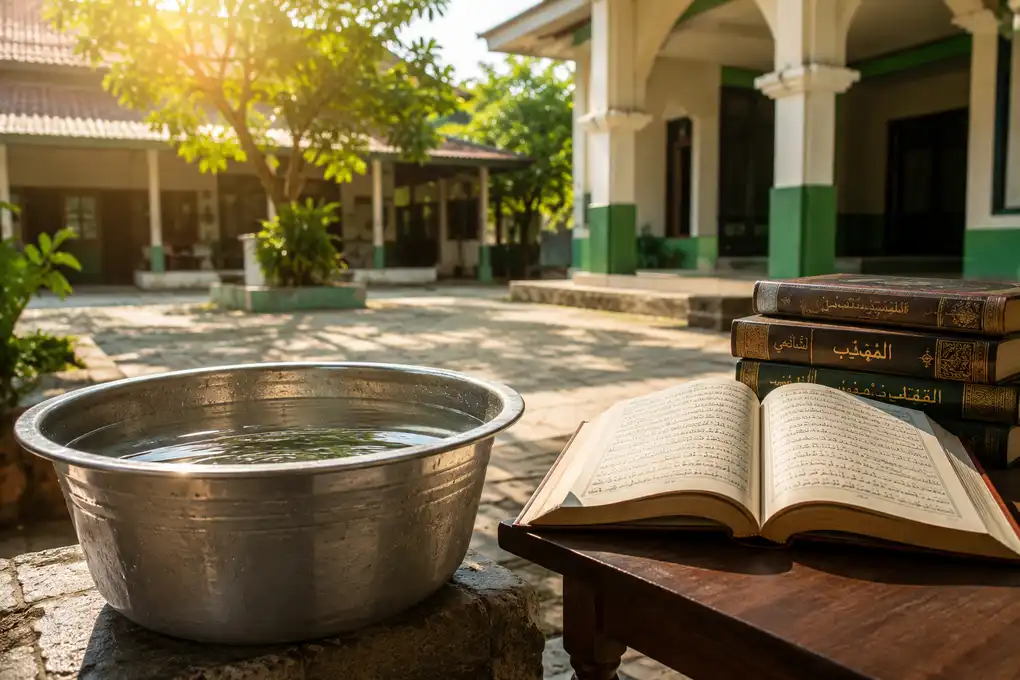
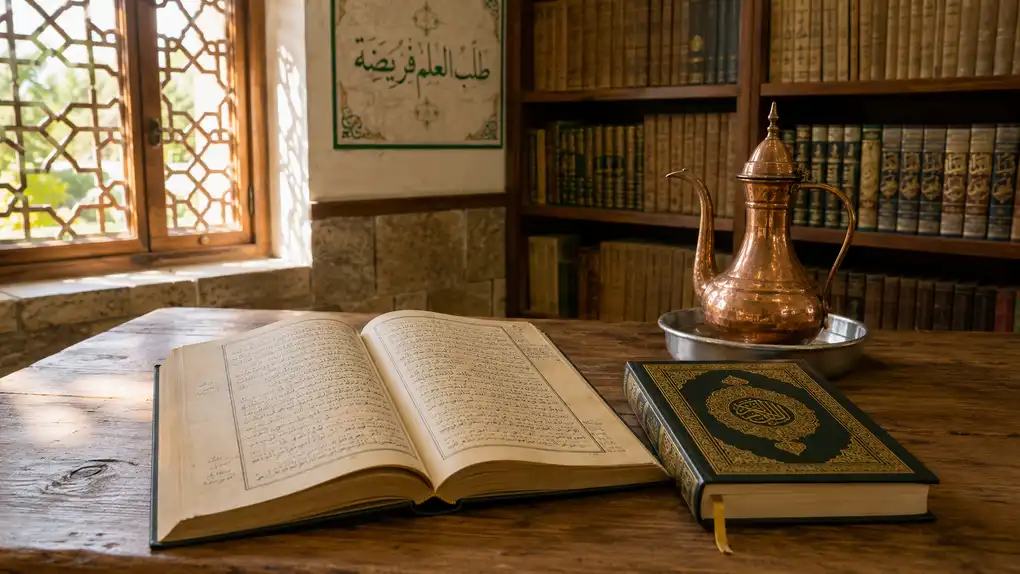
Illustration of a wooden table with Islamic fiqh books and a copper jug pouring pure water, symbolizing the ghusl intention.

The concept of purification (thaharah) in Islam is not merely an activity to cleanse the physical body from dust and dirt. Rather, it is a spiritual act of worship that leads a servant to commune with Allah Azza wa Jalla. One of the primary instruments distinguishing a customary daily bath from a ritual purification is … Read more

When to Perform Ghusl After Menstruation and Postpartum Bleeding: A Shafi’i Perspective

Ghusl after menstruation: An open classic fiqh book alongside a copper pitcher filled with pure water and jasmine flowers on a carved wooden table.

The issue of purification (Thaharah) is the fundamental foundation of worship in Islamic law. For a Muslim woman, understanding biological cycles such as menstruation and postpartum bleeding is not merely a medical concern, but a strict theological responsibility that determines the validity of her prayers and fasting. Various conditions can place a person in a … Read more

Is Washing 3 Times in Wudu Obligatory? Rulings, Evidence, and Sunnah Methods

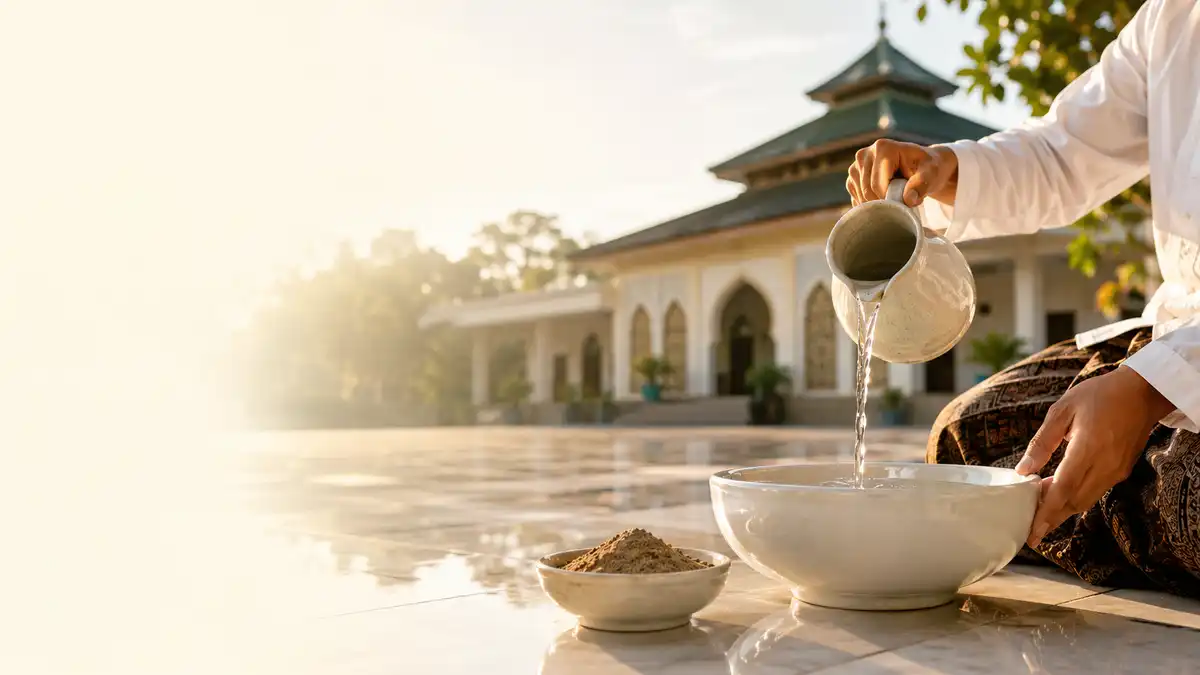
Hands catching clear water for wudu with a blurry mosque in the background

Ablution is a fundamental prerequisite for the validity of prayer and a vital part of the concept of ritual purity (taharah) in Islam. Because performing it correctly is an essential reflection of one’s faith in Allah, Muslims strive to emulate the Prophet Muhammad (peace be upon him) as closely as possible. One of the most … Read more

Islamic Rulings on Wudu for Amputees in the Shafi’i Madhhab

A Muslim man pouring water from a copper vessel onto his arm to perform wudu in a modern mosque purification area with gold Arabic calligraphy.

Performing ablution is a fundamental prerequisite for prayer, but how does one approach Wudu for amputees? In Islamic jurisprudence, or fiqh, physical limitations do not entirely absolve a believer from their religious obligations. Within the Shafi’i madhhab, the core principle applied to this condition is al-maysūr lā yasquṭ bil-ma‘sūr (what can be accomplished is not … Read more

Complete Guide to Bathroom and Istinja Prayers in Islam

Aesthetic, partly-open wooden bathroom door with the text overlay "Etiquette & Dua for the Bathroom According to Sunnah", showing a clean wastafel and wudhu area inside.

Understanding the meaning of Islam in language and Sharia reveals that every human action holds the potential for worship when accompanied by the correct intention and etiquette. This includes the most private of acts, such as relieving oneself. Practicing the bathroom and Istinja prayers is not merely a verbal routine but a profound spiritual awareness … Read more

Mandancy and Primary Evidence on Istinja’ in Islamic Jurisprudence

Macro photography of crystal clear absolute water flowing over smooth river stones, symbolizing purity and Islamic taharah.

Purity and cleanliness are integral aspects of faith. Within Islamic teachings, the attention to cleanliness is not solely limited to outward appearance but extends to inner purity from impurities, particularly after relieving oneself. This essential process of cleansing is known as istinja’. A comprehensive understanding of the mandatory ruling, the primary evidence on istinja, and … Read more

Mediums of Thaharah: Islamic Purification Tools and Their Importance

Still life composition of mediums of thaharah: copper water pitcher, clay bowl with soil for tayammum, acacia pods for tanning, and stones for istinja on a solid wood table with Islamic window shadows.

Purification is a fundamental cornerstone of a Muslim’s daily worship. It extends far beyond basic physical cleanliness, representing a state of ritual purity required to validate major acts of worship within the core pillars of Islam, such as the obligatory prayers and circumambulation (Tawaf). Understanding the mediums of thaharah—the legally approved tools for Islamic purification—is … Read more

The Meaning of Istinja: Foundation of Purity in Islam

Meaning of Istinja: Traditional copper water pitcher and white towel on a wooden table with Islamic geometric pattern background symbolizing purity in istinja.

Cleanliness is an integral pillar of Islamic teachings. One fundamental personal hygiene practice required of every Muslim is Istinja. While many are familiar with the term, what exactly is the meaning of Istinja? Why is this specific practice so heavily emphasized within the Sharia? This article explores the definition, linguistic roots, and spiritual significance of … Read more

The Wisdom of Thaharah in Islam: Purifying the Body and Soul

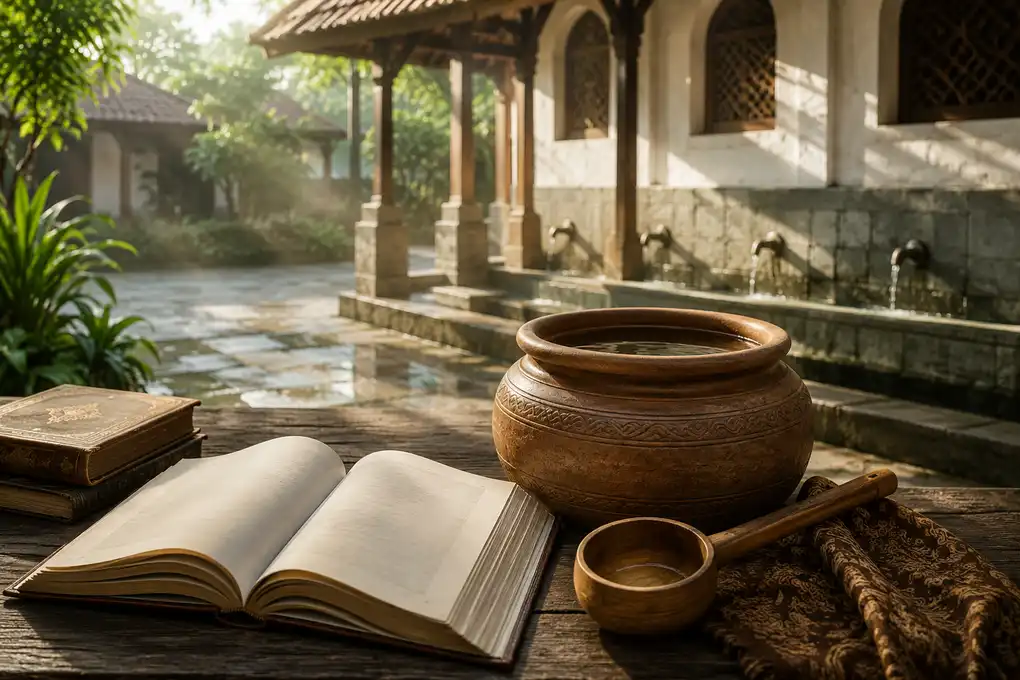
Clear water flowing near a classical Fiqh book symbolizing the fitrah of purification.

In Islamic jurisprudence, maintaining physical and spiritual purity plays a central role in a Muslim’s daily life. The wisdom of Thaharah (purification) extends far beyond the mere physical act of removing dirt. It carries profound spiritual, social, and health benefits. Grasping the comprehensive meaning of Thaharah enables believers to perform their religious duties with heightened … Read more