Purification is a fundamental cornerstone of a Muslim’s daily worship. It extends far beyond basic physical cleanliness, representing a state of ritual purity required to validate major acts of worship within the core pillars of Islam, such as the obligatory prayers and circumambulation (Tawaf). Understanding the mediums of thaharah—the legally approved tools for Islamic purification—is essential knowledge for every Muslim striving to fulfill religious obligations correctly.
This article comprehensively explores the legally sanctioned tools for purification according to the classical scholars, focusing specifically on the rigorous standards established within Shafi’i Islamic jurisprudence (fiqh).
Textual Sources for the Mediums of Thaharah
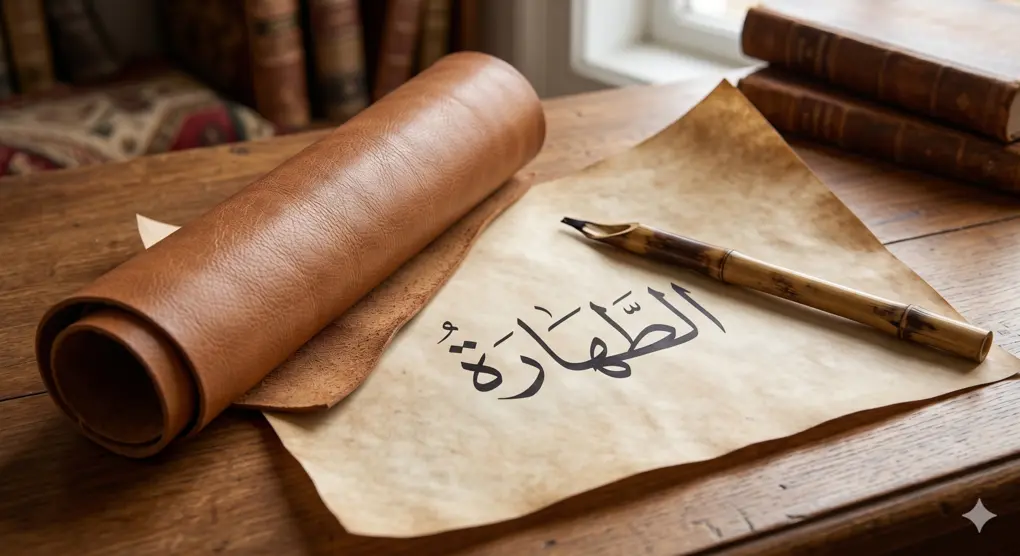
Classical fiqh literature thoroughly details the precise rules governing ritual purity. A concise yet highly authoritative text on this subject is Al-Yaqut al-Nafis. On page 9, the text succinctly outlines both the acceptable purification tools and their intended objectives. The original Arabic excerpt reads:
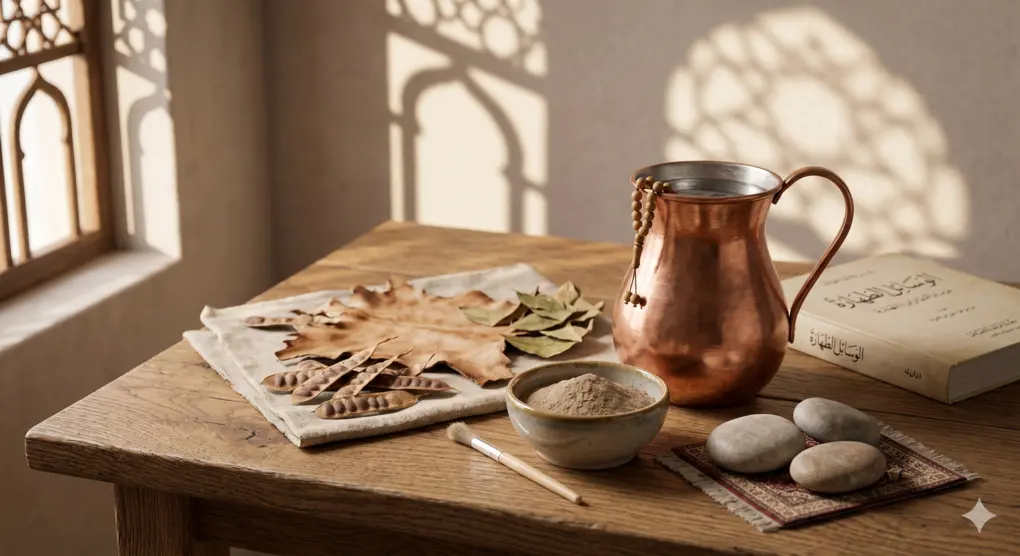
وسائل الطهارة ومقاصدها للطهارة أربع وسائل، وأربعة مقاصد فالوسائل؛ هي: الماء والتراب و الدابغ وحجر الاستنجاء الماء: إذا كان مطلقاً والتراب: إذا كان خالصاً غير مستعمل والدابغ إذا كان حِرِّيفاً ينزع فضلات الجلد وعفونته؛ كالقرظ، وذرق الطير وحجر الاستنجاء: إذا كان طاهراً ، قالعاً ، غير محترمٍ أما الأواني، والاجتهاد ؛ الذي هو: بذل المجهود في تحصيل المقصود: فمن وسائل الوسائل والمقاصد؛ هي: الوضوء والغسل وَالتيمم وإزالة النجاسة
This foundational text clearly establishes that the concept of purification (thaharah) relies on four primary mediums and serves four main objectives.
The Four Primary Mediums of Thaharah
Based on the text above, scholars categorize the primary tools used to achieve ritual purity into four distinct types. Each medium has specific functions and strict conditions that govern its validity.
1. Pure Water (The Primary Medium)
Water serves as the absolute foundation of Islamic purification. It is utilized in almost all different categories of purification, whether removing physical filth or lifting a state of ritual impurity. However, Islamic law does not permit the use of just any liquid.
- Absolute Water (Air Mutlak): The water must remain in its original, natural state of creation. Examples include rainwater, well water, seawater, river water, dew, and melted snow. It must not be mixed with impurities, nor can it be heavily mixed with pure substances (like tea or soap) to the point that its primary name or nature changes. Securing absolute water (air mutlak) is the most critical condition. For a deeper understanding, explore the different types of water recognized in fiqh.
2. Pure Soil for Tayammum
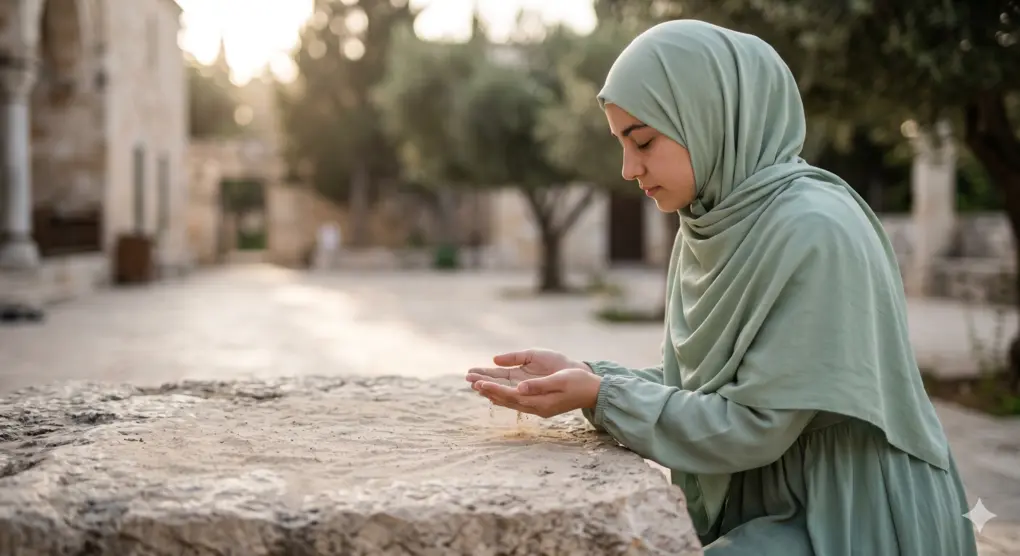
The second acceptable medium is soil or earth. This serves as a legally recognized substitute for water during tayammum (dry ablution). It is utilized when pure water is entirely unavailable, insufficient in quantity, or when medical conditions prevent a person from using water.
- Pure and Unused: The soil must be khalis (pure earth, unmixed with flour, sand, or filth). Additionally, it must be ghayr musta’mal (previously unused for an obligatory dry ablution).
3. Tanning Agents (Dabigh)


The third medium involves tanning agents (Dabigh). This is a highly specific tool used exclusively to purify the hides of animals that are ordinarily impermissible to eat or died unslaughtered, transforming their skin into a ritually pure, usable material.
- Astringent and Removing: A valid tanning agent must be hirrifan (acrid or astringent). It must possess enough chemical strength to strip away residual flesh, fat, and putrid odors from the animal hide. Classical examples include qaraz (acacia pods) and certain bird droppings containing potent uric acid.
4. Stones for Istinja
The fourth medium encompasses stones used to clean the private parts after answering the call of nature. This is permitted as a standalone alternative to water or as a preliminary step before washing. To properly perform the act of istinja without water, the objects used must meet rigorous standards.
- Pure, Extracting, and Not Honored: The object must be tahir (ritually pure). It must be qali’ (having a coarse texture capable of extracting and removing the filth, unlike smooth glass). Finally, it must be ghayr muhtaram (an object that is not honored or sacred in Islamic law, such as food, bones, or religious texts). Modern alternatives like dry, rough toilet paper or dry leaves are perfectly valid if they fulfill these conditions for using stones. Scholars also extensively discuss the internal spiritual aspects of this act, including whether an intention (niyyah) is required for istinja.
Supporting Tools (Wasail al-Wasail)
Beyond the four primary materials, Al-Yaqut al-Nafis identifies secondary elements known as “means of the means” (wasail al-wasail). These do not purify by themselves but facilitate the use of the primary mediums.
- Utensils (Awani): Containers used to hold or pour water, such as buckets or pitchers.
- Ijtihad (Deductive Effort): This refers to the intellectual and physical effort expended to achieve purification. Examples include striving to locate a hidden water source in the desert or calculating the Qibla direction before performing tayammum.
The Four Objectives of Thaharah
Once the correct mediums of thaharah are acquired, they are deployed to fulfill four specific religious objectives:
- Wudu: The minor ablution (wudu) removes minor ritual impurity (hadas asghar). It requires absolute water and is a prerequisite for daily prayers and touching the Quran.
- Ghusl: The major ritual bath (ghusl) lifts major ritual impurity (hadas akbar) caused by states like junub, menstruation, or postpartum bleeding. It mandates washing the entire body with absolute water.
- Tayammum: This acts as an emergency substitute for either wudu or ghusl, utilizing pure soil when water is unavailable or harmful.
- Removing Filth (Izalat al-Najasah): This objective involves cleansing the body, clothing, or prayer area from physical, legally recognized filth and impurities. Removing the physical substance requires understanding the exact definition of najis and utilizing water or other specific mediums (like soil for dog saliva) to eliminate it entirely.
Conclusion
Mastering the precise tools required for Islamic purification is essential for safeguarding the validity of our daily worship. By adhering to the scholarly guidelines regarding the correct mediums of thaharah—whether ensuring the absolute purity of water, selecting the right soil, or utilizing appropriate items for istinja—Muslims honor the sacred commands of their faith. Delving into the profound wisdom behind purification reveals that physical cleanliness paves the way for spiritual elevation. For ongoing learning, exploring the broader study of thaharah ensures that our acts of devotion are always built upon a flawless foundation.
Frequently Asked Questions (FAQ)
1. What are the 4 main mediums of thaharah?
According to Shafi’i jurisprudence, the four primary mediums used for purification are absolute water (for wudu, ghusl, and removing filth), pure unused soil (for tayammum), astringent tanning agents (for purifying animal hides), and pure, extracting stones or similar objects (for istinja).
2. Can I use wet wipes as a medium for Istinja?
Wet wipes are generally problematic as a substitute for stones because the moisture in the wipe can spread the impurity beyond its original exit point. For dry cleansing (without flowing water), fiqh requires a dry, coarse, and pure object (like dry toilet paper) that extracts the filth rather than smearing it.
3. What does “Absolute Water” mean in Islamic law?
Absolute water (Air Mutlak) refers to water that remains exactly as Allah created it in nature, such as rain, spring water, or seawater. It has not been altered in its color, taste, or smell by mixing heavily with pure substances (like coffee or soap), nor has it been contaminated by any physical impurities (najis).
Reference
Aḥmad ibn ʿUmar al-Shāṭirī al-Ḥusaynī, al-Yāqūt al-Nafīs fī Madhhab Ibn Idrīs (al-Maktabah al-Shāmilah al-Dhahabiyyah, digital text).


