

The wisdom of thaharah is that it keeps a Muslim pure, clean, dignified, healthy, and ready to stand before Allah in worship. The benefits of thaharah are not limited to outward cleanliness. Thaharah is also tied to the validity of prayer, because a Muslim must be free from hadath and najis before praying.
In daily life, thaharah appears in wudu, obligatory ghusl, istinja, tayammum, and the removal of najis. For that reason, this topic belongs to the complete guide to thaharah.
The meaning of thaharah before its wisdom
Shaykh Zakariyya al-Ansari writes in Asna al-Mathalib:
وهي لغة النظافة، والخلوص من الأدناس حسية كالأنجاس أو معنوية كالعيوب … وشرعا رفع حدث أو إزالة نجس أو ما في معناهما
“Linguistically, thaharah means cleanliness and being free from impurities, whether outward impurities such as najis or inward defects. In Islamic law, thaharah means lifting hadath, removing najis, or what is similar to them.”[1]
This shows that thaharah in Islam has both an outward meaning and a legal meaning. A person may look clean in the ordinary sense, but still not be ritually pure according to fiqh.
For example, an ordinary bath without the intention of obligatory ghusl does not lift major hadath. Likewise, clothing may smell pleasant, but if it is affected by najis, it cannot be used for prayer until the najis is removed.
That is why the definition of thaharah in language and Islamic law comes before the discussion of its benefits. Thaharah is not merely being neat, fresh, or fragrant. It is the state of purity that allows worship to be valid.
Proofs that Islam cares about thaharah
Islam gives great care to cleanliness and purification. In al-Fiqh al-Manhaji, this care is shown through the command to perform wudu, encouragement to bathe, trimming nails, cleaning the teeth with siwak, and keeping clothes pure.[2]
Allah says:
يَا أَيُّهَا الَّذِينَ آمَنُواْ إِذَا قُمْتُمْ إِلَى الصَّلاةِ فاغْسِلُواْ وُجُوهَكُمْ وَأَيْدِيَكُمْ إِلَى الْمَرَافِقِ وَامْسَحُواْ بِرُؤُوسِكُمْ وَأَرْجُلَكُمْ إِلَى الْكَعْبَينِ
“O you who believe, when you rise for prayer, wash your faces and your hands up to the elbows, wipe your heads, and wash your feet up to the ankles.”[3]
This verse is a proof for wudu before prayer. Wudu teaches that worship is not approached carelessly, but with bodily readiness and proper adab.
Allah also says:
وَإِن كُنتُمْ جُنُباً فَاطَّهَّرُواْ
“If you are in a state of janabah, then purify yourselves.”[4]
This verse is a proof for obligatory ghusl. When a person is in major hadath, he or she is ordered to return to purity before acts of worship that require purification.
The Prophet ﷺ said:
الطُّهور شَطْرُ الإيمان
“Purification is half of faith.”[5]
This hadith shows the rank of thaharah in Islam. It is not only a good habit. It is part of the structure of a Muslim’s faith.
For a wider discussion, see the proofs of thaharah from the Qur’an and hadith.
Four main wisdoms of thaharah
1. Thaharah protects human fitrah
Al-Fiqh al-Manhaji states:
أن الطهارة من دواعي الفطرة، فالإنسان يميل إلى النظافة بفطرته وينفر بطبعه من الوساخة والقذارة
“Thaharah is part of the call of fitrah. A human being naturally inclines toward cleanliness and naturally turns away from filth and dirt.”[6]
A sound human nature loves a clean body, pure clothes, and a neat place. Islam strengthens this nature through the rules of thaharah.
Wudu, ghusl, istinja, and removing najis are not empty duties. They keep a Muslim from becoming comfortable with dirt.
2. Thaharah preserves Muslim dignity
The same reference says:
المحافظة على كرامة المسلم، وعزته، فالناس يميلون بطبعهم إلى النظيف، ويرغبون بالاجتماع إليه، والجلوس معه
“Among the wisdoms of thaharah is preserving the dignity and honor of the Muslim. People naturally incline toward the clean person, enjoy gathering with him, and sitting with him.”[7]
Cleanliness is not only personal. It is also social adab.
A person who keeps the body, clothes, and scent clean does not disturb others. He is more pleasant to be around in the mosque, a study circle, the family, and the wider community.
3. Thaharah protects health




Al-Fiqh al-Manhaji also states:
المحافظة على الصحة، فالنظافة من أهم الأسباب التي تحفظ الإنسان من الأمراض، لأن الأمراض أكثر ما تنتشر بين الناس بسبب الأوساخ والأقذار
“Among the wisdoms of thaharah is protecting health. Cleanliness is one of the greatest causes that protect a person from diseases, because diseases often spread through dirt and filth.”[8]
Wudu washes body parts often exposed to dust and dirt, such as the face, hands, nose, and feet. Ghusl cleans the whole body more widely. Istinja keeps the body and clothes away from najis.
So the benefits of purification are felt in worship and daily habits. A Muslim is trained not to leave dirt on the body, clothes, or prayer area.
4. Thaharah prepares a servant to stand before Allah
The same reference says:
الوقوف بين يدي الله طاهراً نظيفاَ، لأن الإنسان في صلاته يخاطب ربه ويناجيه
“Among the wisdoms of thaharah is standing before Allah in a pure and clean state, because in prayer a person speaks to his Lord and calls upon Him privately.”[9]
This is the purpose of thaharah most closely tied to prayer. A servant should not stand before Allah while being careless about purity.
The body, clothes, and prayer place must be kept free from najis. Minor hadath is lifted by wudu. Major hadath is lifted by ghusl. When water cannot be used due to a valid excuse, the Sharia gives tayammum.
Benefits of thaharah in daily life
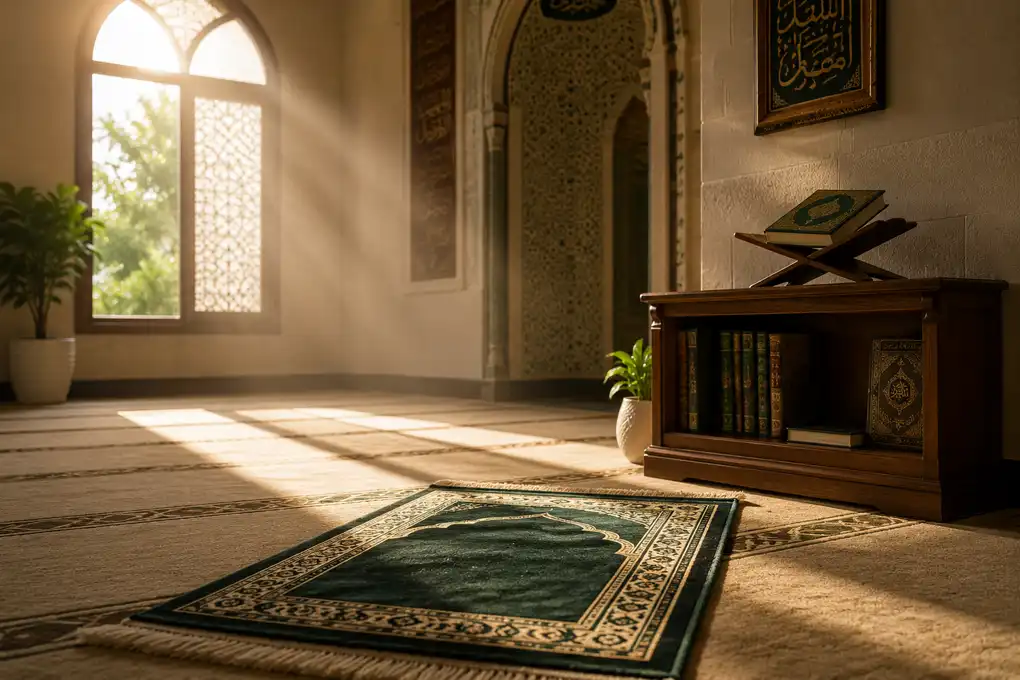
Benefits for worship
Thaharah is the doorway to many acts of worship. Prayer is not valid without purity from hadath and najis.
Thaharah teaches a Muslim to check himself before prayer. Is the wudu still valid? Are the clothes pure? Is the prayer place clean?
Related topics are discussed in minor and major hadath and types of najis.
Benefits for daily discipline
Wudu is performed repeatedly during the day. Obligatory ghusl is performed when its cause occurs. Istinja is done after relieving oneself. Najis is removed when it affects the body, clothes, or place.
These habits train a Muslim to be careful. They teach that worship has adab and rules.
Benefits for social life
Thaharah makes a person more comfortable to be around. A clean body, pure clothes, and a pleasant scent are part of social manners.
A person who keeps thaharah does not disturb other worshippers, classmates, family members, or guests. This is one of the most visible benefits of thaharah in daily life.
Benefits for the family and environment

A family trained in thaharah will more easily keep the house, clothes, bathroom, and prayer area clean. Children learn that najis must not be ignored and that cleanliness is not a small matter.
In this way, thaharah builds a clean way of life in the home and community.
Examples of thaharah in Muslim life
Wudu

Wudu is the daily form of thaharah performed most often. It lifts minor hadath and is a condition for prayer.
See also the complete guide to wudu.
Obligatory ghusl
Obligatory ghusl lifts major hadath. It cleans the entire body with the intention of worship.
See also the guide to obligatory ghusl.
Istinja
Istinja removes filth after relieving oneself. Its purpose is to keep the body and clothes free from najis.
See also istinja after relieving oneself.
Tayammum
Tayammum is a concession when water is unavailable or cannot be used. It shows that thaharah is still preserved even in hardship.
See also tayammum when water is unavailable.
Water for purification
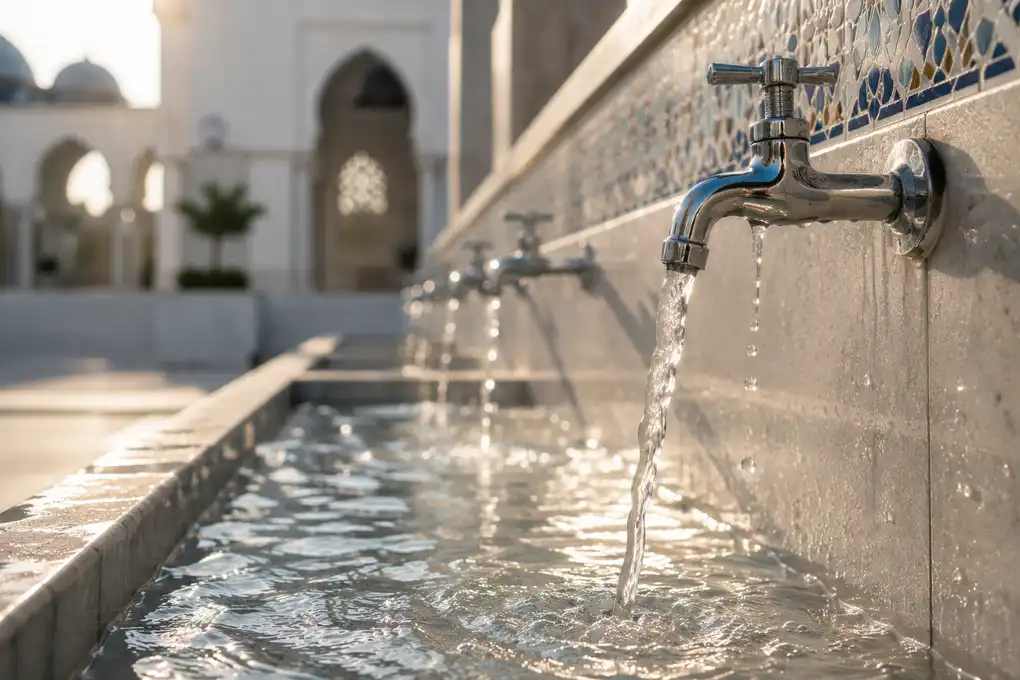
Water is the main tool for thaharah. In Shafi‘i fiqh, the discussion of water is detailed because not every type of water can lift hadath or remove najis.
See also water for purification in Shafi‘i fiqh.
Table of wisdoms and examples
| Wisdom of Thaharah | Example | Benefit |
|---|---|---|
| Protecting fitrah | Wudu, ghusl, washing clothes | A cleaner and more comfortable body |
| Preserving Muslim dignity | Wearing pure and neat clothes | Others feel comfortable |
| Protecting health | Washing the face, hands, nose, and feet | Dirt does not build up |
| Preserving worship | Being free from hadath and najis | Prayer becomes valid |
| Caring for the environment | Cleaning the prayer area | A cleaner home and mosque |
Key takeaways on the wisdom and benefits of thaharah
The wisdom of thaharah can be gathered into five points:
- It protects human fitrah.
- It preserves Muslim dignity.
- It protects bodily health.
- It improves social life.
- It prepares a servant for worship.
Thus, thaharah in Islam is not merely cleanliness in the eyes of people. It is purity according to the Sharia, adab before Allah, and a clean way of life.
FAQ about the wisdom and benefits of thaharah
What is the main wisdom of thaharah in Islam?
The main wisdom of thaharah is to keep a Muslim pure, clean, healthy, dignified, and ready to worship Allah.
Why is thaharah linked to human fitrah?
Because human beings naturally love cleanliness and avoid filth. Islam strengthens this fitrah through wudu, ghusl, istinja, tayammum, and removing najis.
What are the health benefits of thaharah?
Thaharah trains a Muslim to clean body parts often exposed to dirt, such as the face, hands, nose, and feet.
Why is thaharah required before prayer?
Because prayer is a private address to Allah. A Muslim must be free from hadath and najis before standing before Him.
What are common forms of thaharah in Islam?
Common forms of thaharah include wudu, obligatory ghusl, istinja, tayammum, and removing najis from the body, clothes, and prayer place.
References
- Zakariyā al-Anṣārī, Asnā al-Maṭālib fī Sharḥ Rawḍ al-Ṭālib, with commentary by Aḥmad al-Ramlī, edited by Muḥammad az-Zuhrī al-Ghamrāwī (Cairo: al-Maṭbaʿah al-Maymānīyah, 1313 AH; repr. Dār al-Kitāb al-Islāmī), vol. 1, p. 4.
- Al-Khin, Muṣṭafā, Muṣṭafā Dīb al-Bughā, and ʿAlī al-Syarbajī. Al-Fiqh al-Manhajī ʿalā Madzhab al-Imām al-Syāfiʿī. Damascus: Dār al-Qalam li al-Ṭibāʿah wa al-Nasyr wa al-Tawzīʿ, 4th ed., 1413 AH/1992 CE, vol. 1, pp. 27-29.


