Cleanliness is an integral pillar of Islamic teachings. One fundamental personal hygiene practice required of every Muslim is Istinja. While many are familiar with the term, what exactly is the meaning of Istinja? Why is this specific practice so heavily emphasized within the Sharia? This article explores the definition, linguistic roots, and spiritual significance of this practice, alongside a brief explanation of its legal status according to Islamic jurisprudence (fiqh) within the Shafi’i school of thought.
Textual Evidence and Classical Translation
Classical Islamic texts provide comprehensive explanations regarding this practice. A prominent example is found in Al-Fiqh al-Manhaji ‘ala Madhhab al-Imam al-Shafi’i (Volume 1, page 45), which states:
معناه: هو إزالة النجاسة أو تخفيفها عن مخرج البول أو الغائط. مأخوذ من النَّجاء وهو الخلاص من الأذى، أو النجوة: وهي المرتفع عن الأرض، أو النجو: وهو الحُزْء، أي ما يخرج من الدبر. سمي بذلك شرعاً، لأن المستنجي يطلب الخلاص من الأذى ويعمل على إزالته عنه، وغالباً ما يستتر وراء مرتفع من الأرض، أو نحوها، ليقوم بذلك حكمه: وهو واجب، وقد دل على ذلك قول الرسول – صلى الله عليه وسلم – كما سيأتي خلال البحث
Translation: Its meaning: It is the removal or reduction of an impurity from the exit points of urine or feces. It is derived from an-Najaa’, which means salvation from harm/filth; or an-Najwah, which is elevated ground; or an-Najwu, which is excrement (that which exits the posterior). It is termed as such in Sharia because the person performing it seeks salvation from the harm of filth and works to remove it from themselves. Historically, they would often conceal themselves behind elevated ground or similar structures to perform this act.
Its Ruling: The ruling is obligatory (wajib). The evidence for this is the statement of the Messenger of Allah (ﷺ), which will be detailed throughout the discussion.
The Linguistic Meaning of Istinja
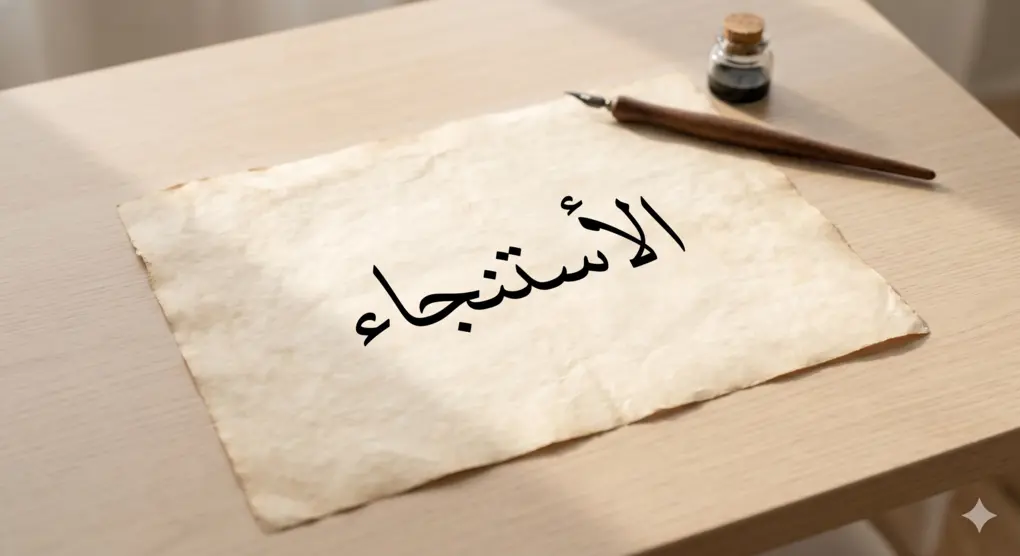
To fully grasp the meaning of Istinja, we must examine its Arabic etymology. As highlighted in the text above, the term stems from several interconnected root words that illustrate the essence of the practice:
- From “An-Najaa'” (النجاء): This root translates to “salvation” or “release from harm/filth.” This meaning perfectly aligns with the act, as cleansing oneself after answering the call of nature is a way to seek salvation from an impurity (najis) that disrupts physical comfort and spiritual sanctity.
- From “An-Najwah” (النجوة): Translating to “elevated ground,” this word reflects historical contexts. Before modern sanitation facilities existed, individuals sought elevated or hidden terrain for privacy when relieving themselves. Thus, the term became associated with the private act of cleansing.
- From “An-Najwu” (النجو): This term specifically denotes “excrement” or waste. This root directly references the physical object being cleansed.
The Definition of Istinja in Islamic Law
In formal fiqh terminology, the definition becomes highly specific. It refers strictly to the act of removing different types of impurities that exit from the two natural human passages (the front and rear private parts).
The primary objective is the total elimination of these impurities. However, Islamic law accommodates human limitations. If total removal is impossible due to medical conditions (such as incontinence) or the limitations of the cleansing medium, the obligation shifts to reducing and cleaning the residue to the best of one’s ability using absolute water (air mutlak). This diligent physical cleansing forms the very first step in preparing a Muslim for worship.
The Legal Ruling of Istinja
Regarding the ruling of Istinja, the vast majority of scholars within Ahlus Sunnah wal Jama’ah, including the Shafi’i school, maintain that it is unequivocally obligatory (wajib).
This obligation stems from the fact that impurities exiting the body break a person’s state of purity. Unremoved impurities prevent a valid ablution (wudu), thereby nullifying prayers and other acts of worship that strictly require physical and ritual sanctity. By properly cleansing these specific areas, a Muslim guarantees that their body is prepared for subsequent purification rituals, like wudu or the major bath (ghusl).
The Importance of Purity (Thaharah)
Understanding the broader concept of purification (thaharah) helps contextualize this practice. Istinja is not merely a secular routine of physical hygiene; it is a sacred, divinely prescribed ritual.
Ensuring that all contaminated areas are thoroughly washed prepares the believer to stand before Allah (ﷻ) in the best possible state. Delving into the wisdom behind purification reveals that Islam meticulously links external cleanliness with internal spiritual readiness. For an extensive exploration of how this relates to daily Muslim life, studying the overarching concept of istinja provides essential guidance.
Conclusion
The meaning of Istinja transcends basic hygiene; it is the absolute foundation of a Muslim’s ritual purity. By understanding its linguistic roots and its strict definition within Shafi’i jurisprudence, believers can ensure their acts of worship are legally valid. It is an obligatory practice that guarantees readiness for prayer, reflecting Islam’s profound dedication to comprehensive cleanliness.
Frequently Asked Questions (FAQ)
1. What is the precise meaning of Istinja in Islamic terminology?
In Islamic jurisprudence, it refers to the obligatory act of cleaning the private parts to remove the impurities (urine or feces) that exit from the front or rear passages, typically using pure water or designated solid objects like stones.
2. Is Istinja obligatory in the Shafi’i school of thought?
Yes, according to the Shafi’i school and the consensus of Ahlus Sunnah wal Jama’ah scholars, it is obligatory (wajib). A person cannot perform a valid wudu or prayer if these specific impurities have not been properly removed.
3. Can I use anything other than water for this purification?
While pure, absolute water is the primary and most superior method for cleansing, Islamic law provides ease. In the absence of water, or as an alternative, Muslims are permitted to use pure, solid, and extracting objects (such as stones or modern toilet paper), provided specific fiqh conditions are meticulously met.
Reference
Al-Fiqh al-Manhaji ‘ala Madhhab al-Imam al-Shafi’i (Volume 1, page 45)


