How to Purify Dog Impurity (Najis) with Soil and Water
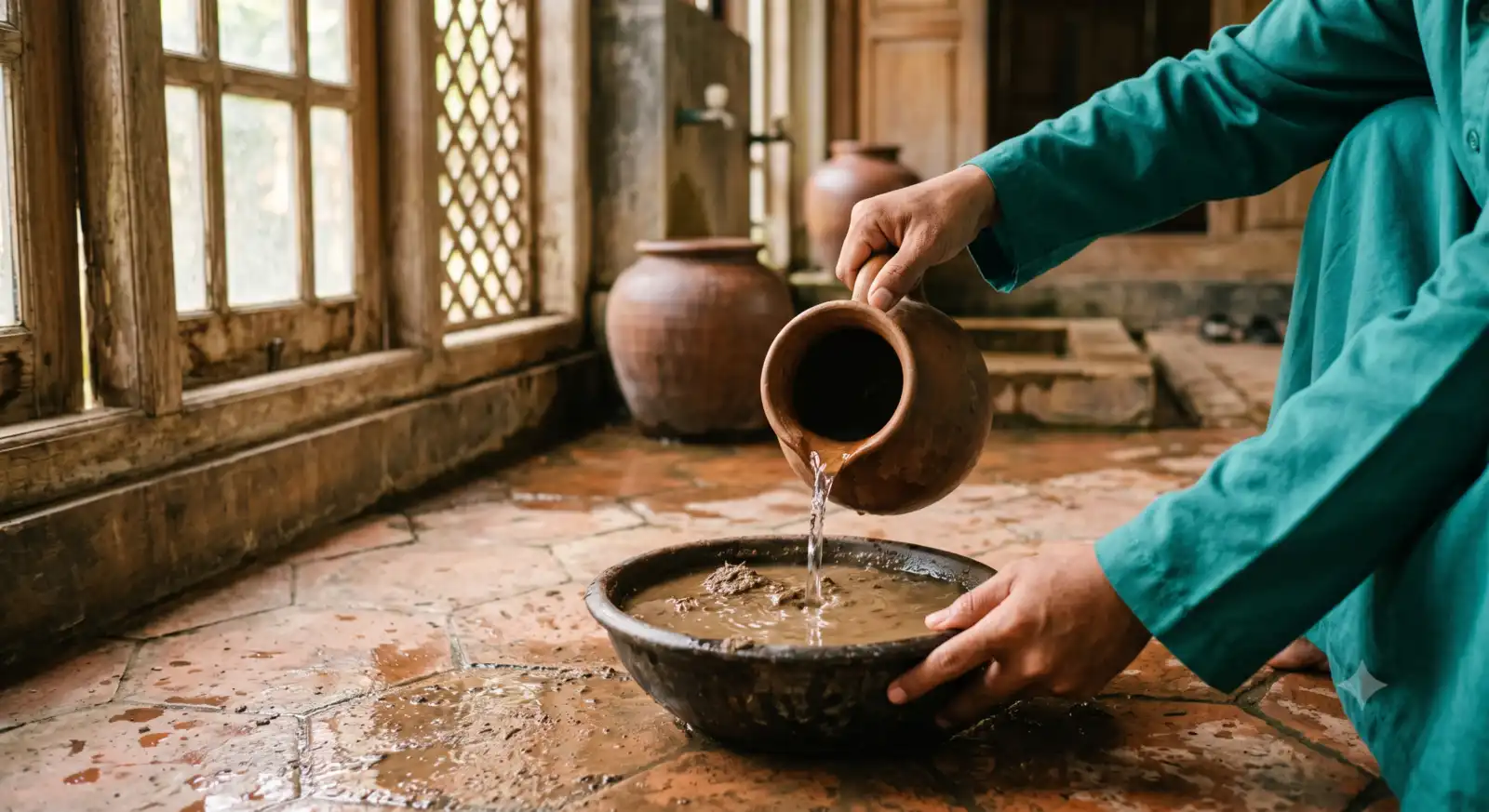
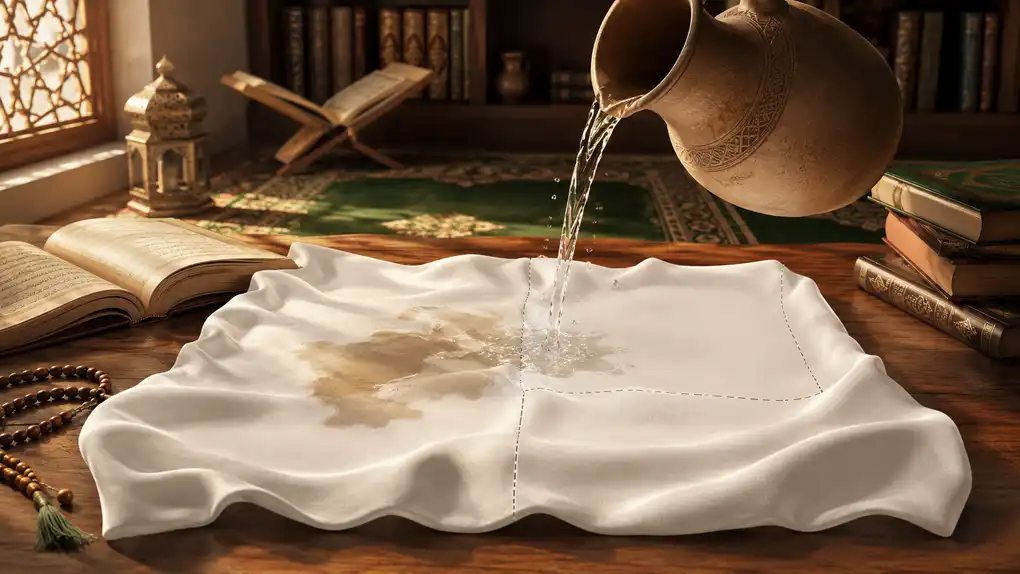
Illustration of pouring pure water into soil for purifying dog impurity

For many Muslims, the question of how to purify dog impurity comes up the moment skin or clothing comes into contact with this animal — whether by accident, or because a dog is kept for a legitimate purpose such as guarding property or hunting. Unlike ordinary impurity, which can simply be washed away with plain … Read more

Blood in Islam: Menstruation, Wounds, and Mosquitoes

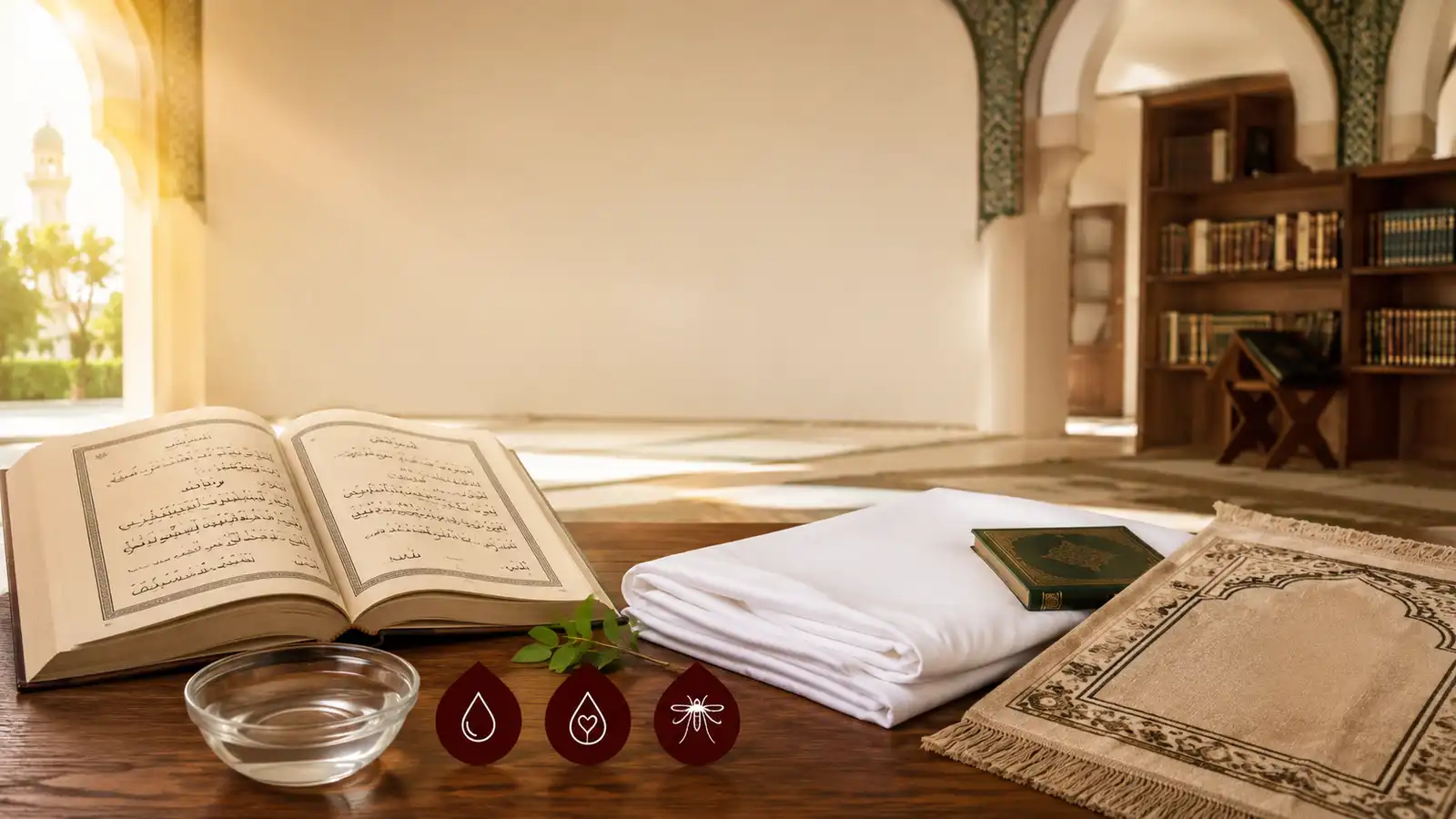
Illustration of blood rulings in Islam according to Shafi'i fiqh covering menstrual blood, wound blood, and mosquito blood in purification law

Blood on the body, clothing, prayer garments, bedding, or a mattress can raise three different questions: is blood impure, is it excused, and does it invalidate wudu? These questions must not be merged. Blood may be legally impure, while a small trace can still be excused in prayer. Likewise, contact with blood does not automatically … Read more

Is Semen Impure? The Shāfiʿī School’s Ruling

Classical Arabic fiqh book, clean white garment, prayer mat, and prayer beads illustrating the Shafi'i ruling on whether semen is pure or impure.

Direct answer: in the Shāfiʿī school, human semen is pure, not impure (najis). So the answer to “is semen impure?”, “is semen najis?”, or “is sperm impure?” is no—provided that the fluid is actually semen and has not come into contact with another impurity. This article addresses the legal status of semen as a substance … Read more

Najis Mutawassithah: Intermediate Impurity (‘Ainiyyah & Hukmiyyah)

Editorial illustration of a wooden study table in an Islamic boarding school featuring an open classical Arabic fiqh book, a simple water jug, wooden prayer beads, and soft morning sunlight through a window.

Najis mutawassithah, often written as najis mutawasitah, refers to a moderate impurity. Its classification falls between a light impurity (najis mukhaffafah) and a heavy (or severe) impurity (najis mughallazhah). The primary discussion revolves not only around its “moderate” status but also its physical state. Najis mutawassithah is divided into two categories: najis ‘ainiyah, which still … Read more

Impure Water in Shafi’i Fiqh: Meaning and How to Purify It

Clay water vessel and classical fiqh book illustrating impure water in Shafi'i jurisprudence.

Water is used for ablution, ritual bathing, and removing impurity. Yet water is not judged only by how clear it looks. In Shafi’i fiqh, its ruling depends on its original state, contact with impurity, changes in its qualities, and its amount. This article explains impure water, commonly called mutanajjis water, according to Shafi’i fiqh. It … Read more

Sun-Heated Water in Shafi‘i Fiqh: The Ruling on Mushammas Water

Sun-heated water in a metal container according to Shafi'i fiqh.

Sun-heated water, known in classical fiqh as mushammas water or al-mā’ al-mushammas, is water warmed by direct sunlight. In Shafi‘i fiqh, it remains pure and purifying, but its use on the body can be disliked when specific conditions are present. This topic often raises practical questions. Can sun-heated water be used for wudu? Is water … Read more

Scriptural Proofs of Taharah in the Qur’an and Hadith

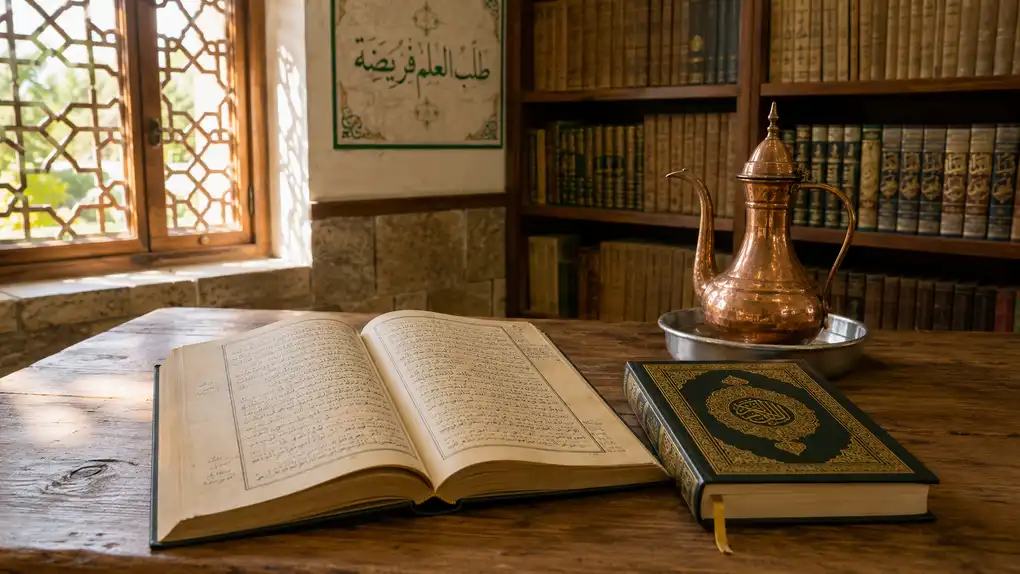
Alt Text: A santri study desk with an open classical fiqh book, a closed Qur’an, and an ablution water pitcher in a pesantren room.

Thaharah means purification according to Islamic law. It is not merely physical cleanliness, a pleasant smell, or tidy clothing. In fiqh, thaharah is the state of ritual purity needed for acts of worship, especially prayer. The scriptural proofs of thaharah come from the Qur’an and the Hadith of the Prophet ﷺ. These proofs explain wudu, … Read more

Tayammum: Purification with Dust When Water is Unavailable

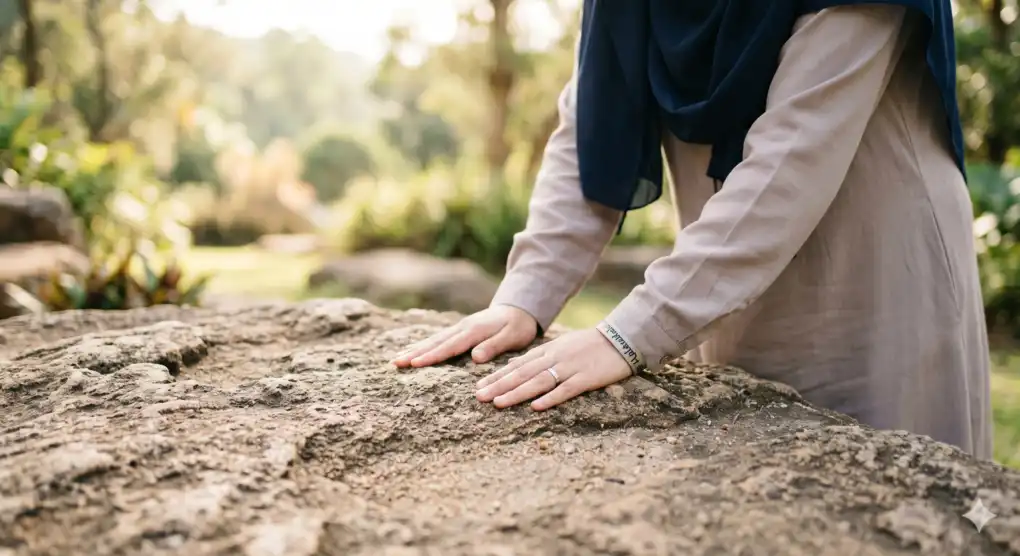
A macro close-up of a Muslim woman's hands, wearing long sleeves, softly dabbing the textured surface of a natural sandstone rock to collect pure dust for Tayammum, set against a calming, blurry nature background.

Did you know that performing Tayammum on a wall or a car window might be invalid if the surface is too clean? Or did you know that Tayammum does not actually “lift” the state of ritual impurity (Hadath)? Many of us are forced to perform Tayammum in emergency situations, yet unknowingly make mistakes in practicing … Read more

Hadath: Definition, Types, and Causes

Deskripsi: Main featured image for a fiqh article explaining the definition of hadath and methods of purification in Islam according to the Shafi'i madhhab.

Every Muslim who is about to establish prayer must have asked: “Is my ablution still valid?” or “Am I currently in a state of ritual impurity (hadath)?” This question is not merely a technicality of ritual. It is the very foundation of all our worship. If someone prays while in a state of hadath, their … Read more

Istinja: The Proper Etiquette of Ritual Cleansing After Relieving Oneself

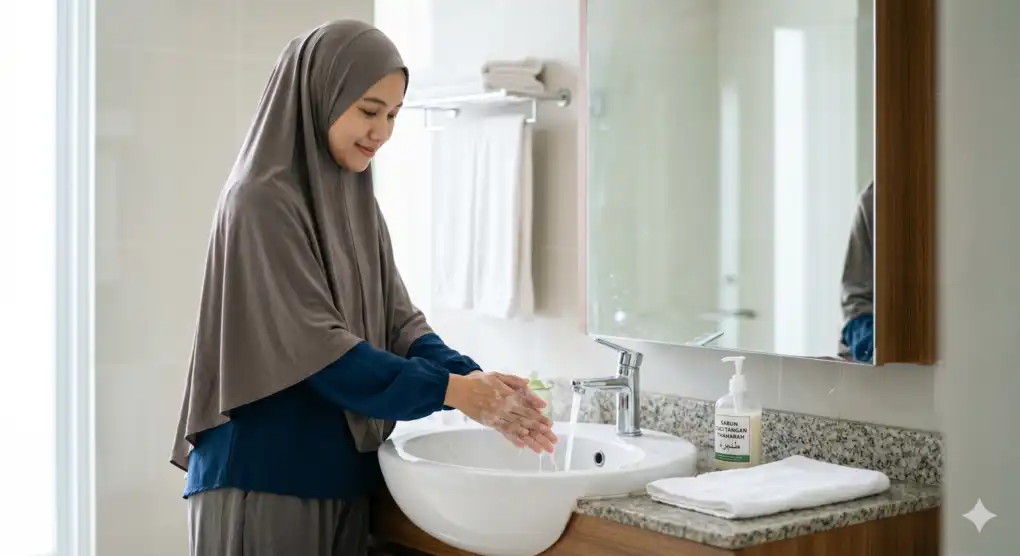
A Muslim woman in a hijab washing her hands at a sink as an illustration of Islamic purification or istinja.

Have you ever realized that whether or not the daily prayers (Salah) we perform are valid depends heavily on our routine activities in the restroom? Cleansing oneself after nature’s call, known in Islamic Fiqh literature as Istinja, is not merely a routine of physical hygiene. Rather, it is the opening key and an absolute prerequisite … Read more