Innamal A’malu Binniyat: Meaning, Arabic Text, and Its Profound Significance

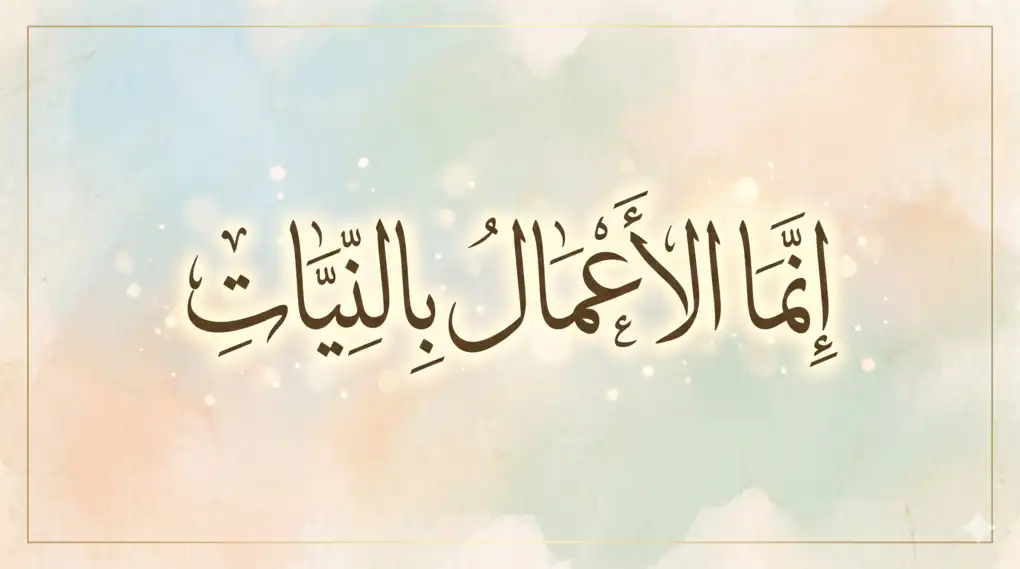
Innamal A'malu Binniyat Arabic calligraphy with an elegant and glowing pastel background.

The foundation of religious life in Islam rests upon the awareness of the heart before any limb moves to act. Within the Islamic scholarly tradition, the hadith of intention occupies a central position, even regarded by classical scholars as one-third of the entire religion. Understanding what Innamal A’malu Binniyat truly means is not merely a … Read more

Niyyah and Ikhlas in Islam: A Complete Guide from Hadith to the Fiqh of Worship

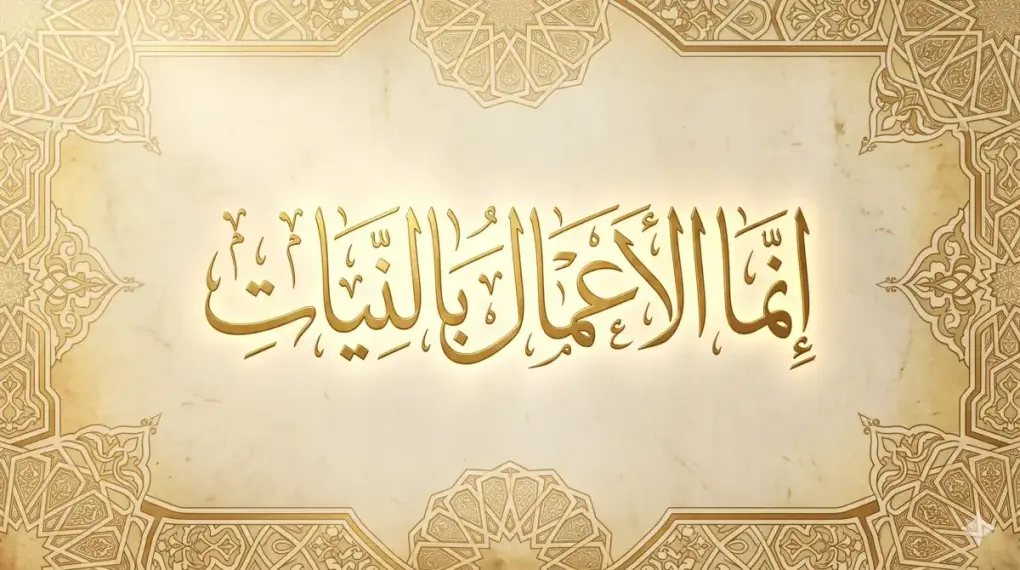
Arabic calligraphy of innamal a'malu binniyat symbolizing niyyah and ikhlas in Islam

Understanding niyyah and ikhlas in Islam is the gateway to authentic worship. Intention (niyyah) and sincerity (ikhlas) form the twin pillars upon which the acceptance of every believer’s deed rests. For this reason, Imam an-Nawawi raแธฅimahullฤh opens his celebrated Riyฤแธ al-แนขฤliแธฅฤซn with the chapter titled Bฤb al-Ikhlฤแนฃ wa Iแธฅแธฤr al-Niyyah fฤซ Jamฤซสฟ al-Aสฟmฤl wa al-Aqwฤl … Read more

The Immense Reward of Providing Iftar: Liberation from Hellfire & Special Supplications

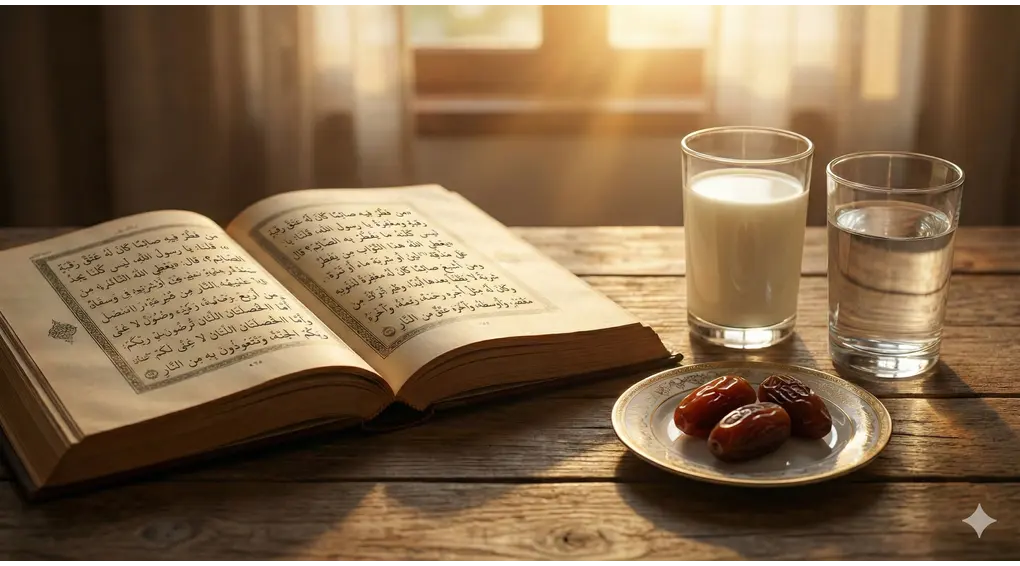
An open antique Islamic manuscript next to a glass of milk, a glass of water, and three dates on a wooden table at sunset.

The holy month of Ramadan serves as a spiritual madrasa that educates every Muslim to sharpen their inner spiritual acuity and social sensitivity. One significant manifestation of this sensitivity is the practice of muwasah (empathy and caring) toward fellow servants of Allah who are observing the fast. Within classical Islamic literature, particularly in the book … Read more

How to Control Anger While Fasting: The Meaning of “Inni Shaim”

A Muslim man smiling patiently, placing his hand on his chest as a symbol of restraining his anger and saying 'Inni Saim' (I am fasting).

The worship of fasting (al-แนฃawm) is a spiritual discipline that trains a believer to restrain their desires. Sharia guidance establishes that fasting is not merely restraining the stomach and genitals from dawn to sunset. More than that, fasting is a process of tazkiyatun nafs (purification of the soul) that demands its practitioners to guard their … Read more

Etiquette of Facing a Teacher: The Secret of Jibril’s Knees

An illustration depicting the close knee-to-knee seating arrangement between a scholar and student during traditional talaqqi, imitating the manners of the Angel Jibril.

In the Talaqqi tradition (direct acquisition of knowledge) in Islam, body language plays as important a role as speech. A studentโ€™s etiquette before their teacher often determines the extent of futuแธฅ (openness of understanding) that Allah will bestow upon their heart. One of the most magnificent portrayals of the etiquette of a study session is … Read more

Attire for Seeking Knowledge: Sunnah of White, Clean & Fragrant Clothes (Hadith Jibril)

A student of knowledge dressed in a clean white koko shirt sitting with proper etiquette in a brightly lit mosque prior to a majlis of knowledge.

The assembly of knowledge is a garden of paradise on earth; a place where blessings descend and where the angels spread their wings of pleasure for those who seek it. Therefore, attending an assembly of knowledge is not the same as attending an ordinary gathering. There are ethics (adab) and manners that must be observed, … Read more

History of Tasawuf: Is It Truly the Core of Maqam Ihsan?

Illustration discussing the history of tasawuf (Islamic mysticism) and its relationship with the concept of maqam ihsan.

Many people frequently wonder about the true essence of Sufism. Is it a novel doctrine that emerged later in Islamic tradition? Or perhaps an assimilation of foreign cultures outside of Islam? Such questions naturally arise, given the widespread misconceptions surrounding the spiritual dimension of Islam. However, if we trace back to the authentic history of … Read more

Fiqh of Repentance & Human Rights (Haqqul Adami): Complete Guide

An illustration of a Muslim man sitting on a prayer mat, looking pensive as he reflects on his unfulfilled obligations regarding the rights of others (Haqq al-Adami), with an open wallet lying beside him.

In the treasury of Islamic Jurisprudence (Fiqh) and Sufism, sin is categorized into two major dimensions: sins related to the rights of Allah (Haqqullah) and sins related to the rights of other people (Haqqul Adami). Often, a servant feels content weeping and seeking forgiveness on the prayer rug, forgetting the unsettled obligations they owe to … Read more

Understanding the Essence of Tasawuf: The Science of Heart Purification for Eternal Happiness

Illustration symbolizing the concept of tasawuf in Islam with a glowing heart representing spiritual purification.

Many people feel confused upon hearing the word Tasawuf (Sufism). Some mistakenly consider it a foreign doctrine, whereas, in reality, Tasawuf is the very heartbeat of the Islamic faith. Simply put, the essence of Tasawuf is the spiritual path of self-improvement designed to purify our hearts and cultivate a more profound, intimate relationship with Allah … Read more

Conditions of Taubat Nasuha: Imam Nawawi’s Guide to True Repentance

A silhouette of a Muslim praying with raised hands on a mountain at sunrise, symbolizing hope within the requirements of sincere repentance (taubatan nasuha).

In a servantโ€™s (sฤlik) spiritual journey towards Allah SWT, human nature, prone to error, requires a path of return. This mechanism, in Islamic legal terminology, is known as repentance (taubat). Understanding the conditions for the validity of sincere repentance (taubat nasuha) is not merely theoretical knowledge, but an urgent need so that the process of … Read more