

Imagine being deeply engrossed in your ritual prayer (salah), profoundly focused on every sacred verse, when someone suddenly enters the room and loudly offers a greeting of peace. Must you break your prayer to reply?
In the magnificent framework of Islamic law, replying to a greeting is fundamentally an individual obligation (fard al-ayn) when addressed to a single, legally responsible Muslim (mukallaf). This ruling shifts to a communal obligation (fard al-kifayah) when the greeting is directed at a group. However, the Sharia is profoundly wise and provides specific concessions (rukhsah). There are certain exceptions to answering salam where this obligation is entirely lifted, as meticulously detailed by the authoritative scholars of the Shafi’i school.
This article elucidates the specific cases where the obligation to return a greeting is nullified, complete with juristic arguments from authoritative Shafi’i literature. The primary foundation for the comprehensive fiqh of salam and the obligation to reply is explicitly stated in the Quran, Surah An-Nisa, verse 86:
وَإِذَا حُيِّيتُمْ بِتَحِيَّةٍ فَحَيُّوا بِأَحْسَنَ مِنْهَا أَوْ رُدُّوهَا “And when you are greeted with a greeting, greet [in return] with one better than it or [at least] return it [in a like manner].”
This noble verse serves as the absolute basis for the obligation to respond to a greeting, while also acting as the starting point for scholars to derive the contextual legal exceptions.
Fundamental Conditions for a Valid Salam
Before analyzing the exceptions to answering salam, we must establish the foundational criteria that validate a greeting. Shafi’i scholars have set strict parameters for a greeting to be legally binding. If these conditions are not met, the recipient bears no obligation to respond.
These conditions consist of three primary elements:
- Isma’ (Clearly Audible): The greeting must be voiced loudly enough to reach the intended recipient’s hearing. If the volume is too low, the sunnah of initiating the greeting is not achieved, and the obligation to reply does not apply.
- Ittishal (Continuous Without Long Pauses): The response must be issued immediately after the greeting concludes. Jurists equate this process to the principle of offer and acceptance (ijab and qabul) in commercial transactions. A time gap that exceeds customary norms (‘urf) breaks the connection between the two statements.
- Lawful by Sharia: If initiating a greeting in a specific context is prohibited (haram) or disliked (makruh), the obligation for the recipient to reply is automatically dropped.
This profound explanation is meticulously recorded by Shaykh al-Islam Zakariyya al-Anshari (may Allah have mercy upon him) in his magnum opus, Asna al-Matalib (Volume 4, page 182):
قوله: (وَشَرْطُهُ) أَيْ كُلٌّ مِنْ ابْتِدَاءِ السَّلَامِ وَرَدِّهِ (إسْمَاعٌ) لَهُ بِرَفْعِ الصَّوْتِ بِهِ وَإِلَّا لَزِمَ تَرْكُ سُنَّةِ الِابْتِدَاءِ أَوْ وُجُوبُ الرَّدِّ (وَاتِّصَالٌ) لِلرَّدِّ بِالِابْتِدَاءِ (كَاتِّصَالِ الْإِيجَابِ بِالْقَبُولِ) فِي الْعُقُودِ، وَالْإِلْزَامُ تَرْكُ وُجُوبِ الرَّدِّ.
6 Key Exceptions to Answering Salam
Below is a detailed breakdown of the circumstances that invalidate the obligation to return a greeting, viewed through the lens of Shafi’i jurisprudence.
Case 1: The Greeting is Inaudible to the Recipient
If the voice is not loud enough to be heard, the greeting is legally void and does not reach the recipient. Therefore, if a person initiates a greeting but doubts whether their voice was heard, it is recommended (sunnah) to raise their volume.
However, there is a beautiful etiquette exception: if someone is sleeping near the intended recipient, the greeter is forbidden from shouting. They are advised to lower their voice so that only the awake person hears it without disturbing the sleeper, in accordance with the prophetic etiquette narrated in Sahih Muslim.
Case 2: During Ritual Prayer (Salah)
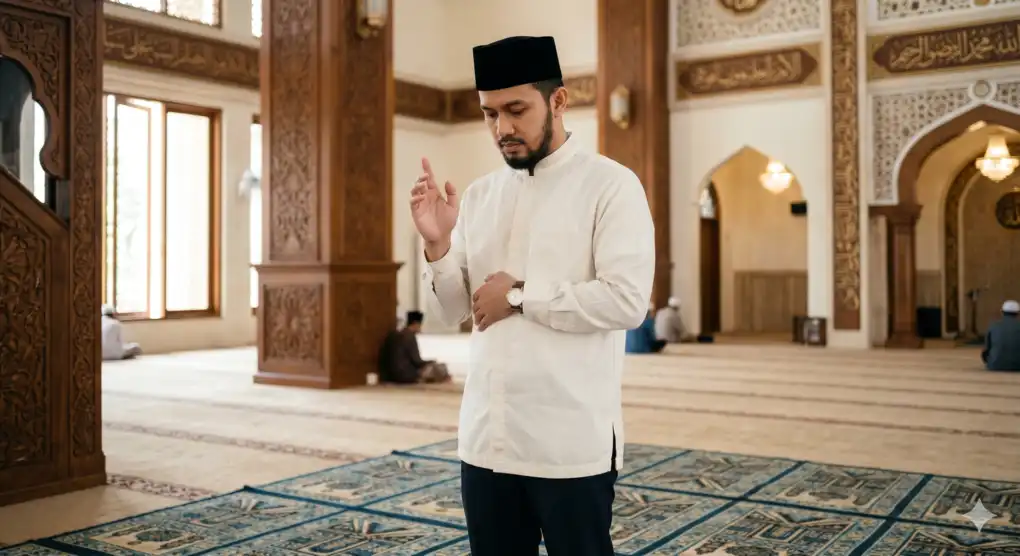
An individual engaged in prayer is prohibited from uttering words outside the pillars and recommended acts of the prayer. Answering a greeting verbally will absolutely invalidate the prayer. Consequently, the obligation to provide a verbal response is lifted.
Instead, the Sharia guides the praying individual to respond using a physical gesture—such as a hand motion or a nod. This gesture does not compromise the prayer’s validity. In fact, most scholars state that initiating a greeting to someone deep in prayer is fundamentally makruh as it risks breaking their concentration with Allah.
قوله: (وَكَذَا) يُسَنُّ (لِلْمُصَلِّي وَنَحْوِهِ) كَسَاجِدٍ لِتِلَاوَةٍ وَمُؤَذِّنٍ (بِالْإِشَارَةِ)
Case 3: Greetings from Non-Muslims (Dhimmi)




Islamic law regulates social interactions with measurable boundaries. If a non-Muslim initiates the Islamic greeting, the Muslim is prohibited from returning the full phrase (like “Wa ‘alaikumussalam”). The required response is strictly limited to the phrase “Wa ‘alaik” (meaning “And upon you”).
This rule stems from historical precedents during the Prophet’s ﷺ era, and if a mixed group is addressed, the Muslim responder must intend this specific exception in their heart.
Case 4: Invalid Wording (Makruh Sighah)
The choice of words (sighah) heavily determines a greeting’s legal status. If someone uses a disliked structure—such as placing the predicate before the subject (“Alaikumussalam”)—the majority of scholars (qaul sahih) rule that the obligation to reply remains, as the core meaning is still conveyed.
However, if someone simply blurts out “Wa ‘alaikum” out of nowhere, it is not considered a valid act of worship (ibadah) and does not warrant any response.
Case 5: Greetings from the Insane or Intoxicated
Islamic rulings apply to those of sound mind. Individuals who have lost their intellect, whether due to mental illness or intoxication, lack the legal capacity to perform acts of worship. Because offering salam is a verbal act of worship and a covenant of safety, it is invalid when uttered by someone without reason. Based on the strongest view (ashahh) in Al-Majmu’, the recipient has zero obligation to reply.
Case 6: While in the Restroom or Relieving Oneself
For individuals utilizing a bathroom or relieving themselves, mentioning the name of Allah is highly prohibited and disliked. Given that the Islamic greeting contains one of Allah’s names (As-Salam), greeting someone in this state is not a recommended act.
There is a fiqh maxim stating that if initiating a greeting is not recommended, replying to it is not obligatory. It is considered highly contrary to Islamic dignity and the etiquette of entering public baths or restrooms to converse in such conditions.
Disputed Cases: Between Obligatory and Recommended
Beyond the definitive situations above, Shafi’i literature also records scenarios that spark analytical debate among jurists. To fully grasp these, one must understand how scholars apply the primary sources of Islamic law to varying social realities.
- Greeting Sinners (Fasiq) and Innovators (Mubtadi’): Leading figures like Imam an-Nawawi assert that replying to those who openly commit major sins or spread blameworthy innovations is not obligatory. It acts as a moral sanction to encourage their repentance.
- Greetings Sent via Intermediary or Letter: If a greeting is delivered by a physical messenger, the recipient must reply verbally right away. If it arrives via a written letter, they are obligated to reply in writing.
- While Engaged in Dhikr or Quranic Recitation: Imam an-Nawawi ruled that it is makruh to greet someone whose heart is deeply immersed in remembering Allah. Since initiating it is disliked, the obligation to reply is either dropped or reduced to a slight physical gesture.
Summary: Conditions, Rulings, and Legal Basis
To simplify these concepts, refer to the analytical table below compiling the legal status of each condition:
| Condition of the Greeting | Ruling on Replying | Source / Reference | Special Notes |
|---|---|---|---|
| 1. Inaudible Voice | Not Obligatory | Hadith (Sahih Muslim) | Recommended to repeat unless near a sleeper. |
| 2. Person is Praying | Not Obligatory (Verbally) | Syarh Asna al-Matalib | Recommended to respond with a gesture. |
| 3. From Non-Muslims | Limited Obligation | Muttafaq ‘Alaih | Reply strictly with “Wa ‘alaik”. |
| 4. Invalid Wording | Not Obligatory | Al-Mutawalli | E.g., saying only “Wa ‘alaikum” to start. |
| 5. Insane/Intoxicated | Not Obligatory | Al-Majmu’ (Qaul Ashahh) | The act is not considered a valid worship. |
| 6. In the Restroom | Not Obligatory (Makruh) | Etiquette & Dignity | Prohibition of mentioning Allah’s name in dirty places. |
Frequently Asked Questions (FAQ)
Is it a sin to intentionally ignore a valid greeting?
Yes. The foundational ruling dictates that if all legal conditions are met (audible, immediate, and legislated), intentionally ignoring a greeting is classified as a sin for neglecting an individual obligation (fard al-ayn). However, if the situation falls into the discussed exceptions, the recipient bears no sin whatsoever.
If I receive a greeting via WhatsApp or email, must I reply immediately?
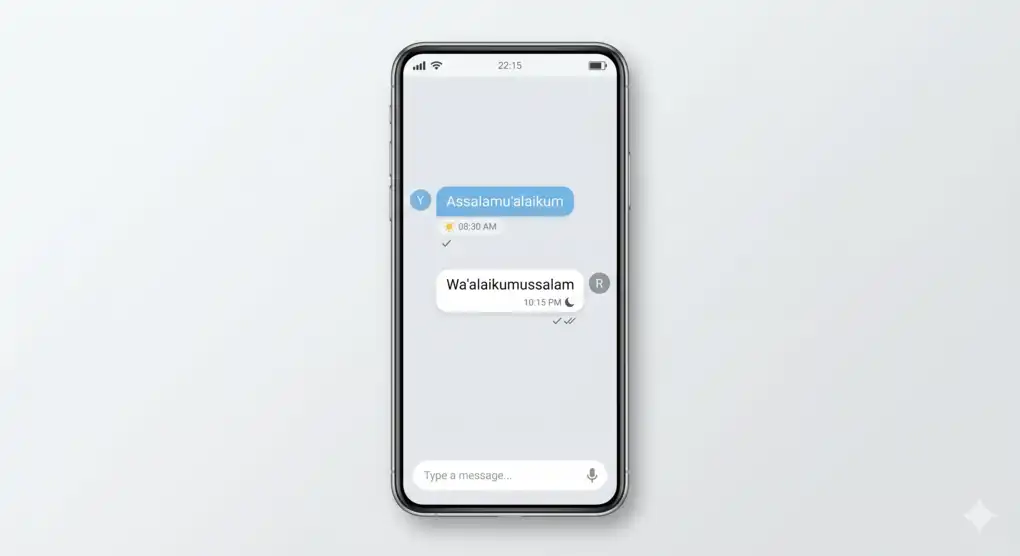
Contemporary scholars use analogical deduction (qiyas) to equate digital messages to written letters from the classical era. The obligation to reply remains fard. The recipient is required to respond via text or voice note with the intention of fulfilling the obligation to return the greeting (raddus salam).
If someone greets my entire group and one friend replies, am I absolved?
Correct. This falls under communal obligation (fard al-kifayah). When a greeting is directed at a group, the correct verbal response from just one legally responsible member automatically lifts the obligation and any potential sin from the rest of the group.
Can I ignore a greeting if I am chewing food?
Shafi’i fiqh provides nuanced details on this. While greeting someone who is actively eating is not highly recommended, Asna al-Matalib specifies that for the person eating, giving a verbal response is reduced to a recommended act (sunnah) rather than an absolute obligation, specifically based on the principle of facilitation (taysir) to prevent choking.
Conclusion
Stemming from the comprehensive breakdown above, we witness the profound wisdom embedded in the structure of Islamic law. Answering a greeting is indeed a noble moral obligation and an act of worship. Nevertheless, the great scholars of the Shafi’i school have prudently calculated rational conditions where this obligation is lifted to preserve more substantial values—such as maintaining human dignity while relieving oneself, guarding the sacred vertical interaction during prayer, and acknowledging the legal limitations of those without cognitive faculties. These rulings demonstrate how the Sharia consistently stands firm upon the foundations of human intellect and ease.
Reference
Al-Anṣārī, Zakariyā. Asnā al-Maṭālib fī Sharḥ Rawḍ al-Ṭālib. With ḥāshiyah by Aḥmad al-Ramlī. Edited by Muḥammad az-Zuhrī al-Ghamrāwī. Cairo: Al-Maṭbaʿah al-Maymānīyah, 1313 AH. Reprinted by Dār al-Kitāb al-Islāmī.


