
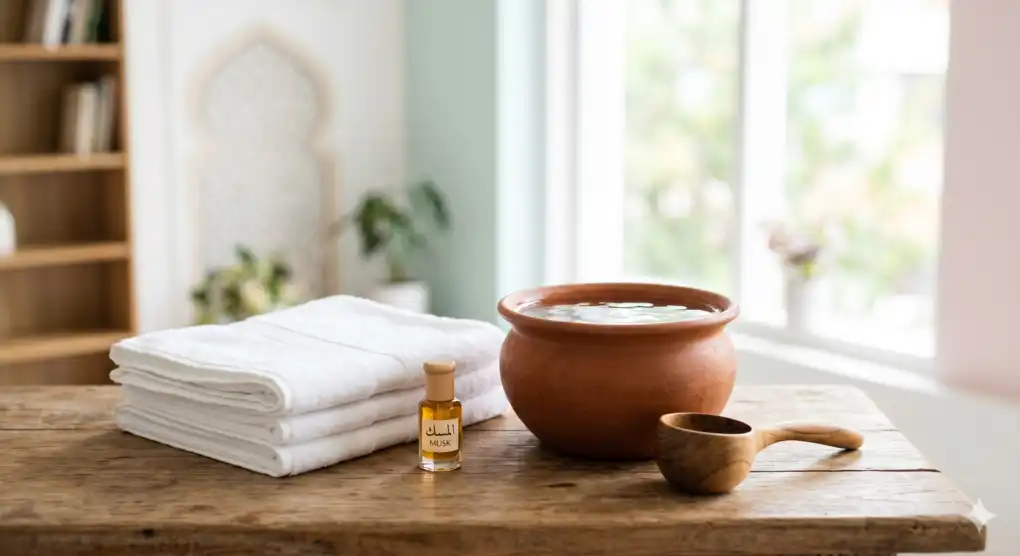
Worship in Islam is not merely the discharge of obligations through mechanical movements, but a spiritual path to draw closer to the Creator. In the chapter of Thaharah (ritual purification) from major ritual impurity, the major bath (Ghusl) holds a highly esteemed position. When examining the fundamental meaning of thaharah according to classical scholars, you will find that physical cleanliness correlates directly with the purity of the heart. To achieve this spiritual elevation, observing the Sunnahs of Ghusl is essential.
Fiqh strictly distinguishes between pillars (mandatory conditions) and sunnahs (recommended acts of perfection). Fulfilling the pillars of Ghusl ensures the ritual is legally valid. However, adorning the bath with the Sunnahs of Ghusl manifests gentleness of heart, sincerity (Ikhlas), and a servant’s devotion to emulating the Prophet Muhammad ﷺ. Leaving a sunnah does not invalidate the bath, but it deprives a Muslim of supreme virtue and makes them vulnerable to Futur (spiritual lethargy) in upholding obedience.
This article explores in depth the complete procedure of Ghusl for Janabah in Shafi’i fiqh, focusing on the sunnahs taught by the Prophet ﷺ. This exposition is grounded in the classical text Asna al-Matalib Syarh Rawd ath-Thalib (Vol. 1, pp. 69-70) authored by Shaykh al-Islam Zakariyya al-Ansari.
The Sequence of the Sunnahs of Ghusl in Shafi’i Fiqh
To perform the bath correctly and maximize its value as an act of worship, Shaykh al-Islam Zakariyya al-Ansari formulated a highly structured sequence (tartib) of recommended acts. The following are the six primary sunnahs to meticulously observe:
1. Removing Filth or Impurity First (Izalat al-Adza)
Technically, before initiating the ritual ablution (wudu) and pouring water for the bath, the first highly recommended action is to remove all forms of physical filth, seminal residue, or impurities (najasah) from the body’s surface. The fiqh text instructs:
قوله: (وأكمله) أي الغسل (إزالة قذر) ظاهر كبصاق ومني (ونجس أولا)
“And the most perfect form of it (Ghusl) is removing apparent filth like saliva and semen, and purifying impure substances first.”
This preparatory step ensures that the pure water, which will subsequently be distributed across the body, does not become contaminated. The practical method involves washing the private parts and any affected areas using the left hand, or wiping them with a cloth or tissue, before formulating the actual intention for Ghusl.
2. Performing a Complete Wudu Before Bathing (Al-Wudhu Qabla al-Ghusl)
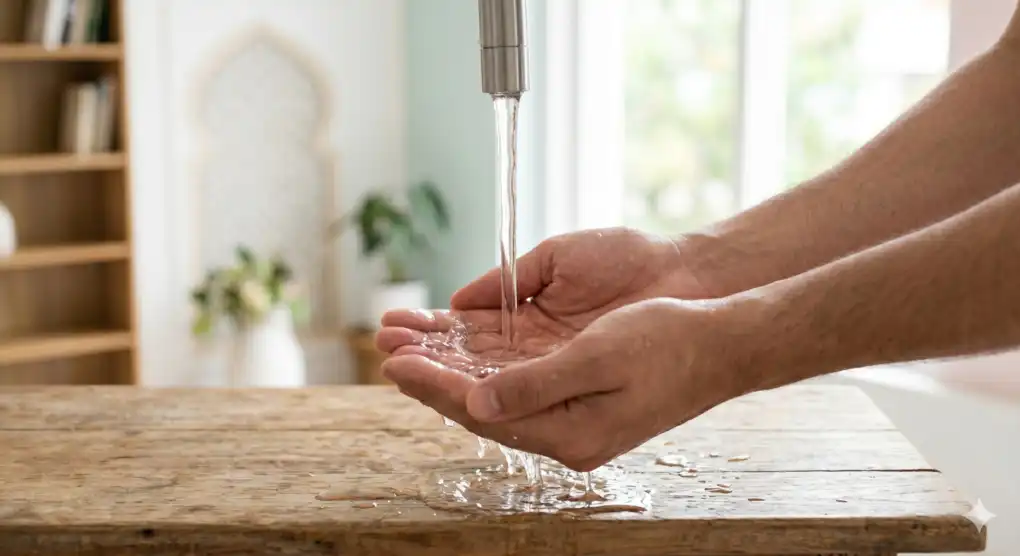
After cleansing the body of impurities, the subsequent sunnah is to perform ablution. Performing wudu before the major bath serves as a spiritual preparation that cultivates inner awareness before water cascades over the entire physique.
قوله: (ثم الوضوء كاملا) للاتباع رواه الشيخان فهو أفضل من تأخير قدميه عن الغسل
“Then performing a complete wudu to follow the Prophetic guidance (Narrated by Al-Bukhari and Muslim); thus, it is more excellent than delaying the washing of his feet until the end of the bath.”
This ablution is executed exactly like the wudu for prayer. The intention formulated in the heart is to fulfill the sunnah of the bath, not to lift minor impurity. Initiating the bath with wudu holds immense virtue, as the limbs of wudu are noble parts of the body that merit prior purification.
3. Prioritizing the Right Side of the Body (Shiqq al-Ayman)


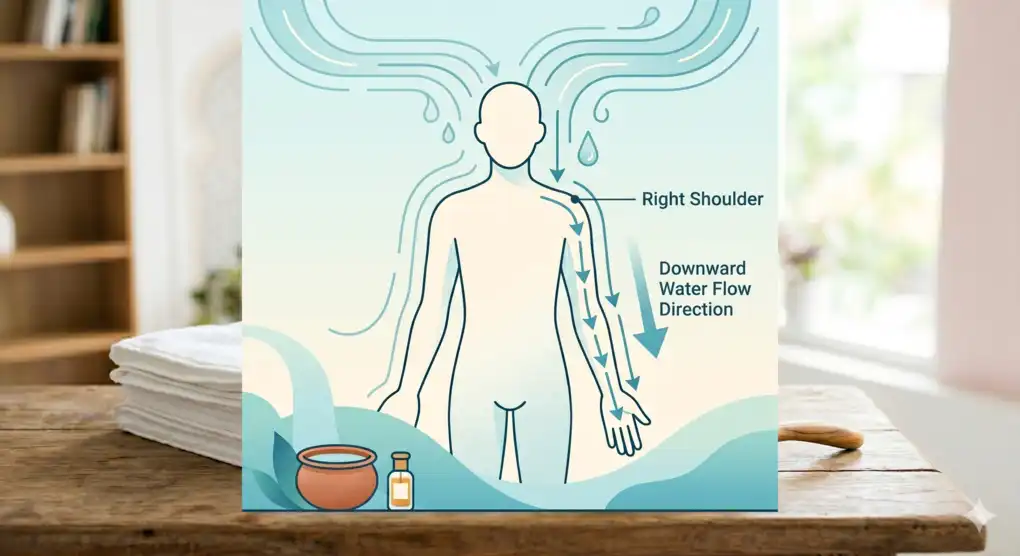
The Prophet ﷺ possessed a noble habit of consistently favoring the right side (Tayamun) in all virtuous endeavors, including purification. When the moment arrives to distribute the water, Shaykh al-Islam delineates the following pouring sequence:
قوله: (ثم يفيض) الماء (على رأسه ثم شقه الأيمن ثم الأيسر بتثليث) لغسل جميع البدن
“Then he pours water over his head, then his right side, then his left side, doing so three times to wash the entire body.”
Applying this principle requires pouring water from the right shoulder down to the right foot, followed by pouring from the left shoulder down to the left foot. The wisdom underpinning this etiquette reflects a profound spiritual order and respect for the manners of worship inherited from the pious predecessors (Salaf al-Salih).
4. Rubbing the Entire Surface of the Body (Ad-Dalk)
The smooth distribution of water is frequently hindered by the skin’s natural oils, sebum, or bodily folds. Therefore, Islamic jurisprudence prescribes a practice known as Ad-Dalk, which involves rubbing the hands over the skin simultaneously with the flowing water.
ويدلكه ثلاثا ثم باقي جسده كذلك
“And he rubs it three times, then does the same for the rest of his body.”
The majority of scholars within the Shafi’i school categorize Dalk as a sunnah. This contrasts with the Maliki school, which stipulates it as a mandatory condition. The primary objective of rubbing is to establish absolute certainty (Yaqin) that water has thoroughly permeated the pores and the outermost layer of the skin without any obstruction.
5. Washing Every Body Part Three Times (At-Tathlith)
The characteristic of prudence in the Islamic faith is demonstrated through the sunnah of Tathlith (washing three times). As the preceding text mentioned the phrase bitathlith, every pour over the head, the right side, and the left side is recommended to be repeated three times.
Fundamentally, a single, comprehensive pour of water satisfies the obligatory criteria for a valid bath. However, the second and third pours function to compensate for any physical shortcomings, dispel intrusive doubts (waswas) stemming from Satanic deception, and perfect ultimate hygiene.
6. Using Fragrance for Women Post-Menstruation (Tatabbu’ Athar ad-Dam)
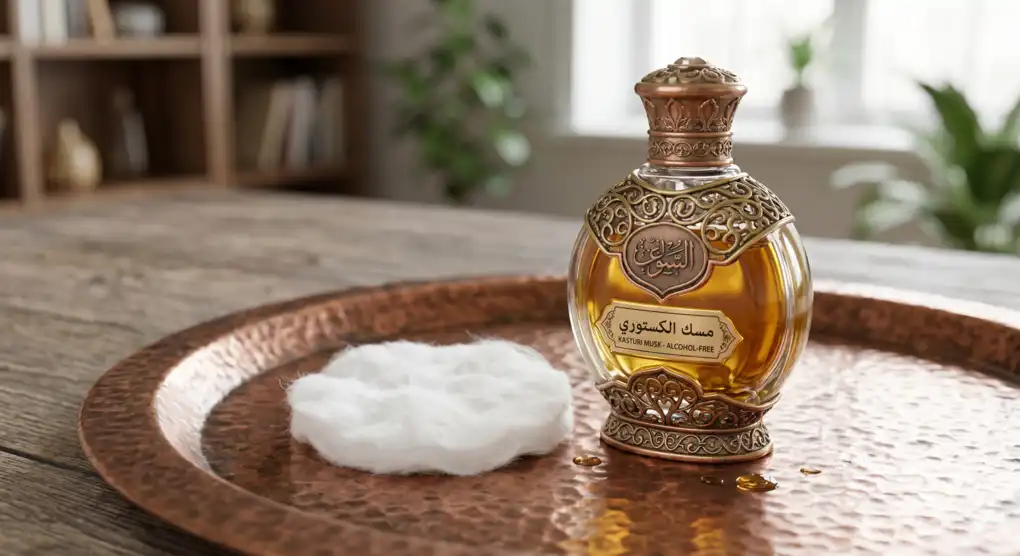
There is a specific sunnah directed exclusively toward women who have just concluded their menstrual or postpartum cycle. Following the bath, it is recommended to take a piece of cotton scented with musk and wipe it over the area where blood exited. You can learn the finer details in the guide on how to perform the major bath for menstruating women correctly.
قوله: (وأتبعت… أثر الدم مسكا) بأن تجعله على قطنة… لقوله لسائلته عن الغسل من الحيض خذي فرصة ممسكة فتطهري بها
“And she follows the trace of blood with musk by placing it on a piece of cotton… based on the Prophet’s ﷺ statement to a woman asking about the bath after menstruation: ‘Take a piece of cotton scented with musk and purify yourself with it.'”
This practice is ideally applied after verifying the valid timeframe for purification, fully discussed in the study regarding when women with menstruation and postpartum bleeding should begin their major bath. Tracing the remnants of blood with fragrance eradicates unpleasant odors, restores freshness, and acts as a preventative measure against disease. If musk is unavailable, any pure, alcohol-free fragrance is permissible.
Common Mistakes in Ghusl to Avoid
Negligence frequently leads to the forfeiture of a worship’s virtue. Several practical errors commonly observed in society include:
- Pouring Water Directly Without Wudu: Many individuals rush into the bathroom, stand directly under the shower, and make their intention without preceding the ritual with wudu. This action forsakes the immense reward of emulating the Prophetic etiquette.
- Neglecting the Removal of Filth: If impurities on the body are not washed away first, the bathwater mixing with the filth can potentially spread impurity to other bodily regions, particularly if the volume of water used is small.
- Overlooking Skin Folds: Ignoring thick hair, the back of the ears, armpits, and the spaces between the toes. These areas critically require rubbing (Dalk) to ensure the pure water penetrates perfectly.
- Pouring Randomly Without Sequence (Tartib): Splashing water from left to right or bottom to top irregularly. Although the bath remains legally valid provided the whole body is wet, this erratic action contradicts the noble etiquette established by the Prophet.
Conclusion
Practicing the six Sunnahs of Ghusl—consisting of removing filth, performing wudu, prioritizing the right side, rubbing the skin, pouring water three times, and applying fragrance (for women)—is a clear manifestation of a Muslim’s spiritual sensitivity. Worship enveloped in the sunnah will radiate the true light of Thaharah, which will eventually serve as a testament of obedience on the Day of Reckoning. Learning and consistently practicing the correct procedure is an invaluable investment in one’s spiritual journey.
Summary Table: Procedure of the Prophetic Sunnah Bath
| Step / Fiqh Action | Legal Status | Spiritual & Sharia Objective |
|---|---|---|
| Removing Filth & Semen | Condition / Sunnah | Securing water purity from external contamination. |
| Perfect Wudu | Sunnah Muakkadah | Inner preparation and purifying noble limbs. |
| Pouring over Head (3x) | Sunnah | Calming the nerves and opening hair pores. |
| Prioritizing the Right | Sunnah | Emulating the revered etiquette of the Prophet ﷺ. |
| Rubbing the Skin (Dalk) | Sunnah | Achieving certainty that water reaches the outer skin. |
| Post-Menstruation Musk | Specific Sunnah | Removing the lingering odor of the biological cycle. |
Frequently Asked Questions (FAQ) About the Sunnahs of Ghusl
If I wash my body less than three times due to a limited water supply, is my bath valid?
Yes, your bath is entirely valid. The fundamental obligation of the major bath requires merely a single, comprehensive distribution of water over the entire surface of the skin and hair, accompanied by the correct intention. The second and third pours (Tathlith) serve as perfecting sunnahs, not as strict determinants for the validity of the ritual.
Is the recommended wudu performed at the beginning of the bath sufficient for establishing prayer afterward?
Yes. If, after completing the major bath, you do not commit any acts that invalidate wudu (such as passing gas, urinating, or directly touching the private parts without a barrier), you are permitted to immediately perform your prayer utilizing the state of purity attained from that bath.
Can I use soap before fulfilling the pillar of distributing pure water over my body?
Within Shafi’i fiqh, it is heavily emphasized to distribute absolute water (mutlaq) over the entire body first, until the intention and the pillars of the bath are fulfilled. If soap is used at the outset, there is a risk that the water adhering to the body will alter its natural properties into soapy water—known legally as altered water (mutaghayyir)—before it can be distributed to the obligatory areas. It is highly recommended to use soap only after the core pillar of distributing pure water is complete.
Reference
Zakariyā al-Anṣārī, Asnā al-Maṭālib fī Sharḥ Rawḍ al-Ṭālib, with marginalia by Aḥmad al-Ramlī, edited by Muḥammad az-Zuhrī al-Ghamrāwī (Cairo: al-Maṭbaʿah al-Maymānīyah, 1313 AH; repr. Dār al-Kitāb al-Islāmī), vol. 1, p. 69.


