
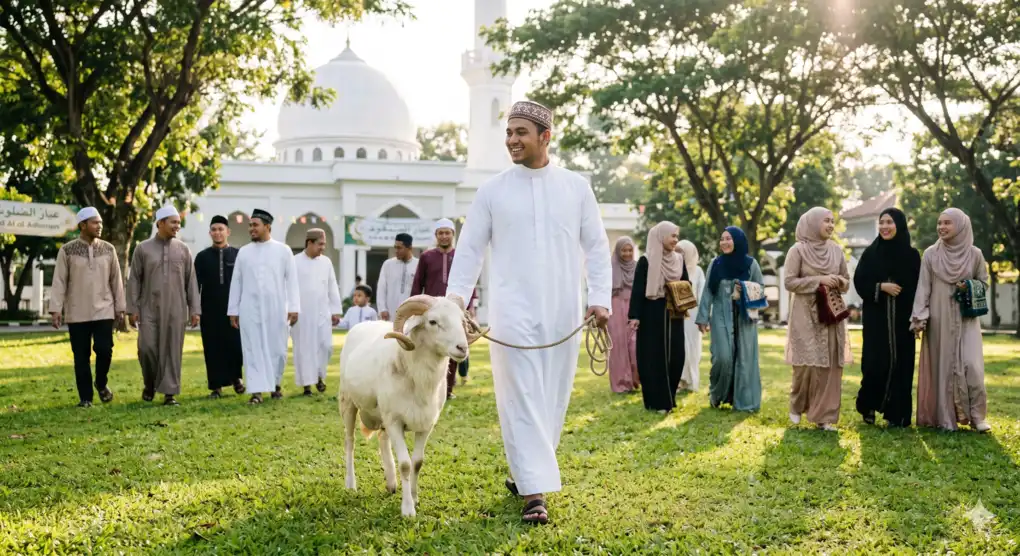
The act of sacrifice, or Udhiyah, is one of the most profound rituals in Islam, observed primarily during the festival of Eid al-Adha and the subsequent days of Tashriq. Understanding the meaning and ruling of Qurban is essential, but equally critical is knowing exactly when to perform it. The validity of this worship is strictly bound by a specific timeframe set by Islamic jurisprudence (fiqh).
This article provides an academic and deeply rooted explanation regarding the precise time of Qurban slaughter, the most virtuous moments to perform it, and the jurisprudential consequences of slaughtering outside the designated window. We will explore these rules referencing authentic Hadiths and the authoritative Shafi’i text, Al-Fiqh al-Manhaji (Vol. 1, pp. 234-235).
The Lawful Time of Qurban Slaughter According to Shariah
The time of Qurban slaughter is an immutably fixed period in Islamic law. Before delving into the specific dates, one should recognize the foundational principles of Islamic jurisprudence which establish that acts of worship must adhere to divine temporal boundaries. According to Al-Fiqh al-Manhaji (Vol. 1, pp. 234-235), the timeframe is delineated as follows:
“وقت الأَضحية: يبتدئ وقتها بعد طلوع شمس يوم عيد الأضحى بمقدار ما يتسع لركعتين وخطبتين، ثم يستمر وقتها إلى غروب آخر أيام التشريق، وهي الحادي عشر والثاني عشر والثالث عشر من ذي الحجة.”
Translation: The time for the sacrifice begins after sunrise on the day of Eid al-Adha, following a duration sufficient to perform two units of prayer (raka’at) and two sermons (khutbahs). Its time then continues until the sun sets on the last of the days of Tashriq, which are the 11th, 12th, and 13th of Dhu al-Hijjah.
Therefore, the valid period strictly spans from the morning of the 10th of Dhu al-Hijjah until the sunset of the 13th of Dhu al-Hijjah. Ensuring your sacrifice falls within this window is a primary condition of Qurban.
When Does the Time for Qurban Slaughter Begin?
The precise initiation of the time of Qurban slaughter is tied to the Eid congregation. It begins on the 10th of Dhu al-Hijjah, specifically after the congregation has completed the Eid prayer. Understanding the profound meaning of prayer helps contextualize why communal worship precedes the physical sacrifice. This chronological order is affirmed by a sound Hadith recorded by Imam Bukhari (No. 5225) and Imam Muslim (No. 1961):
“أول ما نبدأ به يومنا هذا تصلي ثم نرجع فننحر، فمن فعل ذلك فقد أصاب سنتنا، ومن ذبح قبل ذلك فإنما هو لحم قدمه لأهله ليس من النسك في شيء.”
“The first thing we begin with on this day of ours is to pray, then we return and slaughter. Whoever does that has struck upon our Sunnah. But whoever slaughters before that, it is merely meat that he has presented to his family; it is not part of the sacrificial rites at all.”
When Does the Valid Time End?
The concluding boundary for the time of Qurban slaughter is sunset on the 13th of Dhu al-Hijjah. These three days following Eid are known as the days of Tashriq. This extended period is supported by the Prophetic tradition narrated by Jubair bin Mut’im and recorded by Ibn Hibban (No. 1008):
“وكل أيام التشريق ذبح.”
“All the days of Tashriq are a time for slaughtering.”
This generous window ensures that all Muslims have ample opportunity to fulfill this recommended or obligatory rite.
The Best Time to Perform the Sacrifice
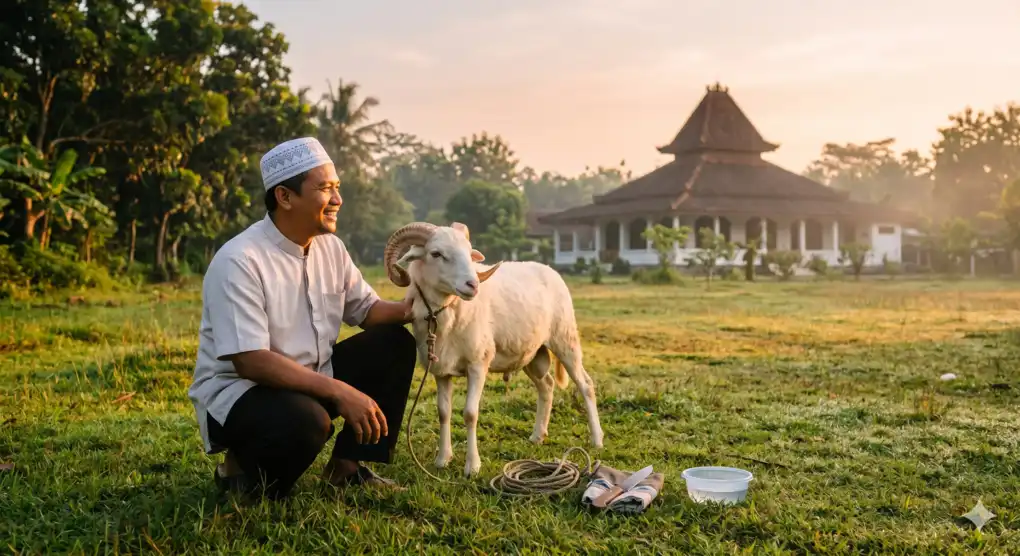
While the permissible window lasts for four days, the absolute best time of Qurban slaughter is immediately following the Eid al-Adha prayer and sermon on the 10th of Dhu al-Hijjah. Hastening to perform good deeds is a hallmark of Islamic piety. Fulfilling the ritual early, while adhering to the proper etiquette before sacrificing, closely mirrors the explicit practice of the Prophet Muhammad ﷺ and maximizes the spiritual reward.
Rulings on Slaughtering Outside the Designated Timeframe
Slaughtering Before the Eid Prayer



Timing is an absolute condition for the validity of the Udhiyah. If an individual slaughters their animal before the time of the Eid prayer has passed, the core ruling of Qurban dictates that the act is legally invalid as a ritual sacrifice. As the aforementioned Hadith explicitly states, the slaughtered animal is considered regular meat meant for familial consumption or general charity, devoid of the specific spiritual merits of Qurban.
Slaughtering at Night

Classical scholars note that the textual evidence simply bounds the time of Qurban slaughter between the morning of the 10th and the sunset of the 13th of Dhu al-Hijjah. The texts do not explicitly invalidate slaughtering during the nights bridging these days. Therefore, slaughtering at night within this defined timeframe is legally valid and accepted. However, doing so during the daytime is highly preferred to ensure accuracy, safety, and to facilitate the immediate and transparent distribution of the Qurban meat to the community.
Textual Evidences (Dalil) for the Time of Sacrifice
The foundation of this worship originates from the Holy Qur’an, where Allah commands in Surah Al-Kauthar, verse 2: “So pray to your Lord and sacrifice [to Him alone].” This divine injunction is then detailed and contextualized through the authentic Prophetic traditions (Hadiths) mentioned above, which practically define the exact temporal boundaries.
Conclusion
To fully grasp the profound wisdom of Qurban, a believer must perform the ritual in exact accordance with prophetic guidance. The valid time of Qurban slaughter initiates after the Eid al-Adha prayer on the 10th of Dhu al-Hijjah and definitively concludes at sunset on the 13th of Dhu al-Hijjah. Slaughtering outside this specific Shariah-compliant timeframe transforms a sacred act of Udhiyah into a mundane slaughter. By adhering to these well-established rules outlined in classical texts like Al-Fiqh al-Manhaji, Muslims can ensure their sacrifices are valid, accepted, and spiritually rewarding.
Frequently Asked Questions (FAQ)
Can I slaughter my Qurban animal before going to the Eid prayer?
No. If you slaughter the animal before the time sufficient for the Eid prayer and its two sermons has passed, the sacrifice is not counted as Udhiyah. It will only be considered regular meat for consumption.
What exactly are the days of Tashriq?
The days of Tashriq are the 11th, 12th, and 13th days of the Islamic month of Dhu al-Hijjah. They serve as an extended, valid period for performing the Qurban slaughter.
Is it permissible to slaughter the Qurban animal at night?
Yes, it is legally valid to slaughter at night as long as it occurs between the night of the 10th and before sunset on the 13th of Dhu al-Hijjah. However, daytime slaughter is highly recommended to avoid mistakes and to easily distribute the meat to the poor.
Conceptual Reference:
Al-Khin, Muṣṭafā, Muṣṭafā Dīb al-Bughā, and ʿAlī ash-Sharbajī. Al-Fiqh al-Manhaji ʿalā Madhhab al-Imām ash-Shāfiʿī. Vol. 1. Damascus: Darul Qalam, 1992.


