
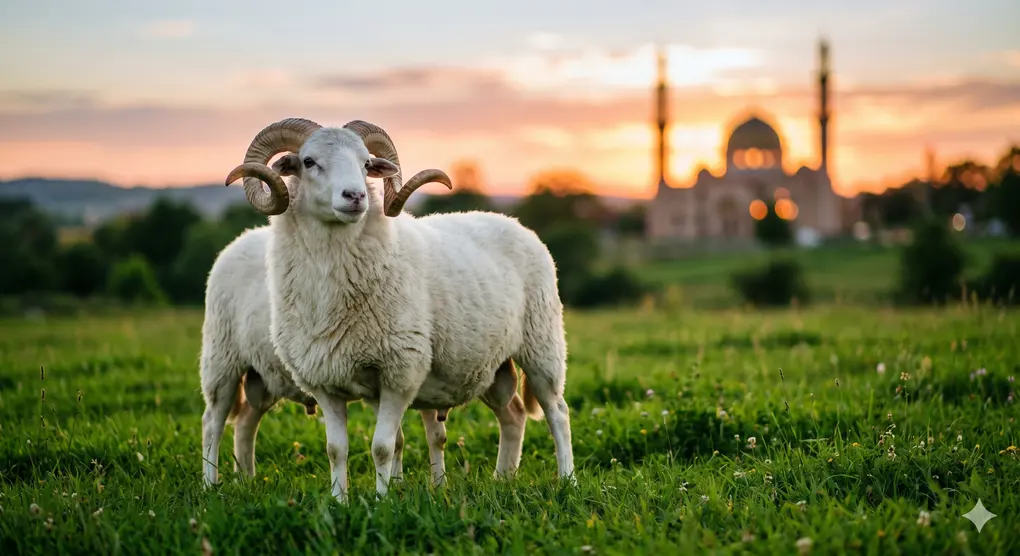
Qurban, jurisprudentially known as Udhiyyah in Arabic, stands as one of the most profound annual acts of worship in Islam, observed during Eid al-Adha and the days of Tashriq. Coinciding with the culmination of the history of Hajj rites, this practice transcends the mere physical slaughtering of livestock; it serves as a profound medium to draw closer to the Creator. To fully appreciate the spiritual and legal dimensions of this worship, it is essential for Muslims to understand both the intrinsic meaning and the primary ruling on Qurban in Islam.
The True Essence and Meaning of Qurban
In the context of Islamic jurisprudence (Shariah), Qurban refers to the specific slaughter of permissible livestock—such as camels, cows, goats, or sheep—performed with the explicit purpose of drawing closer to Allah during the days of Eid al-Adha. This ritual must be anchored by a sincere intention (niyyah) as an act of worship, seeking solely Divine pleasure and reward.
For the sacrifice to be considered valid and accepted, the designated animal must meet the specific conditions for the sacrificial animal, encompassing its species, age, and physical soundness.
Conceptually, Qurban is a definitive manifestation of a servant’s faith in Allah and absolute submission to His commands. It echoes the monumental trial of Prophet Ibrahim (peace be upon him), who was commanded to sacrifice his beloved son, Prophet Ismail (peace be upon him). Although Allah ultimately substituted Ismail with a ram, this historical event remains a timeless lesson on ultimate sincerity and absolute sacrifice.
The Foundational Ruling on Qurban in Islam
The implementation of the Qurban ritual is firmly rooted in the primary sources of Islamic law, namely the Holy Quran and the Prophetic Sunnah. These texts establish the fundamental ruling of Qurban, indicating that it is a highly sanctioned and emphasized act of worship within the Islamic tradition.
The Quran as the Primary Evidence
A central Quranic verse consistently referenced by scholars regarding the injunction of Qurban is found in Surah Al-Kawthar (108:2):
فَصَلِّ لِرَبِّكَ وَانْحَرْ
Translation: “So pray to your Lord and sacrifice [to Him alone].”
According to the authoritative Shafi’i text, Al-Fiqh Al-Manhaji, the foundational basis for this legislation is explicitly stated:
الأصل في مشروعيتها قوله عز وجل: {فَصَلِّ لِرَبِّكَ وَانْحَرْ} [الكوثر: ٢]، فإن المقصود بالنحر على أصح الأقوال نحر الضحايا
Explanation: This verse issues a direct command to perform the prayer and the sacrifice. Exegetes (Mufassirun), as noted in Al-Fiqh Al-Manhaji (Vol. 1, p. 231), interpret the imperative word wanhar (وَانْحَرْ) specifically as the command to slaughter the Qurban animal. This stands as the most authentic view (ashaḥḥ al-aqwāl) among scholars, proving that Qurban is not a mere cultural tradition, but a divine mandate.
The Prophetic Hadith as Clarification and Reinforcement
Beyond the Quranic imperative, the physical practice of Qurban is extensively detailed through the traditions (Hadith) of Prophet Muhammad ﷺ. A highly authentic narration recorded by Imam Al-Bukhari and Imam Muslim serves as foundational evidence:
وما رواه البخاري (٥٢٤٥) ومسلم (١٩٦٦): أن النبي – صلى الله عليه وسلم – ضحى بكبشين أملحين أقرنين، ذبحهما بيده، وسمى وكبر، ووضع رجله على صفاحهما.
Translation: “And what was narrated by Al-Bukhari (No. 5245) and Muslim (No. 1966): That the Prophet ﷺ sacrificed two horned, predominantly white rams (amlahain aqranain). He slaughtered them with his own hands, recited the name of Allah (Bismillah) and the Takbir (Allahu Akbar), and placed his foot on the sides of their necks.”
Explanation of Hadith Terminology


To precisely grasp the jurisprudential details of the Prophet’s practice, specific Arabic terms require academic clarification:
- Al-Amlah (الأملح): Refers to a ram whose wool is predominantly or entirely white. An animal with this specific coloration is deemed superior for the sacrifice.
- Al-Aqran (الأقرن): Describes a ram possessing two large, perfect horns. Physical completeness, including intact horns, is a preferred trait for a sacrificial animal.
- Shifahuhuma (صفاحهما): The plural of shafhah (صفحة), referring to the side of the neck. This illustrates the specific, humane method the Prophet ﷺ used to secure the animal by gently placing his foot upon its neck during the slaughter.
The Prophet’s personal execution of the sacrifice, coupled with the ruling of reciting the Basmalah during the act, solidifies this practice as an established Prophetic tradition (sunnah fi’liyyah).
The Profound Benefits and Wisdom of Qurban

Engaging in the Udhiyyah is not solely a matter of fulfilling a legalistic requirement; it carries multifaceted spiritual and social benefits. The core wisdom of Qurban includes:
- Elevating Spiritual Proximity to Allah: Qurban is a tangible expression of gratitude and absolute obedience, designed to elevate a believer’s piety (Taqwa).
- Fostering Social Empathy and Equity: The Islamic framework mandates specific guidelines for distributing the Qurban meat to the poor, neighbors, and relatives. This mitigates social inequality and ensures the underprivileged partake in the festive joy.
- Reviving the Prophetic Legacy: By offering a sacrifice, Muslims actively preserve and revive the established Sunnah of Prophet Muhammad ﷺ and the legacy of Prophet Ibrahim.
- Purification of the Soul: Sincere sacrifice serves as an expiation for minor sins, inviting divine mercy and immense rewards for the one who offers it purely for the sake of Allah.
Conclusion
Qurban is a noble and deeply significant act of worship in Islam, embodying the highest ideals of sacrifice, submission, and devotion to Allah. The ruling on Qurban in Islam is robustly supported by undeniable evidence from both the Holy Quran and the authentic Hadith. By comprehending its legal foundations and spiritual objectives, Muslims can execute this ritual with doctrinal certainty and absolute sincerity. Furthermore, the practice bridges the gap between individual piety and communal welfare, fostering a profound sense of solidarity during Eid al-Adha.
Frequently Asked Questions (FAQ)
Is the ruling on Qurban in Islam obligatory (Fard) or recommended (Sunnah)?
In the Shafi’i school of jurisprudence, Qurban is classified as Sunnah Muakkadah (a highly emphasized recommended act) for individuals who possess the financial means to do so. It is not an absolute obligation (Fard ‘Ayn), but intentionally abandoning it when one is wealthy is highly discouraged.
Can I give the monetary equivalent of an animal to the poor instead of slaughtering it?
No. According to classical Islamic jurisprudence, the specific act of shedding the blood of the designated livestock (Nahr/Dhabh) on the days of Eid and Tashriq is an independent, non-transferable act of worship. Giving charity (Sadaqah) is highly virtuous but cannot substitute the specific ritual of Qurban.
Who has the right to receive the meat from the Qurban?
The meat is traditionally divided into three parts: one-third is kept by the person offering the sacrifice and their family, one-third is gifted to friends and neighbors (even if they are wealthy), and the final one-third is distributed as charity to the poor and needy.
Reference
Mustafa al-Khin, Mustafa al-Bugha, and Ali al-Syarbaji, al-Fiqh al-Manhaji ‘alā Madhhab al-Imām al-Shāfi‘ī, Vol. 1 (Damascus: Dār al-Qalam, 1992), p. 231.


