
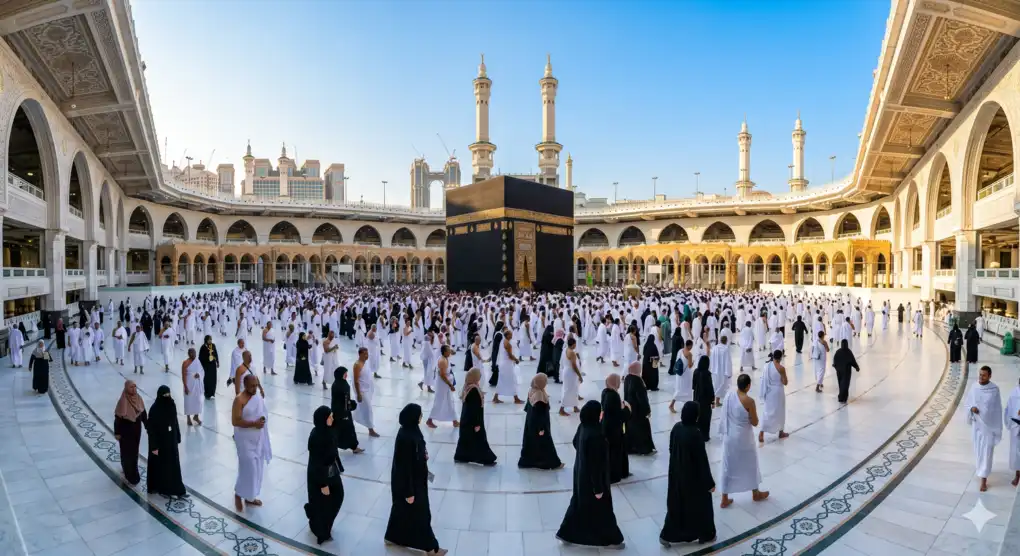
Performing the sacred pilgrimage to Mecca is a profound spiritual journey rooted in a believer’s unyielding faith in Allah. To ensure this devotion is accepted, one must strictly observe the pillars of Hajj and Umrah. In Islamic jurisprudence (fiqh), particularly within the Shafi’i school, these pillars (rukun) are the foundational, obligatory rituals that must be fulfilled; omitting any of them renders the pilgrimage invalid.
Before embarking on this journey, it is essential to grasp the fundamental meaning of Hajj and its mandatory components. This article provides a comprehensive academic overview of the pillars of Hajj and Umrah, grounded in authentic scriptural evidence and original Arabic texts, specifically referencing At-Tadhhīb fī Adillah Matn al-Ghāyah wa at-Taqrīb.
The Five Pillars of Hajj
In Shafi’i fiqh, the pillars of Hajj consist of five obligatory acts: Ihram, Wukuf (standing) at Arafah, Tawaf, Sa’i, and shaving or shortening the hair (Tahallul). These must be performed in a specific, sequential order (tertib).
1. Ihram and the Intention for Hajj
The first pillar is Ihram, which entails establishing the intention to enter the sacred state of pilgrimage while donning the prescribed garments. According to the legal definition of intention in Islamic law, it is an internal resolve made in the heart. When crossing the designated boundary (miqat), the pilgrim formulates the intention of Ihram for Hajj and Umrah, typically vocalized as, “Labbaik Allahumma hajjan” (I respond to Your call, O Allah, for Hajj).
The original text from At-Tadhhīb (p. 110) elaborates on this:
وهو عند الإطلاق: نية الدخول في حج أو عمرة، قال في المصباح المنير: أحرم الشخص نوى الدخول في حج أو عمرة، ومعناه: أدخل نفسه في شيء حرم عليه به ما كان حلالاً له. والمراد به هنا الدخول، لذكر المصنف النية معه.
Translation: “Ihram in a general sense is the intention to enter Hajj or Umrah. In Al-Misbah al-Munir, it is stated: ‘A person is in Ihram when they intend to enter Hajj or Umrah, meaning they subject themselves to a state that renders previously permissible actions forbidden for them.’ The intended meaning here is ‘entering the worship,’ as the author mentions the intention alongside it.”
Entering Ihram signifies the commencement of the pilgrimage, triggering specific prohibitions, such as cutting hair or using fragrances.
2. Wukuf (Standing) at Arafah
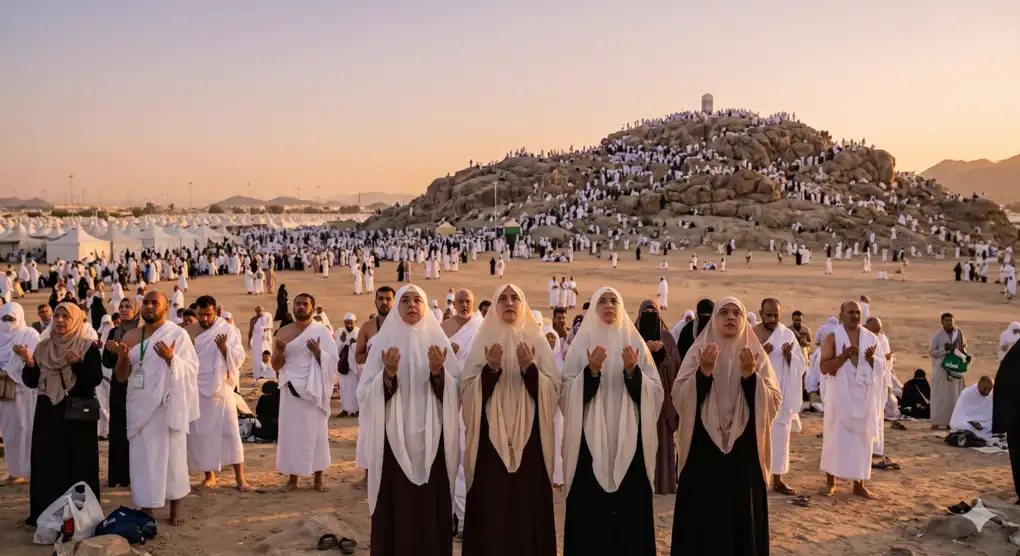
Wukuf at the plains of Arafah is the core pillar of Hajj, observed on the 9th of Dzulhijjah. Missing it unconditionally invalidates the Hajj.
At-Tadhhīb (p. 110) references the foundational Hadith:
لقوله صلى الله عليه وسلم: (الحَج عَرَفةُ، من جاء ليلة جَمعْ قبل طلوع الفجر فقد أدرك الحج). رواه الترمذي (٨٩٩) وأبو داود (١٩٤٩) وغيرهما. [جمع: مزدلفة، سميت بذلك لاجتماع الناس فيها].
Translation: “Based on the saying of the Prophet ﷺ: ‘Hajj is Arafah. Whoever arrives on the night of Jam’ (Muzdalifah) before the break of dawn has caught the Hajj.’ (Narrated by Tirmidhi 899, Abu Dawud 1949, and others). [Jam’: Muzdalifah, named as such due to the gathering of people there].”
3. Tawaf Ifadah (The Pilgrimage Circumambulation)




Following Arafah, pilgrims perform Tawaf Ifadah, which involves circumambulating the Kaaba seven times. This is typically done on the 10th of Dzulhijjah. Just as a Muslim observes specific etiquette before Qurbani during Eid al-Adha, they must also maintain strict physical and spiritual purity for Tawaf.
The scriptural basis in At-Tadhhīb (p. 110) is drawn from the Quran:
لقوله تعالى: ” وَليَطوَفُوا بالْبَيْت العَتيقِ ” / الحج: ٢٩/. والإجماع على أن المراد به طواف الإفاضَة. [اَلعتيقَ: المتقدم في الزمان]
Translation: “Based on the word of Allah SWT: ‘And let them circumambulate the Ancient House’ (QS. Al-Hajj: 29). And there is scholarly consensus (Ijma’) that the intended meaning here is Tawaf Ifadah. [Al-Atiq: That which precedes in time / Ancient].”
4. Sa’i Between Safa and Marwah
Sa’i involves walking back and forth seven times between the hillocks of Safa and Marwah. It is an inescapable pillar of the pilgrimage.
At-Tadhhīb (p. 110) states:
لخبر الدارقطني (١/ ٢٧٠) وغيره بسند صحيح: أنه صلى الله عليه وسلم: استقبل الناس في المسعى وقال: (اسْعُوا، فَإن اللهَ تعالى كَتب عَلَيكُم السعي). وروي البخاري (١٥٦٥) عن ابن عمر رضي الله عنه…
Translation: “Based on a conventionally sound narration from Ad-Daruquthni (1/270) and others: The Prophet ﷺ faced the people at the Mas’a (place of Sa’i) and said, ‘Perform Sa’i, for Allah the Exalted has prescribed Sa’i upon you.’ And Bukhari (1565) narrated from Ibn Umar (RA)…”
5. Halq or Taqshir (Shaving or Shortening the Hair)
The concluding pillar is Tahallul, marked by the shaving (Halq) or shortening (Taqshir) of the hair.
As noted in At-Tadhhīb (p. 110):
لبعض الرأس، أو التقصير. روى البخاري (١٦٩) ومسلم (١٣٠٥)… عن أنس بن مالك رضي الله عنه: أن رسول الله صلى الله عليه وسلم… قال للحلاق: (خُذ)… والحلق للرجال أفضل من التقصير…
Translation: “Shaving a portion of the head, or shortening the hair. Bukhari (169) and Muslim (1305) narrated… from Anas bin Malik (RA) that the Messenger of Allah ﷺ… said to the barber: ‘Take it.’ … And shaving is more superior for men than shortening.”
The Four Pillars of Umrah
While sharing many similarities, the minor pilgrimage (Umrah) has fewer pillars. The pillars of Umrah consist of four actions: Ihram, Tawaf, Sa’i, and Tahallul. Noticeably absent is the Wukuf at Arafah, which is exclusive to Hajj.
1. Ihram and the Intention for Umrah
The procedure remains identical to Hajj. The pilgrim establishes the intention specifically for Umrah, declaring, “Labbaik Allahumma umratan.” The definition of this state remains as explained in the Arabic text for Hajj above.
2. Tawaf for Umrah
The pilgrim circumambulates the Kaaba seven times. Unlike Tawaf Ifadah, the Tawaf for Umrah can be performed at any time of the year upon entering Mecca.
At-Tadhhīb quotes a Hadith demonstrating this obligation:
روى البخاري (١٥٦٨) عن جابر رضي الله عنه قال: فأمر النبي صلى الله عليه وسلم أصحابه أنْ يجعلوها عمرة، ويَطُوفُوا، ثم يُقَصرُوا وَيَحلوا.
Translation: “Bukhari (1568) narrated from Jabir (RA): The Prophet ﷺ commanded his companions to designate their ritual as Umrah, to perform Tawaf, then shorten their hair, and exit the state of Ihram (Tahallul).”
3. Sa’i Between Safa and Marwah
Immediately following the Tawaf of Umrah, the pilgrim proceeds to perform the seven circuits of Sa’i between Safa and Marwah, identical in execution to the Sa’i of Hajj.
4. Tahallul (Shaving or Shortening the Hair)
To exit the state of Ihram for Umrah, the pilgrim trims or shaves their hair. The jurisprudential ruling for women is explicitly clear in Shafi’i texts:
والحلق أو التقصير في أحد القولين (١)… والتقصير للنساء أفضل، ويكره لها الحلق لقوله صلى الله عليه وسلم: (ليسَ عَلى النِّسَاءِ الحلقُ، إنمَا عَلى النساءِ التقْصِير) رواه الترمذي (١٩٨٤، ١٩٨٥)…
Translation: “Shaving or shortening the hair according to one of the opinions… Shortening is preferred for women, and shaving is disliked (makruh) for them, based on the saying of the Prophet ﷺ: ‘Shaving is not obligatory upon women, but rather shortening is upon them.’ (Narrated by Tirmidhi 1984, 1985).”
The Importance of Sequential Order (Tertib)
In the Shafi’i school, adhering to the sequential order (tertib) is practically a functional pillar in itself.
- Order of Hajj: Ihram → Wukuf → Tawaf → Sa’i → Tahallul.
- Order of Umrah: Ihram → Tawaf → Sa’i → Tahallul.
Deviating from this required chronological sequence directly affects the validity of the worship.
Conclusion
Understanding the pillars of Hajj and Umrah is not merely an academic exercise; it is an absolute necessity for ensuring one’s devotion is ritually valid and acceptable to Allah. By faithfully executing the sequence—from the initial Ihram to the concluding Tahallul—pilgrims experience the profound wisdom of the Hajj pilgrimage. Grounding our worship in the established proofs of the Ahlus Sunnah wal Jama’ah scholars ensures a journey filled with spiritual clarity and divine blessing.
Frequently Asked Questions (FAQ)
What is the main difference between the pillars of Hajj and Umrah?
The primary difference is the Wukuf (standing) at Arafah. Hajj consists of five pillars (including Arafah), whereas Umrah only has four pillars and does not involve standing at Arafah.
What happens if I miss the Wukuf at Arafah during Hajj?
According to Shafi’i fiqh and prophetic consensus, Wukuf at Arafah is the core of Hajj. If a pilgrim fails to be present at Arafah during the designated time, their Hajj is entirely invalid and must be repeated in the future.
Is shaving the head mandatory for women during Tahallul?
No. According to authentic hadith traditions within Shafi’i jurisprudence, it is actually disliked (makruh) for women to shave their heads. Instead, women are only required to trim a small portion of their hair (Taqshir) to fulfill the pillar of Tahallul.
Reference Note:
The primary conceptual and textual references in this article are derived from Muṣṭafā Dīb al-Bughā, At-Tadhhīb fī Adillah Matn al-Ghāyah wa at-Taqrīb al-Mashhūr bi Matn Abī Shujāʿ fī al-Fiqh al-Shāfiʿī (Damascus–Beirut: Dār Ibn Kathīr, 1989), p. 110.


