
Cleanliness is an exceptionally vital component of Islamic teachings. A Muslim is explicitly commanded to maintain the purity of their physical body, clothing, and place of residence. One of the most fundamental aspects of cleanliness, according to Islamic law (Shari’ah), is thoroughly understanding the definition of Najis and the proper methods for removing it.
What exactly is Najis? In our daily lives, we frequently hear this term, but do we truly comprehend its precise meaning according to orthodox religious teachings? This article will guide you to a deeper understanding of the definition of Najis in Islam, its various classifications, and the correct jurisprudential methods for purification, primarily referencing the widely studied classical Shafi’i text, Fathul Qarib.
Understanding Najis means recognizing the substances or states that legally invalidate core acts of worship, such as the ritual prayer (Salah) and circumambulation (Tawaf). Avoiding and removing Najis is an absolute prerequisite for the validity of numerous Islamic devotions. Therefore, this knowledge is a non-negotiable foundation for every practicing Muslim who seeks to understand the broader concept of Thaharah (purification).
Defining Najis: Linguistic and Shari’ah Perspectives
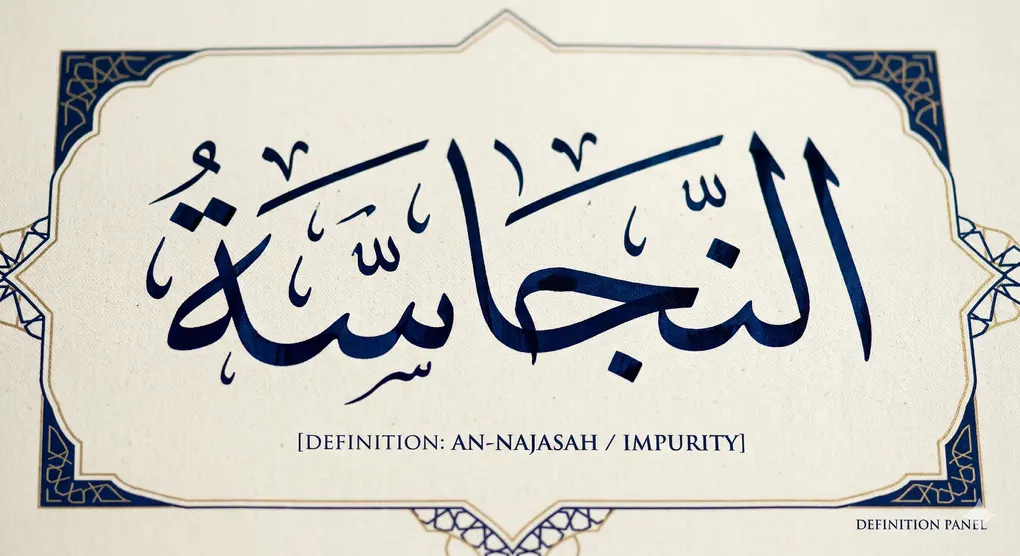
To grasp the complete concept of Najis, we must examine its definition from two distinct perspectives: the linguistic root and the specific Shari’ah terminology.
The Linguistic Meaning of Najis
Linguistically, the Arabic word Najis refers to anything considered dirty, filthy, or repulsive (asy-syai’ al-mustaqdzar). This definition is inherently broad and encompasses anything that human custom or nature finds disgusting, even if Islamic law does not legally classify it as ritually impure.
The Shari’ah Definition of Najis
The legal definition of Najis is far more specific and carries direct consequences for the validity of worship. In the classical text Fathul Qarib, the definition of Najis in Islam is meticulously detailed as follows:
فصل: في بيان النجاسات وإزالتها. وهذا الفصل مذكور في بعض النسخ قبيل كتاب الصلاة. والنجاسة لغةً الشيء المستقذر، وشرعًا كل عين حرُم تناولها على الإطلاق حالة الاختيار مع سهولة التمييز، لا لحرمتها ولا لاستقذارها ولا لضررها في بدن أو عقل.
Translation: “[Chapter] Explaining impurities (Najasat) and their removal. This chapter, in some manuscripts, is mentioned just before the Book of Prayer. Najasah linguistically is a repulsive thing. Legally (in Shari’ah), it is every specific substance (‘ain) whose usage is absolutely prohibited in a state of choice (normalcy), while being easy to distinguish/separate. [This prohibition is] not due to its nobility, nor its repulsiveness, nor its harm to the body or intellect.”
Based on the precise wording of Fathul Qarib, the legal definition of Najis is any physical substance (‘ain) that:
- Is absolutely prohibited to be used or consumed (whether in small or large quantities).
- The prohibition applies in normal, non-emergency situations (ikhtiyar).
- It is relatively easy to separate or distinguish from other pure things.
- Its prohibition is not because:
- It is noble or sacred (like a human corpse, which is prohibited to consume but is pure).
- It is merely repulsive (like mucus, saliva, or semen, which are disgusting to some but legally pure).
- It is harmful or toxic to the body or mind (like poisonous stones or deadly plants, which are forbidden to consume but are physically pure).
This explanation establishes a very clear boundary. Not everything considered “dirty” by human standards is Najis under Shari’ah. For instance, sweat or mucus, while perhaps unpleasant, are not categorized as types of impurities in Islam.
The Classifications of Najis
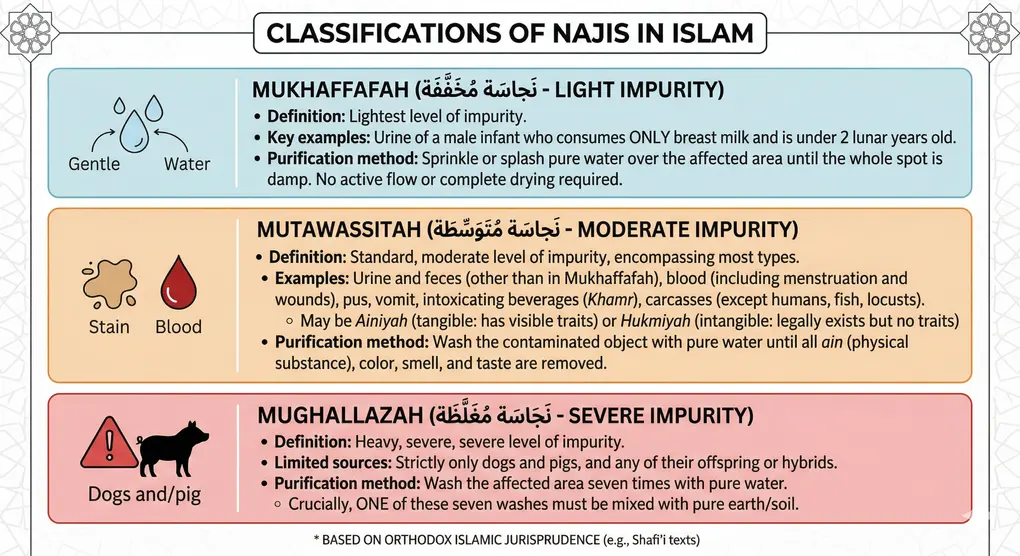
In Islamic jurisprudence, specifically within the Shafi’i school, Najis is categorized into three main types based on the severity of the impurity and the specific method required to cleanse it. This classification greatly simplifies the practice of purification.
1. Light Impurity (Najis Mukhaffafah)



This category represents the lightest form of impurity. The primary example is the urine of a male infant who is exclusively breastfed and has not yet reached two lunar years of age. Understanding how to clean Najis Mukhaffafah is quite simple: it is sufficient to sprinkle or spray pure water over the affected area until it is evenly dampened, even if the water does not actively flow off the surface.
2. Moderate Impurity (Najis Mutawassitah)
This is the standard, moderate category encompassing the vast majority of impurities. Common examples include:
- Urine (other than the specific male infant mentioned above) and human/animal feces.
- Flowing blood and pus.
- The carcasses of animals (excluding fish, locusts, and human corpses).
- Intoxicating beverages (Khamr).
The method to cleanse Najis Mutawassitah is to wash the contaminated object or area with pure water until the physical substance (‘ain), taste, color, and smell of the impurity are completely eradicated.
3. Severe Impurity (Najis Mughallazah)
This is the heaviest category of impurity. It strictly encompasses only two sources: dogs and pigs, including any offspring born from either of them. The purification process for Najis Mughallazah is rigorous: the affected area must be washed seven times with pure water, and one of those seven washes must be mixed with pure earth/soil.
Distinguishing Between Tangible (‘Ainiyah) and Intangible (Hukmiyah) Najis
Beyond the severity, Najis (specifically within the moderate category) is also evaluated based on its physical presence. This creates the distinction between ‘Ainiyah and Hukmiyah impurities.
Tangible Impurity (Najis ‘Ainiyah)
Najis ‘Ainiyah refers to an impurity that still retains its physical substance, color, smell, or taste, which can be perceived by the senses. An example is a visible drop of thick blood on a garment. To purify it, the actual substance, color, smell, and taste must be completely removed through washing.
Intangible Impurity (Najis Hukmiyah)
Najis Hukmiyah is an impurity that legally exists on a surface, but its physical substance, color, smell, and taste are no longer detectable. For example, urine that has completely dried on the floor leaving no visible trace or odor. Even though the physical traits have vanished, the area remains legally impure. Cleansing Najis Hukmiyah is generally easier; it is sufficient to flow pure water over the affected area just once.
Common Everyday Examples of Najis
Recognizing common examples of Najis is crucial for knowing when purification is mandated. Some prevalent examples include:
- Urine and feces (from humans or animals, whether the animal’s meat is lawful or unlawful to consume).
- Blood, specifically menstrual blood (Haid), postpartum blood (Nifas), or blood flowing from a wound.
- Animal carcasses (with the exceptions noted by Shari’ah).
- The saliva or moisture from dogs and pigs.
- Alcoholic, intoxicating drinks.
Proper Methods for Purifying Najis
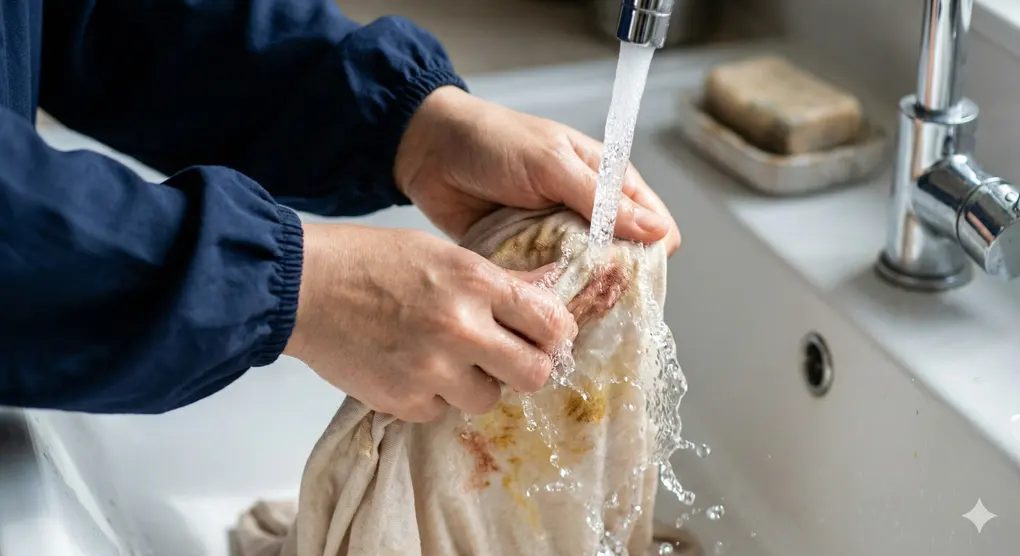
Generally, the universal method for removing Najis is utilizing pure, absolute water (Ma’ Mutlaq) until all traits of the impurity (substance, color, smell, taste) are eliminated. However, as detailed above, the exact procedure varies based on whether the impurity is light, moderate, or severe.
It is imperative to use the correct type of water. You can learn more about the valid types of water in Islam and specifically the essence of absolute water to ensure your purification is legally sound.
Why is Avoiding Najis Crucial for Worship?
It is vital to remember that bearing Najis on your body, clothing, or prayer space directly invalidates the ritual prayer. A person’s prayer is legally void if they carry an unforgiven impurity. Therefore, comprehending the true definition of prayer inherently requires understanding purity.
Beyond the prayer, other acts like Tawaf also demand absolute purity from Najis. Consequently, avoiding and meticulously cleansing impurities is a foundational prerequisite for the validity of worship. This underscores how seriously Islam approaches both spiritual and physical hygiene, reflecting the core tenets of understanding Islam.
Conclusion
Fully comprehending the definition of Najis, its various classifications, and the precise methods for its removal is foundational knowledge obligatory for every Muslim. Najis is not merely physical dirt; it carries a highly specific legal definition in Shari’ah that directly impacts the validity of our most sacred acts of worship. By understanding the distinctions between light, moderate, and severe impurities, as well as tangible and intangible forms, we can accurately execute the divine commandments regarding purification, ensuring our devotion is accepted by Allah (SWT).
Frequently Asked Questions (FAQ)
Is human sweat or saliva considered Najis?
No. While human sweat, saliva, or mucus might be considered physically unclean or repulsive by human standards, they do not meet the legal Shari’ah definition of Najis and are legally pure.
What happens if I pray and later realize there was Najis on my clothes?
According to the Shafi’i school, purity from Najis is a strict condition for prayer. If you realize after the prayer that you had Najis on your clothes, the prayer is considered invalid and must be repeated.
Does touching a dog make my wudu invalid?
Touching a dog does not break your Wudu. However, if you touch a dog while either your hand or the dog is wet, that specific area becomes contaminated with Najis Mughallazah (severe impurity). You must wash that specific area seven times (once with earth), but you do not need to repeat your entire Wudu unless you committed one of the specific acts that invalidate wudu.
Reference
Muḥammad ibn Qāsim al-Ghazzī, Fatḥ al-Qarīb al-Mujīb fī Sharḥ Alfāẓ al-Taqrīb = al-Qawl al-Mukhtār fī Sharḥ Ghāyat al-Ikhtiṣār, ed. Bassām ʿAbd al-Wahhāb al-Jābī, 1st ed., vol. 1 (Beirut: al-Jafān wa-al-Jābī, Dār Ibn Ḥazm, 2005), 56.


