How to Choose an Asmaul Husna for Dhikr According to Your Inner State (Jalal and Jamal)

Silhouette of a person doing dhikr with prayer beads representing choosing Asmaul Husna based on soul condition

Why Dhikr with Asmaul Husna Is Not the Same for Everyone Many people ask the same thing: out of the 99 names of Allah, which one should I recite? The short answer is that no single name suits everyone. Shaykh Ahmad Zarruq gives one simple guideline, and it is the backbone of this article. For … Read more
Biography of Shaykh Ahmad Zarruq al-Fasi (846–899 AH): The Scholar Who Wrote Sharh Asma’ Allah al-Husna

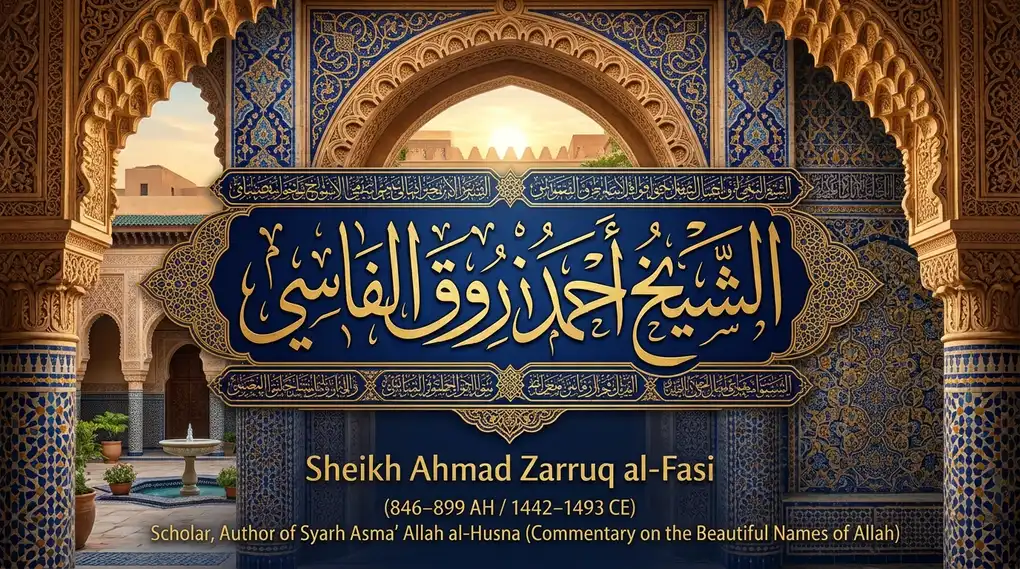
Arabic calligraphy illustration of Sheikh Ahmad Zarruq al-Fasi's name with a blue and gold Moroccan architectural background.

Who Is Shaykh Ahmad Zarruq al-Fasi? Shaykh Ahmad Zarruq was a Moroccan scholar of the ninth Islamic century who wrote a commentary on the Asmaul Husna in the book Sharh Asma’ Allah al-Husna. He was a Maliki jurist, a hadith scholar, and a figure of Sufism. His name is also written Ahmad Zarruq al-Fasi, after … Read more

Asmaul Husna: The Meaning of Allah’s 99 Names, Evidence, and How to Understand Them

Glowing gold Asmaul Husna calligraphy with the title The Meanings of the 99 Names of Allah over an Islamic green background.

What Is Asmaul Husna? Definition and the Meaning of “Al-Husna” Many Muslims memorize Asmaul Husna as children, usually through a song or a recitation after prayer. But ask “what does Asmaul Husna actually mean?” and the answer often stops at “the 99 names of Allah”. Behind those two words lies a long and beautiful discussion … Read more

Is Posting Acts of Worship on Social Media Considered Riya? Here is the Answer

Neatly dressed Muslim solemnly reading the Quran without holding a phone

A Muslim posts a status: “Alhamdulillah, just finished Tahajjud prayer. Hope to remain istiqamah.” In the comments section, praise flows. In another corner, a Muslimah uploads a photo of a suhoor dining table complete with a morning prayer caption. Is this riya? Or dawah? Or something in between? This is not a new question. However, … Read more

What is Riya: Meaning, Types, Examples, and Its Dangers in Islam

An illustration of a Muslim woman putting money into a charity box with two sides showing the difference between sincere intention for Allah and riya seeking social media likes.

A servant might appear steadfast in establishing prayer with lengthy recitations, generously giving large amounts of charity, and diligently attending religious gatherings every single day. However, this entire accumulation of deeds can instantly shatter and hold absolutely no weight in the sight of Allah ﷻ. This destruction occurs not because the individual violated the pillars … Read more

The Differences Between Riya, Sum’ah, and Ujub: Identify the 3 Destroyers of Good Deeds

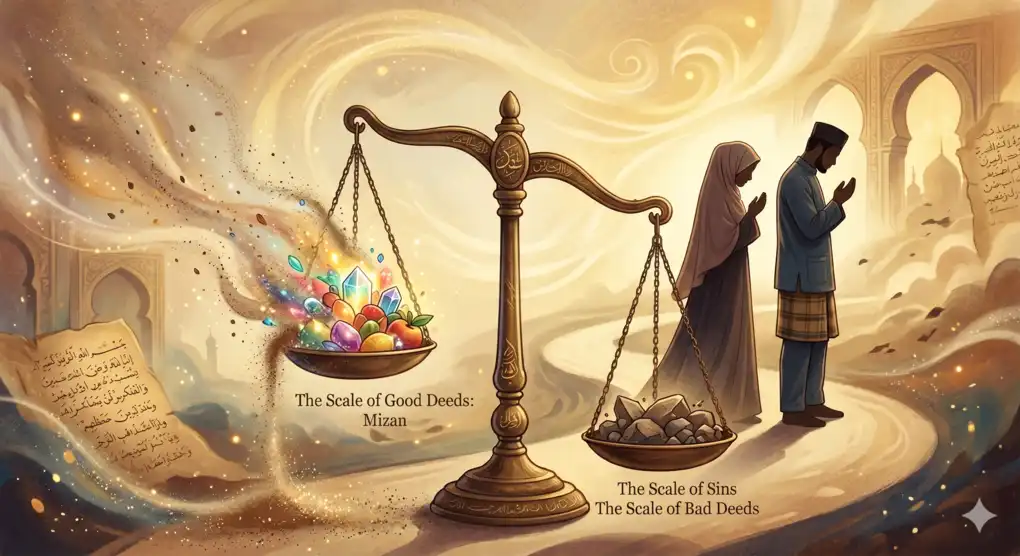
A conceptual image symbolizing the danger of spiritual diseases that destroy rewards, showing the scales of the Hereafter and flying dust.

A paradox often entraps the spiritual life of a believer: a person might appear exceptionally disciplined in their worship—performing prayers at the earliest time, regularly giving charity, and never missing religious gatherings—yet ironically, the record of their deeds risks turning into worthless dust on the scales of the Hereafter. The ruin of these deeds occurs … Read more

What is Ikhlas? Meaning, Levels, and How to Achieve It

A minimalist illustration of a water drop falling onto a calm surface, symbolizing the essence of pure intention and sincerity (ikhlas) in worshiping Allah based on Sufism principles.

Within the framework of Islam, righteous deeds hold a central position. However, mere physical actions lack weight in the sight of Allah ﷻ if they are devoid of their primary essence. The soul of all acts of worship is ikhlas (sincerity). Without it, regardless of the volume of deeds a human being performs, their value … Read more

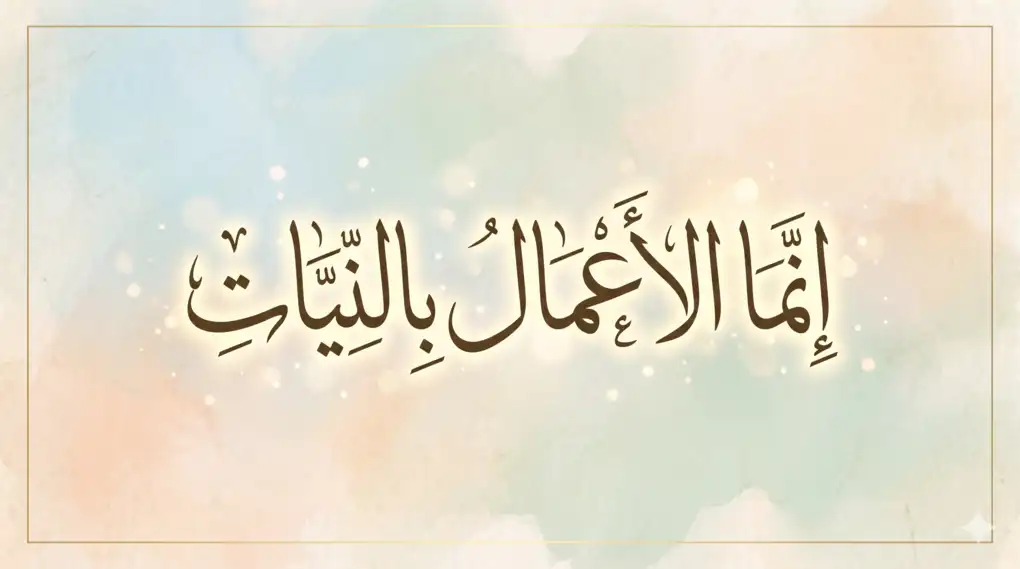
Innamal A’malu Binniyat: Meaning, Arabic Text, and Its Profound Significance

Innamal A'malu Binniyat Arabic calligraphy with an elegant and glowing pastel background.

The foundation of religious life in Islam rests upon the awareness of the heart before any limb moves to act. Within the Islamic scholarly tradition, the hadith of intention occupies a central position, even regarded by classical scholars as one-third of the entire religion. Understanding what Innamal A’malu Binniyat truly means is not merely a … Read more

Niyyah and Ikhlas in Islam: A Complete Guide from Hadith to the Fiqh of Worship

Arabic calligraphy of innamal a'malu binniyat symbolizing niyyah and ikhlas in Islam

Understanding niyyah and ikhlas in Islam is the gateway to authentic worship. Intention (niyyah) and sincerity (ikhlas) form the twin pillars upon which the acceptance of every believer’s deed rests. For this reason, Imam an-Nawawi raḥimahullāh opens his celebrated Riyāḍ al-Ṣāliḥīn with the chapter titled Bāb al-Ikhlāṣ wa Iḥḍār al-Niyyah fī Jamīʿ al-Aʿmāl wa al-Aqwāl … Read more

The Meaning of Thaharah: Significance, Rulings, and Its Importance in Islam

A modestly dressed Muslim woman in a proper hijab sitting reverently, holding a Quran in a bright mosque.

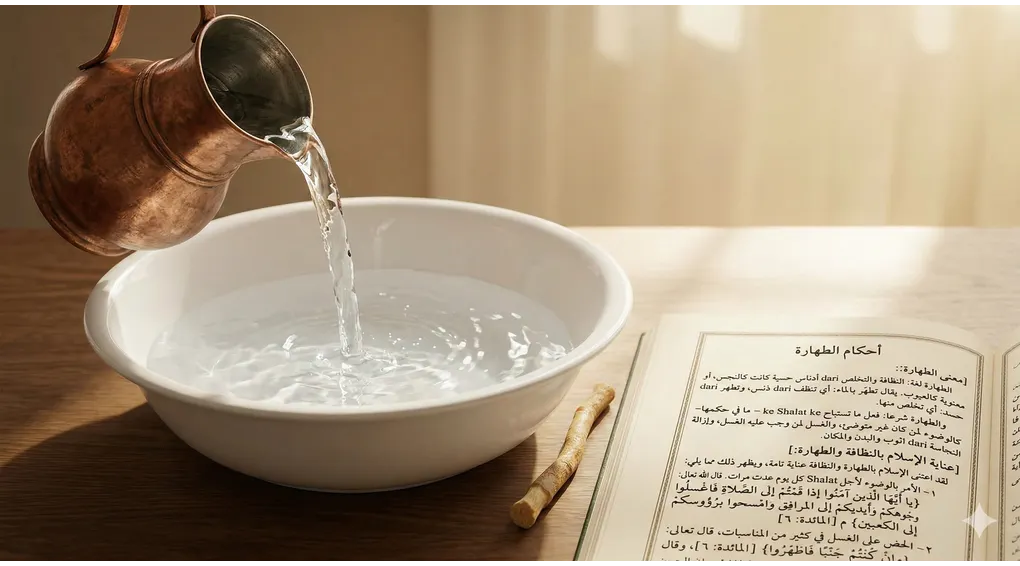
Thaharah is a fundamental concept in Islamic teachings that is inextricably linked to cleanliness and purity. For Muslims, understanding the meaning of thaharah goes far beyond merely maintaining physical cleanliness; it comprehensively encompasses the purity of the heart and soul. Before delving deeper, it is essential to realize that this teaching is an inseparable part … Read more