
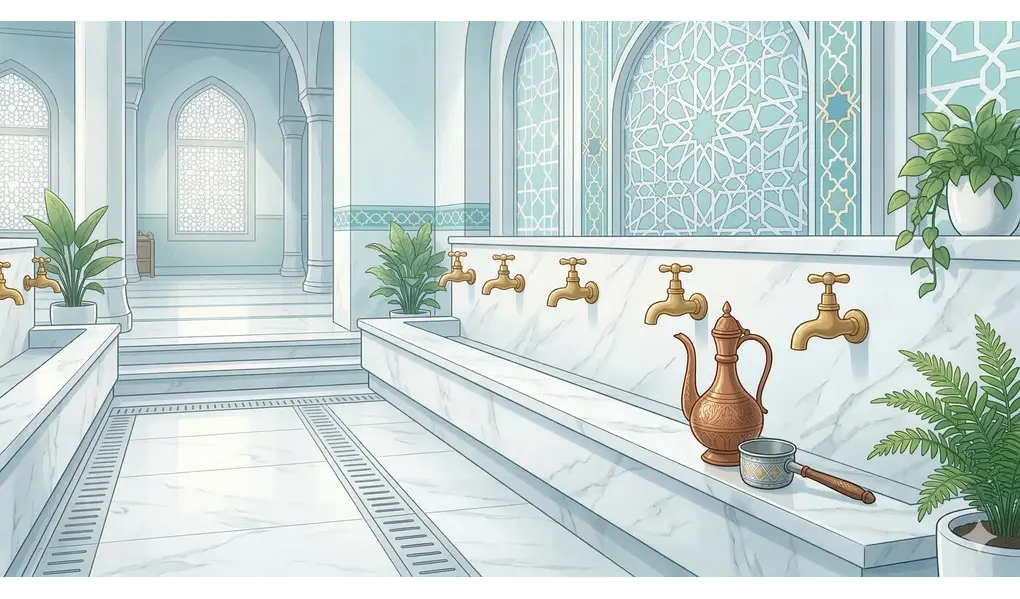
Wudu (ablution) is a fundamental prerequisite for performing daily prayers in Islam. As a vital part of purification, wudu is not merely a physical ritual but a spiritual reflection of a Muslim’s devotion to the teachings of Prophet Muhammad ﷺ. By understanding the linguistic and technical meaning of wudu, we recognize that achieving perfection in worship requires more than just fulfilling the obligatory components. A Muslim must also avoid the makruh acts in wudu to preserve the sanctity of their worship. What exactly are these disliked actions, and why should we avoid them? This article explores these practices comprehensively through the lens of Shafi’i scholarship.
What Does Makruh Mean in Wudu?
In Islamic jurisprudence, a makruh (disliked) act refers to an action that contradicts the prophetic tradition (Sunnah) but does not directly invalidate the ritual. Avoiding makruh acts helps maintain deep spiritual concentration (khushu’) and excellence in worship. According to Shafi’i scholars, as elucidated in Al-Minhaj al-Qawim by Ibn Hajar al-Haytami, several behaviors render the ablution disliked.
Here is the original text establishing these rulings:
فصل: في مكروهات الوضوء “يكره الإسراف في الصب فيه” ولو على الشط ومحله في غير الموقوف وإلا فهو حرام، ويكره ترك تخليل اللحية الكثة لغير المحرم “وتخليل اللحية الكثة للمحرم” لئلا يتساقط منها شعر وهذا ضعيف والمعتمد أنه يسن تخليلها حتى للمحرم لكن برفق “و” يكره “الزيادة على الثلاث” المحققة بنية الوضوء والنقص عنها؛ لأنه صلى الله عليه وسلم توضأ ثلاثًا ثلاثًا ثم قال: “هكذا الوضوء فمن زاد على هذا الوضوء أو نقص فقد أساء وظلم” ١ أي أخطأ طريق السنة في الأمرين، وقد يطلق الظلم على غير المحرم إذ هو وضع الشيء في غير محله. “و” تكره “الاستعانة بمن يغسل أعضاءه إلا لعذر” كما مر وبالصب لغير عذر كما مر وترك التيامن، ويظهر أن كل سنة اختلف في وجوبها يكره تركها، وبه صرح الإمام في غسل الجمعة، بل وقياس قولهم يكره ترك التيامن وتخليل اللحية الكثة أن كل سنة تأكد طلبها يكره تركها1.
This excerpt serves as the primary foundation for understanding the etiquette of utilizing purification tools and water. Below is the detailed breakdown of these rulings.
Detailed List of Makruh Acts in Wudu
1. Wasting Water (Israf)
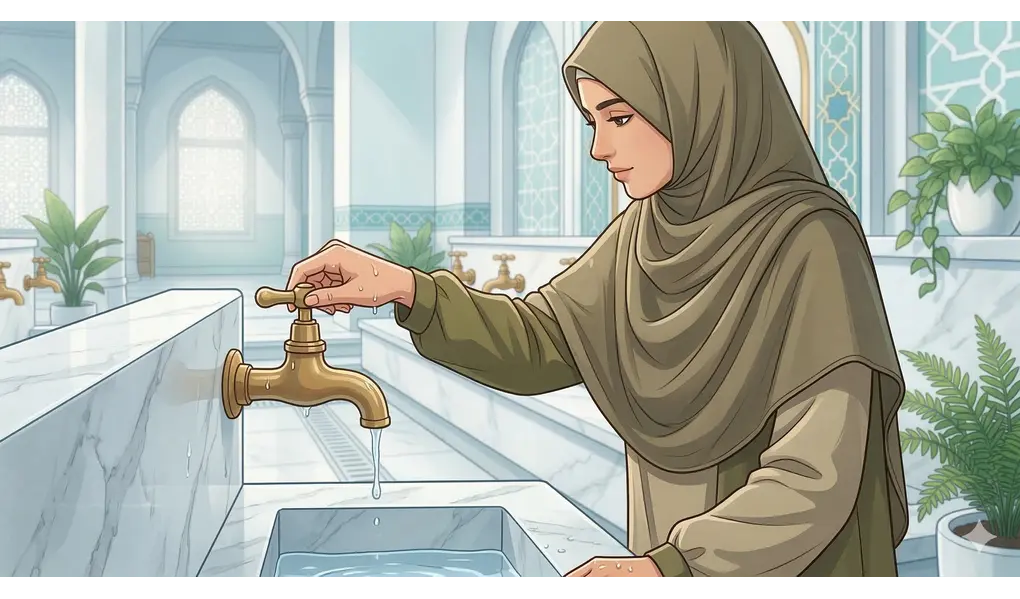
Wasting water during ablution is highly discouraged, even if you are performing it on the banks of a flowing river. The text of Al-Minhaj al-Qawim firmly states that excessive use of water becomes strictly prohibited (haram) if the water is endowed (waqf), such as the facilities provided in a mosque. Understanding the types of water in Islam emphasizes environmental conservation. Prophet Muhammad ﷺ exemplified efficiency by using minimal water, approximately one mudd (around 0.6 liters).
2. Speaking During Ablution
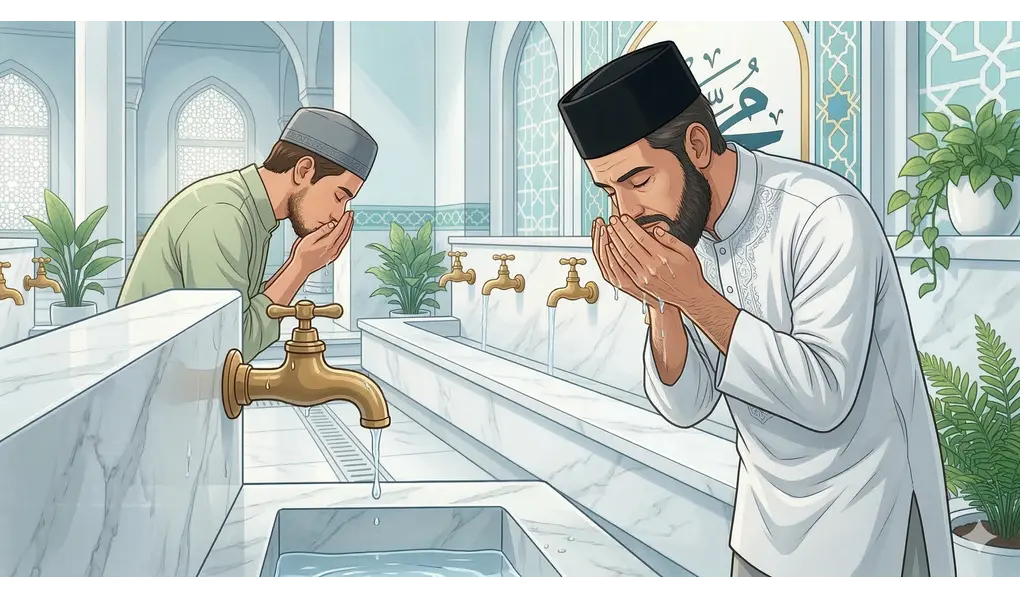
Is it permissible to converse while washing? According to the Shafi’i school, speaking during wudu is a makruh act because it disrupts your spiritual focus. While it does not nullify your ablution, it contradicts the proper etiquette of thaharah. The ruling is relaxed only if speaking serves a beneficial purpose, such as correcting someone else’s religious mistakes.
3. Washing More or Less Than Three Times


The Sunnah dictates washing each obligatory body part exactly three times. Fulfilling the validity conditions of wudu requires precision. Al-Minhaj al-Qawim cites a Hadith stating that whoever adds to or subtracts from this exact number has committed a misdeed and an injustice, meaning they have deviated from the prophetic path. Therefore, washing four times or deliberately washing only twice without a valid excuse is disliked.
4. Performing Wudu in Impure Places
Performing ablution in a restroom or a space designated for impurities is makruh2, especially if a cleaner alternative is available. Guarding the purity of your ablution area honors the ritual. Nevertheless, if no other options exist, ablution in a bathroom remains valid as long as the water utilized remains pure and purifying.
5. Abandoning the Sunnah of Wudu
Neglecting recommended acts is actively disliked in the Shafi’i madhhab. This includes skipping the recitation of the Basmalah or failing to start with the right side of the body (Tayamun). Furthermore, combing through a thick beard with wet fingers (Takhil) is a confirmed Sunnah; neglecting it without a valid reason is categorized as makruh.
6. Wiping the Neck
Wiping the neck during ablution lacks a strong foundation in the authentic Sunnah. In Shafi’i Fiqh, this specific action is deemed a makruh act in wudu. Muslims must concentrate entirely on the obligatory and established recommended body parts, such as the face, hands, head, and feet.
7. Drying the Ablution Water
Wiping off the remaining water with a towel is generally disliked because the residual drops are believed to carry spiritual blessings. Allowing the water to dry naturally on the skin is the preferred etiquette to honor the physical and spiritual purification process3.
Practical Tips to Perfect Your Thaharah
To elevate your worship and avoid these disliked actions, consider the following practical steps:
- Use Water Sparingly: Emulate Prophet Muhammad ﷺ by minimizing water consumption.
- Maintain Silence: Stay quiet and internally focused to prepare your heart for prayer.
- Stick to the Count: Wash every required body part exactly three times.
- Choose Clean Environments: Avoid impure spaces whenever possible.
- Fulfill the Sunnah: Always prioritize the right side and recite the appropriate dua (supplications).
Conclusion
Understanding and avoiding the makruh acts in wudu—such as wasting water, engaging in casual conversation, or altering the prescribed number of washes—is essential for any Muslim seeking to refine their daily prayers. By adhering to the precise guidelines of the Shafi’i madhhab, we align our physical purification with profound spiritual humility. Let us implement the correct methods of ablution so that our acts of worship are accepted by Allah SWT.
Frequently Asked Questions (FAQ)
Does speaking during ablution invalidate my wudu?
No, speaking does not invalidate your ablution. However, it is considered a makruh act in wudu because it diminishes your spiritual focus and contradicts the optimal etiquette of thaharah.
Is it haram or makruh to use too much water?
It is generally makruh. However, if you are using endowed water (waqf) provided by a mosque or public trust, excessive usage crosses the line and becomes haram (prohibited) according to Shafi’i scholars.
Why is drying the water off my face and arms disliked?
In the Shafi’i school, the residual water drops from ablution are viewed as carrying spiritual blessings and washing away minor sins. Therefore, letting the water dry naturally is highly recommended to preserve these blessings.
References
- Aḥmad ibn Muḥammad ibn ʿAlī ibn Ḥajar al-Haytamī, al-Minhāj al-Qawīm, 1st ed. (Beirut: Dār al-Kutub al-ʿIlmiyyah, 2000), 33. ↩︎
- Muhammad Amin al-Kurdi, Tanwir al-Qulub (Beirut, Darul Kutub al-Ilmiyah: t.t]) , 146 ↩︎
- Sulaymān ibn Muḥammad al-Bujayrimī, Tuḥfat al-Ḥabīb ʿalā Sharḥ al-Khaṭīb = Ḥāshiyat al-Bujayrimī ʿalā al-Khaṭīb, vol. 1 (Beirut: Dār al-Fikr, 1995), 174. ↩︎


