

Faith (Iman) is the absolute core of Islamic teachings. It is not merely a verbal declaration but a profound conviction residing within the heart, fundamentally shaping every aspect of a Muslim’s life. However, do we fully comprehend the pillars of faith? These are the structural pillars that form the theological bedrock for every individual who testifies to the Shahadah.
Understanding the definition and the true essence of the six pillars of faith in Islam is crucial for establishing a solid and orthodox creed (Aqidah). A common question that arises among Muslims is, “What exactly are the pillars of faith, and how many are there?” This article will thoroughly explore these questions, detailing the essential pillars that every Muslim is obligated to believe in, drawing upon the primary sources of Islam—specifically the Hadith of Prophet Muhammad (ﷺ)—and the authoritative explanations of classical scholars from the Ahlus Sunnah wal Jama’ah tradition.
What Are the Pillars of Faith? The Linguistic and Islamic Definition

Linguistically, the Arabic word “Iman” originates from the root ‘أمن’ (amana), which generally means to believe, affirm, or feel secure. Imam Ibn Hajar al-Haytami, a prominent Shafi’i jurist, explains in his renowned work al-Fath al-Mubin (a commentary on Imam al-Nawawi’s Forty Hadith) that the word ‘آمنَ’ (aamana) linguistically carries the absolute meaning of at-tashdiq (absolute affirmation or verification). The hamzah at the beginning of the word signifies making others feel secure from one’s denial or making oneself secure from the denial of others. It also encompasses the meanings of acknowledging (i’tarafa), affirming (aqarra), submitting (adz’ana), and accepting (qabila).
However, within the context of Islamic jurisprudence (Shari’ah) and mainstream orthodox theology (specifically the Ash’ari and Maturidi schools), the definition of faith holds a more specific and profound meaning. According to the majority of scholars, Iman in Shari’ah is fundamentally at-tashdiq bil qalbi faqat—meaning affirmation with the heart alone. This refers to the firm acceptance, conviction, and submission of the heart to everything that is definitively known (ma’lum min ad-dharuri bid-din) as the teachings brought by Prophet Muhammad (ﷺ).
Imam Ibn Hajar further elaborates that the object of this belief is divided into two distinct levels:
- General Knowledge (Ijmal): Matters known globally, such as the existence of angels, divine books, and messengers in general, require a firm but broad belief.
- Detailed Knowledge (Tafshil): Matters known specifically and transmitted definitively (mutawatir), such as the Angel Jibril, Prophet Musa, or the Gospel (Injil), must be believed in specifically by name. Denying these specifically established elements can lead one out of the fold of faith.
While the heart’s affirmation is the primary essence of faith according to this orthodox view, scholars elaborate on the status of verbal declaration and physical actions. Heterodox groups historically viewed all three components (heart, tongue, and limbs) as absolute pillars, where omitting a physical act negates faith entirely. In contrast, the scholars of Hadith (Muhaddithin) and mainstream Sunni orthodoxy maintain that verbal confession and physical deeds are the perfections or branches of faith, rather than its core foundational pillars. This view is supported by authentic narrations detailing the branches of faith (shu’ab al-iman).
Therefore, the meaning of the pillars of faith refers to those foundational beliefs required in the heart, which subsequently manifest in verbal acknowledgment and righteous deeds.
How Many Pillars of Faith Are There? Understanding the Agreed-Upon Foundations
The question regarding the exact number of these theological pillars is definitively answered in one of the most fundamental narrations in Islam, known as the Hadith of Jibril. In this profound event, the Angel Jibril, appearing in the form of a man, questioned Prophet Muhammad (ﷺ) about the core principles of the religion, including Iman.
The Prophet’s (ﷺ) response unequivocally established the foundation of Islamic belief. He explicitly listed six core elements. Thus, a person’s faith is not considered valid unless they hold a firm, unwavering conviction in all six of these specific pillars.
The Sequence of the Six Pillars of Faith in Islam
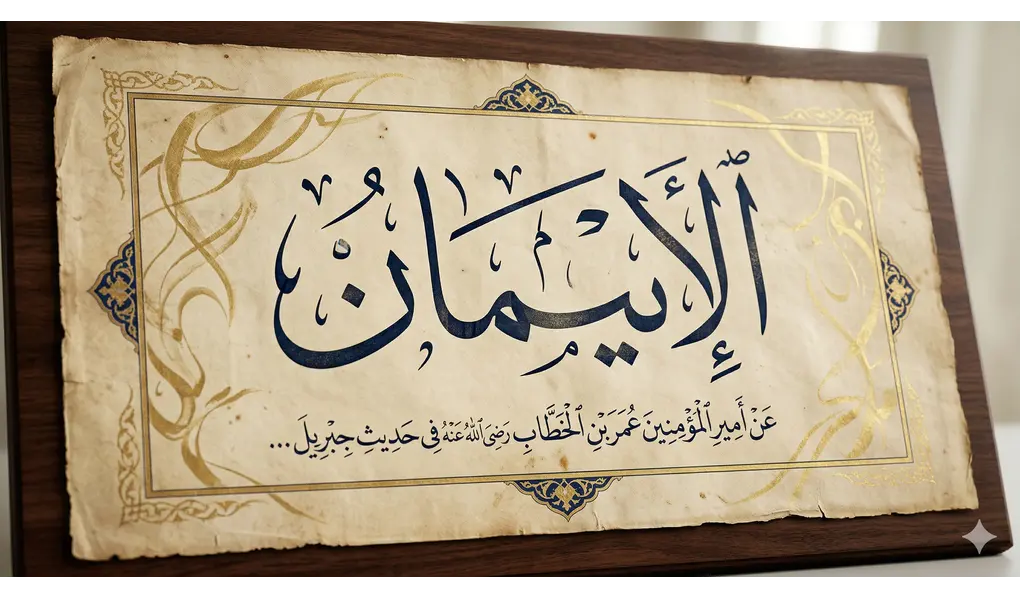
Based on the Hadith of Jibril, the sequential order and brief explanations of each of the six pillars of faith in Islam are as follows:
1. Belief in Allah (SWT)
The first and most paramount pillar is the belief in Allah. This signifies an absolute conviction in the existence of Allah SWT as the sole Creator, Sustainer, Sovereign, and Administrator of the universe. It encompasses affirming His absolute Oneness (Tawhid) and the perfection of His majestic attributes, free from any deficiencies or partners.
2. Belief in the Angels of Allah
The second pillar is the belief in angels. This requires believing in the existence of angels as noble, unseen creations of Allah. Created from light and devoid of carnal desires, they are perfectly obedient in executing His divine commands. They possess specific duties: Jibril delivers revelation, Mikail distributes sustenance, Israfil is tasked with blowing the trumpet, Izrail takes souls, Raqib and Atid record deeds, and Munkar and Nakir question the deceased in the grave. As Imam Ibn Hajar clarified, it is obligatory to believe in them generally, and specifically in those whose names are explicitly mentioned in authentic texts.
3. Belief in the Divine Books




The third pillar is the belief in the Divine Books. Muslims must believe that Allah revealed sacred scriptures to His chosen messengers as guidance for humanity. The primary scriptures include the Torah (Tawrat) revealed to Prophet Musa, the Psalms (Zabur) to Prophet Dawud, the Gospel (Injil) to Prophet Isa, and the Holy Quran to Prophet Muhammad (ﷺ). Orthodox theology dictates that while previous scriptures underwent human alterations over time, the Quran is the final, uncorrupted revelation perfectly preserved by Allah for all mankind until the end of time.
4. Belief in the Messengers of Allah
The fourth foundational article is the belief in the messengers of Allah. This entails the conviction that Allah sent chosen human beings as prophets and messengers to convey His divine message, guide humanity toward the truth, and deliver warnings. We must believe that all messengers were truthful, infallible in their delivery of the message, and taught the singular creed of Tawhid. It is obligatory to believe in them globally, and specifically in those mentioned in the texts, concluding with Prophet Muhammad (ﷺ), the absolute final seal of the prophets.
5. Belief in the Last Day (Day of Judgment)
The fifth pillar is the belief in the Last Day. This is the absolute certainty in life after death, encompassing the day of resurrection (yaum al-ba’ath), the day of accounting (yaum al-hisab), the day of recompense (yaum al-jaza’), and the eternal abodes: Paradise for the believers and Hellfire for the disbelievers. This pillar also includes believing in the major and minor signs of the Hour and all events occurring in the intermediate realm of the grave (Barzakh).
6. Belief in Divine Decree (Qadar), the Good and the Bad
The sixth and final pillar is the belief in Qadar (Divine Predestination). This is the conviction that everything occurring in the universe—whether perceived as good or bad by human standards—has been preordained, meticulously known, and recorded by Allah in the Preserved Tablet (al-Lauh al-Mahfuz) prior to creation. Crucially, this belief does not negate human free will and effort (ikhtiar). Humans are commanded to strive and supplicate, while entrusting the ultimate outcome to the divine wisdom of Allah.
These six pillars form an indivisible unit; a person’s faith remains incomplete and legally invalid if they reject even a single one of them.
The Textual Evidence: The Hadith of Jibril
The foundation of the six pillars of faith in Islam originates directly from the profound words of Prophet Muhammad (ﷺ) in the Hadith of Jibril, authentically recorded by Imam Muslim. The specific segment defining faith states:
“قالَ: فَأَخْبِرْنِي عَنِ الإيمانِ. قالَ: (( أَنْ تُؤْمِنَ بِاللهِ وَمَلاَئِكَتِهِ وَكُتُبِهِ وَرُسُلِهِ وَاليَوْمِ الآخِرِ، وَتُؤْمِنَ بِالْقَدَرِ خَيْرِهِ وَشَرِّهِِ )) . قالَ: صَدَقْتَ.”
Translation: (Jibril) said, “Then tell me about Iman (faith).” He (the Prophet ﷺ) replied, “It is that you believe in Allah, His angels, His books, His messengers, and the Last Day, and that you believe in divine decree, both the good and the bad of it.” (Jibril) said, “You have spoken the truth.”
This precise Hadith serves as the definitive, undeniable proof establishing the exact number and sequence of the pillars of faith. Jibril’s affirmation confirms that the Prophet’s (ﷺ) response is the absolute divine truth based on revelation.
Deepening the Understanding According to Ibn Hajar al-Haytami
Imam Ibn Hajar’s exposition in al-Fath al-Mubin provides essential theological depth. He emphasizes that the core of Iman is inner affirmation. Furthermore, the concept of detailed faith (tafshil) ensures that Muslims do not merely hold vague beliefs but specifically affirm what has been explicitly named in definitively transmitted texts. The pillars of faith are not merely a checklist; they are a profound theological framework requiring study, comprehension, and deep internalization.
The Importance of Internalizing the Pillars of Faith
Merely memorizing the six pillars of faith in Islam is insufficient. This theological foundation must be firmly rooted in the heart and actively reflected in daily life to achieve spiritual perfection. The Six Pillars act as the spiritual engine for all Islamic practices. Outward rituals—such as prayer, fasting, almsgiving, and pilgrimage—lack spiritual vitality without a robust internal foundation of faith.
True orthodox faith motivates a Muslim to pursue righteousness, abstain from prohibitions, exercise patience during trials, show gratitude for blessings, and constantly maintain awareness of Allah’s presence (Muraqabah). Properly understanding divine decree, for instance, fosters true reliance on Allah (Tawakkul) after making a legitimate effort, protecting the believer from the destructive extremes of despair and arrogance.
Conclusion
In Islamic theology, the six pillars of faith are the fundamental tenets that every Muslim must accept and internalize to be considered a believer. The Hadith of Jibril explicitly establishes that there are exactly six pillars: belief in Allah, His angels, His books, His messengers, the Last Day, and the divine decree. From an orthodox Shari’ah perspective, true faith is the unwavering affirmation of the heart regarding these six elements. Understanding and internalizing the six pillars of faith in Islam is the crucial first step in building an unshakable Aqidah, which serves as the foundation for all righteous deeds and the ultimate path to attaining the pleasure of Allah (SWT).
Frequently Asked Questions (FAQ)
What are the 6 pillars of faith in Islam?
The six pillars of faith (Arkan al-Iman) are belief in Allah, His angels, His divine books, His messengers, the Last Day (Day of Judgment), and the Divine Decree (Qadar), encompassing both its good and bad aspects.
What is the difference between the pillars of faith and the pillars of Islam?
The pillars of faith (Iman) relate primarily to internal beliefs and theological convictions (Aqidah) anchored in the heart. In contrast, the pillars of Islam relate to outward, physical acts of worship and submission, such as the prayer (Salah), fasting (Sawm), and charity (Zakat). Both are intrinsically connected to form a complete, practicing Muslim.
Is a person’s faith valid if they reject one of the six pillars?
No. According to mainstream Islamic theology (Ahlus Sunnah wal Jama’ah), the six pillars of faith are an indivisible unit. Rejecting or denying even a single pillar—such as denying the existence of angels or the reality of the Last Day—renders a person’s faith legally incomplete and invalid.
Academic References:
Aḥmad ibn Muḥammad Ibn Ḥajar al-Haytamī, al-Fatḥ al-Mubīn bi-Sharḥ al-Arbaʿīn, ed. Aḥmad Jāsim Muḥammad al-Muḥammad, Quṣayy Muḥammad Nūrūs al-Ḥallāq, and Anwar al-Shaykhī al-Dāghistānī, 1st ed. (Jeddah: Dār al-Minhāj, 2008), 151.


