
Wudu (ablution) is a fundamental and essential practice in the daily life of a Muslim. It serves as the primary key for the validity of various acts of worship, such as the ritual prayer (Salah) and Tawaf. However, do you truly understand the meaning of wudu? Beyond merely washing specific body parts, wudu holds a rich definition from both linguistic and Islamic legal (Shari’ah) perspectives. Understanding the profound essence of wudu helps us internalize every movement and the ultimate spiritual purpose of this sacred ritual.
In this article, we will thoroughly explore the concept of wudu based on authoritative fiqh sources, particularly referencing the explanations of classical scholars from the Shafi’i school, to ensure a correct and orthodox understanding. This is an excellent foundational step before studying the broader chapters of Islamic purification.
What is Wudu? Understanding Its Fundamental Concept
Generally, wudu is a prescribed method of ritual purification in Islam that utilizes water to cleanse specific parts of the body. This ritual is explicitly performed to remove minor ritual impurity (hadas asghar), ensuring that a Muslim is physically and spiritually prepared to stand before Allah (SWT) in worship. It is vital to recognize that the state of purity achieved after ablution is not merely about physical cleanliness; it is a spiritual purity that holds immense devotional value. Naturally, performing this act correctly requires the use of permissible types of water in Islam.
Exploring the Meaning of Wudu: Linguistic and Shari’ah Perspectives

To gain a comprehensive and holistic understanding, let us examine the meaning of wudu from two distinct angles: linguistics (lughah) and Islamic jurisprudence (syara’). This distinction is crucial because the linguistic roots of Arabic words often form the foundational philosophy for their legal terminology in Islamic law.
The Linguistic Meaning of Wudu (Lughah)
In Arabic morphology, the word “الوضوء” (al-Wudu’, pronounced with a dammah on the letter waw) possesses a beautiful and profound root. It is derived from the word “الوضاءة” (al-Wada’ah).
The linguistic meaning of wudu refers directly to the foundational concept of al-Wada’ah, which encompasses:
- الحسن (al-Hasan): Goodness, beauty, or excellence.
- البهجة (al-Bahjah): Radiance, brightness, joy, or elegance.
Therefore, in the science of linguistics, wudu is associated with a specific type of cleanliness that brings goodness, beauty, and a radiant joy to the person performing it or to the limbs being cleansed. This provides us with an initial insight that wudu is not a mundane, mechanical ritual, but rather an act filled with aesthetic and positive spiritual significance.
The Definition of Wudu in Islamic Terminology (Fiqh)
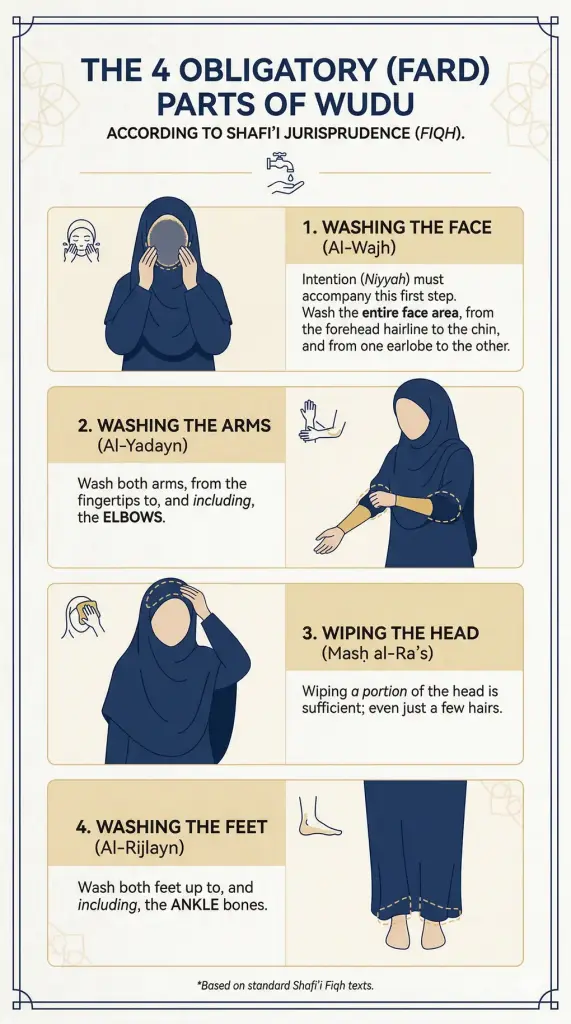
Having established that the linguistic meaning denotes beauty and radiance, let us transition to the Shari’ah definition. The jurisprudential definition contextualizes this ritual strictly within the framework of worship.
In Islamic jurisprudence (fiqh), the definition of wudu is the name given to a specific devotional action or ritual. This action possesses three precise characteristics:
- استعمال الماء (Using Water): This is the primary material element. Wudu must be performed utilizing pure and purifying water.
- أعضاء معينة (On Specific Body Parts): The water is applied to designated areas of the body as established by divine law. These mandatory limbs include the face, both arms up to the elbows, wiping a portion of the head, and washing both feet up to the ankles. Adhering to these limits is one of the primary conditions for a valid wudu.
- مع النية (Accompanied by Intention): This action of using water must be executed with a sincere intention in the heart for the sake of Allah (SWT), fulfilling His command and aiming to remove minor impurity. According to the Shafi’i school, the presence of this intention is an absolute pillar (rukn) that distinguishes wudu as a formal act of worship from an ordinary, everyday act of washing one’s face or cooling down.
Consequently, in fiqh terminology, wudu is defined as the ritual act of using water on specific body parts, coupled with the intention of worship, to attain purity and readiness to face Allah. In Shafi’i fiqh texts, the chapter on wudu is the first and most critical component in the study of purification (thaharah) before proceeding to other acts of devotion.
Briefly, both the linguistic and technical definitions demonstrate a profound connection: the foundational meaning (beauty/cleanliness) is realized through the practical worship (the ritual cleansing of limbs with intention).
Distinguishing Between “Wudu” and “Wadu”
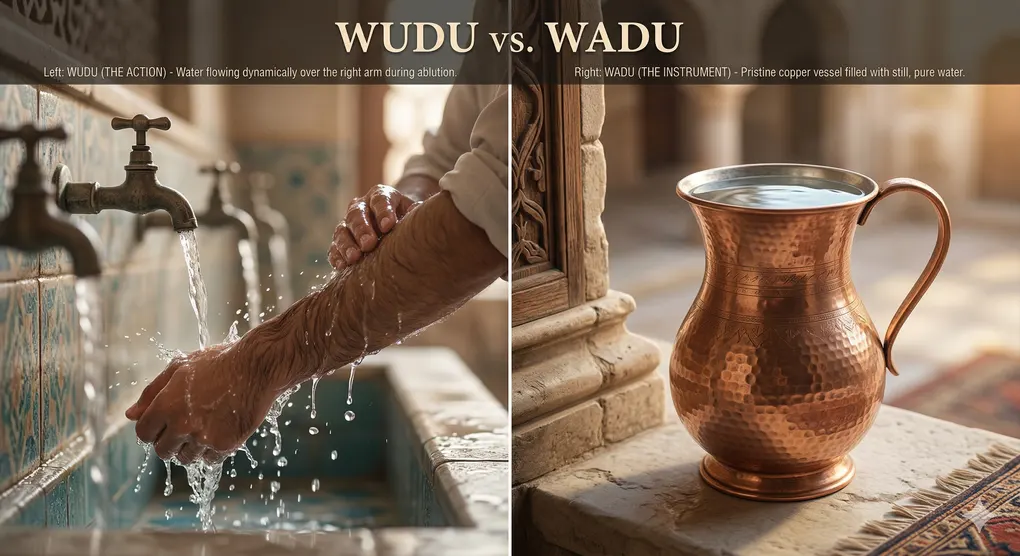
Classical fiqh texts also highlight an interesting and precise linguistic nuance regarding this terminology.
The word “الوضوء” (al-Wudu’), pronounced with a dammah on the first waw, is the specific noun for the action or ritual of ablution itself. Conversely, the word “الوَضوء” (al-Wadu’), pronounced with a fathah on the first waw, is the noun used to designate the actual water utilized to perform the ablution. This linguistic precision demonstrates the richness of the Arabic language in distinguishing between a human action and the physical instrument used for that action.
Why is it Named Wudu? The Wisdom Behind the Terminology
The naming of a practice in Islamic law often carries profound philosophical significance. The name “Wudu,” derived from al-Wada’ah (beauty, radiance), perfectly aligns with its spiritual and physical function.
The classical fiqh text al-Fiqh al-Manhaji states:
“سمي بذلك لما يضفي على الأعضاء من وضاءة يغسلها وتنظيفها”
(It is named as such because of the radiance [brightness] it imparts upon the limbs that are washed and cleaned with it).
This name was deliberately given because wudu genuinely produces an effect of wada’ah or brightness. It is not merely a visible physical cleanliness, but also a profound sensation of psychological freshness, spiritual readiness, and a positive aura after purifying oneself. Wudu cleanses physical dirt, legally removes minor ritual impurity, and prepares the believer’s soul to interact with the Most Holy, Allah (SWT). This is the true beauty and radiance (wada’ah) experienced both outwardly and inwardly.
Wudu in the Practice of Worship: Why is it Essential?
After comprehensively understanding the meaning of wudu, it is equally important to recognize its non-negotiable role in daily Islamic practices. Wudu is an absolute prerequisite for the validity of the ritual prayer. A person who is in a state of minor impurity cannot perform a valid prayer without first performing ablution. To maintain this state of purity, a Muslim must also be vigilant regarding the things that invalidate wudu.
Beyond prayer, wudu is also a condition for other sacred acts of worship, such as touching the physical text of the Quran (according to the majority of orthodox scholars) and performing Tawaf around the Kaaba. Furthermore, for those wondering if washing three times is mandatory in wudu, it is essential to note that while washing once is obligatory, repeating it up to three times is a highly rewarded Sunnah.
Conclusion
In essence, the meaning of wudu extends far beyond simple, mundane washing. It is a sacred, transformative ritual in Islam possessing a profound linguistic significance (beauty, radiance) and a precise Shari’ah definition (utilizing water on specific limbs accompanied by a sincere intention).
Wudu is the critical step in purification that adequately prepares a Muslim to stand before the Creator in a state of absolute cleanliness and purity. Studying the definition of wudu from various academic angles helps us appreciate this act of worship as an inseparable, foundational part of our religious life. Understanding wudu both linguistically and jurisprudentially is a highly valuable first step in diving deeper into the oceans of Islamic law. May we continuously perform our ablution with full awareness of its profound meaning and ultimate purpose.
Frequently Asked Questions (FAQ)
What is the linguistic meaning of the word ‘wudu’?
Linguistically, the word wudu is derived from the Arabic root ‘al-Wada’ah’, which translates to goodness, beauty, brightness, and radiance. It implies a cleanliness that brings joy and elegance to the practitioner.
How is wudu defined in Islamic jurisprudence (fiqh)?
In Islamic fiqh, wudu is formally defined as the ritual act of using pure and purifying water on specific body parts (the face, arms, head, and feet), strictly accompanied by a sincere intention in the heart to worship Allah and remove minor ritual impurity.
What is the linguistic difference between ‘Wudu’ and ‘Wadu’?
In Arabic morphology, ‘Wudu’ (pronounced with a dammah on the ‘w’) refers to the actual physical action or ritual of performing ablution. On the other hand, ‘Wadu’ (pronounced with a fathah on the ‘w’) refers specifically to the water that is being used to perform the ablution.
Academic References:
Khin, Muṣṭafā al-, Muṣṭafā Dīb al-Bughā, and ʿAlī ash-Sharbajī. Al-Fiqh al-Manhaji ‘ala Madhhab al-Imam al-Shafi’i. Vol. 1. Damascus: Dar al-Qalam, 1992, p. 53.


