
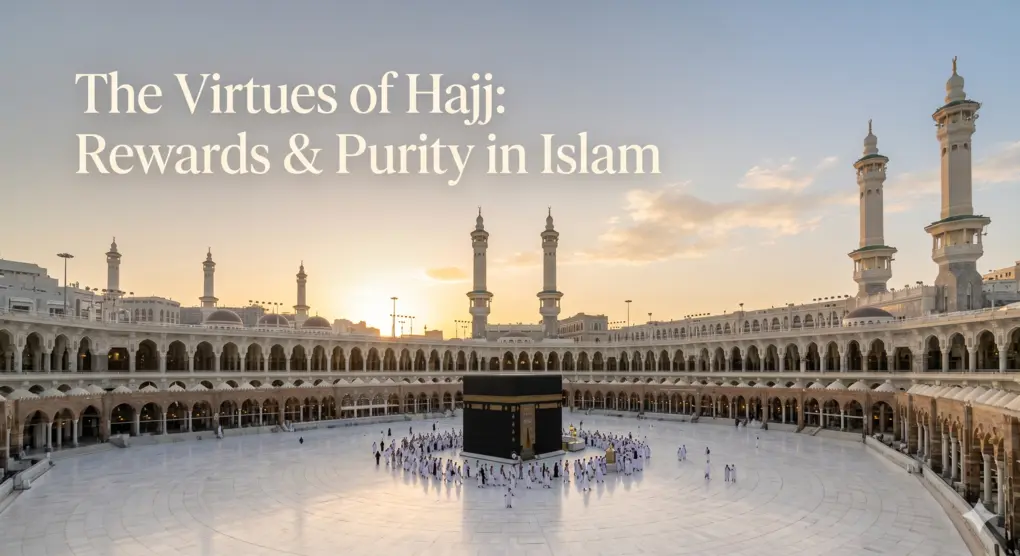
The sacred journey to the Baitullah (House of Allah) in Makkah stands as a monumental pillar within the meaning of Islam in language and Sharia. Beyond a mere physical expedition, this pilgrimage is a profound spiritual voyage. The virtues of Hajj offer immeasurable benefits and spiritual elevation for every Muslim who undertakes it with pure sincerity. Far from being just a mandatory ritual, it serves as a golden opportunity for spiritual purification, drawing closer to the Creator, and attaining the promised ultimate reward of a Hajj Mabrur (an accepted Hajj).
A Journey of Penance and Spiritual Purification
One of the most prominent virtues of Hajj is its profound capacity to cleanse the soul of sins. To understand the meaning of Hajj fully, we must look at classical Shafi’i scholarship. In the authoritative text I’anatuth Thalibin, it is stated:
واعلم أن فضائله لا تحصى. منها خبر: من جاء حاجا يريد وجه الله تعالى، فقد غفر له ما تقدم من ذنبه وما تأخر، ويشفع فيمن دعا له “
Know that its virtues are countless. Among them is the narration: ‘Whoever comes to perform Hajj seeking the pleasure of Allah the Exalted, indeed his past and future sins are forgiven, and he will be granted intercession for whomever he prays for.'”
This magnificent promise illustrates the boundless mercy of Allah upon a servant who embarks on this journey with a pure intention. The hadith affirms that Hajj comprehensively expiates sins, offering a massive motivation for Muslims to fulfill this noble worship.
However, this divine expiation is strictly conditional upon virtuous character. The same text elaborates:
ومنها خبر: من قضى نسكه، وسلم الناس من لسانه ويده، غفر له ما تقدم من ذنبه وما تأخر
“And among them is the narration: ‘Whoever completes his rituals, and people are safe from his tongue and his hand, his past and future sins are forgiven.'”
This teaches us that the wisdom of Hajj extends beyond mere rituals; it encompasses how one conducts themselves and interacts with others. A Mabrur pilgrim is one who is not only precise in their devotion but also impeccable in their social conduct, ensuring no harm comes to others through their words or actions.
Divine Rewards for Every Step
From the very moment a Muslim formulates the intention for Ihram and takes their first step toward the Holy Land, divine rewards await. Recorded by Ibn Hibban from Ibn Umar, and cited in I’anatuth Thalibin:
وروى ابن حبان عن ابن عمر أن النبي – صلى الله عليه وسلم – قال: إن الحاج حين يخرج من بيته لم يخط خطوة إلا كتب الله له بها حسنة، وحط عنه بها خطيئة
“Ibn Hibban narrated from Ibn Umar that the Prophet ﷺ said: ‘Indeed, when a pilgrim leaves his house, he does not take a single step except that Allah writes for him a good deed and erases from him a sin.'”
This is joyous tidings for the believers. Every effort and minor sacrifice is meticulously calculated and rewarded by Allah.
The Pinnacle of Hajj at Mount Arafah
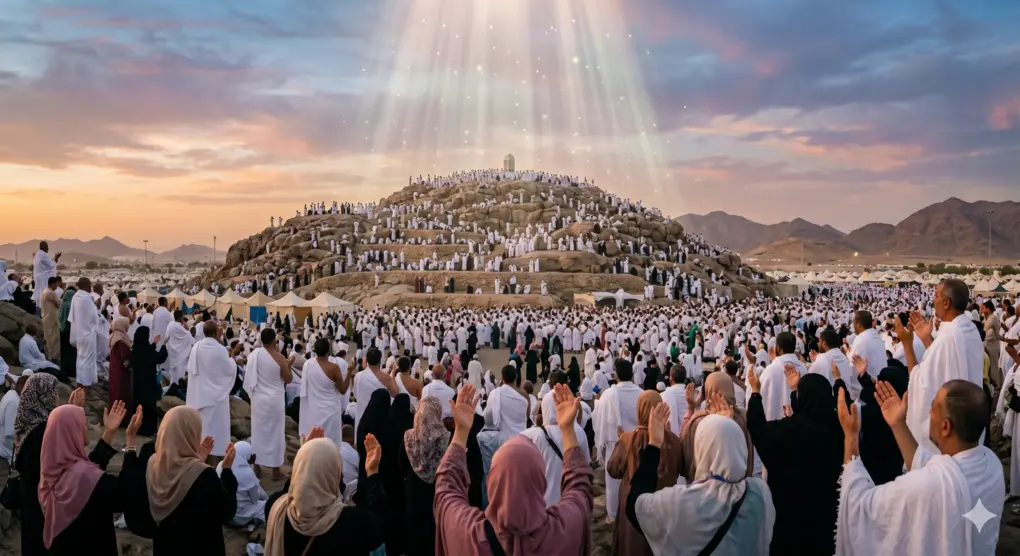
The absolute zenith of the virtues of Hajj in Islam manifests on the plains of Arafah. On the day of Wukuf, millions of pilgrims gather in a state of simplicity, disheveled and covered in dust, demonstrating absolute humility before Allah. In this exact moment, driven by true faith in Allah, Allah proudly presents His servants to the celestial beings.
As elucidated in I’anatuth Thalibin:
فإذا وقفوا بعرفات: باهى الله بهم ملائكته، يقول: انظروا إلى عبادي، أتوني شعثا غبرا، أشهدكم أني غفرت لهم ذنوبهم وإن كانت عدد قطر السماء ورمل عالج
“When they stand at Arafat: Allah boasts of them to His angels, saying: ‘Look at My servants, they have come to Me disheveled and dusty. I bear witness to you that I have forgiven their sins, even if they were as numerous as the drops of rain in the sky and the grains of sand in the desert of ‘Alij.'”
It is as if, upon the plains of Arafah, the veil between the heavens and the earth thins, allowing the humble servants to be witnessed directly by the angels—a concept deeply tied to the faith in angels. Allah Himself declares their absolution, presenting an endless ocean of divine mercy.
The Spiritual Virtues of Hajj Rituals
Following the Wukuf at Arafah, the subsequent rituals carry immense spiritual weight rooted in the history of Hajj. I’anatuth Thalibin notes:
وإذا رمى الجمار: لم يدر أحد ما له حتى يتوفاه الله تعالى يوم القيامة، وإذا حلق شعره فله بكل شعرة سقطت من رأسه نور يوم القيامة
“And when he throws the pebbles (Jamarat): no one knows what reward awaits him until Allah takes him on the Day of Resurrection. And when he shaves his hair, for every hair that falls from his head, there will be a light for him on the Day of Resurrection.”
The reward for the Jamarat is so vast that it remains hidden, known only to Allah, to be unveiled on the Day of Judgment. Furthermore, every strand of hair cut during Tahallul translates into illuminating light in the Hereafter.
The culmination occurs after the final Tawaf at the Baitullah:
فإذا قضى آخر طوافه بالبيت خرج من ذنوبه كيوم ولدته أمه
“So when he completes his last Tawaf at the House, he emerges from his sins like the day his mother bore him.”
The Etymology of Hajj: A Symbol of Hope
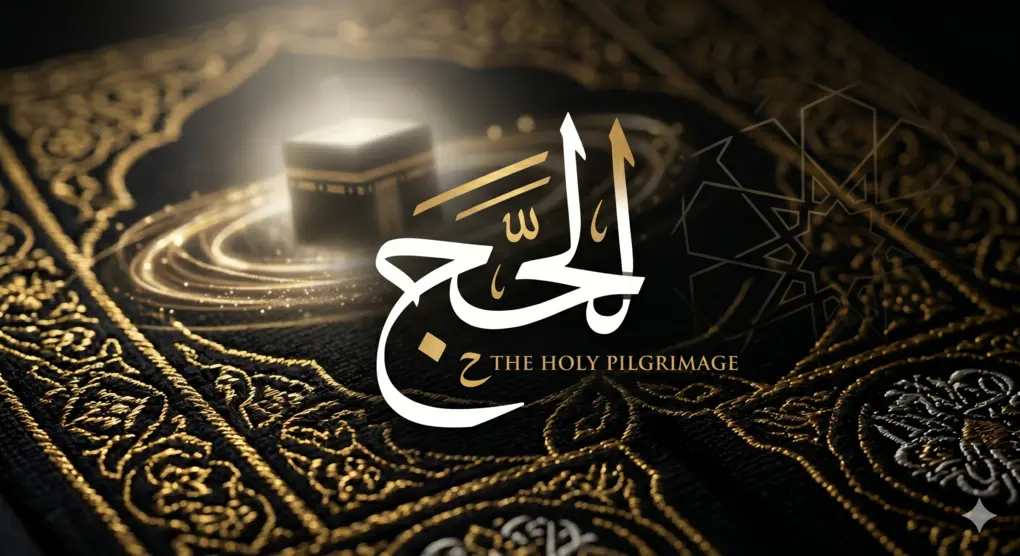
The linguistic wisdom behind the word “Hajj” further deepens our understanding. Ibn al-Imad, in Kasyf al-Asrar (as quoted in I’anatuth Thalibin), provides a beautiful etymological reflection:
وقال ابن العماد في كشف الأسرار: وحكمة تركب الحج من الحاء والجيم: الإشارة إلى أن الحاء من الحلم، والجيم من الجرم – فكأن العبد يقول: يا رب جئتك بجرمي – أي ذنبي – لتغفره بحلمك اه
“And Ibn al-Imad said in Kasyf al-Asrar: ‘The wisdom of the word Hajj (الحج) being composed of the letters Ha (ح) and Jim (ج) is an indication that the Ha originates from Hilm (forbearance/clemency), and the Jim originates from Jarm (sin/offense). It is as if the servant is saying: O Lord, I have come to You with my sin (Jarm) so that You may forgive it with Your clemency (Hilm).'”
Thus, in every breath and footstep within the Holy Land, a servant is silently supplicating, acknowledging their heavy burdens, and begging for divine clemency.
Conclusion
To truly understand the pillars of Islam, one must recognize that the virtues of Hajj cannot be overstated. From the initial departure to the plains of Arafah and the final Tawaf, every ritual is woven with promises of immense rewards, the total forgiveness of sins, and the ultimate prize of Paradise. The Prophet Muhammad ﷺ affirmed that there is no reward for a Hajj Mabrur except Jannah. This pilgrimage is a profound call for every capable Muslim to achieve spiritual purity and proximity to the Creator, ensuring blessings in this world and eternal salvation in the hereafter.
Frequently Asked Questions (FAQ)
What constitutes a “Hajj Mabrur”?
A Hajj Mabrur is an accepted pilgrimage performed with pure intentions, funded by lawful (halal) wealth, and executed without committing sins, obscenities, or arguments. Furthermore, the pilgrim’s character and piety should significantly improve after returning home.
Does Hajj forgive all types of sins?
According to classical Ahlus Sunnah wal Jama’ah scholars, Hajj expiates sins committed against Allah. However, for sins involving the rights of other human beings (such as debts or unresolved grievances), the pilgrim must actively seek forgiveness from those individuals and make amends.
Why is physical purification important before Hajj rituals?
In Shafi’i fiqh, ritual purity (Thaharah) is a prerequisite for certain acts of worship during Hajj, such as Tawaf. Understanding the types of water in Islam is crucial for performing ablution (Wudu) or Ghusl correctly, ensuring that the physical body is in a state of purity that mirrors the spiritual cleansing occurring during the pilgrimage.
Where can I read more about the rulings of Hajj?
You can explore comprehensive articles and classical fiqh rulings regarding pilgrimage by visiting our dedicated Hajj archives.
Academic Reference:
Abū Bakr (al-Mashhūr bi-al-Bakrī) ʿUthmān ibn Muḥammad Shaṭṭā ad-Dimyāṭī ash-Shāfiʿī, Iʿānat aṭ-Ṭālibīn ʿalā Ḥall Alfāẓ Fatḥ al-Muʿīn, 1st ed. (Beirut: Dār al-Fikr, 1997), 2:310.


