
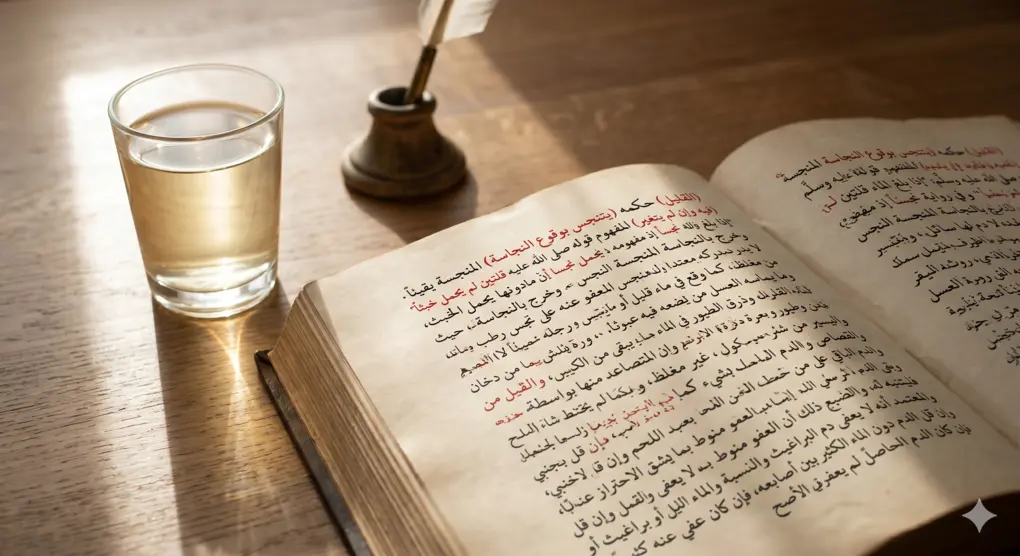
Physical cleanliness and the purity of prayer spaces are absolute foundations for establishing daily prayers. Occasionally, we face trivial yet confusing situations. You might find a dead mosquito at the bottom of a drinking glass or accidentally crush a flea between your fingers until it bleeds. A fundamental question arises in the study of daily jurisprudence: are dead mosquitoes and flea blood najis?
Islamic law consistently provides detailed guidelines regarding the meaning of najis and its boundaries. In the literature of Shafi’i scholars, the rules regarding these matters are highly measurable. The answer depends heavily on the object’s location: whether it falls into a puddle of water or remains attached to clothing during prayer.
The Ruling on Qalil Water Contaminated by Najis

Scholars classify pure and purifying water into two main categories based on volume. Water that has not reached the volume of two qullah (approximately 216 liters) is known as Qalil water (a small amount of water). Fiqh rules stipulate that if qalil water is contaminated by an impure object, the water instantly becomes mutanajjis (impure water). This applies regardless of whether its smell, taste, or color changes or remains clear.
Sheikh Nawawi al-Bantani, in his monumental work Kashifat as-Saja fi Syarh Safinat an-Naja, provides an explanation:
القليل حكمه (يتنجس بوقوع النجاسة) المنجسة يقيناً (فيه وإن لم يتغير) لمفهوم قوله صلى الله عليه وسلّم: “إذا بلغ الماء قلتين لم يحمل خبثاً” وفي رواية نجساً إذ مفهومه أن ما دونها يحمل الخبث
“A small amount of water becomes najis due to the falling of an impurity that is certainly known to be in it, even if the water does not change. This is based on the understanding of the Prophet Muhammad’s ﷺ saying: ‘If water reaches two qullahs, it does not carry filth.’ In another narration, the word ‘najasan’ (impurity) is used. The opposite understanding dictates that water less than that amount can carry impurity.”
Studying the types of najis in Islam is highly necessary. This knowledge helps us differentiate which impure objects contaminate water and which do not.
Islamic Legal Concessions (Ma’fu ‘Anhu) in Water
The religion of Islam stands on the principle of ease. There is a fiqh maxim stating that something extremely difficult to avoid (yasyuqqu al-ihtirazu ‘anhu or umumul balwa) will receive a pardon or concession. You can review the details regarding which impurities are excused for a broader examination.
The book Kashifat as-Saja specifically explains the status of small insects:
وخرج بالنجاسة المنجسة النجس المعفو عنه كميتة لا دم لها سائل، ونجس لا يدركه طرف معتدل حيث لم يحصل بفعله
“Excluded from ‘impurities that render things impure’ are excused impurities (ma’fu ‘anhu), such as the carcass of an animal that does not have flowing blood (when cut open, like cockroaches, flies, etc.), and impurities that cannot be seen by normal eyesight, provided it does not happen due to an intentional act.”
This means that a dead mosquito, ant, or fly that falls into a glass of tea or a small water tub does not render the drink or water najis. The water remains pure.
However, a different ruling applies to the blood of head lice and bedbugs. The text explains the limitation:
والمعتمد أنه لا يعفى عن دم البراغيث والقمل ونحوه بالنسبة للمائع والماء القليل وإن قل الدم دون الماء الكثير ولو قتل قملاً أو براغيث بين أصابعه، فإن كان الدم الحاصل كثيراً لم يعف عنه أو قليلاً عفي عنه على الأصح
The Mu’tamad (relied upon) opinion establishes that drops of flea blood are not excused when they come into contact with liquids and qalil water, even if the blood volume is minimal. The liquid becomes najis. An exception occurs on the human body. If someone kills a flea between their fingers and a small blood stain remains, it is excused (ma’fu). Conversely, if the blood from the crushed flea is substantial, the ruling remains najis.
Different Rulings: Are Dead Mosquitoes and Flea Blood Najis on Prayer Garments?

A refined rule explained by Sheikh Nawawi al-Bantani is about the separation of the scope of excused impurities. Something that receives a concession when it falls into water might not receive the same concession when carried on clothing during worship.
وقسم يعفى عنه في الماء دون الثوب وهو الميتة التي لا دم لها سائل كالقمل حتى لو حملها في الصلاة بطلت
“And there is a category that is excused if it is in water, but not on clothing. Namely, the carcass of an animal without flowing blood, like a flea. So, if someone carries it in their prayer, the prayer is invalid.”
The fiqh logic of this ruling relies on the reality of our environment. Sterilizing an open water container from falling mosquitoes is nearly impossible in tropical areas. However, inspecting and cleaning the folds of clothing from dead fleas before facing Allah is a matter entirely within the control of a mukallaf (legally responsible person).
The book also provides an analogy regarding birds:
ومن هذا القسم منفذ الطير فإنه إذا كان عليه نجاسة ووقع في الماء لم ينجسه عكس منفذ الآدمي ولو حمله في الصلاة لم تصح
A bird carries traces of impurity on its excretory tract because it does not perform istinja’ (cleaning after defecation). If the bird plunges into a small pool, it does not render the water najis—a situation completely opposite to a human entering a pool without cleaning their anus from the remnants of defecation. However, if a person performs prayer while placing a bird on their shoulder, the prayer becomes invalid. They are bearing a najis without any urgent necessity.
Additional Ruling: Residual Blood on Slaughtered Meat
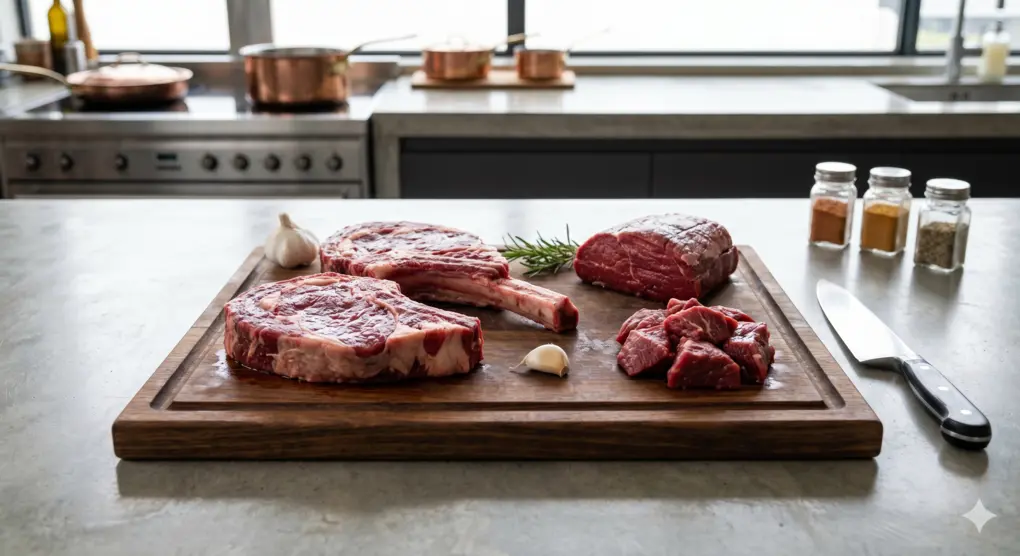
The author of the book also reminds us of an everyday matter concerning residual blood on fresh meat. Blood attached to goat or cow meat after slaughter is excused as long as its form remains pure. However, if the meat has been poured with water at the slaughterhouse, the residual blood attached after washing is no longer excused. The blood has mixed with a foreign object (water), thus nullifying the concession. Muslim households must pay close attention to this during kitchen activities.
Summary Table of Excused Impurities (Ma’fu ‘Anhu)
To simplify the fiqh mapping, here is the classification table:
| Object Type | Status When Falling in Qalil Water | Status When Carried on Prayer Garments |
|---|---|---|
| Dead Mosquito / Bloodless Insect | Pure (Excused) | Najis (Prayer is invalid if carried intentionally) |
| Flea Blood (falling into liquid) | Najis (Liquid becomes Mutanajjis) | Invalidates prayer if attached to cloth |
| Flea Blood Stain (from crushed finger) | – | Excused (if the volume is small) |
| Pet Bird (bathing/perching) | Pure (Excused due to Masyaqqah) | Najis (Prayer is invalid if carried) |
| Residual Blood on pure fresh meat | – | Excused (during cooking) |
| Residual Blood on meat washed with water | – | Najis (Not Excused) |
Frequently Asked Questions (FAQ)
Does a dead mosquito in my drinking glass make my tea or coffee najis?
No. The carcass of an animal that does not have flowing blood when its body is cut open (la dama laha sail), such as lizards, mosquitoes, flies, and ants, is excused if it falls into a drink. The drink remains pure.
I am praying and find a dead mosquito in my pocket. Is my prayer valid?
Your prayer is invalid if you carry it consciously. A valid condition for prayer is that the garment must be pure from all najis, and a dead mosquito is not excused if it is on the clothes. You must remove it.
What if I accidentally kill a flea and a little of its blood sticks to my hand during prayer?
A flea blood stain resulting from the act of crushing or killing it with your fingers is excused as long as the amount is small (qalil). Your prayer is still considered valid.
Conclusion on Fiqh Precautions
The precision of Islamic law is not meant to cause hardship. Rather, it exists to educate us in worship discipline. The ruling on whether dead mosquitoes and flea blood are najis essentially teaches proportional caution. What is excused in one place (like water) due to the difficulty of avoiding it, is not necessarily excused elsewhere (like clothing) when a servant has ample time to clean it before conversing with Allah Ta’ala.
References
al-Bantani, Muḥammad bin ʿUmar Nawawī al-Jāwī. Kāsyifah al-Sajā fī Syarḥ Safīnat al-Najā. Source: al-Maktabah al-Syāmilah al-Dhahabiyyah.


