
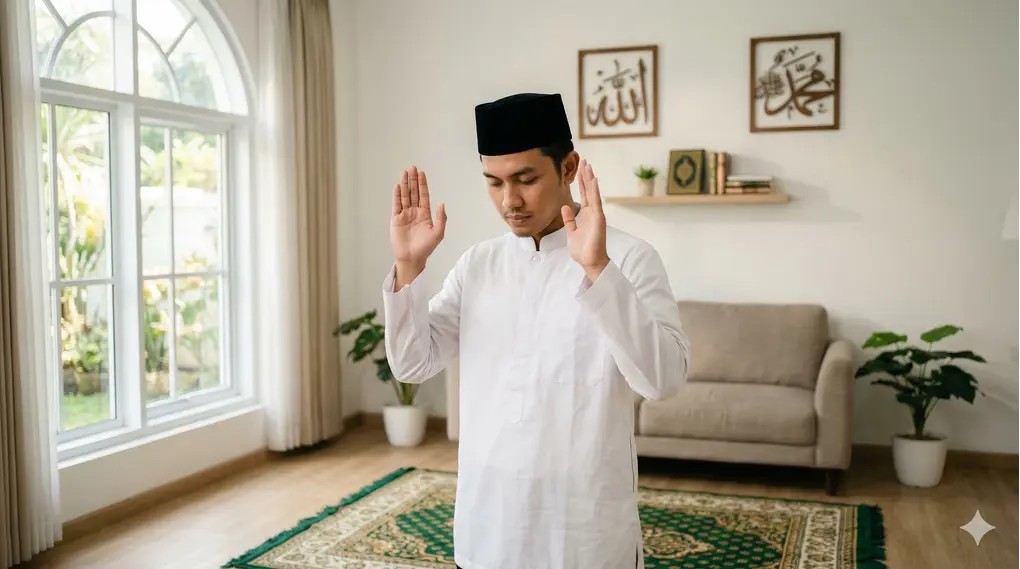
Salah (prayer) stands as the second pillar of Islam and is universally recognized as the most critical act of worship following the declaration of faith (Shahadah). It is the central pillar of the religion, the distinguishing mark between a Muslim and a non-Muslim, and the very first deed to be reckoned on the Day of Judgment. But what exactly is the true essence of Salah? To profoundly understand the status and reality of prayer, it is imperative to explore the meaning of Salah, both from its linguistic roots and its Shariah (religious) terminology.
Grasping the meaning of Salah extends far beyond memorizing a formal definition; it requires internalizing the deepest spiritual realities contained within it. In this article, we will thoroughly unpack the meaning of Salah based on the explanations of classical scholars, particularly referencing authoritative texts of Islamic jurisprudence (fiqh), such as the excerpt from Al-Fiqh al-Manhaji that we will discuss. We will observe how a single Arabic word can possess distinct yet deeply interconnected meanings when transitioning from everyday language to the context of divine worship.
The Linguistic Meaning of Salah in Arabic

In the Arabic language, every word carries a foundational root meaning. This is true for the word “الصلاة” (Ash-Shalah). Linguistically, the word Salah possesses several nuances, but the most prominent and relevant meaning within the context of worship is “supplication” or “prayer” (Du’a).
Therefore, the literal meaning of Salah in the Arabic language is a supplication, invocation, or request. This definition indicates that the core essence of “Salah” in classical Arabic usage is communication, pleading, or praying to the Almighty. It is a broad concept encompassing all forms of sincere requests and praises directed toward Allah Subhanahu wa Ta’ala. This linguistic root perfectly aligns with the Islamic concept of establishing a direct connection with the Creator through faith in Allah.
Quranic Evidence for Salah Meaning “Supplication”
The usage of the word “Salah” to mean supplication can be found explicitly in several verses of the Quran. One of the clearest examples frequently cited by jurists (fuqaha), including the authors of Al-Fiqh al-Manhaji, is the statement of Allah in Surah At-Tawbah (9), verse 103:
خُذْ مِنْ أَمْوَالِهِمْ صَدَقَةً تُطَهِّرُهُمْ وَتُزَكِّيهِمْ بِهَا وَصَلِّ عَلَيْهِمْ ۖ إِنَّ صَلَاتَكَ سَكَنٌ لَهُمْ ۗ وَاللَّهُ سَمِيعٌ عَلِيمٌ
“Take, [O, Muhammad], from their wealth a charity by which you purify them and cause them increase, and invoke [Allah’s blessings] upon them. Indeed, your invocations are reassurance for them. And Allah is Hearing and Knowing.”
In this verse, the phrase “وَصَلِّ عَلَيْهِمْ” (wa shalli ‘alaihim) is unequivocally interpreted by Quranic exegetes (mufassirun) as a command to “supplicate for them.” The context of this verse is a divine directive to Prophet Muhammad ﷺ to pray for the goodness, forgiveness, and blessings of Zakat for those who pay their obligatory charity, so that their hearts may find tranquility. The subsequent word “صلاتك” (shalataka) in the verse also directly refers to the Prophet’s ﷺ supplication, which brings them peace.
This verse serves as crystal-clear evidence that in the Quranic Arabic vocabulary, the word “Salah” can mean a prayer of supplication. This reinforces the understanding that, lexically, the fundamental meaning of Salah is an invocation for goodness.
The Terminological Meaning of Salah in Shariah (Fiqh)
Having established the linguistic roots, we now shift to the specific, technical meaning—the definition of Salah within the context of the daily worship we recognize, such as the five obligatory prayers, or voluntary prayers like the virtues of Sunnah prayers, the prayer of need (Hajat), and the prayer of repentance (Taubah). This is the terminology strictly utilized by the scholars of Islamic jurisprudence (fuqaha).
According to the terminology of the jurists, as elegantly defined in Al-Fiqh al-Manhaji:
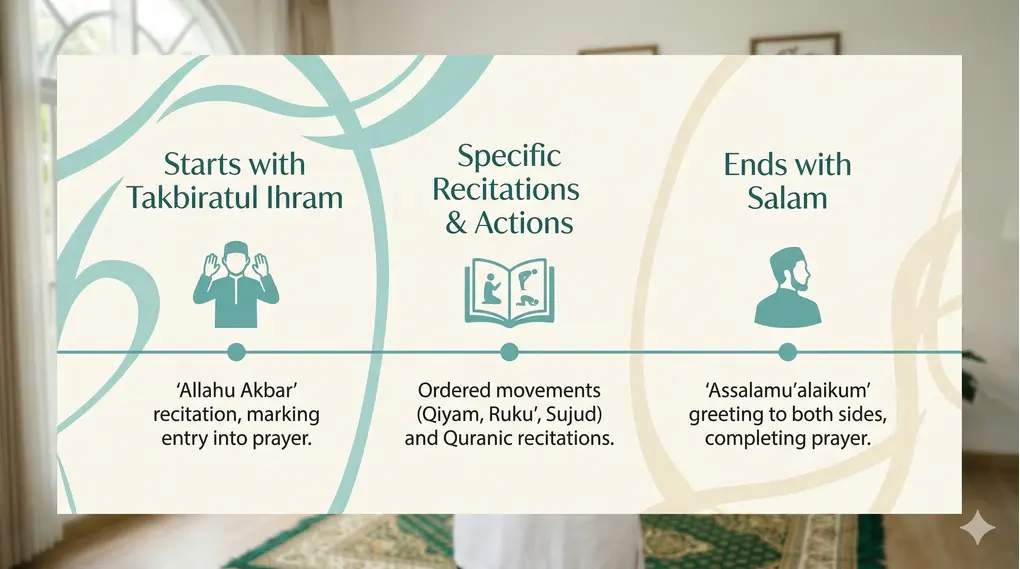
فتطلق كلمة الصلاة على أقوال وأفعال مخصوصة، تفتتح بالتكبير وتختتم بالتسليم.
“Thus, the word ‘الصلاة’ (Salah) is applied to specific words and actions, which begin with the Takbir and end with the Salam.” (Al-Fiqh al-Manhaji ‘ala Madhhab al-Imam al-Shafi’i, Vol. 1, p. 98)
This encapsulates what is meant by Salah in the view of the Shariah: a highly structured ritual of worship with a very specific methodology. This sequence of specific words and actions encompasses various physical postures (standing, bowing, prostrating, sitting) and verbal recitations (the Takbiratul Ihram, Surah Al-Fatihah, Quranic verses, words of glorification during bowing and prostrating, the supplication between the two prostrations, the Tashahhud, and the final Salam). All of these are integral components that must exist in the execution of the prayer.
For a more comprehensive understanding, you can explore detailed articles regarding the pillars of prayer, such as the method of bowing (Ruku’) and the importance of tranquility (Tuma’ninah), as well as the conditions for a valid prayer like physical purification (Thaharah), up to the profound wisdom behind obligatory prayers.
The primary distinguishing feature of this technical definition is that Salah always commences with the Takbiratul Ihram (saying “Allahu Akbar,” which marks the initiation of the prayer and forbids actions outside of it) and always concludes with the Salam (saying “Assalamualaikum” while turning the head left and right, marking its completion). These two pillars act as the definitive boundaries that separate Salah from all other acts of devotion.
Why is this Complex Ritual Called ‘Salah’?
A logical question arises: why is this intricate ritual—consisting of numerous physical movements and specific recitations—named with the word “Salah,” which linguistically merely means “supplication”? Al-Fiqh al-Manhaji eloquently provides the rationale:
سميت صلاة لأنها تشتمل على الدعاء ولأنه الجزء الغالب فيها، إطلاقاً لاسم الجزء على الكل.
“It is named ‘Salah’ because it encompasses supplication (Du’a) and because supplication is the dominant part within it; applying the name of a part to represent the whole.” (Al-Fiqh al-Manhaji ‘ala Madhhab al-Imam al-Shafi’i, Vol. 1, p. 98)
This explanation is remarkably insightful. The ritual is named “Salah” (supplication) for two primary reasons:
- It Inherently Contains Supplication: In every single unit (rak’ah) of prayer, a Muslim offers numerous supplications. Starting from the opening supplication (Iftitah), reciting Al-Fatihah (which is the master of all prayers for help and guidance), the glorifications during bowing and prostration (which inherently contain praise and requests for forgiveness), up to the Qunut (if performed) and the prayers during the Tashahhud. Salah is, in its essence, a comprehensive compilation of various forms of communication and pleading from a servant to their Creator.
- Supplication is the Dominant Element: Despite the presence of physical movements, the verbal aspect and the core act of pleading (Du’a) within the prayer are central and overwhelmingly dominant. The recited words are the heart of the communication with Allah. Even the physical postures are profoundly meaningful as physical manifestations of the submission and magnification that accompany the verbal prayers and remembrances (Dhikr).
- Synecdoche (Naming the Whole by a Part): In Arabic grammar and rhetoric (إطلاق لاسم الجزء على الكل), it is common to use the name of a crucial or dominant part to refer to the entire entity. Because supplication is the core, the spirit, and the most prominent element within the prayer ritual, the entire sequence is appropriately named “Salah.” This is akin to saying, “We sent eyes to the enemy camp,” meaning spies; the entire person is sent, but the “eyes” represent the most critical function of espionage.
Therefore, the terminological meaning of Salah in Shariah refers to a structured ritual, yet its very name is drawn from its foundational linguistic root (supplication) because supplication is its most prominent component and its lifeblood.
The Connection Between Linguistic and Terminological Meanings
From the exposition above, it is evident that a strong, inseparable connection exists between the linguistic meaning of Salah and its terminological definition in Islamic jurisprudence (Fiqh). The linguistic root (supplication) serves as the basis for naming the religious ritual because supplication is the very essence and dominant feature of that ritual.
Salah, in the terminology of Fiqh, is not a series of empty, mechanical physical movements. It is the concrete, structured, and divinely standardized manifestation of “supplicating for goodness,” which is its linguistic reality. Through the sequence of specific words and actions in prayer, a Muslim actively praises, glorifies, seeks forgiveness, begs for guidance, and intimately communicates with Allah Subhanahu wa Ta’ala.
By understanding these intertwined definitions, we can perform our prayers not merely as physical routines but with true presence of heart (Khushu’), realizing that every movement and recitation is an integral part of our “supplication”—our direct, unmediated communication with the Creator.
The Importance of Understanding the Meaning of Salah
Gaining a deep comprehension of the meaning of Salah, both linguistically and terminologically, is of paramount importance for every Muslim striving for spiritual excellence.
- Enhancing Devotion (Khushu’): When we realize that Salah is essentially our personal supplication, it drastically helps us remain fully present during the prayer, internalize every recitation, and genuinely feel proximity to Allah. We transition from merely discharging an obligation to engaging in profound communication.
- Strengthening Religious Foundations: Salah is the pillar of the religion. Understanding its meaning fortifies our foundational faith and heightens our awareness of its daily necessity. What is meant by Salah being the “pillar of the religion” becomes vividly clear when we recognize it as the continuous communication and supplication we must uphold.
- Preserving the Quality of Worship: Knowledge regarding the pillars, prerequisites, and recommended acts of prayer (which constitute the details of the “specific words and actions” in the definition), combined with the proper levels of intention (Niyyah), allows us to perform Salah according to Shariah guidelines, ensuring our worship is valid and accepted.
Consequently, seeking knowledge and continuously deepening our understanding of the meaning of Salah is an integral part of our effort to become comprehensive Muslims (kaffah), performing our worship with sound knowledge and full spiritual awareness.
Conclusion
In conclusion, the meaning of Salah possesses two primary, complementary dimensions. Linguistically, the meaning of Salah is a supplication for goodness (Du’a). Terminologically, according to the jurists, Salah is a specific sequence of words and actions that commence with the Takbir (accompanied by the proper intention) and conclude with the Salam.
This intricate ritual of worship is named “Salah” because it is saturated with the element of supplication; indeed, supplication is its most dominant and defining feature. This nomenclature follows standard Arabic linguistic principles. Comprehending both of these meanings enables us to view Salah not as a burdensome formal duty, but as a profound means of communication and a sincere, intimate plea to Allah Subhanahu wa Ta’ala.
May our understanding of this reality elevate the quality of our Salah, making it the coolness of our eyes, the tranquility of our souls, and our ultimate helper in all matters of this world and the Hereafter.
Frequently Asked Questions (FAQ)
What is the literal translation of the word “Salah” in Arabic?
Literally, in classical Arabic, the word “Salah” translates to “supplication,” “invocation,” or “prayer” (Du’a). It denotes the act of communicating with and asking from the Divine.
Why do we perform physical movements if Salah just means “supplication”?
While the linguistic root means supplication, the Shariah definition refers to a specific ritual taught by Prophet Muhammad ﷺ. The physical movements (bowing, prostrating) are physical manifestations of submission and humility that physically accompany and amplify the verbal supplications being made.
If I just make Du’a (supplicate) in my native language, have I performed Salah?
No. While making Du’a is highly encouraged, the obligatory “Salah” in Islam refers to the specific ritual defined by Shariah (starting with Takbir, reciting Quran in Arabic, bowing, prostrating, and ending with Salam). General supplication is Du’a, while the structured ritual is Salah.
Reference
Al-Khin, Mustafa, Mustafa al-Bugha, and Ali al-Syarbaji. Al-Fiqh al-Manhaji ‘ala Madhhab al-Imam al-Shafi‘i. Vol. 1. Damascus: Dar al-Qalam, 1992, p. 98.


