
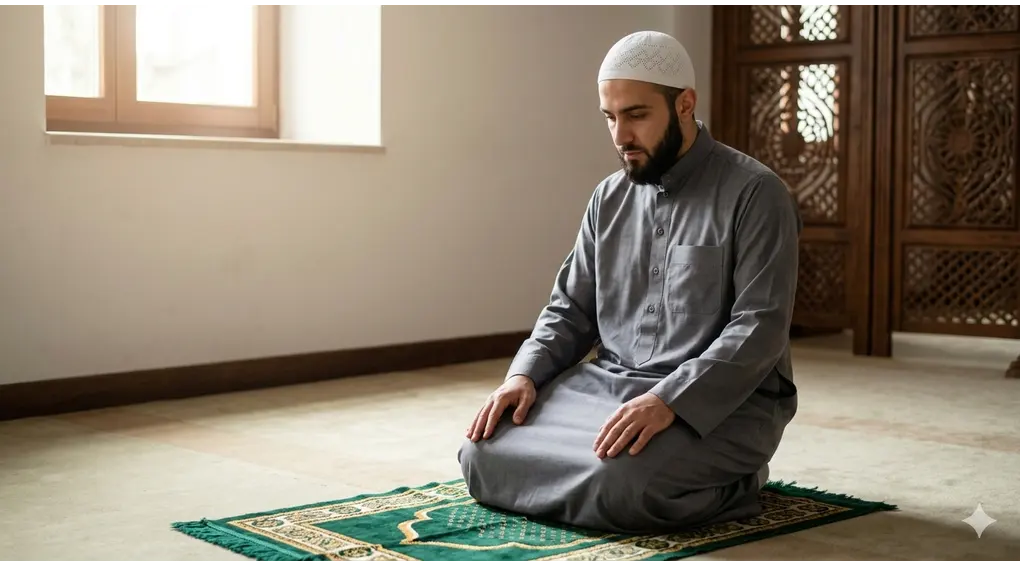
Every human being is susceptible to error. In the framework of Islamic jurisprudence (fiqh), it is understood that no one is immune to sin, whether committed intentionally or inadvertently. However, the hallmark of a true believer is the immediate return to Allah’s grace after a transgression. The doors of Divine forgiveness are perpetually open, and one of the most effective spiritual keys to unlocking this mercy is Salat al-Tawbah (the Sunnah Prayer of Repentance).
This article provides a scholarly analysis of the legal foundations, practical procedures, and specific litanies associated with the prayer of repentance. Grounded in the authoritative text Hasyiyah Al-Bujairimi ‘ala Al-Khatib and established Prophetic traditions, this guide aims to strengthen your faith in Allah by clarifying the path to a valid and accepted repentance.
Scriptural Evidence for Salat al-Tawbah
Before examining the technicalities found in classical texts, one must understand the hadith that serves as the basis for this practice. Shafi’i jurists rely on a well-known narration from the first Caliph, Abu Bakr al-Siddiq (may Allah be pleased with him), who reported hearing the Messenger of Allah ﷺ say:
نص الحديث: مَا مِنْ عَبْدٍ يُذْنِبُ ذَنْبًا فَيُحْسِنُ الطُّهُورَ، ثُمَّ يَقُومُ فَيُصَلِّي رَكْعَتَيْنِ، ثُمَّ يَسْتَغْفِرُ اللَّهَ إِلَّا غَفَرَ اللَّهُ لَهُ
“There is no servant who commits a sin, then performs ritual purification (thaharah)excellently, then stands to perform two units of prayer, and subsequently seeks Allah’s forgiveness, except that Allah forgives him.” (Reported by Abu Dawood no. 1521, Tirmidhi no. 406, and Ibn Majah no. 1395).
This tradition serves as the cornerstone for the Shafi’i position that performing a two-unit sunnah prayer is highly recommended for anyone seeking sincere repentance (tawbah nasuha).
Sequencing the Ritual: Prayer Before or After Istighfar?
In Hasyiyah Al-Bujairimi, there is a profound discussion regarding the sequence of the ritual. Should one seek forgiveness before the prayer, or vice versa?
Citing the opinion of Al-‘Anani, the text explains that the superior method is to perform the prayer first, followed by the verbal seeking of forgiveness (istighfar). This is based on the logic of wasilah (spiritual means). Just as one observes protocol before entering the presence of a king, the prayer serves as a preparatory act of humility to ensure the request for forgiveness is more readily accepted.
The original text from Hasyiyah Al-Bujairimi ‘ala Al-Khatib (Vol. 1, pp. 428-429) states:
وعبارة العناني: الصلاة قبل التوبة بدليل قوله: ثم يستغفر الله وأيضا فإن الصلاة وسيلة لقبول التوبة والوسيلة مقدمة على المقصد.
“Al-‘Anani’s phrasing: The prayer precedes the repentance based on the Prophet’s words: ‘then he seeks forgiveness.’ Furthermore, prayer is a means (wasilah) for the acceptance of repentance, and the means is prioritized over the objective.”
Thus, the practical sequence is: Perform Ablution (Wudhu) → Salat al-Tawbah (2 Raka’ahs) → Sit for Supplication and Istighfar.
Practical Procedure of Salat al-Tawbah
Salat al-Tawbah can be performed at any time except during the prohibited windows (such as after Fajr until sunrise or after Asr until sunset), unless it is performed immediately after a sin, as it then becomes a prayer with a specific cause (dhawat al-asbab).
1. The Intention (Niyyah)
The proper intention (niyyah) must be present in the heart simultaneously with the Takbiratul Ihram. Verbalizing the intention is a recommended (sunnah) act to assist the heart’s focus.
Arabic:
أُصَلِّيْ سُنَّةَ التَّوْبَةِ رَكْعَتَيْنِ لِلَّهِ تَعَالَى
Transliteration: Uṣallī sunnata al-tawbati rakʿatayni li-llāhi taʿālā.
Translation: “I intend to pray the Sunnah prayer of repentance, two raka’ahs, for the sake of Allah the Exalted.”
2. The First Unit (Raka’ah)
- Recite the opening supplication (dua iftitah) (Sunnah).
- Recite Surah Al-Fatihah (Obligatory).
- Recite a short Surah. While any Surah is permissible, Surah Al-Kafirun is often recommended for its theme of spiritual purity.
3. The Second Unit (Raka’ah)



- Recite Surah Al-Fatihah (Obligatory).
- Recite Surah Al-Ikhlas (Recommended).
4. The Final Prostration (Sujud)
The prostration is the closest a servant is to their Lord. It is highly recommended to prolong the final sujud and supplicate silently for forgiveness within the heart.
5. The Closing (Salam)
Upon completing the prayer, remain seated. The moments following the prayer and the supplications before the salam are critical windows for spiritual acceptance.
Litanies and Supplications Following the Prayer
Complete your spiritual return with the recommended dhikr. Sit with humility, presence of heart, and deep regret.
1. General Istighfar (33x or 100x)
Arabic:
أَسْتَغْفِرُ اللهَ الْعَظِيْمَ الَّذِي لاَ إِلهَ إِلاَّ هُوَ الْحَيُّ الْقَيُّومُ وَ أَتُوبُ إِلَيْهِ
Transliteration: Astaghfirullāhal-‘aẓīm, alladhī lā ilāha illā huwal-ḥayyul-qayyūmu wa atūbu ilayh.
2. Sayyidul Istighfar (The Master of Forgiveness)
This is the most superior form of seeking forgiveness.
Arabic:
اللَّهُمَّ أَنْتَ رَبِّي لَا إِلَهَ إِلَّا أَنْتَ، خَلَقْتَنِي وَأَنَا عَبْدُكَ، وَأَنَا عَلَى عَهْدِكَ وَوَعْدِكَ مَا اسْتَطَعْتُ، أَعُوذُ بِكَ مِنْ شَرِّ مَا صَنَعْتُ، أَبُوءُ لَكَ بِنِعْمَتِكَ عَلَيَّ، وَأَبُوءُ لَكَ بِذَنْبِي، فَاغْفِرْ لِي، فَإِنَّهُ لَا يَغْفِرُ الذُّنُوبَ إِلَّا أَنْتَ.
Transliteration: Allāhumma anta rabbī lā ilāha illā anta, khalaqtanī wa anā ʿabduka, wa anā ʿalā ʿahdika wa waʿdika mā istaṭaʿtu. Aʿūdhu bika min sharri mā ṣanaʿtu. Abū’u laka biniʿmatika ʿalayya wa abū’u laka bidhambī. Faghfir lī, fa-innahu lā yaghfiru al-dhunūba illā anta.
“O Allah, You are my Lord. There is no deity except You. You created me, and I am Your servant. I uphold Your covenant and promise as best as I am able. I seek refuge in You from the evil of what I have done. I acknowledge before You Your favor upon me, and I acknowledge my sin. So forgive me, for indeed none forgives sins except You.”
3. The Supplication of Prophet Adam (QS. Al-A’raf: 23)
Recite the supplication of Prophet Adam as a final plea for mercy:
Arabic:
رَبَّنَا ظَلَمْنَا أَنْفُسَنَا وَإِنْ لَمْ تَغْفِرْ لَنَا وَتَرْحَمْنَا لَنَكُونَنَّ مِنَ الْخَاسِرِينَ
Transliteration: Rabbanaa ẓalamnaa anfusanaa wa in lam taghfir lanaa wa tarḥamnaa lanakūnanna mina al-khāsirīn.
“Our Lord, we have wronged ourselves. If You do not forgive us and have mercy upon us, we will surely be among the losers.”
The Danger of Procrastination (Taswif)
A vital point emphasized in Kitab Al-Bujairimi is the warning against taswif (delaying repentance). If one becomes conscious of a sin, one must immediately perform the ritual of sholat.
Delaying repentance is considered a separate sin. Consequently, the procrastinator carries two burdens: the original sin and the sin of neglecting immediate return to Allah. Al-Bujairimi concludes this discussion with a poignant poetic counsel:
“Hasten to repent in its proper time… for a person is a hostage to what he has earned. Seize the opportunity if it is possible… for none attains nobility except the one who harvests it.”
Conclusion
Prayer and supplication are the spiritual vessels, but the essence of Tawbah Nasuha lies in three internal conditions: An-Nadam (sincere regret), At-Tarku (immediate cessation of the sin), and Al-‘Azm (firm resolve never to return to it). Do not delay your return; as breaths are limited, the time for wudhu and prayer is now.
FAQ: Salat al-Tawbah
Is Salat al-Tawbah obligatory (wajib)?
No, it is a recommended (sunnah) prayer. However, seeking repentance itself is an obligation for every Muslim.
Can I perform Salat al-Tawbah for major sins?
Yes. Whether the sin is minor or major, Salat al-Tawbah is a recommended wasilah to seek Allah’s vast forgiveness.
What if I repeat the same sin after praying?
One should repeat the repentance and the prayer. Allah is Al-Ghaffar (The Perpetual Forgiver). As long as the regret is sincere each time, the door remains open.
Reference:
Sulaimān bin Muḥammad bin ‘Umar al-Bujayrimī, Tuḥfat al-Ḥabīb ‘alā Syarḥ al-Khaṭīb (Ḥāsyiyah al-Bujayrimī ‘alā al-Khaṭīb) (Beirut: Dār al-Fikr, 1415 AH/1995 AD), Vol. 1, pp. 428–429.


