

For Muslims, the sound of the call to prayer is profoundly familiar. Echoing five times a day from local mosques, this proclamation serves as the universal marker for worship. However, how deeply do we truly understand the meaning of Adhan and Iqamah, as well as the rich history behind them?
Based on the classical Shafi’i text Asna al-Matalib (Vol. 1, pp. 125-126), this article will comprehensively analyze the definitions, jurisprudential rulings, and the fascinating history of the Adhan, which remarkably originated from a companion’s dream.
Understanding the Meaning of Adhan and Iqamah
Before delving deeper into legalities, we must establish accurate definitions. In classical fiqh (jurisprudence) literature, this topic traditionally begins by distinguishing between the linguistic and terminological meanings.
Linguistically (etymology), the words adhan, al-adhin, and at-ta’dzin signify an announcement or public declaration (al-i’lam). Thus, the general definition is a notification to the masses. This aligns with the divine revelation, rooted in our faith in the Books of Allah, specifically referencing Surah At-Taubah, verse 3: “And a declaration (adhan) from Allah and His Messenger…”
Conversely, the terminological meaning in Islamic law (Shari’ah) refers to specific, established phrases used to announce the entry of the prescribed time for the meaning of Salah (obligatory prayer). If a different announcement is made in the mosque without these specific phrases, it cannot be classified as an Adhan in the context of worship. Therefore, it is vital to learn the valid conditions and text of Adhan and Iqamah to ensure the call is legislatively acceptable.
The meaning of Adhan and Iqamah represents two distinct but complementary calls. While the Adhan functions to summon those who are not yet present at the mosque, the Iqamah is the immediate call signaling that the prayer is commencing for those already gathered.
Here is the original Arabic text from Asna al-Matalib regarding this definition:
( الأذان والأذين والتأذين بالمعجمة لغة الإعلام … وشرعا قول مخصوص يعلم به وقت الصلاة )
The History of the Adhan: Originating from a Dream
The history of the call to prayer is deeply captivating. During the early period in Medina, Prophet Muhammad ﷺ and his companions deliberated on the most effective method to gather people for prayer at the correct time.
Historically, suggestions included using a bell (naqus) like the Christians or a horn like the Jews. However, the Prophet ﷺ was reluctant to adopt these methods. Ultimately, the divine solution arrived through the dream of a noble companion named Abdullah bin Zaid bin Abdi Rabbihi.
The following is the authentic Hadith detailing the history of the Adhan, recorded by Abu Dawud and cited in classical texts:
لما أمر النبي – صلى الله عليه وسلم – بالناقوس يعمل ليضرب به الناس لجمع الصلاة طاف بي وأنا نائم رجل يحمل ناقوسا في يده فقلت يا عبد الله أتبيع الناقوس فقال وما تصنع به فقلت ندعو به إلى الصلاة قال أولا أدلك على ما هو خير من ذلك فقلت بلى فقال تقول الله أكبر الله أكبر إلى آخر الأذان
Translation: Abdullah bin Zaid narrated: “When the Prophet ordered a bell to be made so it could be struck to gather people for prayer, a man carrying a bell in his hand appeared to me while I was sleeping. I said, ‘O servant of Allah, will you sell the bell?’ He replied, ‘What will you do with it?’ I said, ‘We will use it to call people to prayer.’ He said, ‘Shall I not guide you to something better than that?’ I replied, ‘Certainly.’ He then taught me to say, Allahu Akbar, Allahu Akbar… until the end of the Adhan.”
The next morning, Abdullah bin Zaid reported this to the Prophet ﷺ. The Prophet affirmed it was a true vision (Ru’ya Haq) and instructed Abdullah to teach the words to Bilal bin Rabah, as Bilal possessed a louder and more resonant voice. Interestingly, upon hearing Bilal’s call, Umar bin Khattab rushed out of his house, revealing he had experienced the exact same dream. Because of the vital role the muezzin plays, modern scholars often discuss the permissibility of paying a muezzin to ensure this duty is maintained consistently.
Islamic Rulings on the Call to Prayer (Fiqh Perspective)
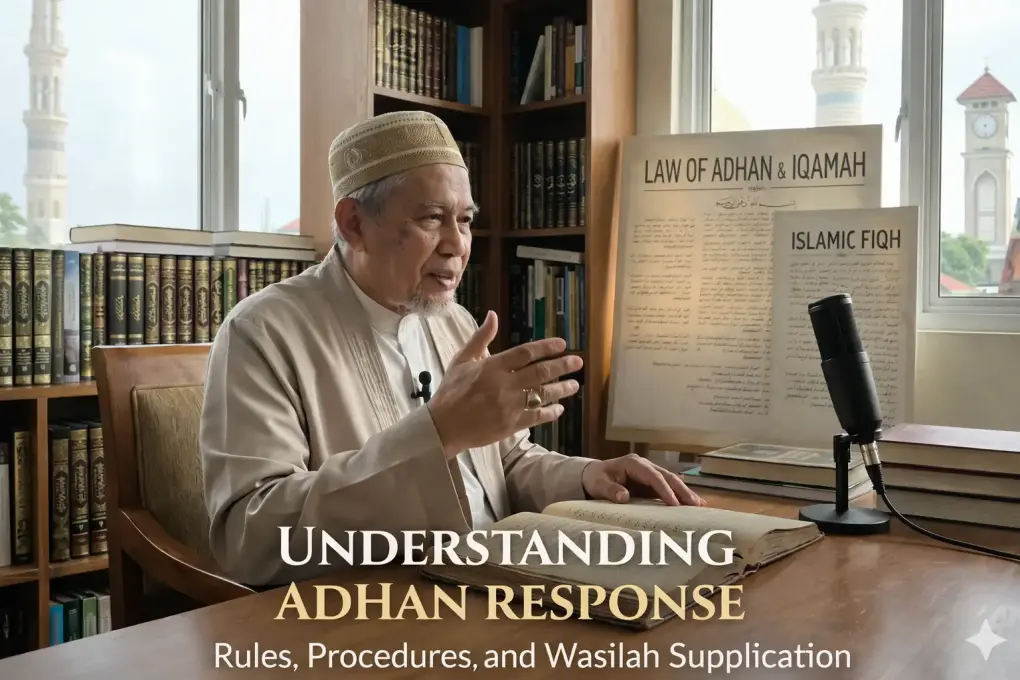
Having established the linguistic and terminological definitions, what is its legal status?
Shafi’i scholars assert that the ruling of the Adhan is Sunnah Kifayah (a communal recommended act) for the five obligatory prayers (Maktubah). This means if one person in a community broadcasts the Adhan, the recommendation is fulfilled for everyone else. However, if an entire community neglects it, they lose the profound virtue of this Sunnah.
Key points regarding its legal rulings:
1. Ruling Before Congregational Prayer
Calling the Adhan before a congregational prayer is a highly emphasized Sunnah (Sunnah Muakkad). Its primary purpose is to manifest the symbols of Islam (syiar) and gather the congregation. Furthermore, it remains recommended even for a person praying alone (Munfarid). Asna al-Matalib states: “It is recommended to call the Adhan for a person praying alone, even if he has already heard it from someone else.”
2. Calling It Before the Prescribed Time
Because the fundamental definition of the Adhan is the notification of the prayer time, calling it before the time has entered renders it invalid for that specific prayer (with the exception of the first Fajr Adhan, which serves to wake people). If done prematurely without a legitimate Shari’ah reason, it fails its purpose of notification (i’lam).
3. Raising the Voice




It is highly recommended for the muezzin to raise his voice. Abu Sa’id al-Khudri narrated that the reach of the muezzin’s voice will act as a witness for him on the Day of Judgment.
هو: أي الأذان (والإقامة سنتان) على الكفاية … (ويسن) الأذان (للمنفرد) بالصلاة (ولو سمعه) من غيره
Special Rulings: Women, Combined Prayers, and Make-up Prayers
Asna al-Matalib provides nuanced details that are often overlooked in general discussions about the call to prayer.
- Women and the Adhan: Can women call the Adhan? The text clarifies that it is recommended for women to establish the Iqamah for a female-only congregation. However, it is not recommended for a woman to call the Adhan loudly. If she calls it softly (audible only to herself and her immediate female peers), it is permissible and counts as a rewarding dhikr. Conversely, raising her voice in the presence of non-mahram men is strictly prohibited due to the potential for fitnah.
- Adhan for Make-up (Qadha) and Combined (Jama’) Prayers: If a person is making up multiple missed prayers consecutively or combining prayers (e.g., Maghrib and Isha), the protocol is unique. One should call a single Adhan at the beginning, followed by a separate Iqamah for each individual prayer. For example, when combining Maghrib and Isha, call one Adhan first, then an Iqamah for Maghrib, followed by another Iqamah before starting Isha.
Conclusion
From the comprehensive discussion above, we understand that linguistically, the Adhan is a public declaration. Meanwhile, the terminological meaning of Adhan and Iqamah encompasses a highly structured notification of prayer times and an Islamic symbol rooted in a divine dream confirmed by the Prophet ﷺ.
To maximize the spiritual benefits of this daily occurrence, Muslims should actively practice answering the Adhan according to the Sunnah and explore the secret practices when hearing the Adhan. May this knowledge deepen our reverence and focus every time we hear this beautiful call echoing from the minarets.
Frequently Asked Questions (FAQ)
What is the literal meaning of Adhan?
Linguistically, the word Adhan means an announcement, notification, or public declaration (al-i’lam).
Is the Adhan obligatory for every individual?
No. According to the Shafi’i school of jurisprudence, it is a Sunnah Kifayah (communal recommendation). If one person in the community performs it, the duty is lifted from the rest.
Can you call the Adhan if you are praying alone at home?
Yes. It is highly recommended (Sunnah) to call both the Adhan and Iqamah even if you are praying alone (Munfarid), as it brings immense spiritual reward and blessings to your home.
Reference
Zakariyā al-Anṣārī, Asnā al-Maṭālib fī Sharḥ Rawḍ al-Ṭālib, with a ḥāshiyah by Aḥmad al-Ramlī, edited by Muḥammad az-Zuhrī al-Ghamrāwī (Cairo: al-Maṭbaʿah al-Maymānīyah, 1313 H; repr. Dār al-Kitāb al-Islāmī), vol. 1, pp. 125-126.


