
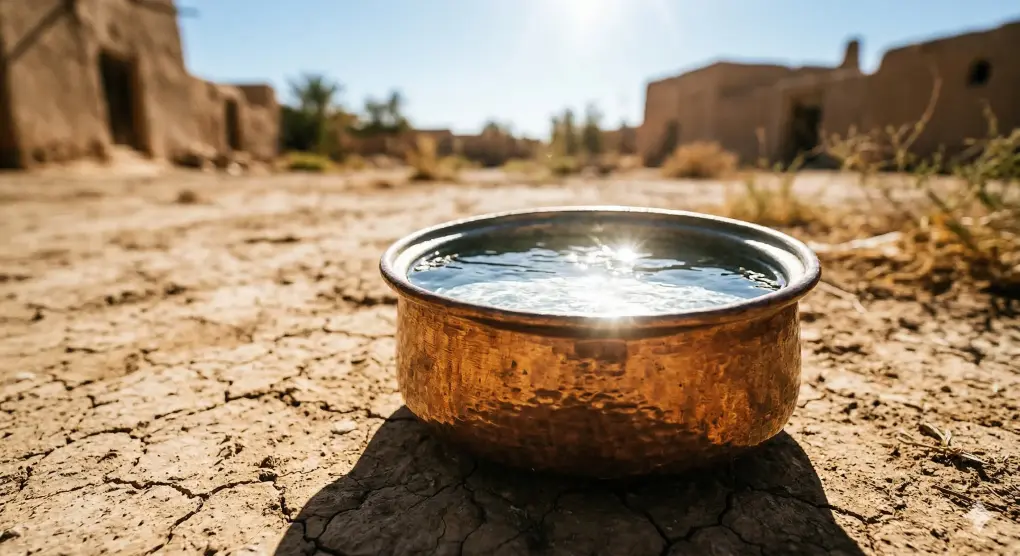
In the religious practice of Muslims, the purity of water plays a foundational role, particularly concerning the concept of ritual purification (thaharah). Water is not merely a fluid; it is the primary instrument for cleansing oneself from ritual impurities (hadath) and physical filth (najis). However, Islamic jurisprudence dictates that not all water holds the same legal status for usage. A specific category exists known as makruh water (disliked water). This comprehensive academic guide explores the definition, types, and rulings of this water within the Shafi’i school of thought.
This exposition is primarily adapted from the classical Shafi’i text, Bushra al-Karim bi-Sharh Masa’il al-Ta’lim (pp. 75-76), which outlines the specific conditions under which water becomes disliked for bodily purification:
فصل: يكره تنزيهاً شرعاً استعمال (شديد السخونة، وشديد البرودة) في بدن؛ للتألم بكل، ولمنعه الإسباغ. نعم؛ إن ضاق الوقت ولم يجد غيره .. وجب استعماله ما لم يعلم ضرره، فيحرم، وكذا يقال في المشمس الآتي… (إلى آخر النص)
Translation: “Chapter: It is legally disliked (makruh tanzih) to use severely hot or severely cold water on the body, due to the pain it causes and because it prevents the perfection of ablution (isbagh). Yes, if time is short and no other water is found, its use becomes obligatory unless it is known to cause harm, in which case it is haram. The same applies to the sun-heated water (musyammas) mentioned next…”
What is Makruh Water?
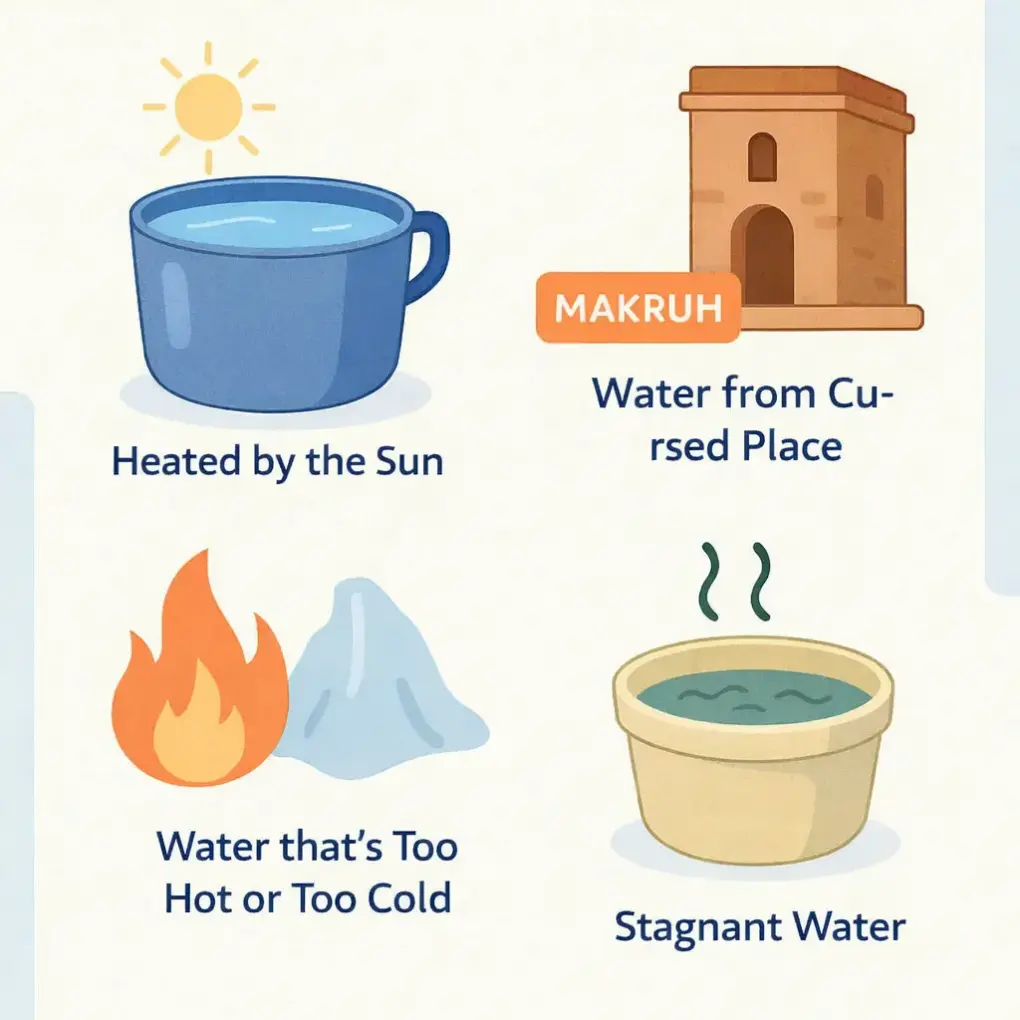
In Islamic jurisprudence, makruh water refers to water that is valid and permissible for purification, but its usage is legally discouraged (makruh tanzih). If a person performs ablution (wudu) or a ritual bath (ghusl) using this water, their purification remains completely valid. Nevertheless, it is highly recommended to seek an alternative source if available.
This category is distinct from pure, unconditioned water (often referred to as absolute water), which is ideal for worship. It is also completely different from contaminated water, which falls under the concept of impurities (najis) and is strictly forbidden for purification.
Types of Makruh Water in Shafi’i Fiqh
Understanding the different classifications of disliked water helps believers make better choices to perfect their worship. The Shafi’i madhhab details several specific types.
1. Sun-Heated Water (Ma’ Musyammas)
The most frequently discussed subcategory is Ma’ Musyammas—water that has been heated by direct sunlight. A common misconception is that all sun-heated water is disliked. In reality, classical Shafi’i scholars established very strict conditions for water to be classified as such.
As stated by Shaykh Zakariya al-Anshari in Asna al-Mathalib:
قوله: (وكره) شرعا (تنزيها استعمال متشمس) في البدن (بمنطبع) أي مطرق (من غير النقدين)
Translation: “His saying: And it is legally disliked (makruh tanzih) to use sun-heated water on the body from a forgeable metal container (other than the two precious metals: gold and silver).”
The rationale behind this ruling is medical, grounded in a narration from Caliph Umar bin Khattab, who stated that bathing in such water could cause leprosy (barash). According to classical scholars, intense sunlight acting upon forgeable metals separates toxic particles from the metal:
ولأن الشمس بحدتها تفصل منه زهومة تعلو الماء فإذا لاقت البدن بسخونتها خيف منها البرص
Translation: “And because the sun, with its intensity, separates from it a rusty/toxic substance (zuhumah) that rises to the surface of the water. If it meets the body while it is hot, there is a fear it may cause leprosy.”
Conditions for Sun-Heated Water to be Makruh:
- Hot Climate: The water must be heated in a region with an extremely hot climate (quthri harr). Water heated by the sun in cold or moderate climates is not makruh.
- Metal Containers: It must be contained in a forgeable metal vessel (munthabi’), such as iron, copper, or zinc. Water stored in plastic, clay, concrete, or precious metals (gold/silver) is entirely exempt.
- Bodily Use: The discouragement applies only when used directly on the human body. Using it to wash clothes or water plants is completely permissible.
- Used While Hot: The ruling applies as long as the water remains hot (ma lam yabrud). Once it cools down, the toxic particles are believed to settle, and the water is no longer disliked.
2. Water with Extreme Temperatures
Water that is excessively hot or excessively cold is also classified as makruh water. The primary legal reason (‘illah) is that extreme temperatures cause physical discomfort, which consequently prevents the worshipper from perfecting the ablution (like washing three times) and observing the recommended sunnah acts.
3. Water from Places of Divine Wrath

Water sourced from geographical locations historically associated with divine punishment is disliked for purification. As mentioned in the continuation of the text in Bushra al-Karim:
ويكره أيضاً استعمال ماء كل أرض غضب عليها، كآبار الحجر غير بئر الناقة، وماء ديار قوم لوط، وأرض بابل، وبئر برهوت، وبئر ذروان التي سحر فيها صلى الله عليه وسلم
This includes:
- Wells in the land of Thamud (Al-Hijr).
- Water from the land of the people of Prophet Lot.
- Water from the land of Babylon.
- The well of Barhut.
- The well of Dharwan (the location where the Prophet Muhammad ﷺ was afflicted with magic).
Crucial Exception: A notable exception regarding Thamud is the specific well from which the camel of Prophet Salih drank (Bi’r an-Naqah). Authentic hadiths explicitly permit using water from this particular well while forbidding the others. When encountering wells with unclear histories, understanding proper well water purification becomes essential.
4. Other Discouraged Waters
Based on the commentary in Al-Tuhfah cited in the main text:
وفي “التحفة”: (يكره الطهر بفضل ما تطهرت منه المرأة؛ للخلاف فيه، قيل: وللنهي عنه، وعن التطهير من إناء نحاس) اهـ ومن المكروه أيضاً: ما في صحة الطهر به خلاف كالراكد
- Leftover Water of a Woman: Some classical scholars hold that a man using the leftover water from a woman’s ritual purification is makruh due to juristic differences and certain narrations forbidding it.
- Copper Vessels: Purifying oneself directly from a copper vessel.
- Doubtful Stagnant Water: Stagnant water (ma’ rakid) whose purity is subject to juristic disagreement is disliked out of precaution.
Rulings on Using Makruh Water for Purification
Can a Muslim use makruh water for worship? Yes. In the eyes of Islamic law, if an individual performs wudu utilizing this water, the core linguistic and technical meaning of wudu is fulfilled, and the purification is valid. There is no sin involved.
However, a critical jurisprudential rule applies: Necessity overrides the disliked status. If the time for prayer is running out and no other water is available, the ruling shifts. It becomes obligatory (wajib) to use the makruh water to perform the prayer on time, provided the water does not cause undeniable, immediate physical harm. Securing the obligatory prayer takes precedence over avoiding a makruh tanzih act.
Comparing Water Categories
To maintain proper Islamic hygiene, one must distinguish makruh water from the other various types of water in Islam:
- Pure and Purifying (Thahur): Pure, unmixed water (e.g., rain, sea, or well water). This is the absolute best choice for worship.
- Pure but Not Purifying (Tahir Ghayr Mutahhir): Water that is clean but legally cannot lift ritual impurity. Examples include coconut water or used water (musta’mal) that falls below the two-qullah volume threshold.
- Impure Water (Mutanajjis): Water contaminated by filth that has altered its smell, color, or taste. It is strictly forbidden for purification.
- Makruh Water: Sits between Thahur and Mutanajjis; valid for purification but better avoided.
Conclusion
Understanding the nuances of makruh water is a reflection of a believer’s dedication to perfecting their acts of worship. While using sun-heated water in a metal container or excessively cold water remains legally valid for ablution, opting for pure, temperate water aligns better with the spirit of caution and reverence in Shafi’i jurisprudence. By identifying the types of discouraged water, Muslims can navigate their daily purification routines with greater wisdom and adherence to the Sunnah.
Frequently Asked Questions (FAQ)
What is the exact difference between makruh water and najis water?
Makruh water is legally pure and your ablution with it is 100% valid, though it is better avoided due to minor health concerns or discomfort. Najis (impure) water is contaminated with filth, making it strictly forbidden for purification or consumption; any ablution performed with najis water is invalid.
Is tap water heated by the sun inside a rooftop tank considered makruh?
It depends on the tank’s material. If the tank is made of a forgeable metal (like steel or zinc) and the climate is extremely hot, it may fall under the musyammas category. However, if the tank is made of plastic or fiberglass, the water is completely permissible and not makruh, regardless of the heat.
If I only have extremely hot or freezing water, should I perform tayammum instead?
No. If water is available, even if its temperature is extreme (making it makruh), you are obligated to use it for wudu, provided it does not cause actual physical injury or illness. The obligation to use water precedes the option of tayammum unless clear harm is established.
Conceptual References
- Al-Hadrami, Sa’id ibn Muhammad Ba’ishin. Bushra al-Karim bi-Sharh Masa’il al-Ta’lim. (Jeddah: Dar al-Minhaj, 2004), pp. 75-76.
- Al-Anshari, Zakariya. Asna al-Mathalib fi Sharh Rawd al-Talib. Edited by Muhammad az-Zuhri al-Ghamrawi. (Cairo: al-Matba’ah al-Maymaniyah, 1313 H), Vol. 1, p. 8.


