
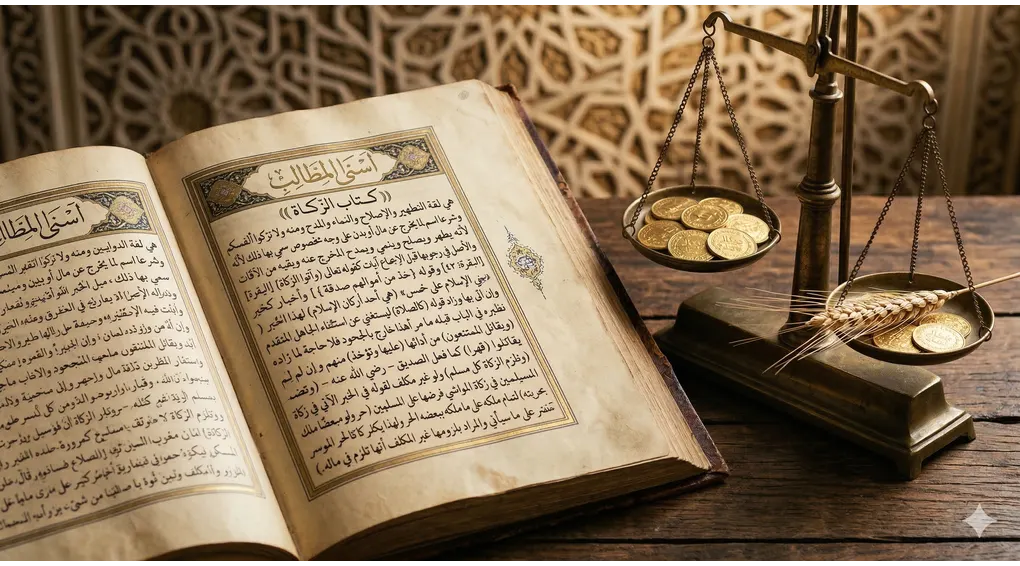
The worship of zakat serves as a primary pillar sustaining the foundation of the Islamic faith. Its implementation is not merely a routine act of relinquishing wealth, but rather an absolute submission to highly detailed Shari’ah regulations. Grasping the basic rulings of Zakat, including its precise procedures, conditions, and the specific types of wealth subject to this obligation, requires referencing authoritative Islamic jurisprudence (fiqh) literature.
The detailed Shari’ah rulings regarding this obligation have been extensively discussed by the scholars of the Shafi’i school of thought (madhhab). One such comprehensive exposition is clearly recorded in the classical text Asna al-Matalib. This complete guide to Zakat in Shafi’i Fiqh is designed to dissect these fundamental rules, ranging from the obligatory conditions and types of wealth to the rightful recipients (mustahiq), ensuring that a Muslim’s financial obligation is fulfilled validly.
Why Study Zakat According to Shafi’i Fiqh?
Studying the fiqh of zakat protects a Muslim from errors in fulfilling the rights of Allah ﷻ and the rights of fellow human beings. In the Islamic scholarly tradition, particularly within the Shafi’i school, the definition of an act of worship is always examined from two perspectives: the linguistic meaning (lughatan) and the Shari’ah terminology (syar’an).
Shaykh Zakariyya al-Ansari in Asna al-Matalib provides a definitive assertion regarding the essential meaning of zakat:
قوله: (كتاب الزكاة) هي لغة التطهير والإصلاح والنماء والمدح ومنه ولا تزكوا أنفسكم وشرعا اسم لما يخرج عن مال أو بدن على وجه مخصوص سمي بها ذلك لأنه يطهر ويصلح وينمي ويمدح المخرج عنه ويقيه من الآفات
Linguistically, zakat means purification (tathhir), improvement (ishlah), growth (nama’), and praise (madh). Meanwhile, in Shari’ah terminology, zakat is the name for something extracted from wealth or the body through a specific procedure (‘ala wajhin makhshush).
This nomenclature is deeply profound. Wealth from which zakat is paid becomes purified, grows with blessings, improves the social order, and protects its owner from various evils and calamities (yaqihi min al-afat). The rule of “a specific procedure” is precisely what obligates Muslims to study fiqh rulings in detail, as zakat distributed without knowing the limits of the minimum threshold (nisab), the required lunar year (hawl), and its valid categories will not absolve the obligation.
The Legal Basis of Zakat in Islam
The obligation to perform this worship rests on exceptionally strong legal foundations, sourced directly from the Qur’an and the Sunnah, predating even the scholarly consensus (ijma’). Some of the primary evidences serving as its foundation are:
- The Words of Allah ﷻ in Surah Al-Baqarah, verse 43: {وآتوا الزكاة} [البقرة: ٤٣] Meaning: “And establish prayer and give zakat.”
- The Words of Allah ﷻ in Surah At-Tawbah, verse 103: {خذ من أموالهم صدقة} [التوبة: ١٠٣] Meaning: “Take, [O, Muhammad], from their wealth a charity…”
- The Hadith of the Prophet ﷺ on the Pillars of Islam: This Shari’ah mandate is built upon five matters, essential for understanding the pillars of Islam, as stated by the Messenger of Allah ﷺ: «بني الإسلام على خمس» (“Islam is built upon five [pillars]”). Zakat occupies a position parallel to the daily prayers.
Because this obligation is so definitive, scholars have outlined severe legal consequences for those who reject it. The fiqh texts state:
قوله: (يكفر جاحدها) وإن أتى بها… (ويقاتل الممتنعون) من أدائها عليها وتؤخذ منهم وإن لم يقاتلوا (قهرا) كما فعل الصديق – رضي الله عنه –
A person who denies the obligation of zakat (jahid) is judged to have left Islam (commits kufr), even if they physically pay it. As for the group that believes in its obligation but refuses to pay (mumtani’un), the legitimate authority has the right to combat them and forcefully confiscate (qahran) the wealth, just as the decisive action taken by Caliph Abu Bakr al-Siddiq (may Allah be pleased with him).
Categories of Zakat
In the Shafi’i school, not all possessions are subject to this obligation. The Shari’ah has specified certain types of wealth that possess the potential for growth. This major division is affirmed with the following statement:
قوله: (وهي) أي الزكاة (ستة أنواع: النعم… والمعشرات… والنقدان… والتجارة… والمعدن… والفطرة)
In total, there are six main types divided into two broad categories: Wealth Zakat (Zakat al-Mal) and Body/Soul Zakat (Zakat al-Fitr). Below is an introduction to the specific discussions on each pillar:
Zakat al-Mal (Wealth Zakat)
This financial obligation is attached to owned objects or assets, encompassing five categories:
- Livestock (Al-Na’am / Mawashi): This applies exclusively to camels, cattle (including water buffalo), and sheep or goats. These animals are subject to zakat because they are frequently utilized as growing commodities (lin-nama’). There are strict rules regarding the condition of sa’imah (grazed on open, permissible pastures) and being exempt from agricultural labor (‘amilah).
- Agriculture and Grains (Mu’ashsharat): This applies to agricultural produce that serves as a staple food (qut) and can be stored for a long time, such as wheat, dates, grapes (raisins), rice, and corn. They are called mu’ashsharat because the extraction percentage revolves around one-tenth (10%) or one-twentieth (5%), depending on the irrigation costs.
- Gold and Silver (Naqdan): The obligation on currency, gold and silver jewelry not used for customary, permissible wear (mubah), and savings or hoarded wealth (kanz). The nisab for gold is 20 mithqal (approx. 85 grams), while silver is 200 dirhams. The obligatory extraction rate is one-fortieth, or 2.5%.
- Trade Goods (Tijarah): All forms of assets and goods purchased with the intention of reselling for profit. The value of the merchandise is evaluated at the end of the year (hawl) using the local currency market standards.
- Mined Minerals and Buried Treasure (Ma’din & Rikaz): Ma’din refers to gold or silver extracted from the earth, requiring an immediate 2.5% zakat upon purification. Rikaz is buried treasure from the pre-Islamic (Jahiliyyah) era discovered by a Muslim, carrying a zakat rate of khums or one-fifth (20%).
Zakat al-Fitr (Body Zakat)
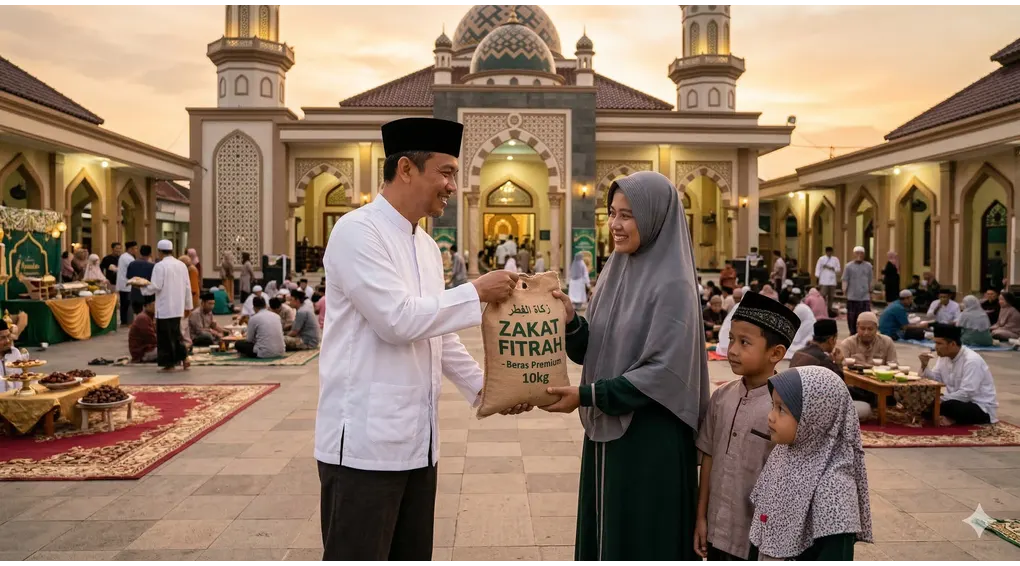
This zakat is not related to the growth of wealth; instead, it functions as a purification of the soul and an expiation of minor sins for the fasting person.
قوله: (والفطرة) تطهيرا للنفس وتنمية لعملها
For a more profound understanding of its distinct mechanisms, you can consult a dedicated Zakat al-Fitr Shafi’i guide. Its obligation falls precisely at sunset on the night of Eid al-Fitr. The standard measurement set is one sha’ (approximately 5 1/3 Baghdad ritl or around 2.5 to 3 kg) of the local staple food. This burden must be fulfilled by every Muslim who possesses surplus food for themselves and their dependents on the day of the festival.
General Conditions for Zakat Obligation
Before calculating the amount of wealth to be extracted, a Muslim must verify whether they and their wealth meet the Shari’ah criteria. Much like verifying the validity conditions of prayer, confirming these prerequisites is essential:
- Islam and Freedom: It is only obligatory for free Muslims. The fiqh text mentions:
قوله: (وتلزم الزكاة كل مسلم) ولو غير مكلف… (حر ولو مبعضا ملك بحريته)
This obligation does not apply to non-believers, nor is it obligatory upon slaves (qinn or mukatab) due to their weak state of wealth ownership. - Applicability to Minors and the Insane: Unlike prayer, which demands physical maturity (baligh) and sanity, zakat is a financial worship (maliyyah). If an infant or an insane person possesses wealth reaching the nisab and hawl, the rights of the poor remain attached to that wealth.
قوله: (فعلى الولي إخراجها من مال الطفل) ولو مراهقا (والمجنون)… (لا الجنين)
The guardian (wali) is obligated to pay zakat from the wealth of the minor or the insane person. However, a fetus still in the womb is not liable for zakat on its wealth as its definitive life is not yet guaranteed. - Perfect Ownership (Milk Taam): The wealth must be under full control. Endowment (waqf) properties intended for public interest (such as mosques) are not subject to zakat. Similarly, for lost, usurped, or collateralized wealth, the obligation of payment is delayed until the asset returns to the owner’s hands.
- Reaching the Minimum Threshold (Nisab): Each type of wealth has a minimum standard to be liable for zakat. Wealth below the nisab is considered not to have reached the level of affluence required for sharing with others (muwasah).
- Passing One Full Year (Hawl): Specifically for livestock, gold, silver, and trade assets, the wealth must remain above the nisab threshold for one full lunar year. This rule does not apply to agricultural zakat, rikaz, and ma’din, which must be paid at the time of harvest or discovery.
The Legal Status of an Apostate’s Wealth: If a person commits apostasy (leaves Islam), the obligation of zakat on their wealth does not automatically drop.
قوله: (ولا تسقط) الزكاة الواجبة في الإسلام (بالردة) مؤاخذة له بحكم الإسلام
The wealth is placed in a suspended status (mauquf). If the person returns to Islam, all zakat liabilities accrued during their period of apostasy must be paid in full.
Eligible Recipients of Zakat (The 8 Asnaf)
Once the wealth is purified, its distribution must be accurately targeted. The Qur’an exclusively limits the distribution of zakat to eight specific categories (mustahiq or asnaf). The Shafi’i fiqh perspective details them as follows:
- The Destitute (Al-Fuqara): A person who possesses absolutely no wealth or income, or has an income but it falls drastically short of the minimum standard of a decent living for themselves and their dependents.
- The Poor (Al-Masakin): A person who has wealth or a decent income but it is still insufficient to cover their total daily needs reasonably, without excess and without severe deficiency.
- The Administrators (Al-Amilin): Official personnel appointed by the government (Imam) to collect, record, safeguard, and distribute zakat. This includes the collector (sa’i), the clerk (katib), the gatherer (hashir), and the accountant (hasib).
- Those Whose Hearts are Reconciled (Al-Mu’allafati Qulubuhum): Groups of Muslims who have newly embraced the faith and whose belief is still fragile, influential Muslim figures whose reception of zakat might encourage their peers to embrace Islam, or funds used to prevent the harm of groups hindering Islamic propagation.
- The Enslaved (Riqab): A mukatab slave who has a written agreement with their master to purchase their freedom but lacks the funds to pay off the emancipation installments.
- The Debtors (Al-Gharim): A person entangled in debt for permissible living needs (not for sinful acts), or a community leader who incurs debt to reconcile two conflicting groups (ishlah dzat al-bain).
- In the Cause of Allah (Fi Sabilillah): Volunteer fighters (ghazah mutathawwi’in) who engage in defending the religion of Allah without receiving a regular salary from the state’s military treasury (diwan).
- The Wayfarer (Ibn al-Sabil): A person undertaking a long journey (permissible travel) or starting a journey from the location where zakat is distributed, and who runs out of provisions, even if they are wealthy in their hometown.
Summary of Differences Between Fakir & Miskin




| Criteria of Need | Asnaf Fakir (Destitute) | Asnaf Miskin (Poor) |
| Wealth Condition | None at all / extremely minimal. | Exists, but falls short of a decent standard. |
| Income Level | Less than half of basic needs (e.g., Needs $10, only has $3). | More than half but not full (e.g., Needs $10, has $8). |
| Distribution Right | Given top priority to cover the severe deficit. | Given a subsidy to reach the sufficiency threshold (kifayah). |
Conclusion
Dissecting the fiqh rules of zakat is akin to safeguarding the pulse of economic justice within Islam. The Shafi’i madhhab offers a precise structural framework to ensure that every gram of gold, every head of livestock, and every grain of harvest is purified with the correct intention and procedure, and then delivered directly into the rightful hands.
Frequently Asked Questions (FAQ) about Zakat in Shafi’i Fiqh
Is it obligatory to pay zakat on paper money savings in the bank?
Yes. In contemporary fiqh, fiat (paper) money is assessed through analogical deduction (qiyas) with the zakat on gold and silver (naqdan). If the balance remains for one full Hijri year and reaches the nisab (equivalent to 85 grams of gold or 20 mithqal), then 2.5% must be paid. It should be noted that there are differing scholarly opinions regarding whether fiat money is entirely analogous to physical gold and silver (nuqud).
Must zakat be paid every year on gold jewelry worn by women?
According to the Shafi’i school, permissible (mubah) gold or silver jewelry worn customarily by a woman (without extravagance/israf) is exempt from the zakat obligation. Zakat only applies to jewelry that is hoarded (stored away), unlawful jewelry, or if the intention behind it changes to commercial trading.
What if a farmer irrigates his rice field using a fuel-powered water pump?
The zakat on agricultural produce (mu’ashsharat), which is originally 10% (for rain-fed fields), is reduced to one-twentieth or 5% (nisf al-‘ushur) because the farmer incurs extra costs and labor (mu’nah) for the irrigation process.
Reference
Zakariyya al-Ansari, Asna al-Matalib fi Sharh Rawd al-Talib, with marginalia (hashiyah) by Ahmad al-Ramli, edited by Muhammad az-Zuhri al-Ghamrawi (Cairo: al-Matba’ah al-Maymaniyyah, 1313 H; repr. Dar al-Kitab al-Islami), Vol. 1, pp. 338-399.


