

Have you ever felt that time is too short while your desire to increase worship is immense? In our daily lives, we are often faced with choices. During Ramadan, for instance, should one prioritize Tarawih prayers or ensure the completion of the Ba’diyyah Isha (post-Isha sunnah)? Or in the morning, is the Dhuha prayer more “powerful” than the Qabliyyah Subh?
Scholars of Islamic Jurisprudence (Fiqh), particularly within the Shafi’i Madhhab, have meticulously organized the levels of voluntary prayers (tatawwu’). The objective is to provide a clear roadmap so believers know which acts to prioritize when time is limited. In this article, we will examine the classical reference, Asna al-Matalib Sharh Rawd at-Thalib by Shaykh al-Islam Zakariya al-Ansari, to understand this spiritual hierarchy.
Classification of Sunnah Prayers: Congregational vs. Individual
Shaykh Zakariya al-Ansari begins his explanation by dividing Sunnah prayers into two major categories. This division serves as the foundation for determining superiority:
قوله : ( وَهُوَ ) أَيْ التَّطَوُّعُ ( قِسْمَانِ قِسْمٌ تُسَنُّ لَهُ الْجَمَاعَةُ ، وَهُوَ أَفْضَلُ ) مِمَّا لَا تُسَنُّ لَهُ جَمَاعَةٌ لِتَأَكُّدِهِ بِسَنِّهَا لَهُ
Meaning: “And it (voluntary prayer) is of two types. The first type consists of those for which congregation (jama’ah) is recommended, and this is superior to those where congregation is not recommended, due to its emphasis through the sunnah of gathering…”
The reason congregational sunnah prayers occupy the top tier is Syiar (public manifestation of faith). Worship that involves the community and demonstrates the symbols of Islam is considered weightier than individual worship.
The Highest Rank: Sunnah Prayers Performed in Congregation
Within this “heavyweight” category, there is a specific order of priority that may differ from common public perception.
1. The Two Eid Prayers (Eid al-Adha & Eid al-Fitr)
The peak is occupied by the Idain. These prayers closely resemble obligatory (fardh) prayers: they have specific timings and are performed in congregation. Between the two, Eid al-Adha is superior. As noted by Imam az-Zarkashi:
قَالَ الزَّرْكَشِيُّ , لَكِنَّ الْأَرْجَحَ فِي النَّظَرِ تَرْجِيحُ عِيدِ الْأَضْحَى ; لِأَنَّهُ فِي شَهْرٍ حَرَامٍ وَفِيهِ نُسُكَانِ الْحَجُّ , وَالْأُضْحِيَّةُ
“The more correct view in analytical perspective is the preference of Eid al-Adha; because it occurs in a Sacred Month (Dhu al-Hijjah) and contains two major acts of worship: Hajj and Sacrifice (Udhhiyah).”
2. Eclipse Prayers (Kusuf & Khusuf)
Following the Eids, the priority shifts to the eclipse prayers.
قوله : ( ثُمَّ الْكُسُوفُ ) لِلشَّمْسِ ( ثُمَّ الْخُسُوفُ ) لِلْقَمَرِ لِخَوْفِ فَوْتِهِمَا بِالِانْجِلَاءِ
“Then the Solar Eclipse (Kusuf), then the Lunar Eclipse (Khusuf), for fear of missing them upon the clearing (of the eclipse).”
The Solar Eclipse takes precedence because the Prophet Muhammad ﷺ never omitted it, and its timing is extremely narrow.
3. Istisqa (Prayer for Rain)

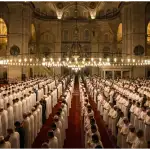


In the third position is the prayer for rain. Since the need for water involves the survival of the community, this prayer for rain carries a very strong congregational emphasis.
4. Tarawih Prayer
In the congregational category, Tarawih follows Istisqa. There is a notable discussion regarding whether Tarawih is superior to regular Rawatib prayers. Shaykh Zakariya al-Ansari notes:
قوله : ( وَغَيْرُ الضُّحَى مِنْ الرَّوَاتِبِ ) … ( أَفْضَلُ مِنْ التَّرَاوِيحِ )
“And other than Dhuha from the Rawatib… are superior to Tarawih.”
The reasoning is that the Prophet ﷺ was more consistent in maintaining Rawatib, whereas Tarawih was sometimes performed at home to ensure it wasn’t perceived as an obligation by the Ummah.
The Masters of Individual Sunnah Prayers (Munfarid)
We now move to the second category: prayers usually performed alone. Do not be mistaken; some prayers here hold immense rewards that can surpass certain congregational acts.
1. Witr: The Nightly Seal
Witr is the most virtuous of all individual sunnah prayers.
قوله : ( وَأَفْضَلُهَا الْوِتْرُ ) … وَلِوُجُوبِهِ عِنْدَ أَبِي حَنِيفَةَ
“The most virtuous of them is Witr… and because of its obligation according to Abu Hanifah.”
In Fiqh principles, an act whose obligation is debated is prioritized to “exit the disagreement” (khuruj minal khilaf).
2. Two Raka’ats of Fajr (Qabliyyah Subh)
Ranked second is the prayer before the Subh obligatory prayer. The Hadith is well-known:
« رَكْعَتَا الْفَجْرِ خَيْرٌ مِنْ الدُّنْيَا وَمَا فِيهَا »
The ḥadīth is very popular: “Two rakʿahs of Fajr (dawn prayer) are better than the world and all it contains.” Indeed, this book mentions that Qabliyah Subḥ (pre-dawn sunnah prayers) are superior to sunnah prayers in the middle of the night (tahajjud) according to some opinions, due to their status as Rawātib (regular sunnah prayers) that the Prophet diligently observed. Although Imam Nawawi in Ar-Raudhah tends to favor Tahajjud as being superior due to the evidence concerning the virtues of the night.
3. Other Rawatib Prayers
After Witr and the Qabliyah of Subuh (dawn prayer), the next priority is the Rawatib prayers that accompany the obligatory prayers (Qabliyah of Zuhur, Ba’diyah of Maghrib, Ba’diyah of Isya, etc.). This routine is a “fence” that protects our obligatory prayers.
4. Dhuha Prayer
The Dhuha prayer holds the next position because it is bound by a specific time, not by an event. This makes it more disciplined than an absolute sunnah prayer.
5. Prayers with a Cause (Dzatul Asbab)
At the last rank of this hierarchy is prayer performed due to a triggering cause. The order is as follows:
- Shalat Thawaf: Because some scholars deem it obligatory.
- Shalat Tahiyatul Masjid: Because the reason has occurred (entering the mosque).
- Shalat Ihram: Because the reason (the pilgrimage/Umrah) is about to begin.
Summary Table of Sunnah Prayer Levels
To make it easier to understand, here is a summary table of the order of priority of sunnah prayers based on the discussion in Asna al-Matalib:
| Rank | Type of Prayer | Category | Main Reason |
| 1 | Eid al-Adha | Congregational | Sacred Month + Hajj & Sacrifice |
| 2 | Eid al-Fitr | Congregational | Related to Ramadan Fasting |
| 3 | Solar Eclipse | Congregational | Limited Time, Propagation |
| 4 | Lunar Eclipse | Congregational | Limited Time |
| 5 | Istisqa (Request for Rain) | Congregational | The Needs of Many People |
| 6 | Witir | Individual | Disputed Obligation (Muakkad) |
| 7 | Qabliyah Subuh | Individual | “Better than the world & everything in it” |
| 8 | Tarawih | Congregational | Propagation of Ramadan (Position debated with Rawatib) |
| 9 | Other Rawatib | Individual | Accompanying Fardhu (obligatory prayers) |
| 10 | Dhuha | Individual | Time-bound |
| 11 | Tawaf & Tahiyatul Masjid | Individual | Cause-bound |
FAQ: Questions About the Priority of Sunnah Prayers
Here are some practical questions that frequently arise regarding this topic:
If the time for Tarawih is running out, should I prioritize the Ba’diyah Isha prayer or continue with Tarawih directly?
Ideally, perform the Sunnah Ba’diyah of Isha prayer first. Sunnah Ba’diyah of Isha (Ba’diyah Isya) holds a very strong position because it is directly connected to the Fardhu prayer. After that, join the Tarawih prayer.
Which is better, performing the Qabliyah Subuh prayer at home or Tahiyatul Masjid in the mosque?
You can get both. Perform the Subuh Qabliyah prayer at the mosque before sitting down, and intend it simultaneously for Tahiyatul Masjid (takhassus). However, in essence, the Subuh Qabliyah prayer is more important to maintain.
Why is Eid al-Adha more virtuous than Eid al-Fitr, even though Eid al-Fitr feels more festive?
The exuberance of culture differs from the weight of Syariah. Eid al-Adha has excellence because it encompasses the nobility of time (the months of Haram), physical worship (Hajj), and worship through wealth (Sacrifice).
Understanding this order does not mean we belittle worships that are lower in position. Rather, this knowledge helps us strategize our daily worship. Let us not be so busy chasing ordinary sunnah practices that we neglect the highly recommended (muakkad) sunnah or even obligatory ones.
Hopefully, the explanation from the book Asna al-Matalib will help us prioritize our worship better.
Reference
al-Anṣārī, Zakariyā. Asnā al-Maṭālib fī Sharḥ Rawḍ al-Ṭālib. With ḥāshiyah by Aḥmad al-Ramlī. Edited by Muḥammad az-Zuhrī al-Ghamrāwī. Cairo: al-Maṭbaʿah al-Maymānīyah, 1313 H. Reprinted by Dār al-Kitāb al-Islāmī.


