

Questions about what reincarnation is frequently appear in theological discussions and comparative religion. Broadly, reincarnation means the belief that a human soul returns to the physical realm in a new body after death. This idea is common outside Abrahamic faiths. But how does reincarnation in Islam actually work?
This academic article explains the issue thoroughly, referring to the explanations of scholars, specifically excerpts from the book Tuhfat al-Ahwadzi by Imam al-Mubarakfuri. Comprehending this matter relates directly to the foundational principles of the religion, which you can study further by understanding Islam linguistically and according to Sharia.
The Concept of Tanasukh: What is Reincarnation According to Islamic Scholars?
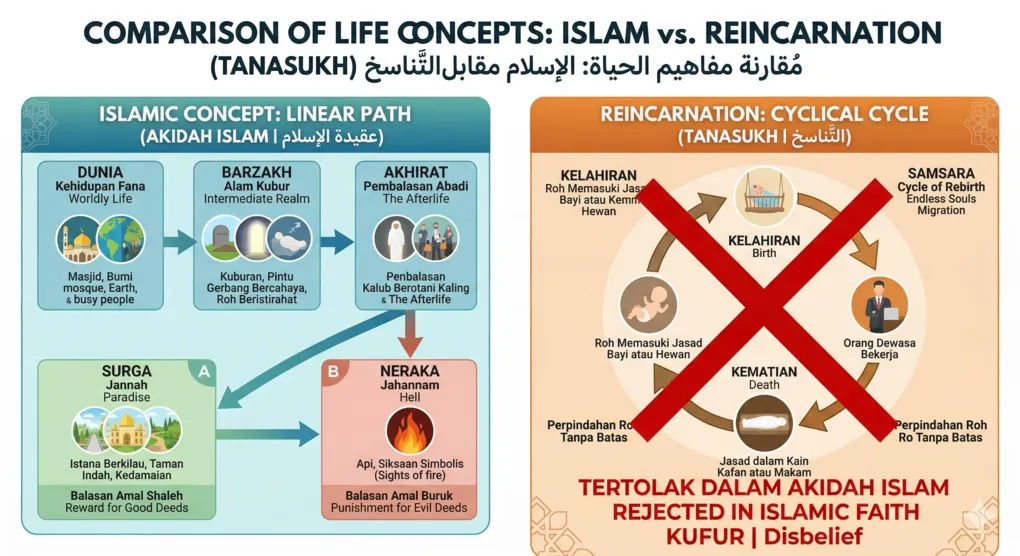
In Islamic scholarship, the concept of reincarnation is known as Tanasukh (التناسخ). This term refers to the doctrine of a soul moving from one body to another within this world. Theological scholars clearly explain the reality of this teaching and its deviations from the truth.
In a marginal gloss (hashiyah) of the book Sharh al-Aqa’id, the text states:
وفي بعض حواشي شرح العقائد اعلم أن التناسخ عند أهله هو رد الأرواح إلى الأبدان في هذا العالم لا في الآخرة إذ هم ينكرون الآخرة والجنة والنار ولذا كفروا انتهى
Translation: “Know that tanasukh, according to its adherents, is the return of souls to bodies in this world, not in the hereafter. They believe this because they deny the hereafter, Paradise, and Hell. Consequently, scholars rule them as disbelievers.” (End quote).
This quote asserts that the tanasukh belief rests on the outright denial of the Day of Judgment. Because they reject Islamic eschatology entirely—which forms a core part of the six pillars of faith—scholars declare the followers of this doctrine outside the fold of Islam (kufr).
Why Does Islam Reject Reincarnation?
Based on the explanation in the book al-Mirqah quoted in Tuhfat al-Ahwadzi, certain deviant groups misinterpret religious texts to justify tanasukh. They claim that a good person’s soul will enter a beautiful and comfortable body as a reward, while a wicked person’s soul will enter a miserable body as a punishment.
The original statement reads:
قال في المرقاة وقد تعلق بهذا الحديث وأمثاله بعض القائلين ب التناسخ وانتقال الأرواح وتنعيمها في الصور الحسان المرفهة وتعذيبها في الصور القبيحة وزعموا أن هذا هو الثواب والعقاب وهذا باطل مردود لا يطابق ما جاءت به الشرائع من إثبات الحشر والنشر والجنة والنار ولهذا قال في حديث آخر حتى يرجعه الله إلى جسده يوم بعثه الأجساد
Translation: He stated in the book al-Mirqah: “Some of those who believe in tanasukh (reincarnation)—the transmigration of souls, their blessing in beautiful, comfortable forms, and their torment in ugly forms—have used this hadith and similar ones as evidence. They assume this represents reward and punishment. This understanding is false and rejected; it completely contradicts the teachings brought by the divine laws, which establish Hashr (the gathering), Nashr (the resurrection), Paradise, and Hell. Therefore, in another hadith, the Prophet (ﷺ) said: ‘Until Allah returns it (the soul) to its body on the day He resurrects the bodies.'”
The tanasukh doctrine fails because Islamic law possesses clear rules regarding the soul’s fate after death. Islam establishes the phases of Hashr and Nashr. A proper understanding of the post-death phase is fundamental, as detailed in the doctrine of the true essence of faith in the Last Day.
Ibn al-Humam’s Rebuttal Against Absolute Soul Separation
Continuing the argument, the expert in jurisprudence and foundational methodology (Ushul), Ibn al-Humam, clarifies that the soul does not separate entirely from its original body forever:
قال بن الهمام اعلم أن القول بتجرد الروح يخالف هذا الحديث كما أنه يخالف قوله تعالى فادخلي في عبادي انتهى
Translation: Ibn al-Humam said: “Know that the opinion stating the absolute separation of the soul contradicts this hadith, just as it contradicts the words of Allah the Exalted: So enter among My servants.” (End quote).
This evidence confirms that on the Day of Resurrection, Allah will return human souls to their original bodies, rather than placing them into the bodies of other people or creatures in the current physical realm.
Quranic Evidence Refuting Tanasukh and Establishing Barzakh
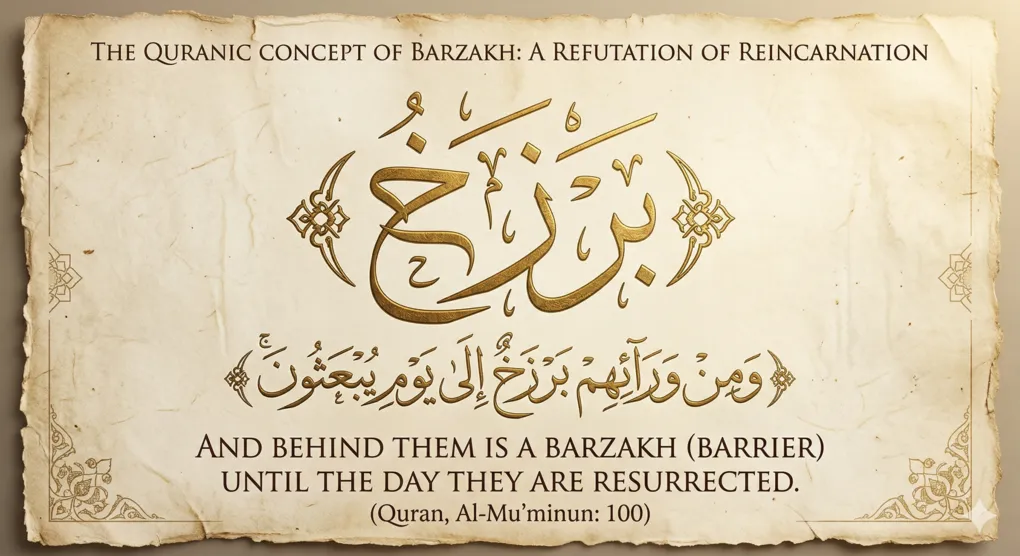
Regarding the absolute error of the tanasukh concept, the author of Tuhfat al-Ahwadzi presents definitive theological evidence from the Quran. The Quran serves as the primary foundation among the four sources of Islamic law. He presents a verse explaining the soul’s condition after it leaves the body, namely the transitional phase called Barzakh.
قلت على بطلان التناسخ دلائل كثيرة واضحة في الكتاب والسنة منها قوله تعالى حتى إذا جاء أحدهم الموت قال رب ارجعون لعلي أعمل صالحا فيما تركت كلا إنها كلمة هو قائلها ومن ورائهم برزخ إلى يوم يبعثون اه تحفة الاحوذي
Translation: I (the author of Tuhfat al-Ahwadzi) say: “Regarding the falsehood of tanasukh, there are many clear proofs in the Quran and the Sunnah. One of them is the word of Allah the Exalted: (For such is the state of the disbelievers), until, when death comes to one of them, he says, “My Lord, send me back, that I might do righteousness in that which I left behind.” No! It is only a word he is saying; and behind them is a barrier (Barzakh) until the Day they are resurrected. (QS. Al-Mu’minun: 99-100).” End of the quote from Tuhfat al-Ahwadzi.
This noble verse dismantles the doctrine of reincarnation. Allah firmly rejects the disbeliever’s request to return to the world to perform good deeds and engage in Tawbah Naṣūḥā (sincere repentance) with the word Kallā (No!). They will remain in the realm of Barzakh, a separating barrier, until the trumpet of the Day of Judgment sounds.
Comparison Table: Islamic Theology vs. Tanasukh Doctrine
To present this explanation clearly, the following table compares the basic principles of Islamic faith regarding the Last Day with the doctrine of tanasukh:
| Theological Parameter | Islamic Faith (Ahlus Sunnah wal Jama’ah) | Tanasukh Doctrine (Reincarnation) |
|---|---|---|
| Post-Death Phase | Transitions to the realm of Barzakh to await the Last Day. | The soul immediately returns to the world in a new body. |
| Concept of Retribution | Realized later in the hereafter (Paradise or Hell). | Realized in this world (born as a noble or despicable figure). |
| Day of Resurrection (Nashr) | Believed as a definitive pillar of faith (qath’i). | Denied completely. |
| Status of the Body | The soul returns to its original body on the Day of Judgment. | The soul sequentially uses the bodies of other creatures. |
Frequently Asked Questions (FAQ) About Reincarnation
Does reincarnation exist in Islam?
No, it does not. Islam strictly rejects the concept of reincarnation (tanasukh). After human death, their souls move to the realm of Barzakh, rather than being reborn in this world.
Why is believing in reincarnation considered kufr (disbelief)?
Adherents of tanasukh deny the existence of the hereafter, the divine judgment of Allah, and the reality of Paradise and Hell, which constitute a pillar of faith. Denying the truth of the Last Day equates to denying the core tenets of Islamic law.
What is the difference between Barzakh and reincarnation?
Barzakh is a waiting realm that acts as a separating barrier between the mortal world and the hereafter. In this realm, the soul waits until the Day of Resurrection. Meanwhile, reincarnation assumes the soul continuously cycles through worldly life without any final hereafter.
Conclusion
The presentation of evidence from the book Tuhfat al-Ahwadzi establishes a clear demarcation line between pure monotheism (Tawhid) and deviant beliefs. The understanding of reincarnation in Islam concludes with the scholarly consensus that the teaching is false (mardud). The worldly life is a field for deeds that a person passes through only once. A Muslim must worship based on the pillar of Ikhlāṣ, avoid the trait of Riyā’, and increase righteous deeds before the door of Barzakh closes without any chance to return.
Reference
al-Mubārakfūrī, Abū al-ʿUlā Muḥammad ʿAbd al-Raḥmān ibn ʿAbd al-Raḥīm (d. 1353 AH). Tuḥfat al-Aḥwadhī bi-Sharḥ Jāmiʿ al-Tirmidhī. Beirut: Dār al-Kutub al-ʿIlmiyyah, n.d., 10 vols., vol. 5, p. 222. Note: The numbering of hadiths in brackets is not part of the original printed edition.


