The Complete Guide to the Iftitah Prayer: Rulings & Authentic Variations
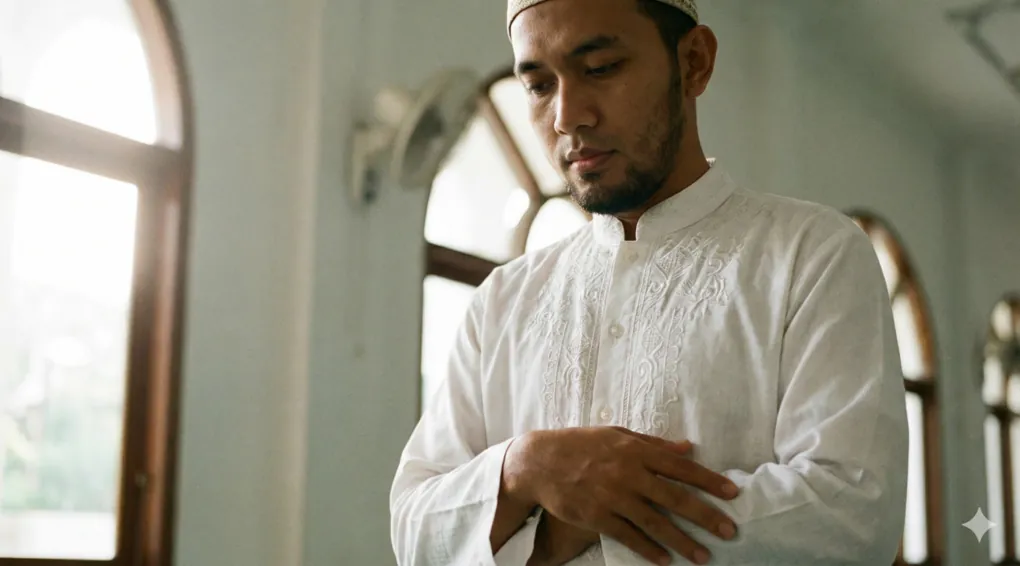
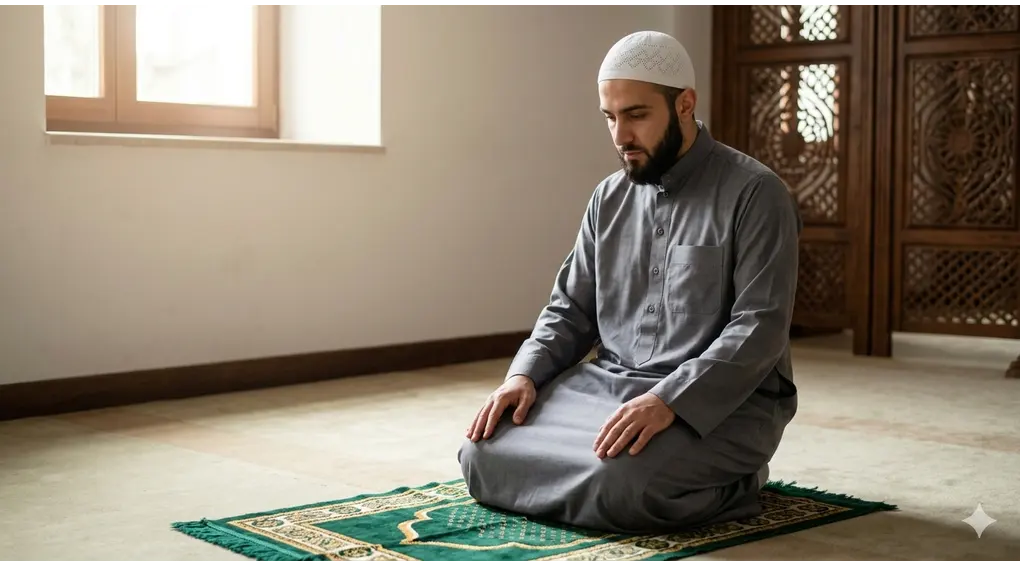
A Muslim standing humbly with folded hands, showing the correct posture while reciting the Iftitah prayer during Salah.

For a Muslim, prayer is the most intimate moment to communicate with the Creator. One of the sunnahs that we often practice at the beginning of prayer is reciting the iftitah. However, did you know that there are many variations of the iftitah recitation taught by the Prophet? In fact, under certain conditions, we are … Read more

Sunnah Prayer for the Iftar Host: Etiquette of Breaking Fast

A Muslim guest praying for the host's well-being after finishing a communal iftar in a warm atmosphere.

The tradition of gathering to break the fast with family or friends always colors the beauty of the holy month of Ramadan. This practice of feasting goes beyond the routine of merely eating. Sharing iftar meals is a means of worship with high value when the doer frames the intention with ikhlas (sincerity) and avoids … Read more

Authentic Fast-Breaking Prayer (Iftar): Sunnah & Pronunciation

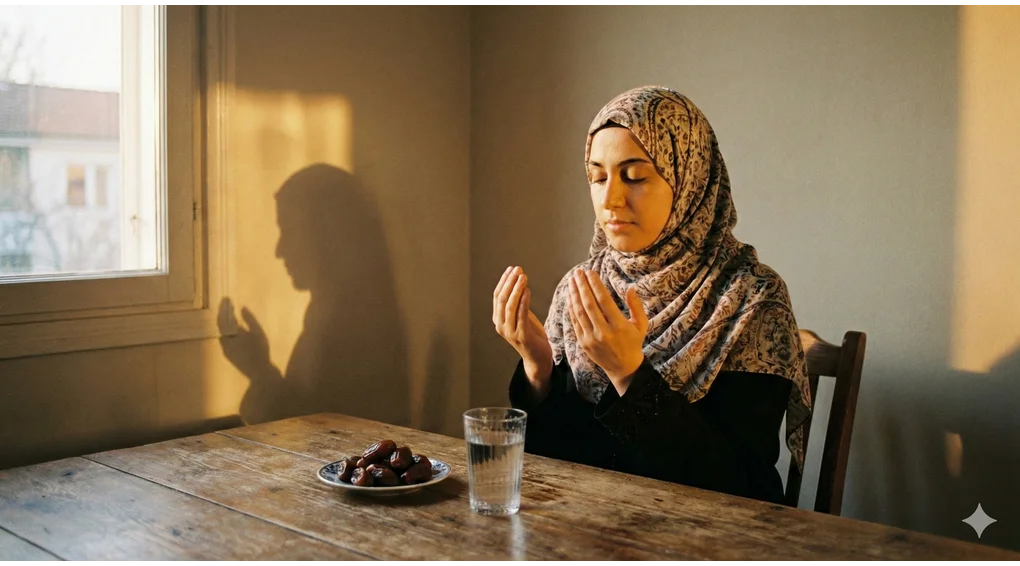
A Muslim praying fervently in front of dates and water at sunset, awaiting the time to break the fast.

The worship of fasting is a spiritual journey that begins as we recite the prayer for seeing the new crescent moon; this will feel even more meaningful when concluded with gratitude at Maghrib. Noble character demands that we emulate the Messenger of Allah ﷺ in moistening the tongue with prayer, giving thanks for sustenance, and … Read more

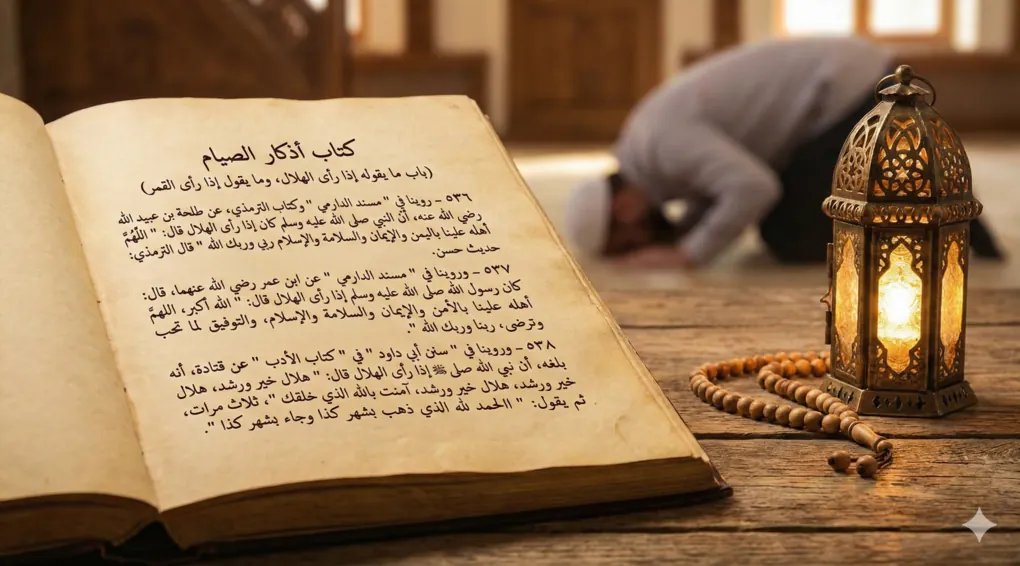
Prayer Upon Sighting the New Moon & Hijri Month (Kitab Al-Adhkar)

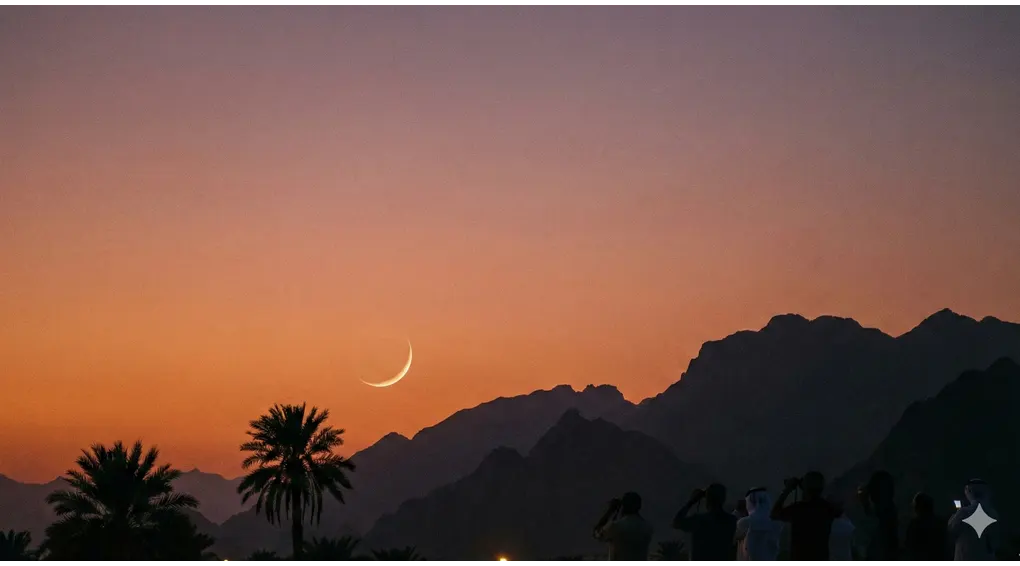
The sighting of the hilal, or the first crescent moon, on the western horizon at dusk, marking the beginning of the new Hijri month.

The passage of time in Islamic law is heavily reliant on the movement of celestial bodies, particularly the moon. The transition of lunar phases, especially when awaiting the arrival of the holy months of Ramadan and Shawwal, is a time imbued with spiritual value. A servant of God who treads the path of tazkiyatun nufus … Read more

Complete Ramadan Fasting Duas & Dhikr Guide (Al-Adhkar)

A Muslim prostrates with deep reverence (khushoo) during the qiyam al-layl night prayer, immersed in the brightly lit and serene ambiance of a mosque on a Ramadan night.

The holy month of Ramadan and the worship of fasting in general hold a high position in Islamic faith. In order for this worship to reach a degree of perfection, a servant needs to adorn their tongue with remembrance and supplication based on the Sunnah of the Prophet Muhammad shallallahu ‘alaihi wa sallam. This article … Read more

Complete Guide to Salat al-Tawbah Nasuha: Evidence, Procedure, and Supplications According to Kitab Al-Bujairimi

A Muslim man or woman in modest attire (hijab and covering the aurat) sitting in a quiet, sunlit corner of a mosque or prayer room. They are in a state of deep reflection or holding their hands in a quiet dua.

Every human being is susceptible to error. In the framework of Islamic jurisprudence (fiqh), it is understood that no one is immune to sin, whether committed intentionally or inadvertently. However, the hallmark of a true believer is the immediate return to Allah’s grace after a transgression. The doors of Divine forgiveness are perpetually open, and … Read more

The Complete Guide to Proper Sujud: Posture and Supplications in Prayer

Muslim man performing sujud in prayer illustrating the proper method and recitation according to the Shafi‘i school of Islamic jurisprudence.

Prostration (Sujud) is not merely the physical act of placing one’s forehead on the floor. Within Islamic prayer, it represents the most sacred moment where a servant is intimately close to their Lord. However, we often find ourselves wondering: are we performing a proper Sujud? Are the supplications we recite accurate? Understanding the correct methodology … Read more

The Ruling on Abbreviating SAW: The Etiquette of Writing Salawat

A conceptual illustration contrasting the abbreviated writings “SAW” or “صلعم” on a worn piece of paper with the elegant Arabic calligraphy of **“Ṣallallāhu ʿalayhi wa sallam.”** A hand is seen holding a smartphone displaying a full *ṣalawāt* autotext option, set against a backdrop of the classical book **Sharḥ Ṣaḥīḥ al-Bukhārī** and a feather quill pen.

Have you ever found yourself in a rush while taking study notes or replying to a message, resorting to abbreviating the Salawat upon Prophet Muhammad ﷺ to “SAW,” “PBUH,” or simply “S.A.W”? This habit seems trivial and has become widespread in our society. The reason is usually simple: to save time and character counts. However, … Read more

The Virtues of Salawat: Authentic Hadiths from Kitab Al-Zawajir

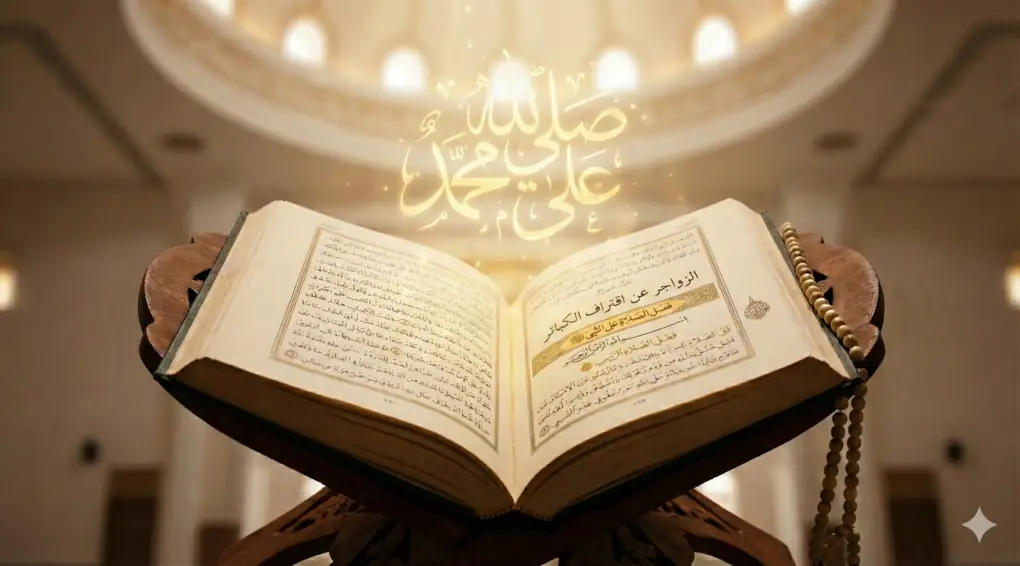
A photograph of the antique book **Al-Zawājir ʿan Iqtirāf al-Kabāʾir** by **Ibn Hajar al-Haytami**, opened on a wooden *rehal* inside a mosque. Radiant golden Arabic calligraphy reading **“Ṣallā Allāhu ʿalā Muḥammad”** rises from the pages, symbolizing the blessings and spiritual light of sending ṣalawāt upon the Prophet.

Many believers occasionally feel as though their supplications remain suspended in the heavens, or that life’s burdens are too overwhelming to articulate in prayer. However, classical Islamic scholarship reveals a profoundly simple yet frequently overlooked practice that opens the doors of divine mercy. This practice is sending blessings upon the Prophet Muhammad ﷺ. In the … Read more

Secret Spiritual Practices When Hearing the Adhan: Insights from I’anah at-Thalibin

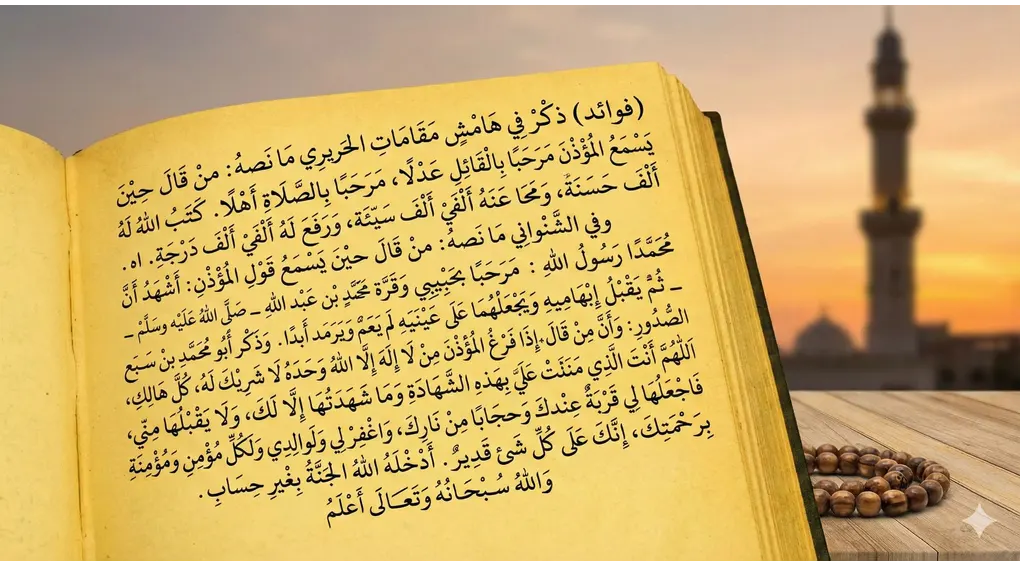
The book I‘ānat al-Ṭālibīn is open, discussing the recommended supplications recited upon hearing the call to prayer, set against the backdrop of a mosque minaret at dusk.

The resounding echo of the call to prayer is not merely a daily marker that prayer time has arrived. For Muslims who deeply comprehend the meaning of the Adhan and Iqamah, the moment it reverberates is a highly precious spiritual opportunity. During this time, the gates of heaven are opened, and Allah’s mercy descends, making … Read more