The Valid Conditions and 4 Pillars of I’tikaf in Shafi’i Fiqh
A Muslim man sitting alone reading the Quran inside a grand mosque, representing the primary pillar of I'tikaf (al-mukth).

The worship of I’tikaf (spiritual retreat) is a noble practice that brings a servant closer to their Creator. For a Muslim seeking to attain the virtues of performing I’tikaf, understanding its precise rules is an absolute necessity. The validity of this worship relies heavily on fulfilling the valid conditions of I’tikaf and its pillars as … Read more

The Complete Guide to the Fiqh of I’tikaf (Shafi’i School)

A Muslim man is reverently reading the Quran while observing i'tikaf in the mosque at dawn.

The worship of I’tikaf is one of the great symbols of Islam; it is a profound manifestation of a servant isolating themselves to draw closer to Allah ﷻ. Within the Islamic scholarly tradition, specifically the rules and procedures of I’tikaf according to the Shafi’i school of thought, this act of worship possesses highly precise pillars … Read more

A Complete Guide to Performing Ghusl (Ritual Bath) After Menstruation According to Classical Fiqh

A serene flat-lay photograph on marble showing items symbolic of Islamic purification: a clean white towel, a bowl of water with flowers, a small bottle of musk perfume oil, and tasbih prayer beads.

Every Muslim woman strives for her worship to be valid and accepted by Allah ﷻ. One of the fundamental requirements to resume worship after a menstrual period is purification. However, doubts often arise: Is the mandatory bath we perform after menstruation actually valid? Has the water truly reached every required part of the body? Performing … Read more

How to Perform Rukūʿ (Bowing) Correctly: Rules, Conditions, and Recitations

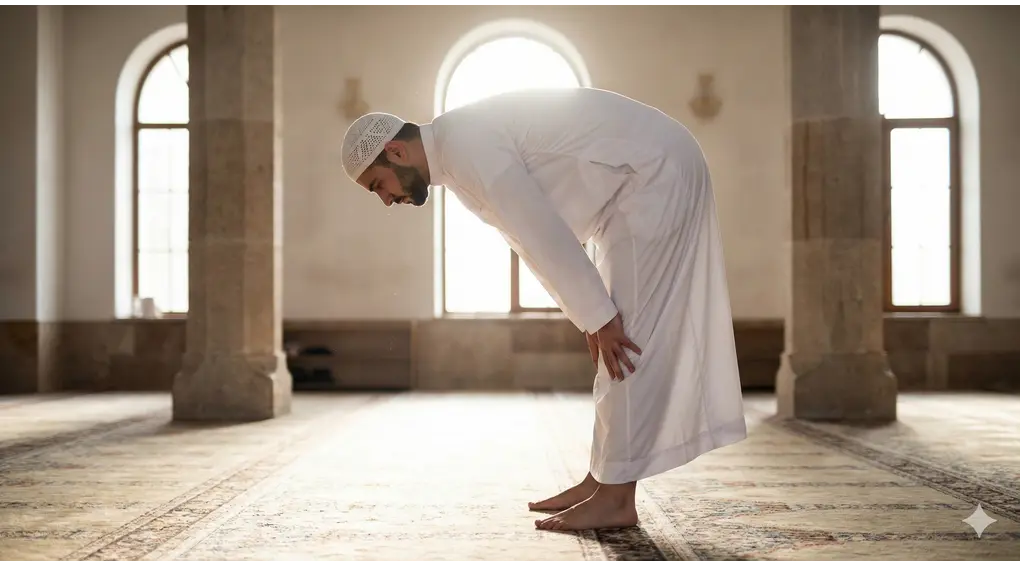
A Muslim man demonstrating the perfect Ruku posture in prayer, featuring a straight back level with the neck and hands grasping the knees.

Understanding the meaning of prayer (Salah) is fundamental, as it is the pillar of the Islamic religion. Every movement within it possesses strict rules to ensure it is accepted by Allah ﷻ. One essential pillar that we perform repeatedly, yet sometimes overlook the technical details of, is bowing (rukūʿ). Many Muslims ask: what is the … Read more

Does Kissing While Fasting Invalidate the Fast? The Islamic Ruling

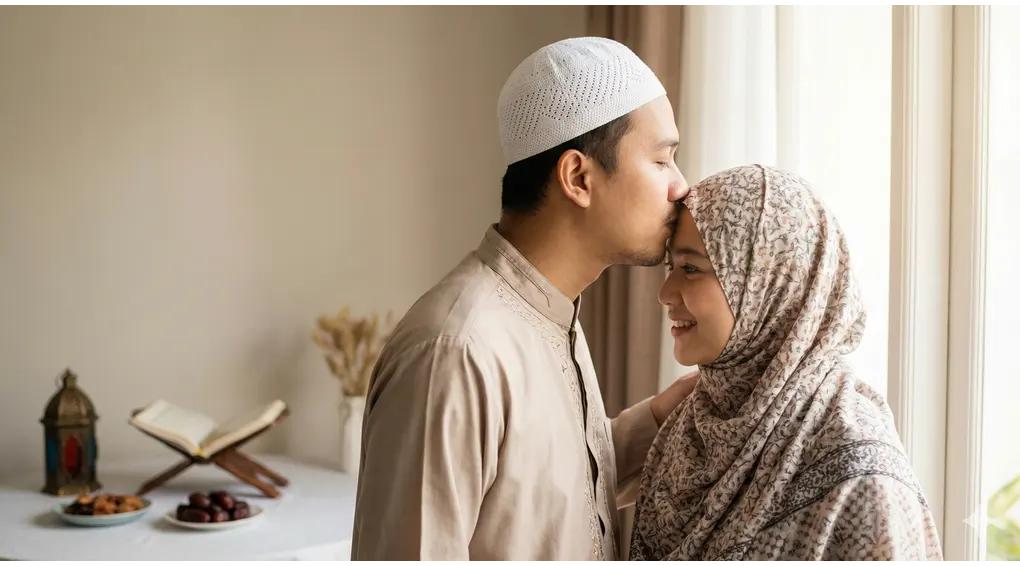
A Muslim husband respectfully kisses his wife's forehead as a permissible (mubah) form of affection during the Ramadan fast.

The worship of fasting (al-ṣawm) is a medium for disciplining the soul and body. Its main essence lies in al-imsāk, namely refraining from everything that invalidates the fast from dawn until sunset. For individuals who are married, the challenge of fasting extends to the manner of physical interaction with their lawful spouses during the day. … Read more

The Complete Guide to the Iftitah Prayer: Rulings & Authentic Variations

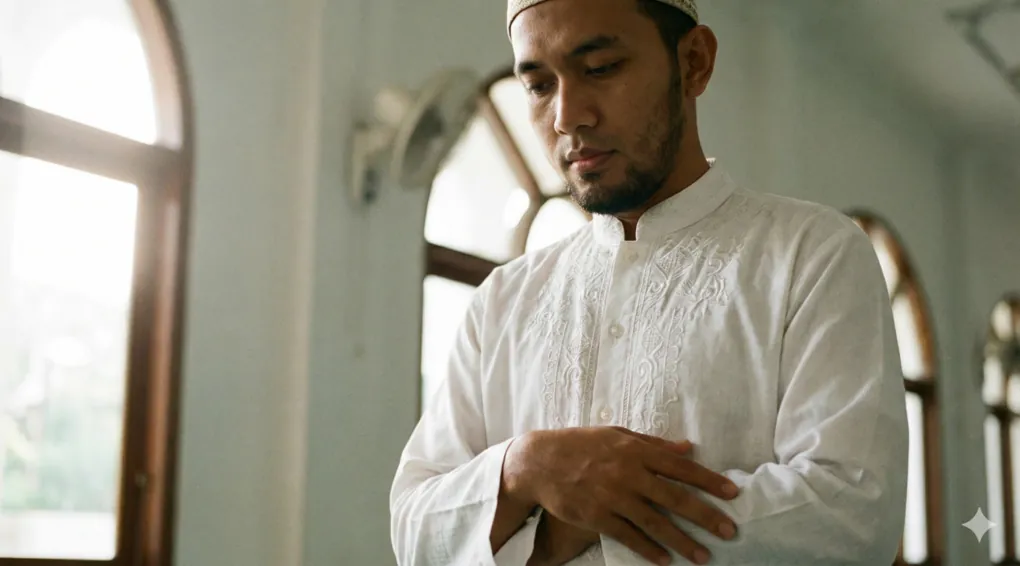
A Muslim standing humbly with folded hands, showing the correct posture while reciting the Iftitah prayer during Salah.

For a Muslim, prayer is the most intimate moment to communicate with the Creator. One of the sunnahs that we often practice at the beginning of prayer is reciting the iftitah. However, did you know that there are many variations of the iftitah recitation taught by the Prophet? In fact, under certain conditions, we are … Read more

How to Control Anger While Fasting: The Meaning of “Inni Shaim”

A Muslim man smiling patiently, placing his hand on his chest as a symbol of restraining his anger and saying 'Inni Saim' (I am fasting).

The worship of fasting (al-ṣawm) is a spiritual discipline that trains a believer to restrain their desires. Sharia guidance establishes that fasting is not merely restraining the stomach and genitals from dawn to sunset. More than that, fasting is a process of tazkiyatun nafs (purification of the soul) that demands its practitioners to guard their … Read more

Valid Adhan and Iqamah Texts: Conditions and Translations in Shafi’i Fiqh

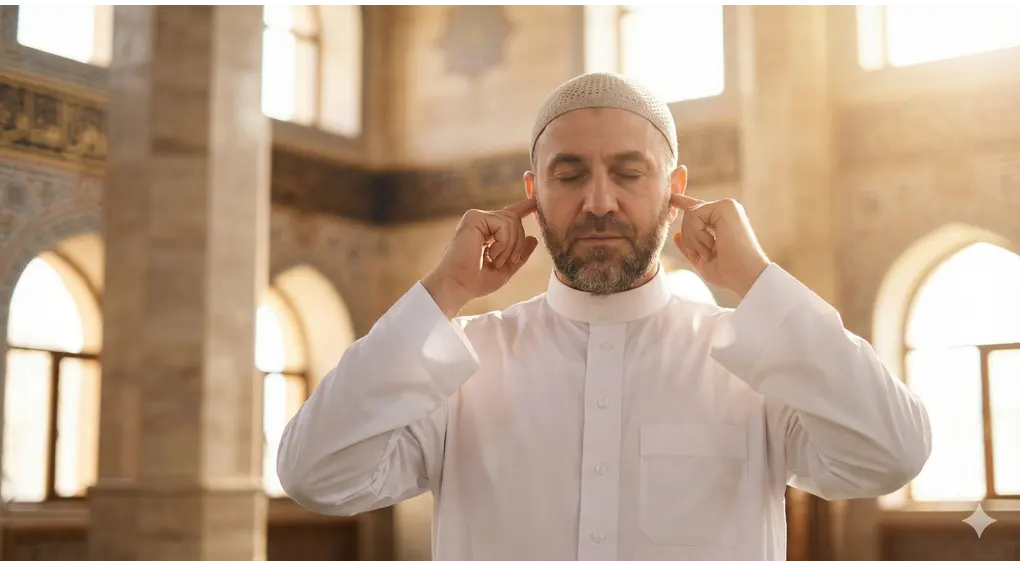
A medium close-up photo of a Muslim muadhin in a mosque, calling the Adhan with a focused expression and placing his index fingers in his ears according to the Sunnah.

The Adhan is not merely a marker of time; it is a profound and majestic Islamic symbol. For a muezzin, understanding the correct recitation of the Adhan and Iqamah, alongside the jurisprudential rules governing them, is absolutely crucial. Many individuals still lack clarity on essential details, such as the proper pronunciation of the Takbir, the … Read more

Valid Conditions of a Muazzin: A Guide Based on Shafi’i Fiqh

A neatly dressed Muslim man in a white koko shirt and peci performing the Adhan (call to prayer) into a microphone from a mosque minaret balcony at sunset.

The resonance of the adhan (call to prayer) five times a day serves as a majestic proclamation of Islamic identity and devotion. The individual entrusted with this noble task occupies a distinguished spiritual station. However, questions often arise among the laity and mosque administrators regarding the specific conditions of a Muazzin and the essential criteria … Read more

Fiqh of Repentance & Human Rights (Haqqul Adami): Complete Guide

An illustration of a Muslim man sitting on a prayer mat, looking pensive as he reflects on his unfulfilled obligations regarding the rights of others (Haqq al-Adami), with an open wallet lying beside him.

In the treasury of Islamic Jurisprudence (Fiqh) and Sufism, sin is categorized into two major dimensions: sins related to the rights of Allah (Haqqullah) and sins related to the rights of other people (Haqqul Adami). Often, a servant feels content weeping and seeking forgiveness on the prayer rug, forgetting the unsettled obligations they owe to … Read more