The Ruling on Cupping While Fasting According to Asna al-Matalib
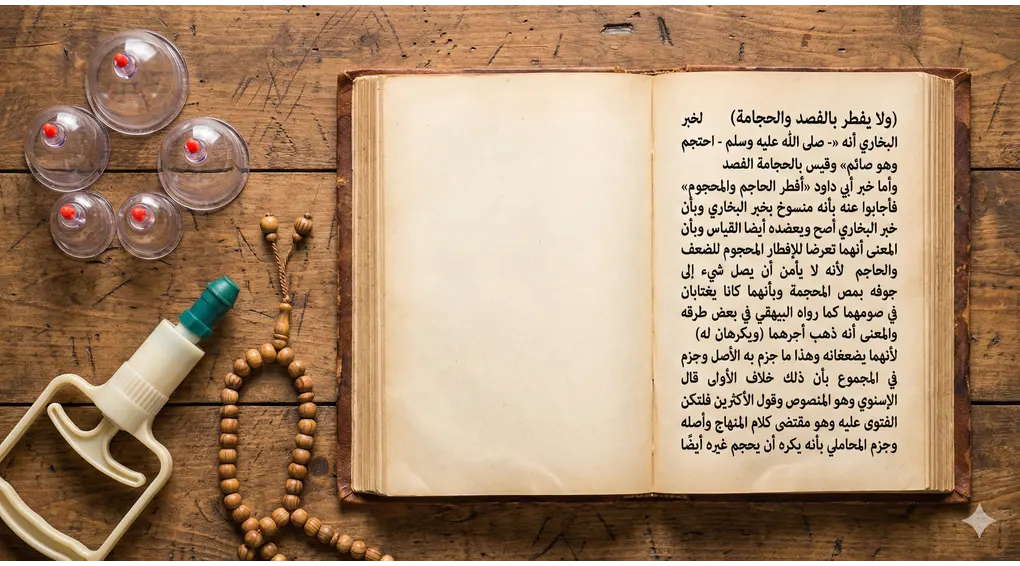
A flat lay photograph on a wooden table featuring an open antique Arabic Fiqh manuscript discussing the ruling of cupping (hijamah) while fasting, next to modern plastic cupping cups, a manual suction pump, and a wooden tasbih.

The month of Ramadan is a golden moment for a believer to practice self-control (al-imsāk) and elevate spiritual quality. Fasting is not merely withholding from thirst and hunger; it is a profound medium for purifying the soul. However, in practice, Muslims often face medical issues or physical therapies during the day. One such treatment is … Read more
Shafi’i Fiqh Analysis: The Rule of Substances (Al-‘Ain) Entering Body Cavities While Fasting

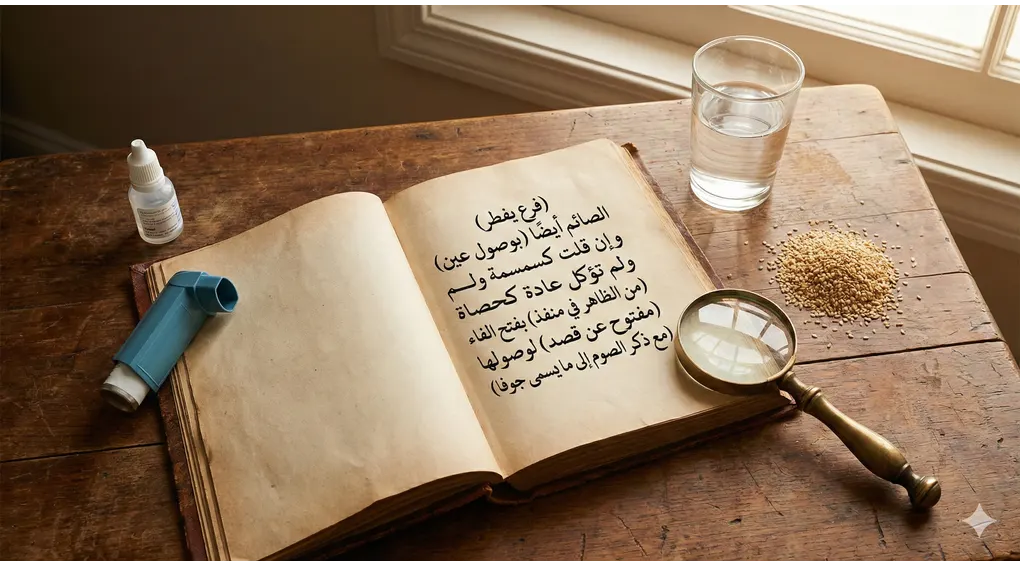
A scholarly flat lay photograph featuring an open classical Arabic Fiqh book relating to fasting rules, alongside modern medical items like eye drops and an inhaler, a glass of water, seeds, and a magnifying glass on a wooden table.

The act of fasting (al-ṣawm) is a tangible manifestation of al-imsāk, which constitutes total restraint from all things that invalidate the fast from the break of dawn until sunset. This noble act of worship must, of course, be preceded by a sincere and correct intention for Ramadan fasting. In the scholarly tradition of the Shafi’i … Read more

Farḍ al-Wuḍūʾ: The 6 Essential Pillars for Valid Worship We Must Understand

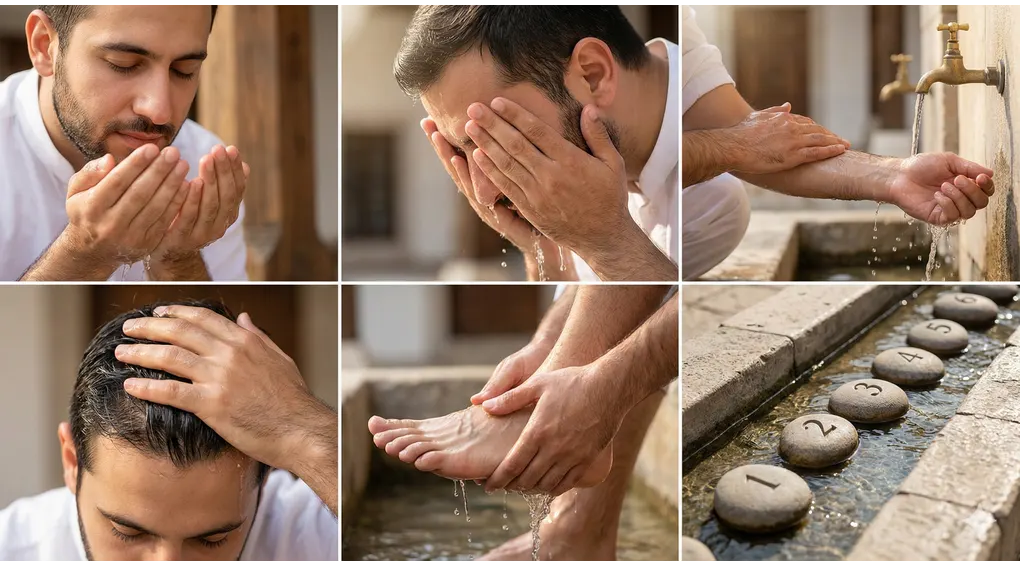
A six-panel photo collage illustrating the 6 fardu (obligatory pillars) of wudu in sequence: niyyah (top left), washing the face, washing arms, wiping the head, washing feet, and an illustration of tartib/order (bottom right).

Wuḍūʾ (ablution) is the indispensable key to the validity of various fundamental acts of worship in Islam, such as prayer (ṣalāh), circumambulation of the Kaaba (ṭawāf), and touching the muṣḥaf of the Qur’an. Without a correctly performed wuḍūʾ, these acts of worship will not be accepted by Allah. A question frequently arises: how many obligatory … Read more

The Meaning of Fiqh: Understanding Islamic Law in Daily Life

An open classical Islamic manuscript resting on a carved wooden rihal (book stand) with prayer beads, illuminated by sunlight through a patterned window.

Understanding the meaning of Fiqh is a crucial first step for every Muslim striving to deepen their religious knowledge. Fiqh serves as one of the most fundamental pillars of Islamic scholarship, functioning as a practical guide for navigating every aspect of life. Naturally, this outward practice must be rooted in sincere faith in Allah. To … Read more

The Meaning of Intention: The Soul of Every Action in Islam

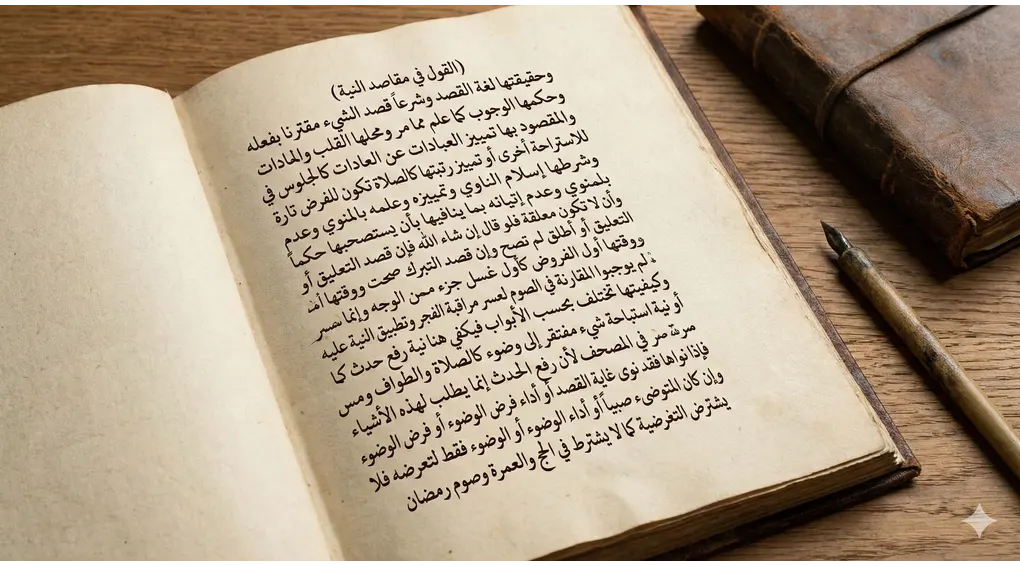
An open antique Islamic fiqh manuscript on a wooden table, displaying Arabic text explaining the linguistic and legal definitions of intention (niyyah).

In every step of life, whether visible to the world or hidden deep within the heart, there is one crucial element that determines its true weight and direction: intention (niyyah). The phrase “everything depends on intention” is not just a passing proverb; rather, it is a fundamental jurisprudential principle that underlines the essence of every … Read more

Rules, Conditions, and Method of Ghusl in Shafi’i Fiqh (Kaifiyah al-Ghusl)

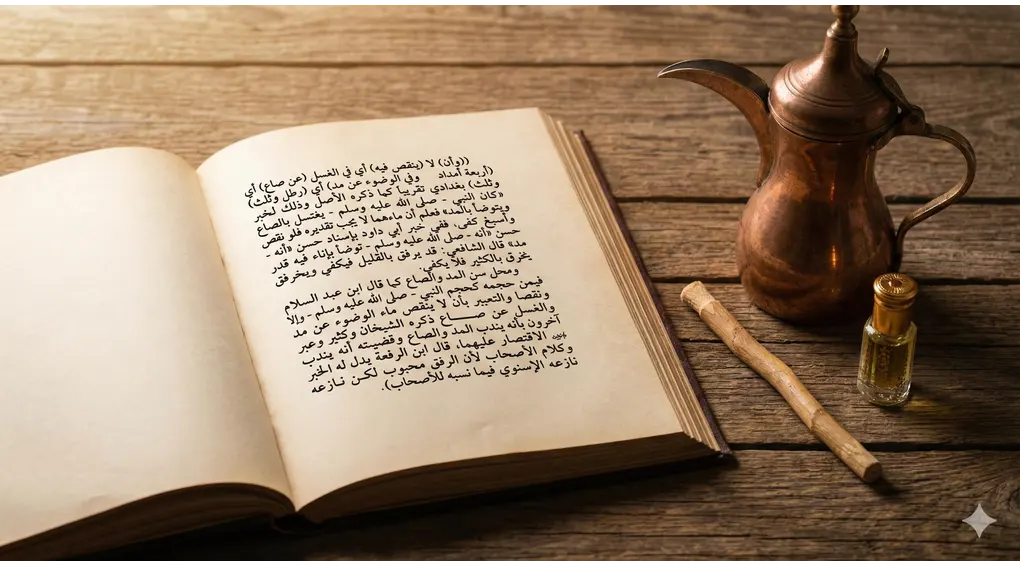
An open classical fiqh manuscript showing Arabic text on water quantity for ghusl, next to a copper pitcher, miswak, and perfume bottle on a wooden table.An open classical fiqh manuscript showing Arabic text on water quantity for ghusl, next to a copper pitcher, miswak, and perfume bottle on a wooden table.

Purity is the foundational pillar in the establishment of worship within Islamic law. Understanding the profound meaning of thaharah is not merely a physical routine, but rather a theological gateway for a servant to commune with the Creator. When a person is in a state of major ritual impurity (hadath akbar), the binding obligation is … Read more

The Mandatory Pillars of Ghusl: 2 Obligatory Conditions in Shafi’i Fiqh

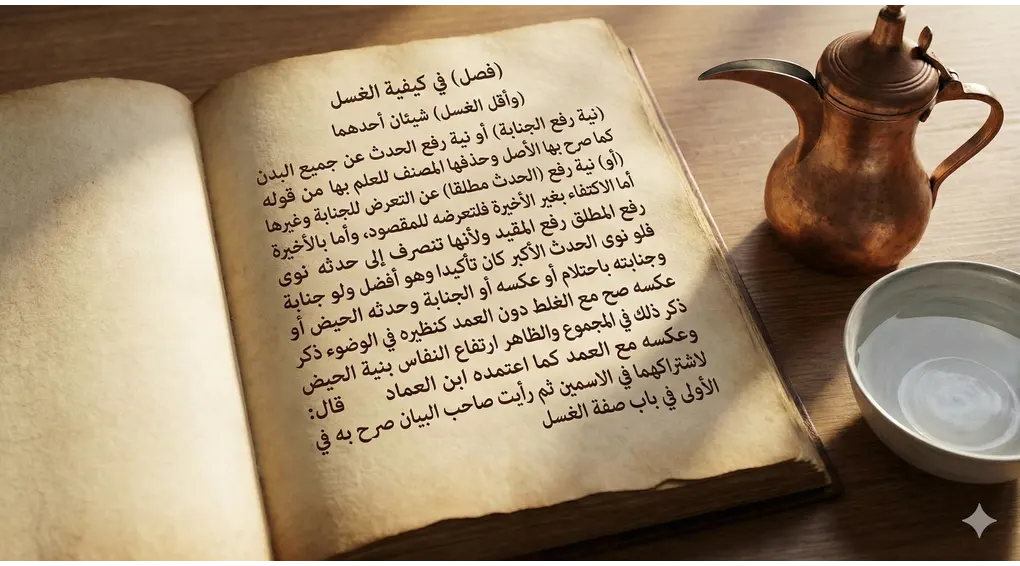
An open antique Arabic manuscript discussing Ghusl pillars next to a traditional copper pitcher and a bowl of clear water on a wooden table.

Within Islamic teachings, elevating oneself from a state of major ritual impurity (hadath akbar) through the process of Thaharah (purification) is an absolute necessity before a servant stands before Allah in prayer. This practice of purification, known academically as Ghusl or the major ritual bath, possesses a highly precise jurisprudential framework. Frequently, Muslims find themselves … Read more

Mani vs. Madhi: Which Discharged Fluid Requires Ghusl?

A traditional copper jug pouring clear, fresh water into a white marble basin, accompanied by clean white towels, olive soap, and a miswak stick on a wooden surface, symbolizing preparation for Islamic ritual purification.

Maintaining physical and spiritual purity from major ritual impurities is a fundamental pillar for every Muslim before performing the obligatory prayers. One of the most frequent dilemmas that arise within the community is the confusion surrounding the discharge of fluids from the private parts. The recurring question is: Does every fluid that is discharged necessitate … Read more

5 Causes of Ghusl in Shafi’i Fiqh: A Complete Guide

Clear water flowing from brass taps into a large marble basin inside a steamy traditional Islamic hammam, illuminated by natural sunlight through geometric window screens.

Physical and spiritual purity is an absolute prerequisite for performing prescribed (mahdhah) acts of worship in Islam. Within the discourse of Islamic jurisprudence, understanding the fundamental concept of purification (thaharah) from major ritual impurities occupies a central position. This article specifically examines the causes of ghusl (obligatory bath), also known as Mujibat al-Ghusl, based on … Read more

Complete Guide to Ghusl Janabah: Intention, Method, and Causes in Shafi’i Fiqh

A person's hands holding a ceramic bowl filled with clear water and floating white flower petals, under a gentle stream from a faucet and bright window light.

Spiritual and physical purity stands as a fundamental pillar in the performance of Islamic worship. Understanding the profound meaning of thaharah (purification) is the essential first step for every Muslim. One primary method of purifying oneself from major ritual impurity (hadats akbar) is through major ablution, widely known as Ghusl Janabah or mandi wajib. This … Read more