History of the Hijri Calendar: From Administrative Issue to the Identity of the Ummah
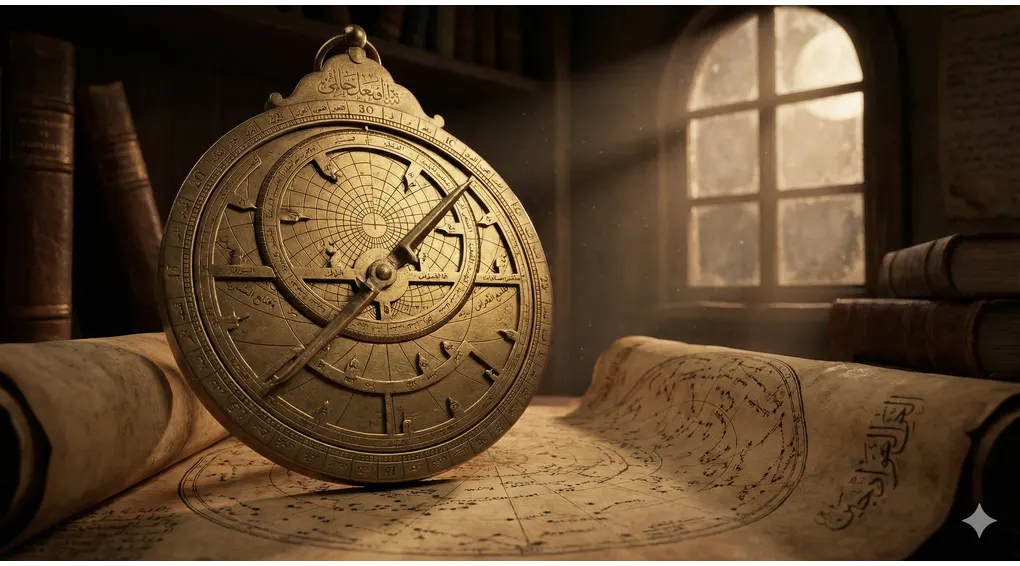
An antique Islamic brass astrolabe resting on an old parchment map by a window, symbolizing the history of the Hijri calendar and early Islamic astronomy.

For Muslims, the Islamic new year is not merely about fireworks or loud celebrations. There is a profound significance behind the system of time we use. However, we often forget how the history of the Hijri calendar actually began. Was it the Prophet Muhammad ﷺ who created it? Or the companions? By definition, the Hijri … Read more


5 Types of Tafakur in Islam: A Complete Guide to Spiritual Reflection

A silhouette of a man sitting on a cliff edge at sunrise, overlooking vast misty mountains, representing deep spiritual reflection or tafakur in Islam.

What is the true meaning of tafakur? In Arabic, tafakur refers to the act of contemplating or thinking deeply to understand the essence of something. Simply put, it is the profound process of using both reason and the heart to reflect on the signs of Allah’s greatness, His endless blessings, and our own personal shortcomings. … Read more

A Complete Guide to Performing Ghusl (Ritual Bath) After Menstruation According to Classical Fiqh

A serene flat-lay photograph on marble showing items symbolic of Islamic purification: a clean white towel, a bowl of water with flowers, a small bottle of musk perfume oil, and tasbih prayer beads.

Every Muslim woman strives for her worship to be valid and accepted by Allah ﷻ. One of the fundamental requirements to resume worship after a menstrual period is purification. However, doubts often arise: Is the mandatory bath we perform after menstruation actually valid? Has the water truly reached every required part of the body? Performing … Read more

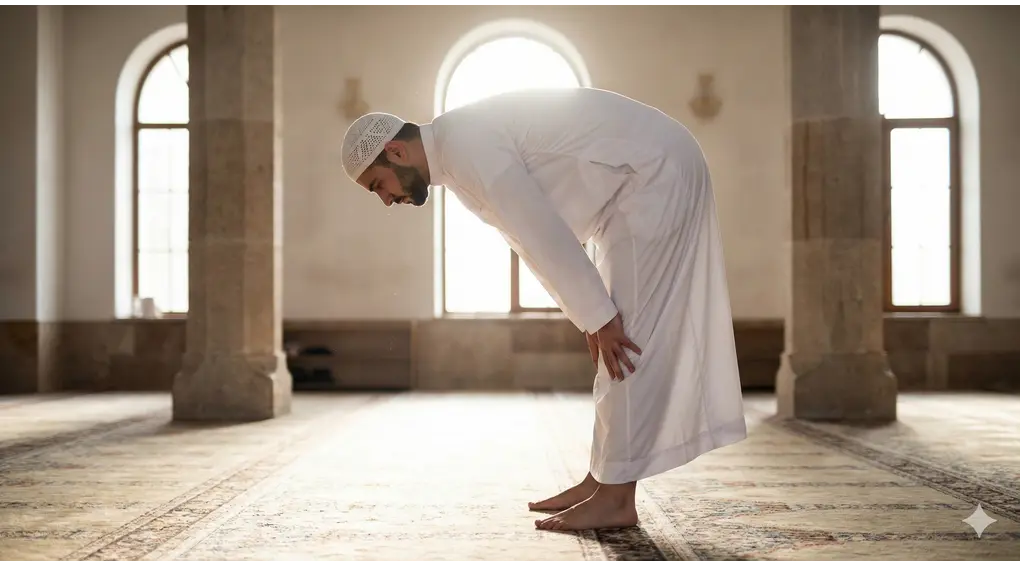
How to Perform Rukūʿ (Bowing) Correctly: Rules, Conditions, and Recitations

A Muslim man demonstrating the perfect Ruku posture in prayer, featuring a straight back level with the neck and hands grasping the knees.

Understanding the meaning of prayer (Salah) is fundamental, as it is the pillar of the Islamic religion. Every movement within it possesses strict rules to ensure it is accepted by Allah ﷻ. One essential pillar that we perform repeatedly, yet sometimes overlook the technical details of, is bowing (rukūʿ). Many Muslims ask: what is the … Read more

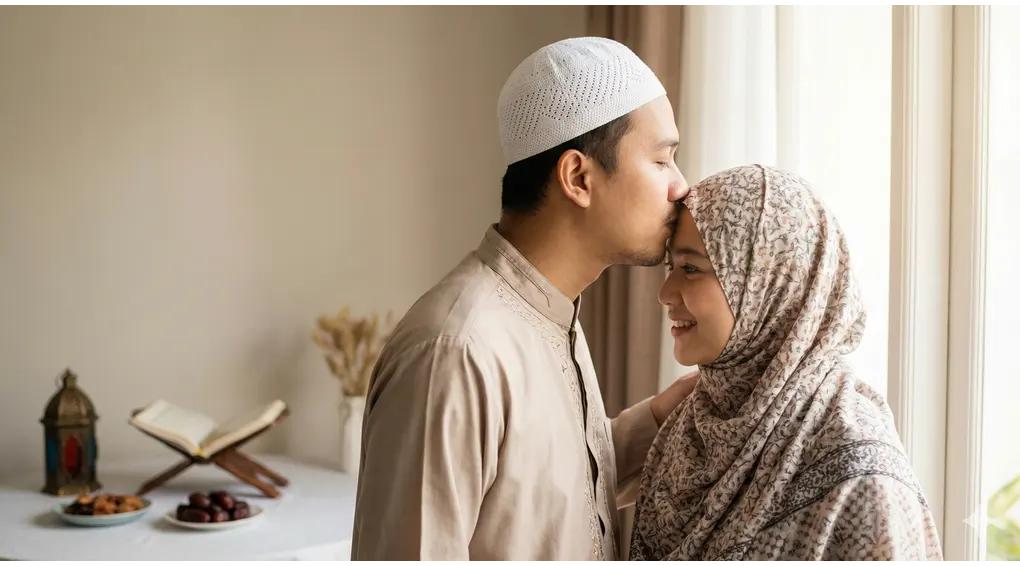
Does Kissing While Fasting Invalidate the Fast? The Islamic Ruling

A Muslim husband respectfully kisses his wife's forehead as a permissible (mubah) form of affection during the Ramadan fast.

The worship of fasting (al-ṣawm) is a medium for disciplining the soul and body. Its main essence lies in al-imsāk, namely refraining from everything that invalidates the fast from dawn until sunset. For individuals who are married, the challenge of fasting extends to the manner of physical interaction with their lawful spouses during the day. … Read more

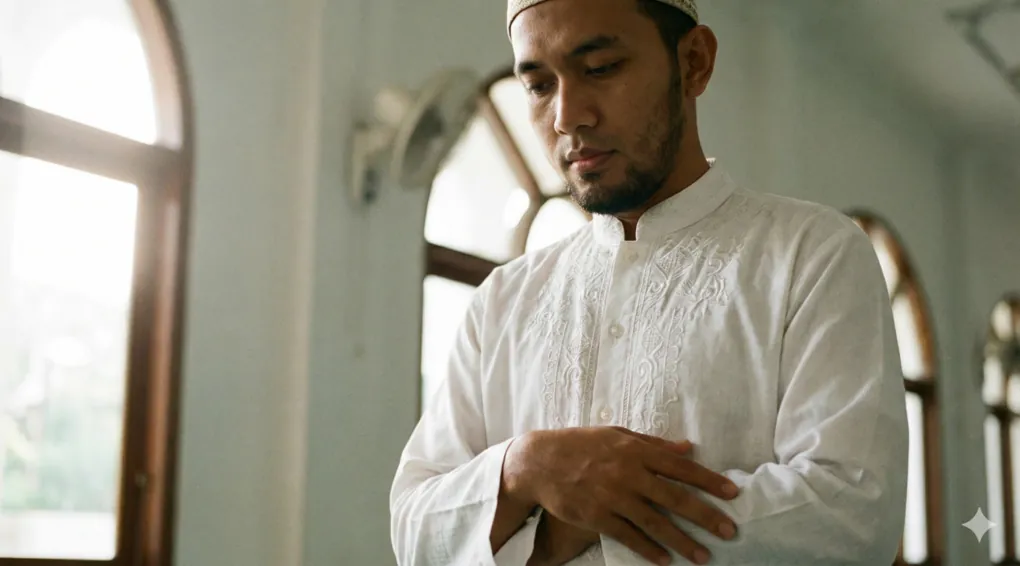
The Complete Guide to the Iftitah Prayer: Rulings & Authentic Variations

A Muslim standing humbly with folded hands, showing the correct posture while reciting the Iftitah prayer during Salah.

For a Muslim, prayer is the most intimate moment to communicate with the Creator. One of the sunnahs that we often practice at the beginning of prayer is reciting the iftitah. However, did you know that there are many variations of the iftitah recitation taught by the Prophet? In fact, under certain conditions, we are … Read more

Sunnah Prayer for the Iftar Host: Etiquette of Breaking Fast

A Muslim guest praying for the host's well-being after finishing a communal iftar in a warm atmosphere.

The tradition of gathering to break the fast with family or friends always colors the beauty of the holy month of Ramadan. This practice of feasting goes beyond the routine of merely eating. Sharing iftar meals is a means of worship with high value when the doer frames the intention with ikhlas (sincerity) and avoids … Read more

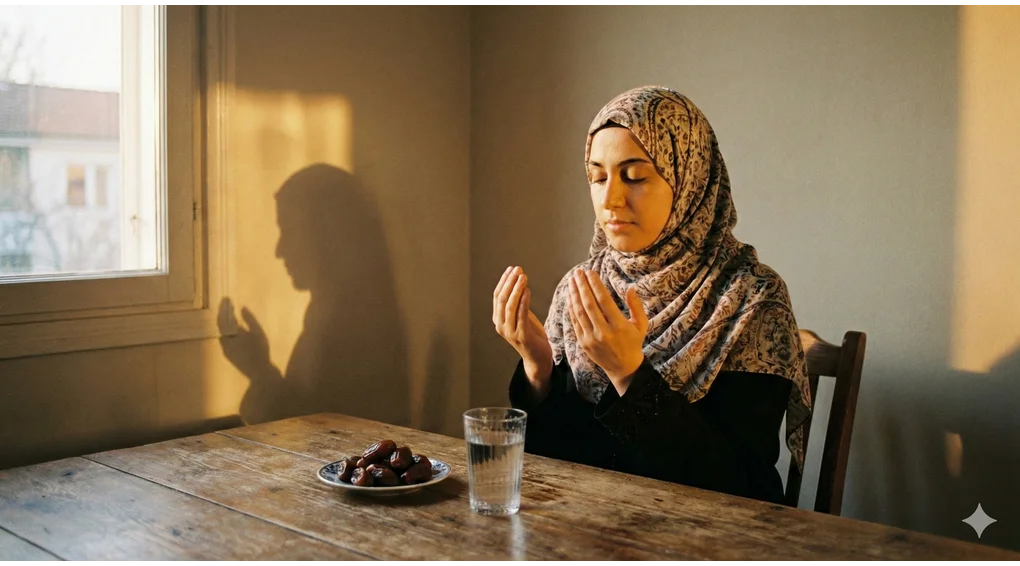
Authentic Fast-Breaking Prayer (Iftar): Sunnah & Pronunciation

A Muslim praying fervently in front of dates and water at sunset, awaiting the time to break the fast.

The worship of fasting is a spiritual journey that begins as we recite the prayer for seeing the new crescent moon; this will feel even more meaningful when concluded with gratitude at Maghrib. Noble character demands that we emulate the Messenger of Allah ﷺ in moistening the tongue with prayer, giving thanks for sustenance, and … Read more

How to Control Anger While Fasting: The Meaning of “Inni Shaim”

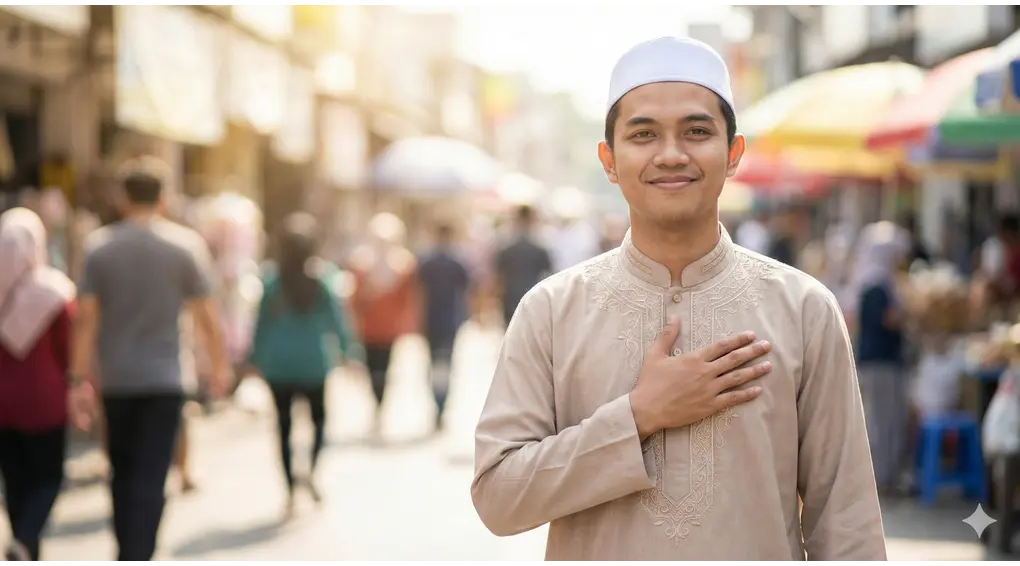
A Muslim man smiling patiently, placing his hand on his chest as a symbol of restraining his anger and saying 'Inni Saim' (I am fasting).

The worship of fasting (al-ṣawm) is a spiritual discipline that trains a believer to restrain their desires. Sharia guidance establishes that fasting is not merely restraining the stomach and genitals from dawn to sunset. More than that, fasting is a process of tazkiyatun nafs (purification of the soul) that demands its practitioners to guard their … Read more

Prayer Upon Sighting the New Moon & Hijri Month (Kitab Al-Adhkar)

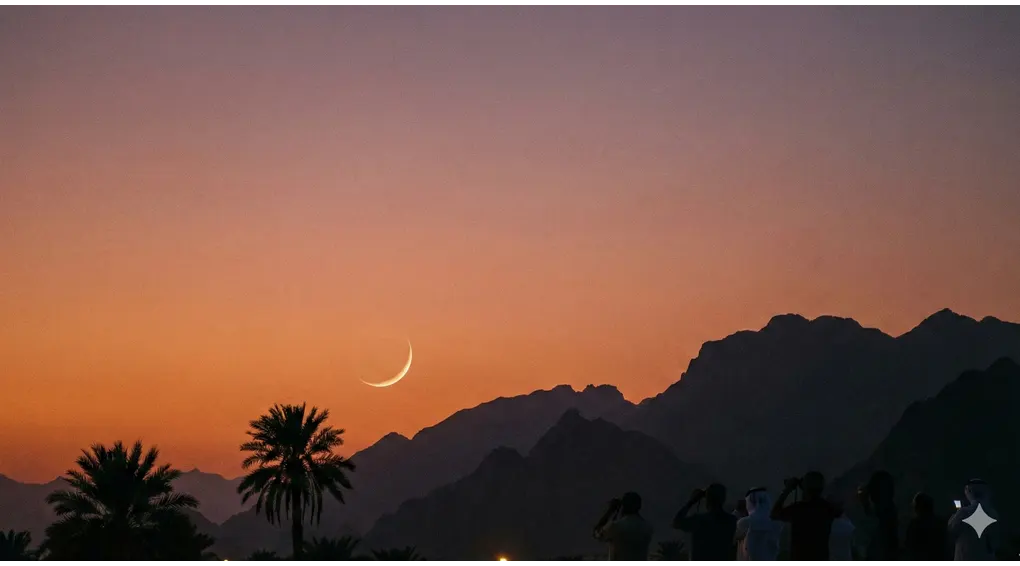
The sighting of the hilal, or the first crescent moon, on the western horizon at dusk, marking the beginning of the new Hijri month.

The passage of time in Islamic law is heavily reliant on the movement of celestial bodies, particularly the moon. The transition of lunar phases, especially when awaiting the arrival of the holy months of Ramadan and Shawwal, is a time imbued with spiritual value. A servant of God who treads the path of tazkiyatun nufus … Read more