Exact Zakat al-Fitr Deadline in Shafi’i Fiqh: A Comprehensive Guide

English version of a conceptual, cinematic split-screen featured image on 'Zakat Al-Fitr Due Date'.

Fasting during the holy month and fulfilling financial obligations at its conclusion are deeply intertwined in Islamic practice. Muslims often inquire about the exact Zakat al-Fitr deadline from the perspective of classical jurisprudence. Determining this timing is essential, as shifting the payment schedule can alter the status of the worship from ada’ (timely fulfillment) to … Read more

Complete Zakat al-Fitr Shafi’i Guide: Rules, Measurements, and Intentions

White rice in a bamboo basket and Kitab Asna al-Matalib on a wooden table for zakat al-fitr.

Zakat al-Fitr is a fundamental financial obligation binding upon every capable Muslim as a concluding act of worship in the month of Ramadan. As a core pillar of the religion, it is essential for every legally responsible individual (mukallaf) to continually understand the pillars of Islam comprehensively. This ensures the act of worship transcends mere … Read more

Basic Rulings of Zakat: Obligatory Conditions and Penalties

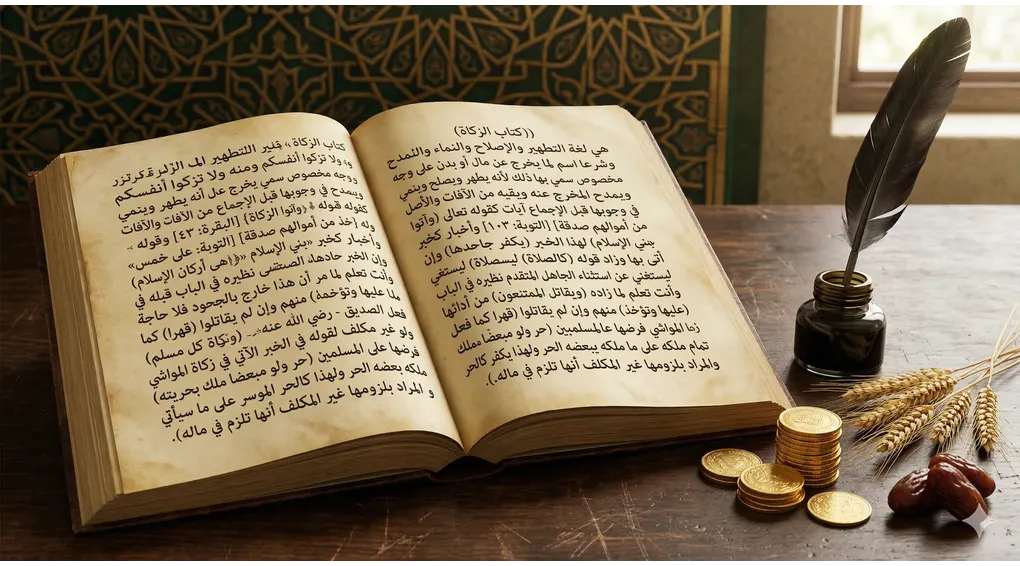
Macro photo of an ancient Arabic manuscript titled 'Asna al-Matalib' on zakat, with gold coins, dates, and wheat on a wooden desk with an arabesque pattern background.

The religion of Islam establishes Zakat as one of the fundamental pillars supporting the edifice of Shari’ah. This decree is not merely a moral encouragement to share wealth, but a binding legal obligation for every Muslim whose wealth meets specific criteria. To grasp the complete construction of this act of worship, you can refer to … Read more

Zakat in Shafi’i Fiqh: Complete Guide to Rules & Types

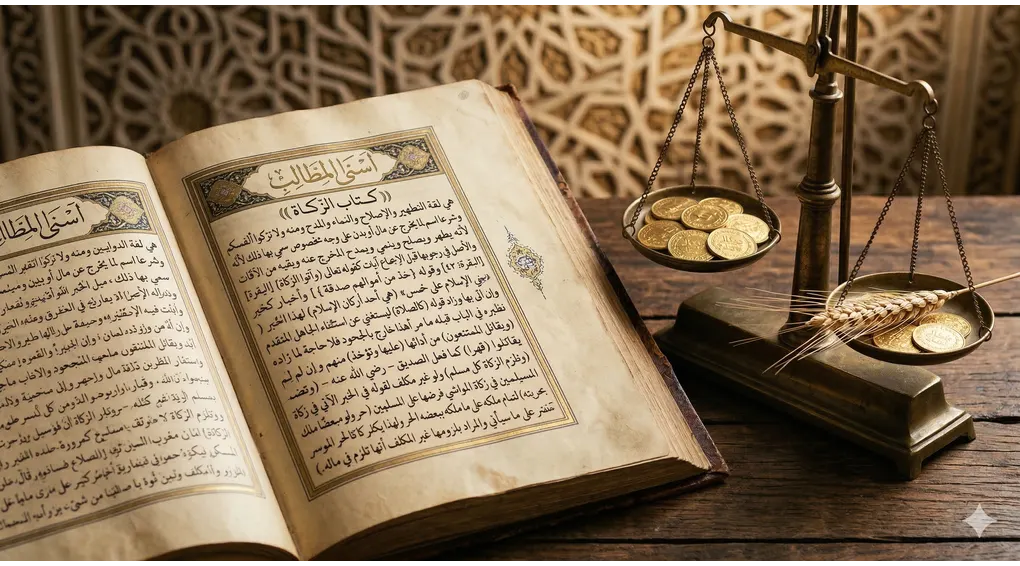
Open 'Kitab Zakat' from Asna al-Matalib with antique gold scale holding dinars and wheat on a wooden table.

The worship of zakat serves as a primary pillar sustaining the foundation of the Islamic faith. Its implementation is not merely a routine act of relinquishing wealth, but rather an absolute submission to highly detailed Shari’ah regulations. Grasping the basic rulings of Zakat, including its precise procedures, conditions, and the specific types of wealth subject … Read more

How to Handle and Purifying Well Water Contaminated by Najis: Insights from Asna al-Matalib

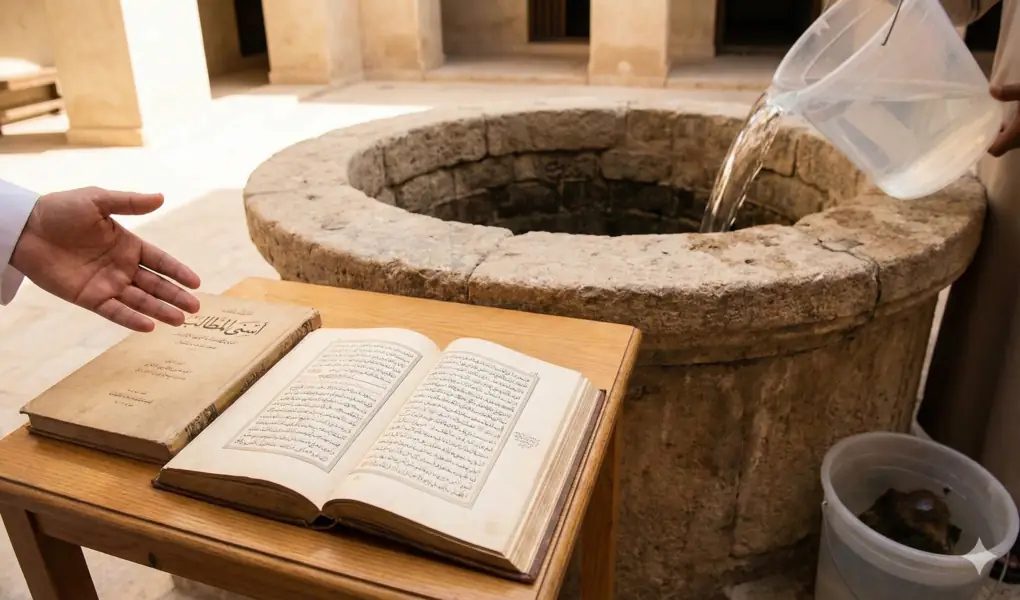
A man points to an open page of Asnฤ al-Maแนญฤlib on a table beside an old stone well. In the background, someone is pouring clean water from a large bucket into the well, illustrating the process of purifying the water.

Have you ever experienced an unpleasant situation while preparing for ritual purification (thaharah)? For instance, while drawing water from a well, you suddenly find a dead lizard, a mouse, or other impurities (najis) inside. Doubt immediately creeps in. Is this water still valid for wudu (ablution)? Must the well be completely drained until it is … Read more

Touching a Translated Quran While in a State of Impurity (Hadath): A Shafi’i Fiqh Perspective

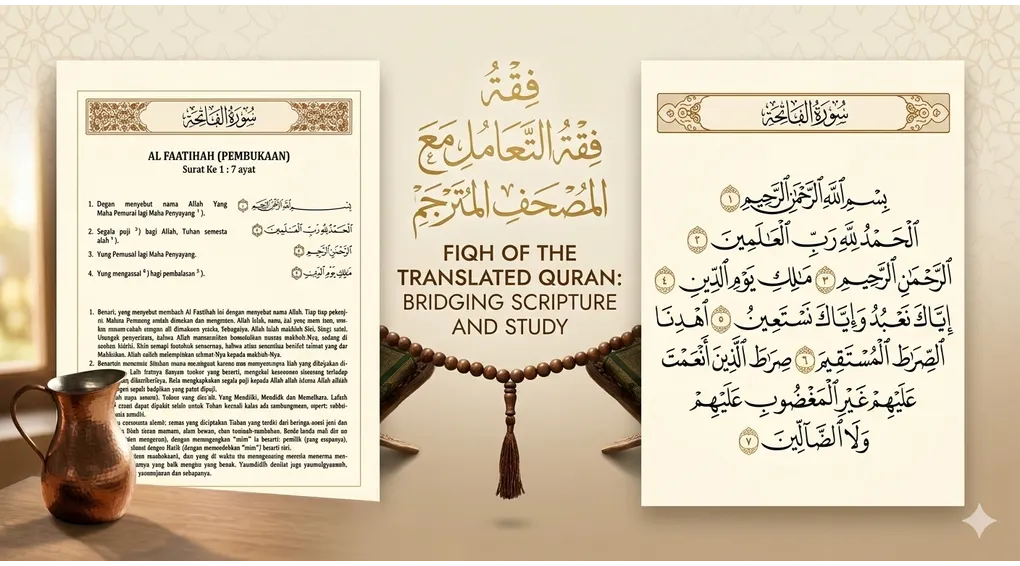
Two Qurans on a wooden library table; on the left, a pure Arabic mushaf on a wooden stand, on the right, an open translated Quran.

In the daily lives of Muslims, reading the words of Allah Subhanahu wa Ta’ala is a noble act of worship. The Prophet Muhammad ๏ทบ highly encouraged his Ummah to consistently interact with this holy book. Contemporary practices show a widespread use of books that place the Quranic verses alongside their translations in local languages or … Read more

Rules of Junub in Shafii Fiqh: A Daily Jurisprudence Guide

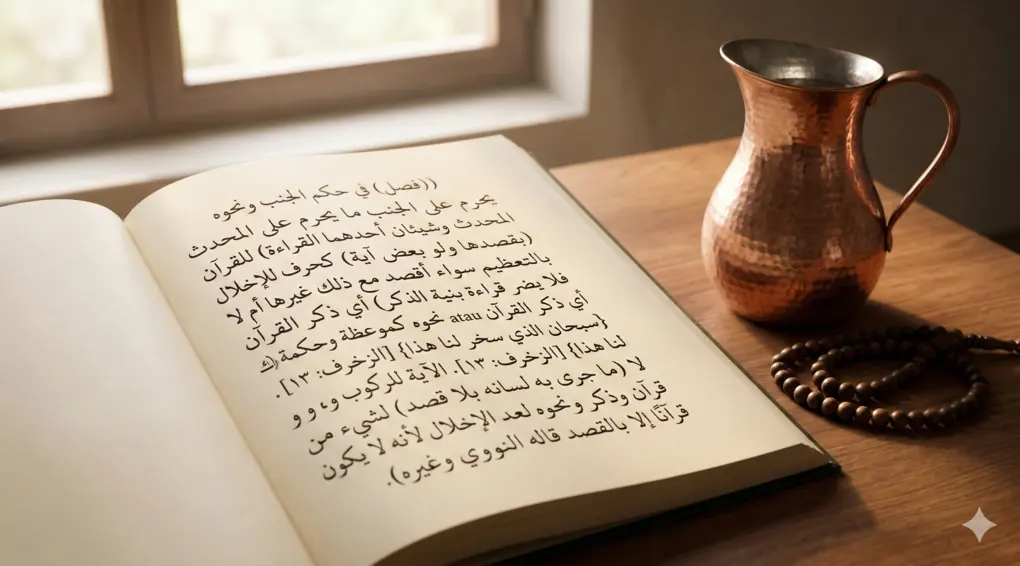
An open classical Arabic fiqh manuscript resting on a wooden desk alongside a copper water pitcher and prayer beads under soft morning light.

Maintaining physical purity and spiritual clarity is a fundamental principle in Islamic law (Shari’ah). A servant who preserves their station (Maqam) of obedience before Allah is always cautious about their state of purity. Just as the stain of sin is removed through sincere repentance (Tawbah Nasuha), the state of major impurity (janabah)โ€”which stems from various … Read more

Does Vomiting Break Fasting? A Detailed Fiqh Analysis

vomit while fasting: Neatly dressed Muslim man holding his stomach, feeling nauseous while fasting during the day.

Fasting (al-แนฃawm) is a profound act of worship. It trains us to exercise self-restraint (al-imsฤk) from anything that invalidates the fast, from dawn to sunset. However, human physical condition is not always perfect. Sometimes, nausea caused by illness, motion sickness, or indigestion strikes suddenly during the day in Ramadan. This condition often leads to a … Read more

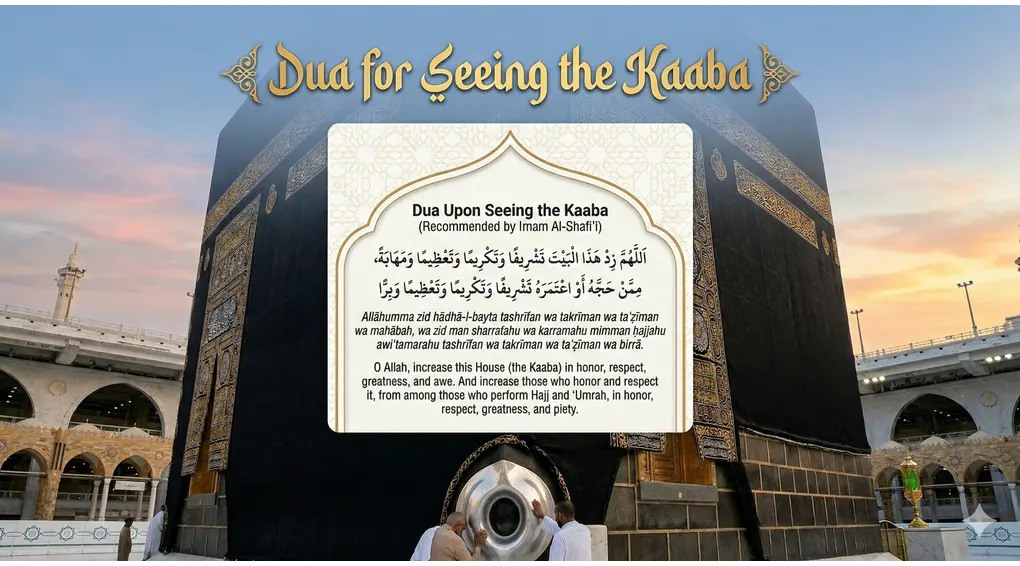
Complete Dua for Seeing the Kaaba: Shafi’i Fiqh and Etiquette

Dua for seeing the Kaaba

Entering the แธคaram (Sacred Precinct) and gazing upon the Baitullฤh (House of Allah) is a transcendental moment for every believing soul. The moments when the physical eyes first behold the Kaaba are not merely a visual experience but a spiritual ascension (mi’raj) that demands profound inner etiquette. In the tradition of Islamic Jurisprudence (Fiqh), particularly … Read more

Emission of Semen While Fasting Due to Kissing or Touching: Does It Break the Fast?

An open classical Arabic fiqh manuscript on a carved wooden book stand, a classic pocket watch, and a string of prayer beads in soft morning window light.

The worship of fasting (al-แนฃawm) is a spiritual discipline demanding a believer to actualize al-imsฤk (restraint). The essence of al-imsฤk is not merely abstaining from hunger and thirst, but also rigorously controlling biological desires from the break of dawn until sunset. In married life, physical interaction between a husband and wife becomes a highly sensitive … Read more