
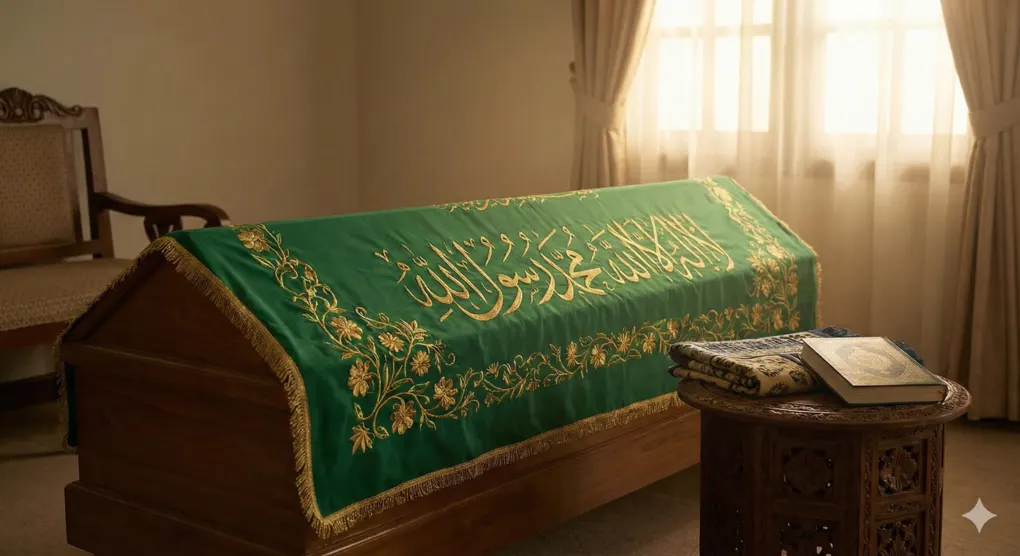
Death is a certainty that will come to every living creature. In Islam, respect for humans does not stop when the soul separates from the body. The body of a Muslim has a sanctity (hurmah) that must be maintained by the living. This process is known as janazah preparation, a series of very noble social worships.
For us Muslims, understanding the procedure for handling a deceased body is not merely additional knowledge, but an urgent necessity. We are often confused about what to do when a relative passes away. This article will thoroughly discuss the guidelines for tajhizul jenazah (funeral preparations) referencing the reliable fiqh book of the Shafi’i school, Asna al-Matalib Sharh Rawd al-Talib, so that you have a valid and heart-soothing guide.
The Ruling on Handling the Deceased for Every Muslim
First of all, we need to understand the legal basis. The law of handling a deceased person for every Muslim is Fardhu Kifayah. This means that this obligation is incumbent upon all Muslims in a region. If some people have fulfilled it, then the sin is removed from the rest. However, if no one takes care of it, then all the inhabitants of that region bear the sin.
The law regarding the handling of a deceased person is an obligation that encompasses four main matters: washing (the body), shrouding, performing the funeral prayer, and burying.
In the book Asna al-Matalib it is mentioned:
قوله: (غسله وتكفينه والصلاة عليه) وحمله (ودفنه) أي كل منها (فرض كفاية)
“Washing, shrouding, praying over, carrying, and burying the deceased, each is a communal obligation (fardhu kifayah).”
This obligation applies to the bodies of Muslims. As for the law of caring for a deceased body, it is a final form of respect we show to fellow servants of Allah, and also a reminder that we will eventually follow them.
1. Pre-Mortuary Phase: The Moment of Death (Sakaratul Maut)
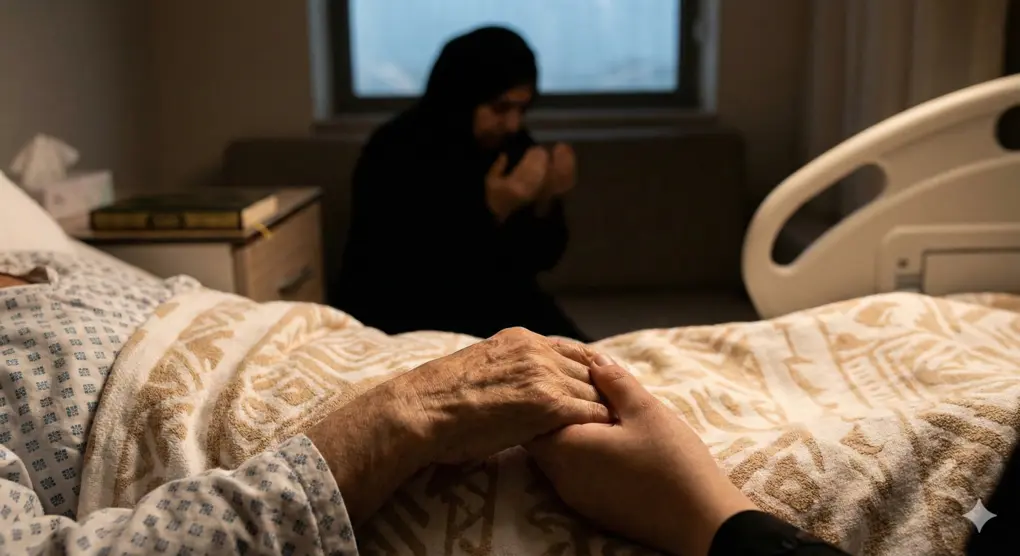
Before delving into the technicalities of handling a deceased body, it is very important for the family to understand the etiquette towards the sick and preparation for facing death in accordance with the Sunnah. This is done so that the patient can have a good end (husnul khotimah) when facing naza’ or the throes of death. And to know the physical signs of death and how to guide the recitation of the declaration of God’s oneness (tauhid) correctly, please read our special article on how to guide someone in the throes of death (mentalqin) and the signs of death.
Sheikh Zakariya al-Anshari explained that a seriously ill person should be patient and have good expectations (husnuzhan) of Allah.
For the family accompanying [the dying person], it is sunnah to gently guide (talqin) the utterance of the declaration of oneness, Laa ilaha illallah, without coercion.
قوله: (و) أن (يلقنه) الشهادة (غير الوارث)… (بلا زيادة) عليها
“And the one who does not inherit should bear witness… without additions.”
Once death is confirmed, immediately close the eyes, tie the jaw shut to prevent the mouth from gaping open, and loosen the joints while the body is still warm. This will facilitate the next process of handling the deceased, especially during the washing. Technical guidance on how to do this can be read in the article: How to Tie and Loosen the Deceased Shortly After Death.
2. The Procedure for Washing the Corpse (Al-Ghusl)
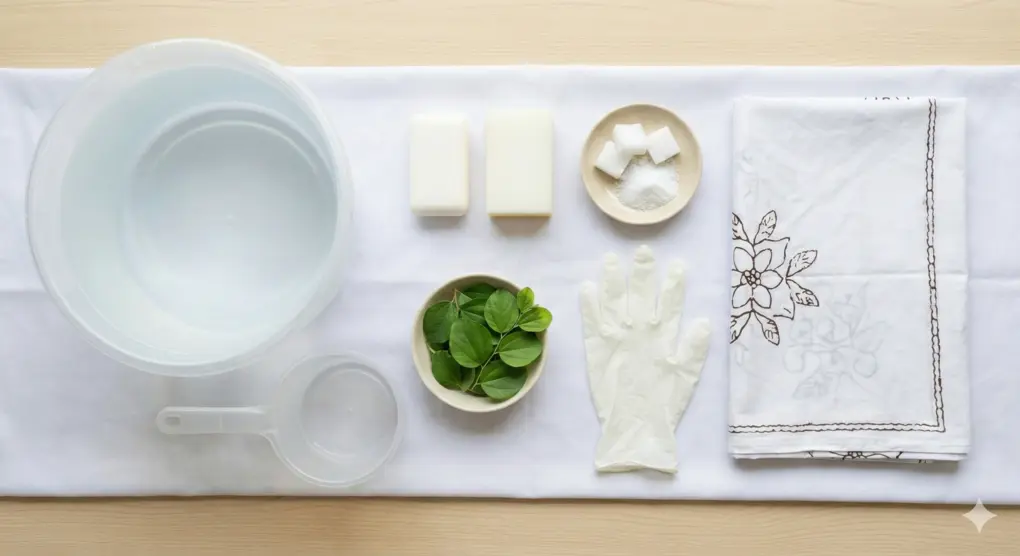
The first step in obligations towards the deceased is to wash (the body). The purpose is to cleanse the physical body of the deceased from impurities and dirt so that they face Allah in a state of purity.
Prepare absolute water, bidara leaves, and camphor. Ensure you understand the measurements and timing of use so that the corpse’s skin is not damaged. A guide to the mixture can be found at: Guide to Using Water, Bidara, and Camphor.
Terms and Conditions
- Place: Private, not to be seen by anyone except those performing the washing.
- Water: It is sunnah to use cold water as it can stiffen the body of the deceased, except if the weather is very cold or the impurities are difficult to remove, then warm water may be used.
- Closing: The private parts of the deceased (between the navel and knees) must be covered during the washing process. It is preferable to wash the body while still wearing thin clothing (a shroud).
Technical Implementation
Based on Asna al-Matalib, the method of handling a corpse during the washing (ghusl) is as follows:
- Position: Place the body on a slightly elevated surface (a bed/platform).
- Cleaning the Abdomen: Sit the deceased up slightly, lean their back, then gently massage the abdomen to expel waste. Clean the qubul and dubur using the left hand covered with a glove cloth.
- Wudu: The deceased is given wudu (ablution) like a living person (with the intention of washing/performing wudu on them).
- Washing: Use water mixed with bidara (sidr) leaves or soap.
- Wash the head and beard.
- Wash the right side of the body, both front and back.
- Wash the left side of the body, front and back.
- Ensure water reaches all parts of the body at least once (obligatory). It is recommended to wash three times.
- Final Rinse: The final rinse is mixed with camphor (kafur) to preserve and fragrance it.
قوله: (وأقل الغسل استيعاب البدن) بالماء (مرة بعد إزالة النجس)
“At a minimum, performing ghusl (ritual bath) is applying water to the entire body once after removing impurities.”
When washing the body of the deceased, there is a minimum limit that is valid and a perfect way that is recommended according to the Sunnah. To find out the details of the intention reading (Arabic/Latin) and the correct technique for pouring water, read more at: A Complete Guide to the Intention and Procedure for Washing the Body of the Deceased.
3. The Procedure for Shrouding a Corpse (At-Takfin)
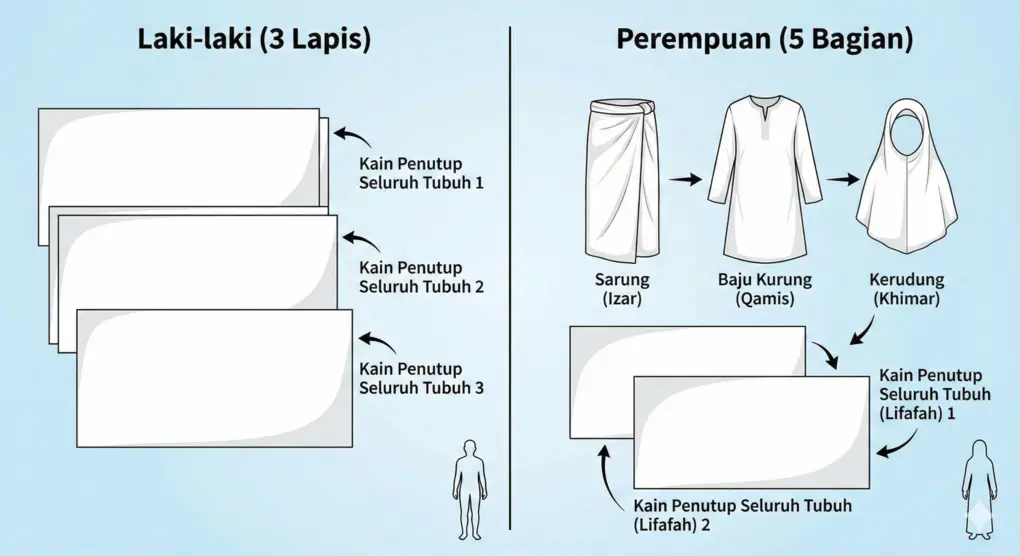
After being purified and dried with a towel, the next step in preparing the deceased (tajhizul jenazah) is shrouding. The shroud cloth should ideally be white, clean, and thick (not transparent).
Number of Shroud Layers




- Men: It is recommended to use 3 sheets of white cloth, each covering the entire body, without a long-sleeved shirt and without a turban.
- Women: It is recommended to use 5 sheets, consisting of:
- Worn cloth (sarong/izar).
- Kurung baju (qamis).
- Headscarf (khimar).
- Two sheets of fabric covering the entire body (lifafah).
Procedure for Kafaning (Shrouding)
Spread out the shroud that has been perfumed (such as with agarwood or camphor). Place the body on top of it. Close the body’s orifices (nose, ears, etc.) and the parts used for prostration with cotton. Fold the cloth from the left side to the right, then the right side to the left. Tie it with string that will be removed when inside the grave.
قوله: (وأقله) أي الكفن (ثوب) لحصول الستر به (يعم البدن)
“At a minimum, the shroud is one garment that covers the entire body.”
4. Procedure for the Funeral Prayer (Janazah Prayer)
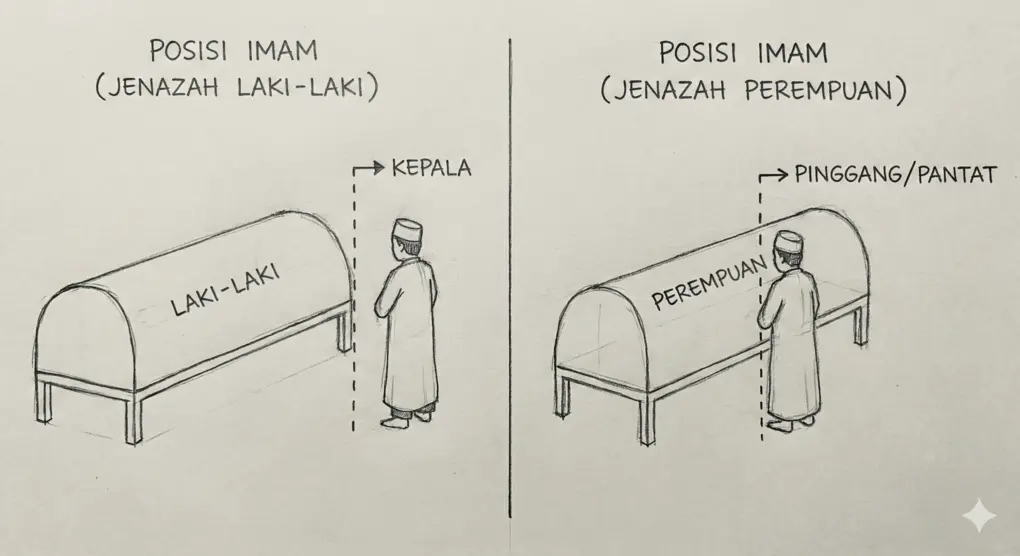
This is the essence of funeral arrangements, namely praying for forgiveness for the deceased. The funeral prayer (shalat jenazah) does not have bowing (ruku’) and prostration (sujud), only standing with 4 takbirs.
The Pillars of Funeral Prayer
- Intention: To intend to perform the funeral prayer (fardhu kifayah) accompanied by takbiratul ihram.
- Intention: “I intend to pray upon this corpse as a communal obligation for the sake of Allah the Exalted.”
- Standing: For those who are able.
- Takbir 4 Times:
- Takbir I: Reciting Surah Al-Fatihah.
- Takbir II: Reciting Salawat Nabi (Allahumma shalli ‘ala Muhammad…).
- Takbir III: Praying for the deceased. This is the most important pillar.
- Prayer: O Allah, forgive him (her) and have mercy on him (her), and heal him (her) and pardon him (her)1.
- Takbir IV: Recite the prayer Allahumma la tahrimna ajrahu (ajraha) wala taftinna ba’dahu (ba’dahaa) waghfirlana walahu (walahaa)… then [give the] Salam.
وأركانها سبعة الأول النية… الثَّانِي الْقِيَام… الثالث التكبيرات الأربع…الرابع السلام بعدها… الخامس قراءة الفاتحة… السادس الصلاة على النبي… السابع أدنى الدعاء للميت
“Its pillars are seven: Intention, Standing, Four Takbirs, Reciting Al-Fatihah, Prayers upon the Prophet, Supplication for the deceased, and Salam.”
The imam’s position is standing facing the head of a male corpse, and facing the hips/buttocks of a female corpse.
5. The Procedure for Burying a Corpse (Ad-Dafn)
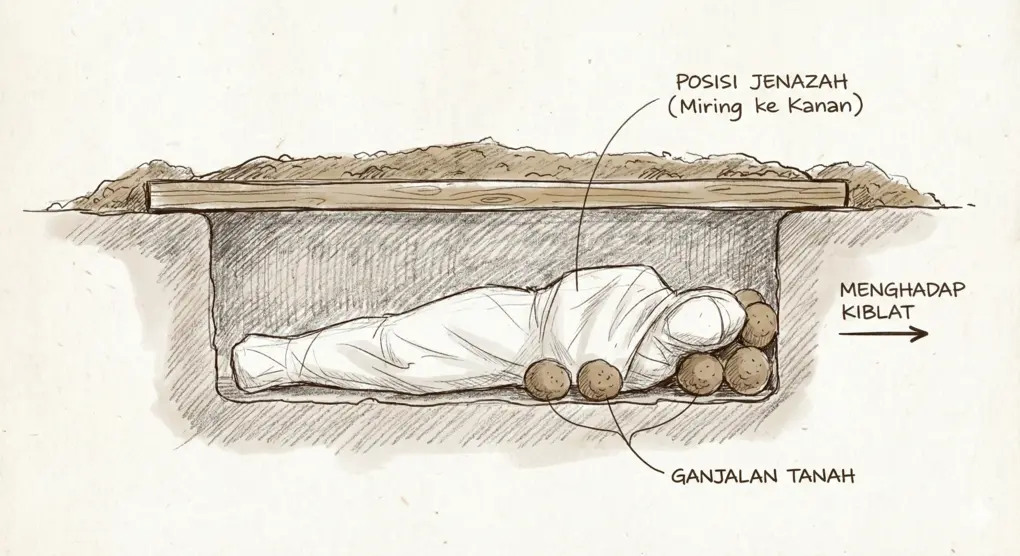
The final stage of preparing the body (for burial) is burial. Islam teaches that the body should be returned to the earth in a dignified manner.
The Provisions of the Grave
The law regarding the handling of a corpse is ensuring the grave is deep enough (approximately the height of a standing person plus the wave of a hand) to prevent odors from escaping and protect it from wild animals. There are two models of graves:
- Lahd (Niche grave): A hole dug in the side of the grave wall facing the Qibla (recommended for hard ground).
- Trench grave (Shaq): A hole dug in the middle of the grave base (for loose soil).
The Funeral Process
- Enter the body from the foot end of the grave.
- Place the body on its right side, facing the Qibla. This is obligatory.
- Place the deceased’s right cheek directly on the ground. Untie the shroud.
- Wedge his back with a clod of earth to prevent him from lying on his back again.
- Cover the grave with wooden planks or raw bricks, then fill it with soil.
قوله: (والاستقبال به) القبلة (واجب) تنزيلا له منزلة المصلي
“Facing the deceased towards the qibla is obligatory, because it is positioned as if they are praying.”
Differences in the Handling of Male and Female Corpses
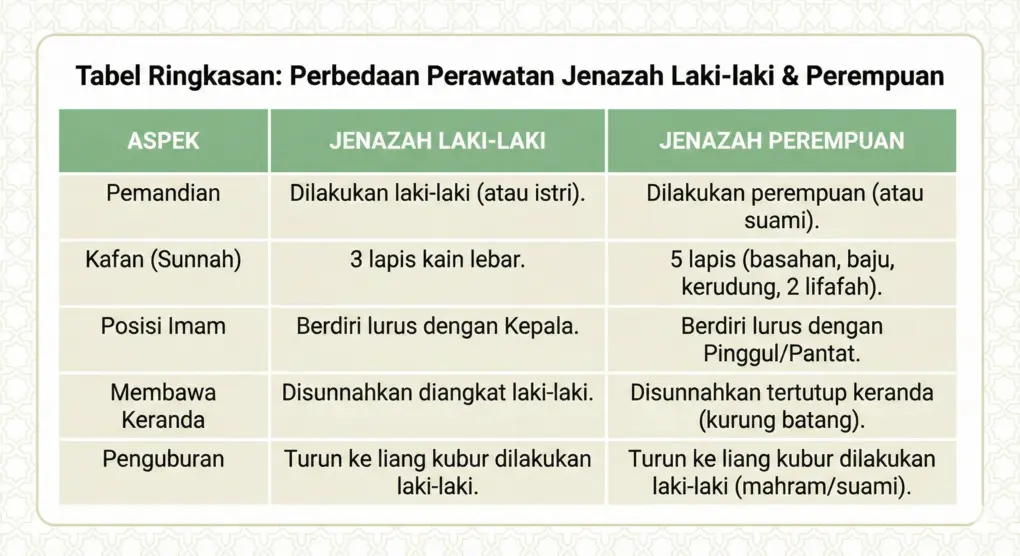
To make it easier to understand, here is a summary table of the fundamental differences in the procedures for handling a deceased body:
| Aspect | Male Corpse | Female Corpse |
| Washing (Ghusl) | Performed by a man (or wife). | Performed by a woman (or husband). |
| Shroud (Sunnah) | 3 layers of wide cloth. | 5 layers (Loincloth, clothes, headscarf, 2 lifafah). |
| Imam’s Position | Standing straight with the Head. | Standing straight with the Hips/Buttocks. |
| Carrying the Bier | It is Sunnah for men to lift it. | It is Sunnah for the bier to be covered (covered bier). |
| Burial | Descending into the grave is done by a man. | Descending into the grave is done by a man (mahram/husband). |
Frequently Asked Questions (FAQ)
Is it permissible for a husband to wash the body of his deceased wife?
Permissible. Indeed, in the book *Asna al-Matalib* it is explained that a husband has the right to wash his wife, and vice versa, because the marital bond is not completely severed by death in this context.
What if the body is destroyed or not whole?
If the body is destroyed (e.g., a victim of a fire) and washing it would actually damage the body, then the obligation of washing is replaced with Tayammum. This is done by applying dust to the face and hands of the deceased.
What is Talqin for the deceased and what is its ruling?
Talqin is guiding/reminding the newly buried deceased with the kalimat tauhid and answers to the angels Munkar-Nakir. According to the Shafi’i school of thought, its ruling is Sunnah.
Is it permissible to perform the funeral prayer (salat jenazah) for a miscarried baby?
If a baby is born and shows signs of life (cries/moves) before dying, it is obligatory to perform the funeral prayer (shalat) for them. If born dead but the gestational age is already 4 months (when the soul is breathed into it), it is obligatory to wash (mandikan), shroud (kafani), and bury the baby, but according to the official Shafi’i school of thought, it is not prayed upon, although some scholars permit it as a prayer for the parents.
Closing
Performing janazah care correctly is evidence of our concern and responsibility as Muslims. Tajhizul jenazah is not merely a physical ritual, but rather an act of worship filled with spiritual meaning and prayer.
Hopefully this guide on how to care for a deceased body based on the book Asna al-Matalib is beneficial and makes it easier for us to fulfill the rights of our brothers and sisters who have passed away. Let us straighten our intentions, learn the knowledge, and practice it with sincerity.
And Allah knows best.
Referensi & Catatan Kaki
al-Anṣārī, Zakariyā. Asnā al-Maṭālib fī Sharḥ Rawḍ al-Ṭālib. With a ḥāshiyah by Aḥmad al-Ramlī. Edited by Muḥammad az-Zuhrī al-Ghamrāwī. Cairo: al-Maṭbaʿah al-Maymānīyah, 1313 H. Reprinted by Dār al-Kitāb al-Islāmī.


