
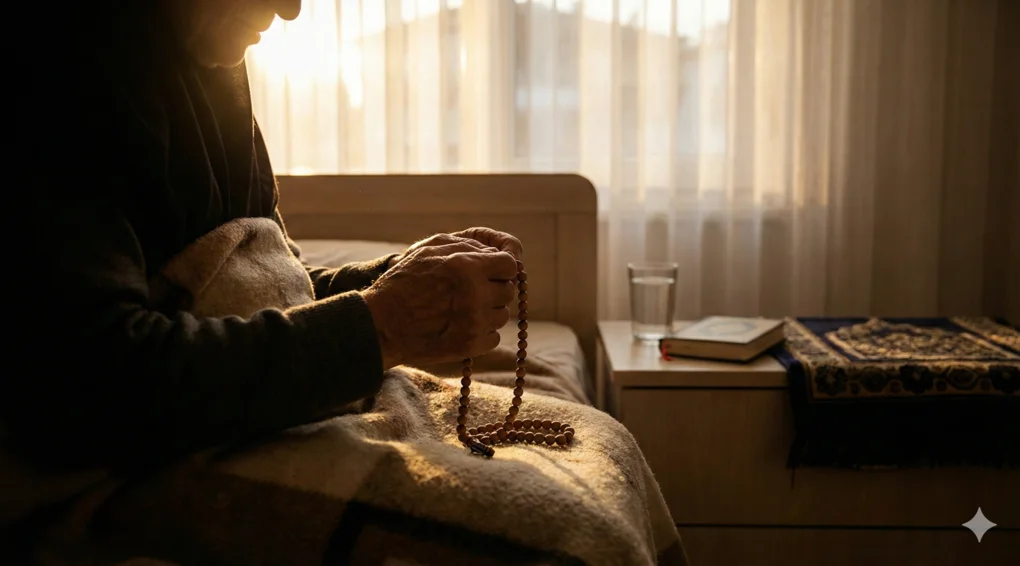
Illness often comes without warning. For some people, illness is merely a physical condition that hinders daily activity. However, From a deeper Islamic perspective, illness can be seen as a merciful reminder from Allah and an early warning to prepare for the Hereafter.
When the body begins to weaken, the heart should become stronger by remembering the afterlife. The Shafi’i fiqh text Asna al-Matalib provides detailed guidance on the etiquette of the sick in Islam. Sickness is not a time for mere complaint, but a precious opportunity to purify the soul before meeting the Creator.
This article will discuss what a Muslim should do when seriously ill or feels the signs of death approaching, referencing directly the texts of classical scholars.
Why is Sickness the Best Reminder of Death?
In Asna al-Matalib, Sheikh Zakariya al-Anshari begins the chapter on the deceased by encouraging frequent remembrance of death (dhikr al-mawt), rather than immediately discussing funeral rites. He quotes:
(يستحب الإكثار من ذكر الموت)
“It is recommended to frequently remember death.”
Why? Because remembering death is a breaker of the pleasures of the world that often distracts. For the healthy person, remembering death prevents sin. For the sick person, this is even more emphasized (aakad). Sickness is a condition where the distance between us and death feels increasingly thin.
Therefore, preparation for death should begin well before the final moments. This preparation begins while we are still fully conscious in the sickbed.
Urgent Obligations: Repentance and Restoring the Rights of Others

Many people mistakenly think preparing for death means only arranging a shroud. In reality, the most important preparation is tazkiyat al-nafs (purification of the soul). The text mentions:
(والاستعداد له بالتوبة ورد المظالم)
“And (it is sunnah) to prepare for death with repentance and returning the possessions taken unjustly (the rights of others).”
1. Sincere Repentance
Do not postpone repentance until old age. Sickness is an urgent alarm. Immediately repent from all major and minor sins. Deep regret when sick can be a very effective way to expiate sins.
Read also: The procedure for the repentance prayer.
2. Resolving Disputes Between People (Raddul Madzalim)
This is a point that is often forgotten. Repenting to Allah is easy, simply asking for forgiveness is enough. However, sins against other people will not be expiated only with istighfar.
If you have debts, borrowed items that haven’t been returned, or have ever taken someone else’s rights, sickness is the deadline to settle them. If you are unable to pay, ask for forgiveness (consent) from that person. Do not let us die carrying the burden of debt or wrongdoing, because it will weigh down the journey in the intermediate realm (barzakh).
The Etiquette of the Sick in Islam: Between Patience and Seeking Treatment

What should our mindset be when lying weak? Here are points of etiquette taught in Asna al-Matalib:
Refraining from Complaining (Tarku as-Syakwa)




It is human to feel pain. However, Islam teaches high etiquette:
(وترك الشكوى)
“And (it is sunnah) to refrain from complaining.”
Complaints that express dissatisfaction with Allah’s decree — such as “Why me?” or persistent lamentation (al-anīn) that reveals impatience — are discouraged.
However, if you inform the doctor or family about the pain with the intention of seeking treatment, not to complain, then it is permissible and not disliked. Scholars differentiate between complaining to creatures (blameworthy) and striving to seek healing (recommended).
Treatment (Tadawi) vs. Reliance on God (Tawakkal)
Is medical treatment obligatory? The majority of Shafi’i scholars cited in Asna al-Matalib hold that seeking treatment (tadāwī) is recommended (sunnah) rather than strictly obligatory (wājib).
قوله: (ويستحب) له (التداوي)
“And it is recommended for him (the sick person) to seek treatment.”
Allah does not send down a disease without also sending down a cure for it. However, there is a higher level for those whose faith is strong. This book mentions:
فإن ترك التداوي توكلا ففضيلة
“If he abandons treatment due to reliance on God (tawakkul – complete surrender to Allah), then that is a virtue (fadilah).”
This is a personal choice. If not seeking treatment makes you increasingly distressed and disrupts your worship, then seek treatment. That is better for your religion.
Having Good Expectations of Allah (Husnuzhan)
As illness worsens and the shadow of death looms, the devil often whispers fear and despair. This is where the etiquette of the sick in Islam emphasizes the importance of positive thinking (Husnuzhan).
Be certain that this illness is an expiator of sins. Be certain that Allah is the Most Forgiving. Do not let the fear of sin cause you to despair of His mercy. The Prophet (peace and blessings be upon him) said, “None of you should die except while having good expectations of Allah.”
The Role of the Family: Do Not Force Feeding
For families who are caring for someone, there are specific ethics that need to be considered. Often, due to affection, we force patients to eat a lot. However, in Asna al-Matalib it is mentioned:
قوله: (ويكره أن يكره) المريض (عليه) أي على التداوي
“And it is disliked to force a sick person to drink medicine or eat.”
The sick person’s body is busy fighting the illness. Forcing them to eat can actually burden the body’s work. Give them food they enjoy and is light, and remind them to pray and engage in remembrance of Allah to the best of their ability.
Summary: What is Permissible and What is Not?
To facilitate understanding, here is a summary table of etiquette for the sick:
| Category | Recommended Actions (Sunnah) | Actions to Avoid (Makruh/Haram) |
| State of the Heart | Patience, Acceptance, Good opinion of Allah. | Complaining, Bad assumptions, Despair. |
| Worship | Sincere repentance, Returning people’s rights (debts), Much remembrance of Allah (dhikr). | Delaying repentance, Neglecting prayer due to minor illness. |
| Physical | Seeking treatment (Tadawi), Maintaining personal hygiene (cutting nails/mustache). | Excessive lamenting/groaning (Anin), Rejecting destiny. |
| Interaction | Asking forgiveness from others, Making a will. | Arguing about worldly matters while critically ill. |
FAQ: Questions About the Etiquette of the Sick
Is a sick person still obligated to pray?
Yes, the obligation of prayer is not waived as long as the mind is functioning. If unable to stand, one may sit. If unable to sit, one may lie down. The etiquette of the sick in Islam is very accommodating (rukhsah), but does not eliminate the obligation.
Is it permissible to hope for death due to an incurable illness?
The ruling originally is Makruh. The Prophet SAW forbade us from hoping for death due to worldly calamities. However, if someone fears their religion will be corrupted (for example, fearing apostasy due to being unable to endure pain), then it is permissible to pray: “O Allah, let me live if life is good for me, and let me die if death is good for me.”
What if a sick person has difficulty speaking during their death throes?
It is recommended that family members gently guide (talqin) the recitation of the phrase *Laa ilaha illallah*. Do not pressure or shout. If he/she has uttered it once, let him/her rest. Do not engage in worldly conversations so that his/her last words remain the declaration of monotheism.
If it becomes clear that death has occurred, the family should promptly carry out funeral arrangements according to the Sunnah. For a complete guide to the steps, you can read our article: A Complete Guide to Funeral Procedures (Tajhizul Jenazah) According to the Sunnah.
Sickness is a trial as well as a warning. However, if the condition worsens and death draws near, the family must be prepared to accompany [the dying person]. Learn what to do next in the guide Signs of Approaching Death and How to Assist [the Dying Person].
Illness can be a means by which Allah cleanses a believer before meeting Him. Let us make the moment of illness a means of drawing closer, not distancing ourselves. May we all be granted a good end (Husnul Khotimah).
And Allah knows best.
Reference
al-Anṣārī, Zakariyā. Asnā al-Maṭālib fī Sharḥ Rawḍ al-Ṭālib. ḥāshiyah by Aḥmad al-Ramlī. Edited by Muḥammad az-Zuhrī al-Ghamrāwī. Cairo: al-Maṭbaʿah al-Maymānīyah, 1313 H. Reprinted by Dār al-Kitāb al-Islāmī.


