
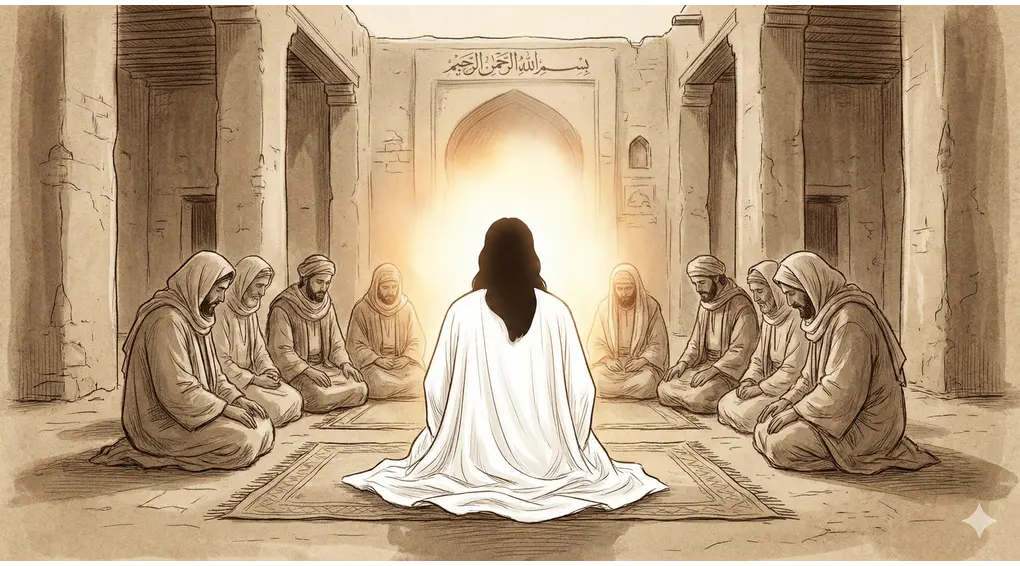
In the Islamic scholarly tradition, adab (etiquette) holds a position preceding knowledge itself. Imam Malik once advised, “Learn adab before you learn knowledge.” The most perfect manifestation of the etiquette of a study session is recorded in a momentous event known as the Hadith of Gabriel.
This event was not merely a transfer of theological information regarding the Pillars of Islam, Faith, and Ihsan. More than that, it was a “madrasah” teaching how a student (muta’allim) should behave before their teacher.
Through the book Al-Fath Al-Mubin bi Syarhi Al-Arba’in An-Nawawiyah pages 139-143, Sheikh Ibn Hajar Al-Haitami details the behavior of the Angel Jibril—who disguised himself as a human—and the response of Umar bin Khattab. From the manner of sitting to the choice of words, there is stored istinbath of Fiqh law and profound Sufi values regarding the etiquette of seeking knowledge.
This article will dissect the four main pillars of adab.
1. The Attire of the Seeker of Knowledge: A Symbol of Purity of Heart and Appearance
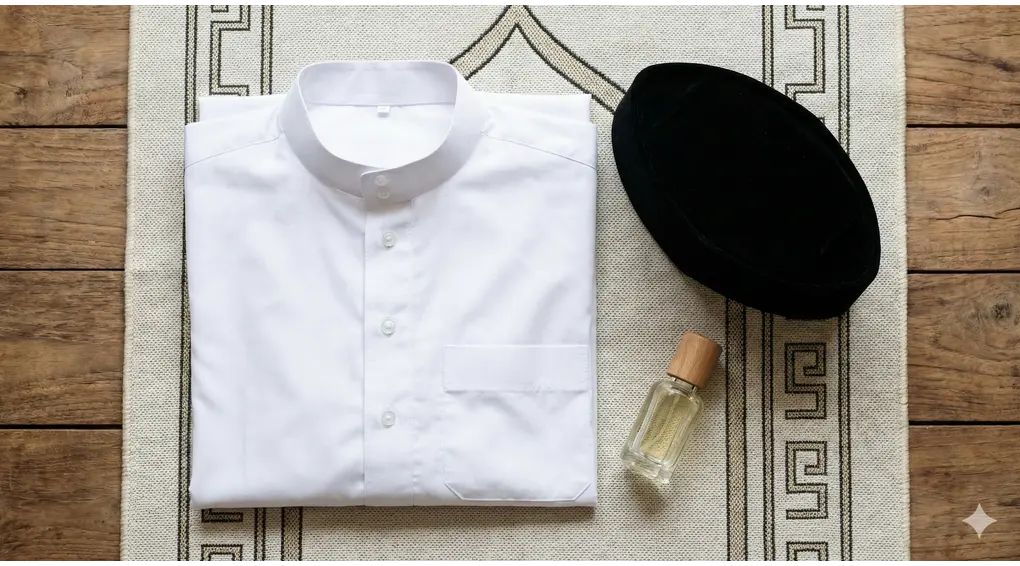
The first thing that caught the eyes of the companions was the guest’s physical appearance. Umar bin Khattab described him with the words: “Syadīdu bayāḍith-thiyāb, syadīdu sawādis-sya’r” (Very white his clothes, very black his hair).
Why did Gabriel have to appear so clean and neat when he could have resembled a disheveled traveler?
Sunnah of Purification and Wearing White
In Al-Fath Al-Mubin (p. 141), Sheikh Ibn Hajar explains that this appearance of Jibril was not coincidental, but rather a tasyri’ (establishment of Islamic law – Fiqh) for the Muslim community. He wrote the following nash:
ففيه ندب تنظيف الثياب ، وتحسين الهيئة بإزالة ما يؤخذ للفطرة ، وتطييب الرائحة عند الدخول للمسجد ، وعلى نحو العلماء
(Therefore, it contains the recommendation [sunnah] of cleaning clothes, improving one’s appearance by removing natural impurities [such as cutting nails/grooming hair], and applying perfume when entering the mosque and when meeting scholars).
White clothing (bayāḍ) and bodily cleanliness are forms of ta’zim (respect) towards knowledge and angels who also attend the dhikr assembly. Knowledge is light, and light is difficult to settle in a dirty or foul-smelling place.
Special Admonitions for Those with Knowledge (Ahlul Ilmi)
Furthermore, Sheikh Ibn Hajar quoted that Sayyidina Umar bin Khattab radhiyallahu ‘anhu himself greatly favored the color white for the Qari’ (those who memorize the Qur’an and seekers of knowledge).
ومن ثم استحب عمر رضي الله عنه البياض للقارئ ، واستحبه بعض أئمتنا لدخول المسجد
(It was for this reason that ‘Umar, may Allah be pleased with him, liked white for the Qari’, and some of our imams liked it for entering the mosque).
This serves as a reprimand for students of knowledge today who are sometimes negligent of their appearance. In truth, the clothing etiquette for a seeker of knowledge—wearing the best clothes, preferring white, and ensuring the body is clean and fragrant before setting out for a religious assembly—is a profound sunnah directly exemplified by the Leader of the Angels.
2. Etiquette When Facing a Teacher: An Analysis of Jibril’s Sitting Position
After entering the assembly, Jibril did not sit just anywhere. He immediately went to the presence of the Messenger of Allah ﷺ and took a very specific sitting position.
The wording of the hadith states:
حتى جلس إلى النبي صلى الله عليه وسلم ، فأسند ركبتيه إلى ركبتيه ، ووضع كفيه على فخذيه
(Until he sat before the Prophet ﷺ, resting his knees against the Prophet’s knees, and placing his palms upon the Prophet’s thighs).
The Meaning of “Jalsatul Muta’allim”




Sheikh Ibn Hajar (pp. 141-142) provides a sharp analysis regarding this position. He states:
صريح في أنه جلس بين يديه دون جانبه , وهي جلسة المتعلم
(This clearly indicates that he sat in front of the Prophet [facing him], not beside him. And this is the sitting position of a student).
Sitting face-to-face demonstrates total focus. A student should not sit to the side or with their back to the teacher without a valid reason. A deeper understanding of why Jibril pressed his knees against the Prophet’s knees teaches us that this posture is a profound form of mubalaghah fil qurb (totality in closeness) and a symbol of utmost seriousness in seeking knowledge.
The Secret of Placing Hands on the Thighs
There is a minor debate among scholars regarding the phrase “placing the hand on the thigh.” Is it the thigh of Jibril himself or the thigh of the Prophet? Sheikh Ibn Hajar strengthens the opinion that Jibril’s hand was placed on the Prophet’s thigh ﷺ (ala fakhidzi an-Nabi).
The objective is:
- Spreading Affection: Demonstrating mazidul wuddi (an increase in affection) and intimacy.
- Tanbih (Admonition): To awaken the teacher’s (Prophet’s) awareness to focus on listening to the question.
- Spiritual Readiness: An indication that the questioner is ready to receive the bestowal of knowledge.
The lesson for us is: physical proximity (within the bounds of proper etiquette) and closeness of the heart with the teacher are the key to unlocking futuh (understanding) in learning.
3. The Etiquette of Asking: The Controversy over the Address ‘Ya Muhammad’
One of the most discussion-provoking parts of this ḥadīth is the way Jibrīl addressed the Messenger of Allah ﷺ. Jibrīl said: “Ya Muhammad, akhbirni ‘anil Islam” (O Muhammad, inform me about Islam).
Why did Gabriel address him directly by name (“O Muhammad”), while Allah has forbidden Muslims from addressing the Prophet by name alone (Q.S. An-Nur: 63), and obligated respectful forms of address such as “O Messenger of Allah”?
Ibn Hajar’s Commentary
In Al-Fath Al-Mubin (p. 143), Sheikh Ibn Hajar raises this issue (isykal) and provides several scholarly responses:
- Status of Jibril: The prohibition against directly calling names applies to humans, while Jibril is an angel with a special status.
- Before the Prohibition Descended: It is possible this event occurred before the verse of prohibition was revealed.
- Camouflage Strategy (Ta’miyah): This is the strongest reason according to the context of the hadith.
Shaykh Ibn Hajar wrote:
أجاب بأنه قصد مزيد التعمية عليهم ، فناداه بما كان يناديه به أجلاف الأعراب
(It was answered that Gabriel intended to add obscurity for them [the companions], so he called the Prophet with a name commonly used by the rough, interior Arab Bedouins).
Jibril was disguising himself. If he called out with “Ya Rasulullah” with very polite manners, the companions might become suspicious. By calling out “Ya Muhammad,” he imitated the style of the A’rab (Bedouins) to perfect his disguise.
Implications for Students Today
Even though Jibril did that, Sheikh Ibn Hajar affirmed that this is not evidence for a student to call his teacher by his first name directly.
وفيه أيضا : جواز نداء العالم والكبير باسمه ولو من المتعلم ، ومحله : إن لم يعلم كراهته لذلك ، ولا كان على سبيل الوضع من قدره
(Within it is evidence permitting the calling of a knowledgeable person by their name… however, the place of its permissibility is: if it is known that the teacher does not dislike it, and there is no intention to diminish their status).
However, when discussing the etiquette of a student asking a teacher, the more commendable rule (al-aula) is to use honorific titles such as “Sheikh”, “Ustadh”, or “Imam” as a form of honoring the sacred knowledge they possess.
4. The Humility of Scholars: A Lesson from “Allah and His Messenger Know Best”
The final point from this cluster of adab comes from Sayyidina Umar bin Khattab radhiyallahu ‘anhu. After Jibril departed, the Prophet asked Umar: “O Umar, do you know who was asking just now?”
Umar did not attempt to guess. He answered with a sentence full of submission: “Allahu wa Rasuluhu A’lam” (Allah and His Messenger know best).
The Dangers of Pretending to Know in Religion
Shaykh Ibn Hajar praised this attitude as the pinnacle of the companions’ good manners. In his book (p. 184), he commented:
قلت : الله ورسوله أعلم ، قال : فيه حسن ما كان عليه الصحابة رضوان الله تعالى عليهم من مزيد الأدب معه صلى الله عليه وسلم ، برد العلم إلى الله وإليه
(Umar said: Allah and His Messenger know best. Ibn Hajar said: In this is a good adab possessed by the companions… namely, adding adab to the Prophet ﷺ by returning knowledge to Allah and His Messenger).
This attitude is the truest representation of the humility of scholars in the intellectual realm. In a gathering of knowledge, if a student or even a distinguished scholar is asked about something they are not certain of, proper etiquette dictates saying “I do not know” or referring the knowledge back to the One Who is All-Knowing.
Read also: The Prophet’s ﷺ Teaching Method
Shaykh Ibn Hajar also quoted the statement of Ali bin Abi Talib on page 178 regarding a question whose answer is unknown:
وابردها على كبدي ؛ إذا سئلت عما لا أعلم أن أقول : لا أعلم
(How cool is my heart; if I am asked about something I do not know, I say: I do not know).
Saying “I don’t know” is not a disgrace, but rather half of knowledge and evidence of the piety of the heart.
Conclusion
The Hadith of Gabriel is not only the foundation of aqidah and Fiqh, but also the Standard Operating Procedure (SOP) for attending gatherings of knowledge. From an analysis of the book Al-Fath Al-Mubin, we conclude that the blessing of knowledge is highly dependent on proper etiquette:
- Physical preparation with clean, white, and fragrant clothing.
- A respectful, focused, and close sitting position to the teacher.
- Speaking politely and respecting the teacher’s honor.
- Humility in acknowledging the limitations of knowledge.
May we all be able to emulate the etiquette of Jibril and the companions in seeking knowledge, so that the knowledge we gain becomes beneficial knowledge (ilman nafi’an).
And Allah knows best [regarding the right answer].
FAQ: Questions Regarding Etiquette in the Gabriel Hadith
Is it obligatory to wear white clothing when attending a majelis taklim?
It is not obligatory (wajib); rather, the ruling is Sunnah (recommended/mandub). Based on Ibn Hajar’s explanation, white is preferred because it symbolizes cleanliness. However, wearing other colors that are clean and cover the awrah remains valid and permissible.
Is it appropriate to adopt Jibril’s sitting posture—where the knees touch—when sitting with our teachers in the present day?
This position demonstrates very intense closeness. It is permissible if the situation allows and the teacher feels comfortable. However, the essence is to sit respectfully (jalsah iftirasy or calmly cross-legged) and focus on attentive listening.
Why didn’t Umar answer the Prophet’s question about who the guest was, even though he may have had a guess?
This is a form of proper etiquette. In the presence of the Messenger of Allah ﷺ, the companions did not dare to preempt his speech or speculate about the unseen without evidence. They chose to submit the absolute answer to the possessor of knowledge.
Summary Table: The Etiquette of the Seeker of Knowledge According to the Commentary of Fathul Mubin
| Aspect of Adab | Behavior in Hadith | Explanation / Wisdom |
| Clothing | Very white (Shadidu bayadh) | Sunnah of cleanliness, respecting knowledge & angels. |
| Appearance | Very black hair (Neat) | Removing the dirt of *fitrah* (natural disposition), appearing at one’s best. |
| Sitting | Knees touching knees | Seriousness (Jalsatul Muta’allim), total focus. |
| Interaction | Hand on the Prophet’s thigh | Affection (Wudd), awakening attention. |
| Speech | “Ya Muhammad” | Ta’miyah (disguise) in the Bedouin style, not to be emulated by students. |
| Attitude of the Heart | “Allahu wa Rasuluhu A’lam” | Humility, not being a know-it-all, returning knowledge to Allah. |
Reference:
Ibn Ḥajar al-Haytamī, Aḥmad ibn Muḥammad. al-Fatḥ al-Mubīn bi-Sharḥ al-Arbaʿīn. Jeddah: Dār al-Minhāj, 2008.


