

Prostration (Sujud) is not merely the physical act of placing one’s forehead on the floor. Within Islamic prayer, it represents the most sacred moment where a servant is intimately close to their Lord. However, we often find ourselves wondering: are we performing a proper Sujud? Are the supplications we recite accurate?
Understanding the correct methodology of Sujud is vital because it is a fundamental pillar (rukun) of the prayer. If this pillar is invalid, the entire prayer may be deemed null and void. In this article, we will thoroughly examine the guidelines for prostration based on the classical Shafi’i fiqh text Asna al-Matalib. We will cover the correct posture, the meanings of the supplications, and the specific etiquette for women.
What is Sujud and Its Fundamental Pillars?
According to Asna al-Matalib, performing Sujud twice in every unit (raka’ah) constitutes the ninth and tenth pillars of the prayer. Equally crucial is the requirement of stillness or Tuma’ninah. This means that during prostration, the body must remain completely motionless and tranquil for at least the duration it takes to say one Tasbih (Subhanallah) before rising.
The original text states:
الرُّكْنُ ( التَّاسِعُ , وَالْعَاشِرُ السُّجُودُ ) مَرَّتَيْنِ فِي كُلِّ رَكْعَةٍ ( وَطُمَأْنِينَتُهُ ) … ( وَأَقَلُّهُ وَضْعُ شَيْءٍ مَكْشُوفٍ مِنْ الْجَبْهَةِ )
This implies that rapid, pecking motions—like a bird pecking at seeds—are invalid. The body must come to a complete and restful stop when the posture is achieved.
The Correct Posture for Proper Sujud: The 7 Bones

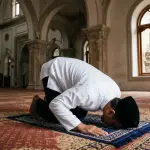
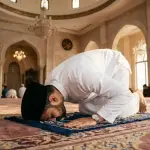
For a Sujud to be legally valid, you must ensure that seven specific body parts rest calmly on the floor. The Prophet Muhammad ﷺ explicitly commanded believers to prostrate on seven bones.
To fulfill a proper Sujud, these seven areas must touch the ground:
- The Forehead: It must touch the place of prostration directly, without any barrier (such as hair or a lowered prayer cap).
- The Two Palms: Specifically, the inner side of the hands.
- The Two Knees.
- The Two Feet: The inner tips of the toes must be folded and directed toward the Qiblah.
The text emphasizes the forehead’s exposure:
قوله: (وَأَقَلُّهُ وَضْعُ شَيْءٍ مَكْشُوفٍ مِنْ الْجَبْهَةِ) لِخَبَرِ «إذَا سَجَدْت فَمَكِّنْ جَبْهَتَك وَلَا تَنْقُرُ نَقْرًا» رَوَاهُ ابْنُ حِبَّانَ وَصَحَّحه
وَيَجِبُ… (وَضْعُ جُزْءٍ مِنْ الرُّكْبَتَيْنِ وَمِنْ بَاطِنِ الْكَفَّيْنِ) … (وَ) مِنْ بَاطِنِ (أَصَابِعِ الْقَدَمَيْنِ)
“And its minimum is placing an exposed part of the forehead, due to the narration: ‘When you prostrate, firmly place your forehead and do not peck.'”
Crucial Conditions: Pressure and Hip Position
There are two technical requirements that are often overlooked:
- Pressure (Tahammul): When the forehead touches the floor, it must bear the weight of the head. If you were to prostrate on cotton, the cotton should visibly compress.
- Elevated Hips (Tankis): A proper Sujud requires the hips (posterior) to be positioned higher than the head and shoulders. Prostrating on a steep incline where the head rests higher than the hips is invalid.
قوله : ( وَتَنْكِيسٍ بِارْتِفَاعِ أَسَافِلِهِ ) أَيْ عَجِيزَتِهِ وَمَا حَوْلَهَا ( عَلَى أَعَالِيهِ حَتَّى يَطْمَئِنَّ )
The Recitation of Sujud and Its Meaning
Once the body is in the perfect position, what should be recited? There are several variations of the prostration recitation taught by the Prophet. You can choose the most common prostration recitation or add other prayers.
1. Standard Tasbih (3x)
This is the most standard reading for the prostration in the five daily prayers:
Arabic Recitation for Prostration:
سُبْحَانَ رَبِّيَ الْأَعْلَى وَبِحَمْدِهِ
Transliteration: Subḥāna Rabbiya al-A‘lā wa biḥamdihi
Meaning: “Glory to my Lord, the Most High, and all praise is due to Him.”
Usually recited three times. This is the most minimal reading during prostration to attain the Sunnah.
2. Additional Prophetic Du’as

To prolong your prostration, especially when praying alone (munfarid), you can add the following majestic supplication:
اللَّهُمَّ لَك سَجَدْتُ وَبِك آمَنْت وَلَك أَسْلَمْت سَجَدَ وَجْهِي لِلَّذِي خَلَقَهُ وَصَوَّرَهُ وَشَقَّ سَمْعَهُ وَبَصَرَهُ تَبَارَكَ اللَّهُ أَحْسَنُ الْخَالِقِينَ
Allāhumma laka sajadtu, wa bika āmantu, wa laka aslamtu. Sajada wajhiya li-lladhī khalaqahu wa ṣawwarahu, wa shaqqa sam‘ahu wa baṣarahu. Tabāraka llāhu aḥsanu al-khāliqīn.
Meaning:
“O Allah, to You I prostrate, in You I believe, and to You I submit. My face prostrates to the One who created it, fashioned its form, and split its hearing and sight. Glory to Allah, the Best of Creators.”
3. Du’a in the Final Sujud
Many scholars strongly encourage intensifying your supplications during the final Sujud, as this is the closest a person ever gets to Allah. The Prophet ﷺ said: “The closest a servant comes to his Lord is when he is prostrating, so make abundant supplications therein” (Sahih Muslim). You may quietly recite a comprehensive prayer or ask for personal needs in your heart.
Proper Sujud Differences Between Men and Women

While the obligatory pillars remain identical for both genders, there are differences in the sunnah (recommended) posture based on the principles of modesty.
The Posture for Men
Men are recommended to adopt an “open” posture:
- Keep the elbows elevated and away from the ribs.
- Keep the abdomen elevated and away from the thighs.
The Posture for Women
For women, the sunnah is to adopt a more “gathered” and enclosed posture to ensure maximum modesty and coverage:
- Keep the elbows tucked closely to the ribs.
- Draw the abdomen close to the thighs, resulting in a more compact position.
The classical text notes:
…. قوله : (وَ) أَنْ ( يُجَافِيَ الرَّجُلُ بَطْنَهُ وَمِرْفَقَيْهِ عَنْ فَخِذَيْهِ وَجَنْبَيْهِ وَتَضُمُّ الْمَرْأَةُ ، وَالْخُنْثَى ) بَعْضَهُمَا إلَى بَعْضٍ
“And that the man separates his abdomen and elbows from his thighs and sides, whereas the woman… gathers her limbs together.”
Common Mistake: Prostrating on Moving Garments
A frequent error that invalidates the Sujud is prostrating on a garment that moves alongside the body. For example, if a woman wears a long, wide prayer garment (mukena) or a man wears a long turban, and their forehead rests exactly on the fabric that moves when they stand or sit, the Sujud is legally invalid.
( وَلَا يَجُوزُ السُّجُودُ عَلَى مُتَحَرِّكٍ مِنْ مَلْبُوسِهِ )
The Solution: Ensure your forehead touches the prayer mat directly. If you must use a barrier, ensure it is completely detached from the clothing you are wearing.
Summary Table: The Perfect Sujud Checklist
To better understand the correct way to perform prostration, see the following table:
| Body Part | Rule for Men | Rule for Women | Status |
| Forehead | Exposed, touching the floor | Exposed, touching the floor | Obligatory (Requires pressure) |
| Elbows | Separated from the ribs | Tucked close to the ribs | Sunnah |
| Abdomen | Lifted away from the thighs | Kept close to the thighs | Sunnah |
| Toes | Folded inward facing Qiblah | Folded inward facing Qiblah | Obligatory |
| Knees | Touching the floor | Touching the floor | Obligatory |
FAQ: Frequently Asked Questions about Prostration (Sujud)
What should I recite if I haven’t memorized the long du’as?
Reciting Subhana rabbiyal a’la is perfectly sufficient. Even if you remain completely silent but maintain stillness (Tuma’ninah), your prayer remains valid, as the recitation itself is sunnah. However, reciting it is highly encouraged to maximize your spiritual reward.
Are the supplications for Ruku’ and Sujud the same?
They are different. In Ruku’ (bowing), one recites Subhana rabbiyal ‘adzim, while in Sujud, the recitation is Subhana rabbiyal a’la. Both, however, serve to glorify and praise Allah.
Can I supplicate in English during the final Sujud?
If you are praying and wish to make a personal du’a in a language other than Arabic, you must do so solely in your heart to prevent invalidating the prayer. Only Arabic supplications sourced from the Quran or Sunnah may be gently vocalized.
Which part of the body goes down first, the knees or the hands?
In the Shafi’i Madhhab, it is recommended (sunnah) for the knees to touch the ground first, followed by the hands, and then the forehead. When rising from Sujud, the hands should be lifted first, followed by the knees.
By understanding the recitation during prostration (sujud) and its procedures as described above, hopefully the quality of our prayers will improve. Remember, the recitation of prostration and its meaning teaches us to be humble before the Most High. Do not rush, enjoy every moment of closeness with the Creator during your prostration.
Conclusion
Perfecting your proper Sujud is a profound step toward elevating the overall quality of your worship. By adhering to the meticulous guidelines set forth by Shafi’i scholars in texts like Asna al-Matalib, we can worship with confidence, knowing our physical actions align with authentic Islamic jurisprudence.
Always remain mindful of the direct contact of your forehead and the tranquility of Tuma’ninah. May Allah accept every prostration and supplication we offer. If you wish to further refine your worship, consider exploring our detailed guides on the sunnahs of ablution or reviewing the fundamental pillars of prayer.
Reference
al-Anṣārī, Zakariyā. Asnā al-Maṭālib fī Sharḥ Rawḍ al-Ṭālib. With ḥāshiyah Aḥmad al-Ramlī. Edited by Muḥammad az-Zuhrī al-Ghamrāwī. Cairo: al-Maṭbaʿah al-Maymānīyah, 1313 H. Reprinted by Dār al-Kitāb al-Islāmī.


