
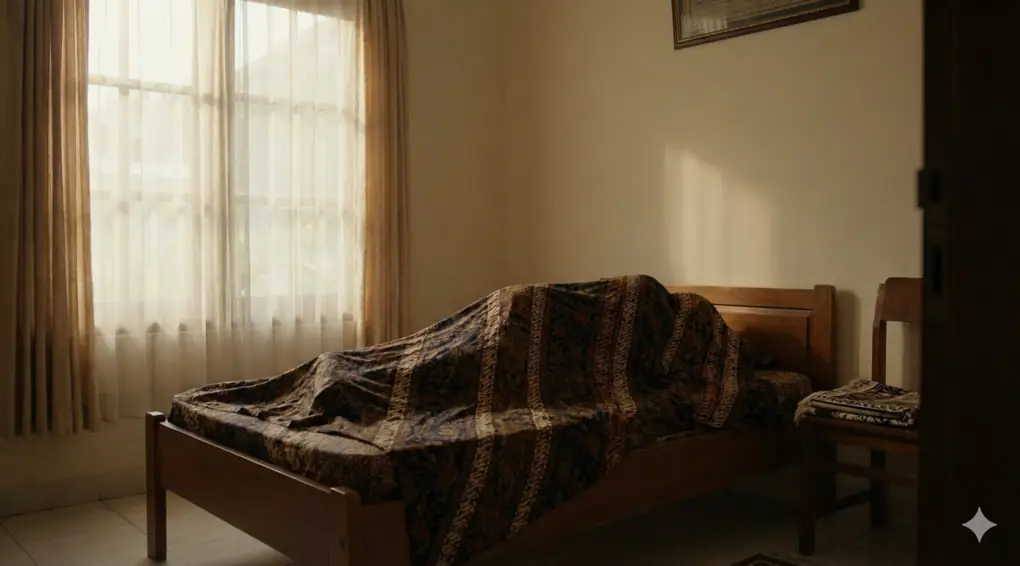
The profound moment after the final breath ceases is simultaneously the most silent and the most disorienting time for a family. Tears may shatter the silence, yet beneath that intense grief, a monumental responsibility awaits. Frequently, out of sheer panic, families simply abandon the deceased’s body until the professional funeral preparers arrive.
However, there is a highly critical window—typically the first 1-2 hours immediately following death—where the deceased’s body remains warm and pliable. If this crucial window is missed, the body will inevitably undergo rigor mortis (stiffening of the corpse), which severely complicates the subsequent washing and shrouding procedures.
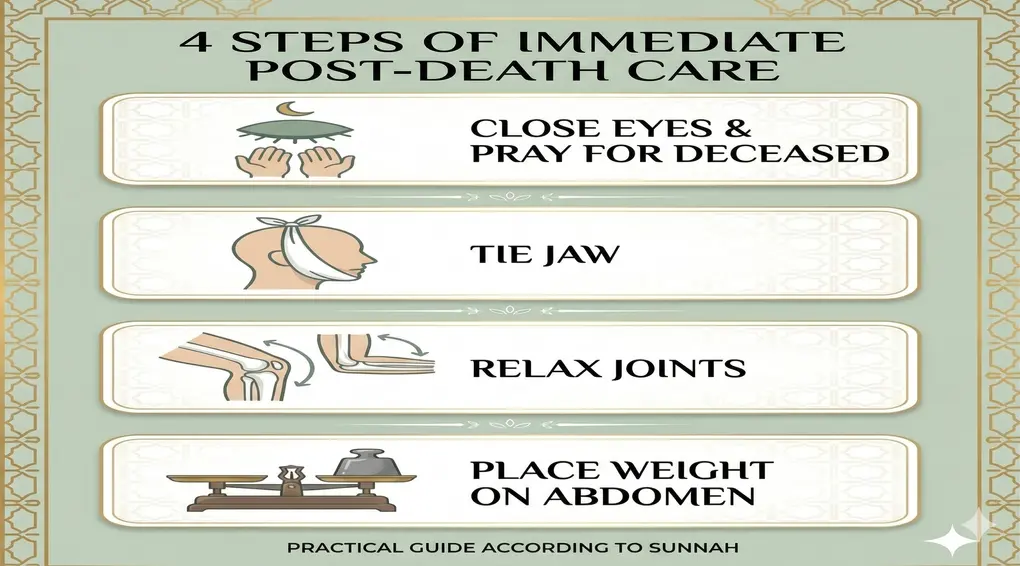
After you have definitively confirmed the signs of death and performed talqin, there are several immediate “first aid” steps that must be swiftly executed.
Below is a comprehensive guide on the crucial things to do after a person dies, based on the authoritative Shafi’i fiqh manual, Asna al-Matalib.
1. Closing the Eyes of the Deceased and Supplicating

The eyes of a newly deceased person frequently remain wide open. Theologically, this occurs because the physical gaze instinctively follows the soul (ruh) as it ascends to the heavens. Leaving the eyes open for an extended period will cause them to dry out and become exceedingly difficult to close later. This can inadvertently cause distress or leave a frightening final impression of the deceased’s face.
In the book Asna al-Matalib, it is explicitly stated:
قوله: (وَيُسَنُّ إغْمَاضُهُ) لِلْحَدِيثِ الصَّحِيحِ إنَّ الرُّوحَ إذَا قُبِضَ تَبِعَهُ الْبَصَرُ
“And it is sunnah to close his eyes, based on the authentic hadith: Indeed, when the soul is taken, the eyesight follows it.”
How to execute this: Gently stroke the face downwards from the forehead, softly pressing the eyelids shut. While performing this, it is a sunnah to recite the specific supplication for closing the eyes of the deceased:
بِسْمِ اللَّهِ وَعَلَى مِلَّةِ رَسُولِ اللَّهِ اللَّهُمَّ اغْفِرْ لِـ(…) وَارْفَعْ دَرَجَتَهُ فِي الْمَهْدِيِّينَ، وَاخْلُفْهُ فِي عَقِبِهِ فِي الْغَابِرِينَ، وَاغْفِرْ لَنَا وَلَهُ يَا رَبَّ الْعَالَمِينَ، وَافْسَحْ لَهُ فِي قَبْرِهِ وَنَوِّرْ لَهُ فِيهِ
Transliteration: Bismillahi wa ‘ala millati Rasulillahi. Allahummaghfir li [name of the deceased] warfa’ darajatahu fil mahdiyyina, wakhlufhu fi ‘aqibihi fil ghabirina, waghfir lana wa lahu ya Rabbal ‘alamina, wafsah lahu fi qabrihi wa nawwir lahu fihi.
(Note: Adjust the pronouns to ‘laha’, ‘darajataha’, etc., for a female deceased).
Meaning: “In the name of Allah and upon the religion of the Messenger of Allah. O Allah, forgive [name of the deceased], elevate his rank among the rightly guided, grant a successor for the descendants he has left behind, forgive us and him, O Lord of the worlds, expand his grave for him, and illuminate it for him.”
2. Tying the Jaw to Prevent the Mouth from Gaping
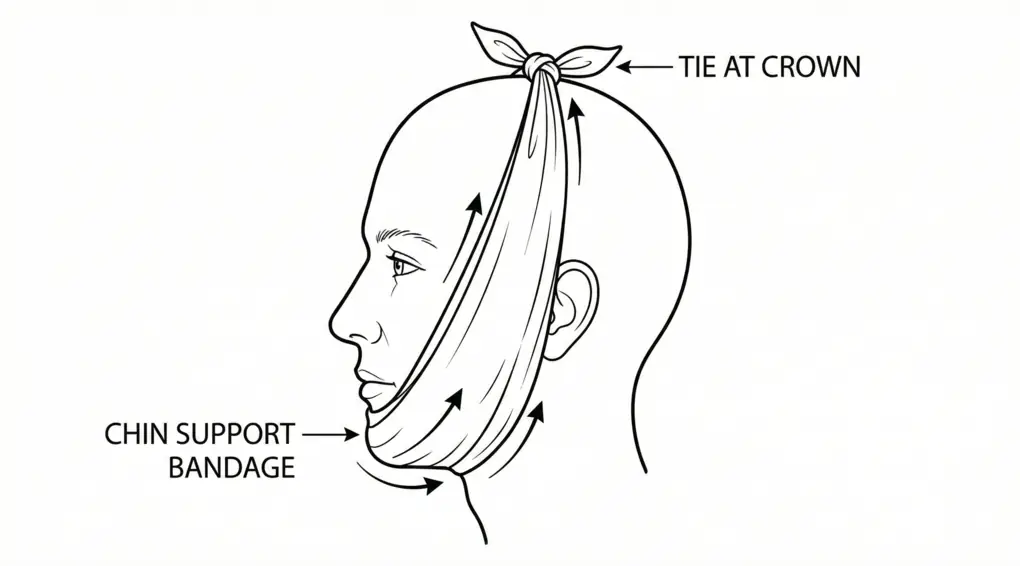
Have you ever seen a deceased person whose mouth was locked wide open? This occurs because the jaw muscles lose all tension at the exact moment of death, dropping open, and then subsequently lock into that terrifying position when rigor mortis sets in. This is visually distressing and invites insects (like flies) to enter the oral cavity.
Therefore, expertly tying the jaw is a mandatory action that must be performed swiftly while the body is still limp. Reference from Asna al-Matalib:
قوله: (ويشد لحييه بعصابة عريضة يربطها فوق رأسه) حفظا لفمه عن الهوام وقبح منظره
“And (it is sunnah) to tie his two jaws with a broad band, tying it above his head, to protect his mouth from insects and from presenting an ugly appearance.”
Technical Steps:
- Obtain a clean, long cloth, bandage, or scarf.
- Position the center of the cloth firmly beneath the deceased’s chin.
- Pull both ends of the cloth tightly upwards towards the crown of the head.
- Tie it securely (but without inflicting damage) until the mouth is firmly and completely shut.
3. Softening the Joints (Talyin al-Mafasil)
This is a critical point that is rarely known by the general public. Frequently, during the washing process, the corpse’s arms are already frozen stiff like a statue, making it nearly impossible to clean the armpits or folds. The definitive solution is to manually soften the joints (“warming up”) immediately after death.
Asna al-Matalib meticulously explains:
قوله: (ويلين مفاصله بالمد والرد) فيرد ساعده إلى عضده وساقه إلى فخذه وفخذه إلى بطنه ثم يمدها (و) يلين (أصابعه) تسهيلا لغسله وتكفينه فإن في البدن بعد مفارقة الروح بقية حرارة فإذا لينت المفاصل حينئذ لانت وإلا فلا يمكن تليينها بعد
“And he should soften his joints by extending and bending them, returning his forearm to his upper arm, his lower leg to his thigh, and his thigh to his abdomen, and then extending them. (And) he softens (his fingers) to facilitate his washing and shrouding. For indeed, in the body, after the departure of the soul, there remains residual heat. If the joints are softened at that precise time, they will become pliable; otherwise, it will be impossible to soften them afterward.”
What exactly must be done?
- Arms: Gently bend the deceased’s forearm towards the shoulder, then extend it straight again. Perform this several times smoothly. Open and close the fingers.
- Legs: Gently bend the knee upwards toward the abdomen, then extend it straight down again.
Perform this exclusively while the body is still warm. If the body has already turned ice-cold and stiff, do not force it, as you could easily fracture the bones.
Now, with the jaw neatly tied and the joints successfully softened, the deceased is perfectly prepped for purification. Learn the profound differences between the obligatory minimum and the perfect sunnah methods in our guide on how to wash a dead body according to fiqh.
4. Placing a Weight on the Abdomen

The subsequent vital action is to place a moderately heavy object on the deceased’s abdomen. The objective is not rooted in mysticism or superstition, but is purely for physical and medical reasons. A corpse’s abdomen is highly susceptible to severe bloating due to residual digestive gases. If severely bloated, the deceased will present an undignified appearance.
قوله: (ويضع على بطنه) شيئا (ثقيلا كسيف ومرآة) ونحوهما من أنواع الحديد (ثم طين رطب) ثم ما تيسر لئلا ينتفخ
“And he places on his abdomen something heavy like a sword or a mirror, or similar types of iron, then wet clay, then whatever is available, so that it does not swell.”
Utilize an object weighing roughly 1-2 kg. This could be a small bag filled with sand, a piece of iron, or even a heavy book (as long as the sole intention is physical weight, not a superstitious belief about warding off evil spirits). Place it meticulously over the covering cloth, never directly on the bare skin.
Additional Actions: Removing Clothing and Covering the Body
After completing the 4 core actions above, there are two final, critical steps to ensure the deceased’s body does not deteriorate rapidly:
- Removing Stitched Clothing (Tajrid): Tight, restrictive clothing will severely complicate matters once the body stiffens. Furthermore, thick clothing traps residual body heat, drastically accelerating the decomposition process. Carefully remove their clothing and replace it with a loose, lightweight covering sheet.
- Covering the Entire Body (Tasjiyah): Completely cover the deceased from the top of the head to the tips of the toes with a thin, breathable cloth (like a simple cotton sheet). Do not utilize excessively thick fabrics (like heavy winter blankets), as this will trap heat and hasten bodily decay.
Family Checklist Summary Table
To avoid confusion, here is a checklist you can use:
| Action | Primary Objective | How to Perform |
| Close Eyes | Prevent drying & frightening appearance | Stroke face downwards while praying, softly shut eyelids. |
| Tie Jaw | Prevent mouth from locking open | Tie a cloth from beneath the chin up to the crown of the head. |
| Soften Joints | Facilitate washing & shrouding | Gently bend and extend arms and legs while the body is warm. |
| Abdominal Weight | Prevent gastric bloating | Place a ±1kg object on the stomach (over a cloth). |
| Change Clothes | Prevent rapid decomposition | Remove tight clothes, cover completely with a thin, long sheet. |
FAQ: Frequently Asked Questions
Is it permissible to weep while performing the steps above?
Yes, it is entirely permissible. Weeping is a natural, profoundly human emotional response. Even the Messenger of Allah ﷺ wept openly when his infant son passed away. What is strictly forbidden (Haram) is wailing (niyahah)—such as screaming hysterically, slapping one’s cheeks, tearing one’s garments, or uttering words that blatantly reject the divine decree of Allah.
How long can the deceased be left before being washed?
It is a highly emphasized sunnah to hasten (ta’jil) the entire funeral process. If a person passes away in the morning, they should ideally be washed and buried that exact same day. Deliberately delaying the process without a valid shar’i reason (such as waiting days for a distant relative to arrive) is feared to cause the physical condition of the corpse to deteriorate significantly.
What if the deceased is already fully stiff (rigor mortis)?
If you arrive late and the deceased has already completely stiffened, do not force the joints to bend aggressively. Perform the washing process to the best of your physical ability without fracturing or damaging the corpse’s body, because inflicting pain or damage upon a corpse carries the exact same sin as inflicting it upon a living person.
Conclusion
Performing these immediate things to do after a person dies is the ultimate manifestation of our final, profound respect for the deceased. By meticulously caring for their physical body mere moments after death, we drastically facilitate the arduous tasks of those who will wash and shroud them later.
Once the deceased has been properly handled, tied, and respectfully covered, the subsequent massive step is preparing for the ritual bath. You can study the profoundly detailed, step-by-step procedures in our master article: The complete procedures for preparing the deceased (Tajhiz al-Janazah) according to the Sunnah.
We pray that Allah showers His boundless mercy upon our deceased family members and grants immense, beautiful patience to those left behind. Wallahu a’lam bish-shawab.
Reference
Zakariyā al-Anṣārī, Asnā al-Maṭālib fī Sharḥ Rawḍ al-Ṭālib, with a ḥāshiyah by Aḥmad al-Ramlī, edited by Muḥammad az-Zuhrī al-Ghamrāwī (Cairo: al-Maṭbaʿah al-Maymānīyah, 1313 H; repr. Dār al-Kitāb al-Islāmī), vol. 1, p. 297.


