

Have you ever felt overwhelmed by the sheer number of things you want to ask from Allah? We desire a smooth flow of provision, a harmonious family, robust health, and ultimate salvation in the Hereafter. Amidst these myriad desires, we sometimes worry that a crucial request might be inadvertently omitted from our supplications.
This is precisely where the profound beauty of Islamic jurisprudence (fiqh) and spirituality shines. The Prophet Muhammad ﷺ taught us a concise, robust, and all-encompassing supplication. In Indonesia, this Rabbana Atina prayer is culturally popularized as the Doa Sapu Jagat (the all-encompassing or “universe-sweeping” prayer).
While this prayer serves as the ultimate supplication for all conditions, if you are facing specific hardships or emotional dead-ends, you can gracefully combine it with a comprehensive collection of prayers to remove sadness and life’s difficulties and the prayer of Rahmataka Arju for targeted spiritual relief.
Almost every Muslim has memorized this prayer. However, do you truly understand the theological secrets behind its seemingly simple phrasing? Let us meticulously examine the meanings, scriptural evidence, and unparalleled virtues of this prayer based on the classical text Al-Adhkar by Imam al-Nawawi.
What is the “Sapu Jagat” Prayer?
Linguistically, the Indonesian term “sapu jagat” implies something that sweeps across or encompasses the entire universe. In the context of worship, it designates a supplication that structurally “sweeps up” all conceivable goodness. There is absolutely no goodness in this world or the Hereafter left behind; everything is encapsulated within these few words. Consequently, it also seeks absolute refuge from all forms of evil.
This prayer is actually a direct quotation from the Holy Quran. Although some mistakenly search for it under Surah Al-Baqarah verse 210, this magnificent prayer is authentically enshrined in Surah Al-Baqarah, verse 201.
The Complete Text of the Rabbana Atina Prayer
For those seeking the precise Arabic text and international transliteration to facilitate memorization, here is the complete wording as recorded in the Quran and the book Al-Adhkar (Hadith No. 347).
Arabic Text:

For those of you looking for the Arabic and Latin transliteration of the Sapu Jagat prayer to make it easy to read and memorize, here is the complete wording as contained in the book Al-Adzkar (Hadith No. 347) and the Quran.
The Universal Prayer in Arabic
رَبَّنَا آتِنَا فِي الدُّنْيَا حَسَنَةً وَفِي الآخِرَةِ حَسَنَةً وَقِنَا عَذَابَ النَّارِ
International Transliteration:
Rabbana atina fi al-dunya hasanatan, wa fi al-akhirati hasanatan, wa qina ‘adhaba al-nar.
The Meaning of Dua Sapu Jagat




“Our Lord, give us in this world [that which is] good and in the Hereafter [that which is] good and protect us from the punishment of the Fire.”
The Virtues of the Prayer According to Hadith
Imam al-Nawawi, in his monumental work Al-Adhkar, categorizes this discussion under the chapter of Supplications for Distress (Dua al-Karb). However, the narrations he presents clearly indicate that this was the Prophet’s most frequent daily prayer.
In Hadith number 347, it is explicitly stated:
“We narrate in ‘Sahih Al-Bukhari and Muslim’ from Anas (may Allah be pleased with him), who said: ‘The supplication most frequently uttered by the Prophet ﷺ was: Allahumma atina fi al-dunya hasanatan, wa fi al-akhirati hasanatan, wa qina ‘adhaba al-nar.'”
Furthermore, Imam al-Nawawi highlights a fascinating addition found in the narration of Imam Muslim:
” زاد مسلم في روايته قال: ” وكان أنس إذا أراد أن يدعو بدعوة دعا بها, فإذا أراد أن يدعو بدعاء دعا بها فيه
“And when Anas wanted to supplicate with a single prayer, he would supplicate with it. And if he wanted to supplicate with a [long] prayer, he would include it therein.”
This powerfully illustrates the immense utility of the Rabbana Atina prayer. The noble companion Anas bin Malik, who served the Prophet ﷺ for ten years, profoundly understood that this prayer is the spiritual “master key” for all affairs. If time is short, this prayer suffices. If time is abundant, this prayer remains a mandatory inclusion to perfect the supplication.
Deep Dive: Why is it Called All-Encompassing?
To fully comprehend why this prayer is so extraordinary, we must examine the exegesis (tafsir) of the word “Hasanah” (Goodness), which is strategically mentioned twice.
1. Goodness in This World (Fi al-dunya hasanah)
When we utilize this prayer to ask for provision, it is inherently included here. However, worldly “Hasanah” possesses an exceptionally broad meaning. Classical exegetes explain that worldly goodness encompasses:
- Expansive and lawful (halal) provision.
- Robust physical and mental health.
- A righteous and pious spouse.
- Obedient and righteous children.
- Beneficial knowledge.
- Profound tranquility of the heart (sakinah).
Therefore, when you articulate Rabbana atina fi al-dunya hasanah, you are requesting a comprehensive package of worldly happiness.
2. Goodness in the Hereafter (Wa fi al-akhirati hasanah)
The worldly life is not the final destination. This segment requests absolute comfort in the eternal future, which perfectly aligns with the essence of faith in the Last Day. This includes:
- Ease during the divine reckoning (hisab).
- Receiving the book of deeds in the right hand.
- Divine shade on the Day of Resurrection (Mahshar).
- The ultimate pinnacle: Unhindered entry into Paradise.
3. Protection from the Hellfire (Wa qina ‘adhaba al-nar)
This serves as the perfect conclusion. A believer might ultimately enter Paradise but could hypothetically have to “transit” through Hell to cleanse unrepented sins. Through this specific phrase, we beg Allah for direct admission into Paradise without being touched by the Hellfire whatsoever.
This tripartite structure is exactly why it is deemed an all-encompassing prayer. It sweeps up every necessity: holistic success in this world, absolute salvation in the Hereafter, and guaranteed immunity from the Fire.
The Best Times to Recite This Prayer
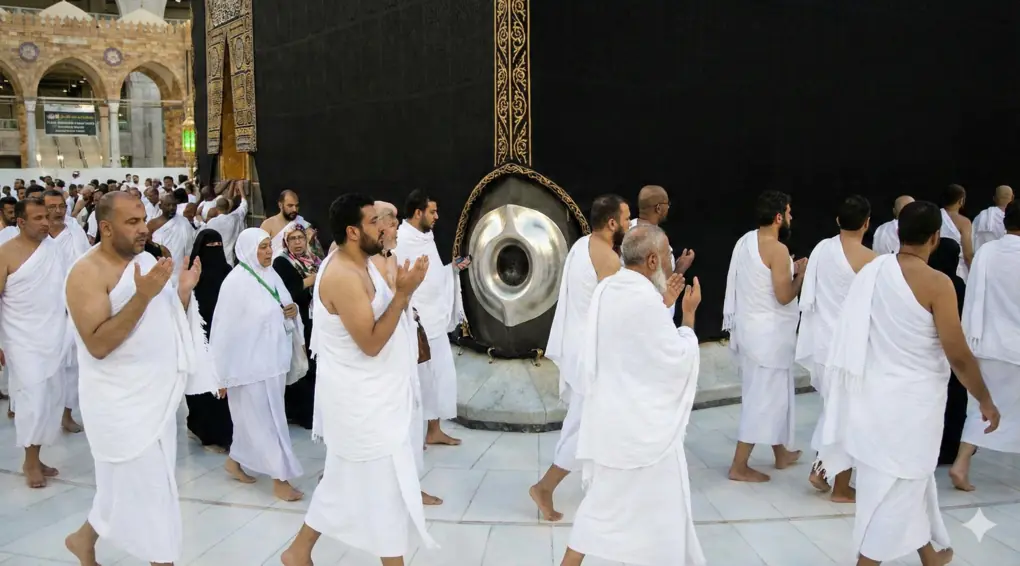
Because this prayer is brief yet profoundly dense, it is highly flexible and can be recited at any time. Nevertheless, specific moments are highly recommended:
- After Obligatory Prayers: It is highly recommended to use this prayer to conclude your series of dhikr and supplications after obligatory and voluntary prayers. It acts as a divine “seal” validating all preceding requests.
- Between the Yemeni Corner and the Black Stone: For those performing Umrah or Hajj, the Prophet ﷺ specifically recommended reciting this prayer while walking between the Rukun Yamani and the Hajar Aswad during the Tawaf around the Kaaba.
- Concluding Long Supplications: Following the exact methodology of Anas bin Malik, if you are making a lengthy, personalized supplication, always conclude it with this prayer to cover anything you might have forgotten to mention.
Additionally, during your final prostration (sujud), combining this comprehensive prayer with the virtues of the dhikr Ya Hayyu Ya Qayyum (Bi rahmatika astaghith) creates a tremendously powerful spiritual plea.
Extended Variation of the Prayer
Frequently, within the community, we hear a slightly extended version. It typically includes an explicit request to enter Paradise alongside the righteous. Here is the popular extended transliteration:
Rabbana atina fi al-dunya hasanatan, wa fi al-akhirati hasanatan, wa qina ‘adhaba al-nar. Wa adkhilna al-jannata ma’a al-abrar, ya ‘Azizu ya Ghaffar, ya Rabba al-‘alamin.
Meaning: “…And admit us into Paradise with the righteous, O Almighty, O Oft-Forgiving, O Lord of the worlds.”
Summary Table of “Hasanah” (Goodness)
To facilitate a clearer understanding, here is a detailed breakdown of exactly what you are requesting when reciting this prayer:
| Phrasing of the Prayer | Scope of the Request (Meaning) |
| Fi al-Dunya Hasanah | Smooth provision, beneficial knowledge, a loyal spouse, a peaceful household, good health, and an honorable reputation. |
| Wa fi al-Akhirati Hasanah | Security during the Apocalypse, an easy reckoning, a radiant face, and entrance into Paradise. |
| Wa Qina ‘Adhaba al-Nar | Protection from trials that lead to sin, forgiveness of sins to avoid punishment, and safety while crossing the Sirat bridge. |
Frequently Asked Questions (FAQ)
Can the Rabbana Atina prayer be used to ask for wealth?
Absolutely. The term “Hasanah” in this world encompasses expansive and blessed wealth. Therefore, if you are utilizing this prayer to seek provision, it is highly appropriate. However, remember that the wealth being requested is specifically that which brings goodness, not wealth that leads to negligence.
What is the primary purpose of this prayer?
Its function is entirely universal. You can recite it with the specific intention of seeking healing, passing an exam, finding a spouse, or paying off debts. This is because all fundamentally good things fall under the category of “Hasanah.” However, if you are facing a severe deadlock, scholars advise preceding it with the Prayer of Prophet Yunus to open the doors of divine forgiveness first.
Must it be recited strictly in Arabic?
Reciting the prayer in its original Arabic is certainly superior (afdal) because it originates directly from the Quran and authentic Hadith. However, if you are not yet fluent, Allah is fully aware of His servant’s intentions. You can learn gradually using the provided transliteration.
Is it true this prayer is found in Surah Al-Baqarah verse 210?
No, that is a common misconception. The correct location is Surah Al-Baqarah, verse 201. Verse 210 discusses entirely different subject matter regarding the Day of Judgment.
Conclusion
The Rabbana Atina prayer profoundly teaches us theological balance. Islam does not command us to obsess solely over the Hereafter while neglecting our worldly existence, nor vice versa. We are meticulously taught to strive for absolute success in both realms.
This prayer is a magnificent gift from Allah to the Ummah of the Prophet Muhammad ﷺ. It is remarkably short and easy to memorize, yet its spiritual impact is cosmically massive. Starting today, never abandon this prayer. Whether utilized as a concluding supplication after your daily prayers or whispered during your commute, let this prayer “sweep” away your anxieties and replace them with abundant, overflowing goodness.
May Allah grant all our noble desires. Wallahu a’lam bi al-sawab.
Referensi
Al-Nawawī, Yaḥyā ibn Sharaf. Al-Adhkār. Edited by ʿAbd al-Qādir al-Arnaʾūṭ. New revised edition. Beirut: Dār al-Fikr, 1994.


