
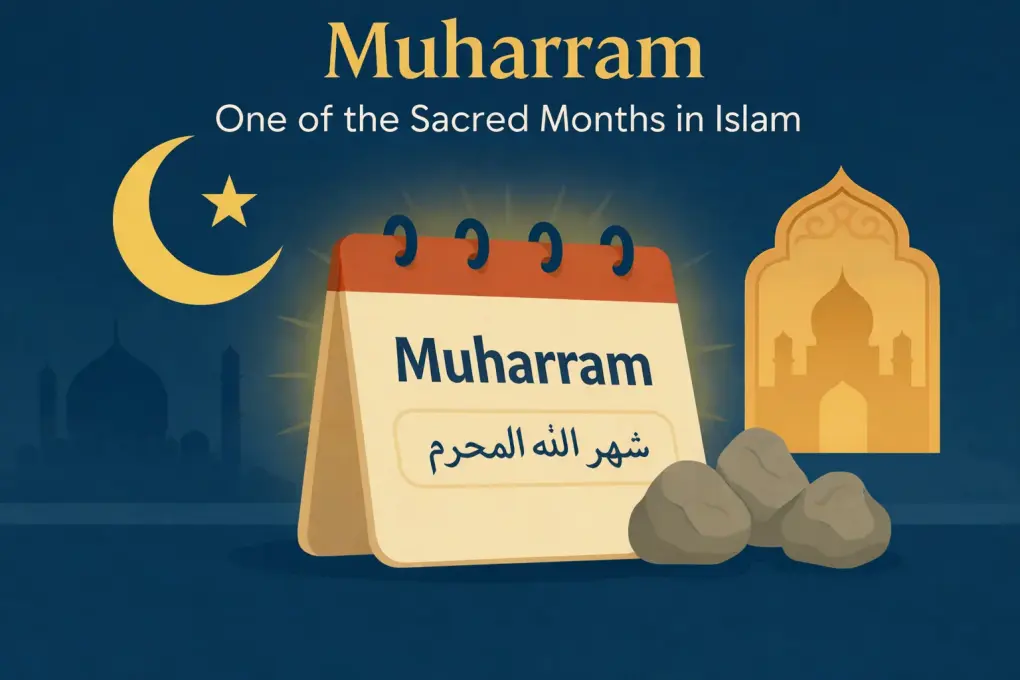
The month of Muharram marks the dawn of the Islamic New Year. As the inaugural month of the lunar year, the virtues of Muharram are deeply rooted in Islamic jurisprudence and history. Understanding this month’s significance is essential for Muslims seeking to maximize their spiritual rewards and align themselves with the Prophetic traditions. Let us explore the noble values, rulings, and recommended practices that elevate this period within the Islamic calendar.
Understanding Muharram: The Sacred Month of Allah
Muharram holds an exceptionally distinguished position in Islam. The depth of its significance is evident in its title, Shahrullah (the Month of Allah). This divine attribution highlights a level of honor directly bestowed by Allah SWT. Throughout the Islamic year—and as we trace the —no other month was explicitly attached to the name of Allah by the Prophet Muhammad (ﷺ) except Muharram.
Furthermore, as we structure our time according to divine guidance, understanding the beginning of the year is just as crucial as knowing the . Both serve to anchor a Muslim’s perception of time around worship and obedience.
Muharram as One of the Four Sacred Months
A prominent characteristic of Muharram is its classification as one of the four sacred months (Al-Ashhur Al-Hurum) in Islam. Allah SWT explicitly establishes this sacredness in the Qur’an, Surah At-Tawbah, verse 36:
إِنَّ عِدَّةَ الشُّهُورِ عِنْدَ اللَّهِ اثْنَا عَشَرَ شَهْرًا فِي كِتَابِ اللَّهِ يَوْمَ خَلَقَ السَّمَاوَاتِ وَالْأَرْضَ مِنْهَا أَرْبَعَةٌ حُرُمٌ
Translation: “Indeed, the number of months with Allah is twelve [lunar] months in the register of Allah [from] the day He created the heavens and the earth; of these, four are sacred.”
Classical scholars unanimously agree that these four months are Dhul-Qa’dah, Dhul-Hijjah, Muharram, and Rajab. During these periods, the gravity of sins is magnified, and conversely, the rewards for righteous deeds are significantly multiplied. Furthermore, initiating warfare and bloodshed is strictly prohibited to ensure peace and security.
Imam Ibn Kathir elucidates the wisdom behind the consecutive arrangement of three of these months: “Three consecutive months (Dhul-Qa’dah, Dhul-Hijjah, Muharram) are designated for the pilgrimage (Hajj) and Umrah. Dhul-Qa’dah is for preparation and travel, Dhul-Hijjah is for the actual performance and , and Muharram secures a safe return journey home1.”
The Virtues of Muharram and Recommended Acts of Worship
Because of its elevated status, Muslims are highly encouraged to increase their acts of devotion during this time. To truly benefit from the virtues of Muharram, one must prioritize fasting, which the Shari’ah heavily emphasizes.
The Excellence of Fasting in Muharram
Before engaging in this act, it is vital to reflect on the true (Sawm) to ensure sincere intention. The Prophet Muhammad (ﷺ) explicitly outlined the superiority of fasting in this month:
أَفْضَلُ الصِّيَامِ بَعْدَ شَهْرِ رَمَضَانَ شَهْرُ اللَّهِ الَّذِي تَدْعُونَهُ الْمُحَرَّمَ، وَأَفْضَلُ الصَّلَاةِ بَعْدَ الْفَرِيضَةِ صَلَاةُ اللَّيْلِ2
Translation: “The most excellent fast after the month of Ramadan is the month of Allah, which you call Muharram. And the most excellent prayer after the obligatory prayer is the night prayer.” (Sahih Muslim)
This Hadith unequivocally establishes that observing voluntary fasts during Muharram holds the highest rank after fulfilling the obligatory rules and , providing a powerful motivation for believers to increase their spiritual exertion.
Fasting on Ashura: Expiation for the Past Year’s Sins
Among the days of Muharram, the 10th day—known as the Day of Ashura—carries immense virtue. Historically, it commemorates the monumental day Allah SWT delivered Prophet Musa (AS) and the Children of Israel from Pharaoh’s tyranny.
Fasting on this specific day offers a profound spiritual reward: the expiation of sins for the preceding year. The Messenger of Allah (ﷺ) stated:
صِيَامُ يَوْمِ عَرَفَةَ أَحْتَسِبُ عَلَى اللَّهِ أَنْ يُكَفِّرَ السَّنَةَ الَّتِي قَبْلَهُ وَالسَّنَةَ الَّتِي بَعْدَهُ، وَصِيَامُ يَوْمِ عَاشُورَاءَ أَحْتَسِبُ عَلَى اللَّهِ أَنْ يُكَفِّرَ السَّنَةَ الَّتِي قَبْلَهُ3
Translation: “Fasting on the Day of Arafah, I anticipate from Allah, expiates the sins of the year before it and the year after it. And fasting on the Day of Ashura, I anticipate from Allah, expiates the sins of the year before it.” (Sahih Muslim)
According to Imam An-Nawawi, a prominent authority in the Shafi’i madhhab, this forgiveness primarily pertains to minor sins (Sagha’ir). However, if a person has no minor sins, the fast is hoped to alleviate major sins or elevate their spiritual rank in the sight of Allah4.
Sunnah Methods for the Ashura Fast




To align properly with the Prophetic Sunnah and distinguish Islamic practices from those of Jewish communities who also fast on the 10th, classical scholars classify the methods of fasting for Ashura into three distinct levels:
- Fasting the 10th of Muharram Only (Ashura)5: This is the basic level. While some scholars, such as those in the Hanbali school, state it is not disliked (Makruh) to fast only on the 10th, it remains highly preferable to combine it with another day.
- Fasting the 9th and 10th (Tasu’a and Ashura)6: This is a highly recommended and common practice. The Prophet (ﷺ) expressed his strong intention to fast on the 9th of Muharram (Tasu’a) had he lived to see the following year. Al-Hafidh Ibn Hajar explained that the purpose of adding the 9th was either out of caution to ensure the 10th is caught, or explicitly to differ from the Jews and Christians7.
- Fasting the 9th, 10th, and 11th: This represents the most complete and perfect level. Imam Ibn al-Qayyim categorized the fasts into three tiers, stating the most complete is fasting a day before and a day after Ashura. This is supported by a narration from Ibn Abbas (RA): “Fast on the day of Ashura and differ from the Jews therein; fast a day before it or a day after it.” (Musnad Ahmad)89.
Conclusion
By comprehending the profound virtues of Muharram and observing its recommended Sunnahs—particularly the fasts of Tasu’a and Ashura—we unlock an invaluable opportunity for immense rewards and spiritual purification. As a sacred month dedicated to Allah, Muharram serves as an ideal starting point for the Islamic year, encouraging believers to reflect, seek forgiveness, and elevate their obedience through dedicated worship.
Frequently Asked Questions (FAQ)
Why is Muharram referred to as “Shahrullah” or the Month of Allah?
It is the only month explicitly attributed to the name of Allah by the Prophet Muhammad (ﷺ). This divine attribution signifies its elevated honor, sanctity, and the exceptional rewards granted for good deeds performed during this period.
Does the Ashura fast forgive all types of sins?
According to scholars of Ahlus Sunnah wal Jama’ah, such as Imam An-Nawawi, the Ashura fast serves as an expiation for minor sins committed in the previous year. Major sins necessitate sincere repentance (Tawbah Nasuha). However, if one has no minor sins, the fast elevates their spiritual status.
Is it permissible to fast only on the 10th of Muharram?
Yes, it is permissible and valid to fast exclusively on the 10th of Muharram. However, to attain the complete Sunnah and purposely differentiate from the practices of other faiths, it is highly recommended to fast on the 9th as well.
Footnotes & References:
- Ibn Kathīr, Tafsīr al-Qurʾān al-ʿAẓīm (Saudi Arabia: Dār Ibn al-Jawzī, 2010), Vol. 4, p. 288. ↩︎
- Muslim bin al-Ḥajjāj, Ṣaḥīḥ Muslim (Beirut: Dār Ṭawq an-Najāh, 2012), Vol. 3, p. 169. ↩︎
- Ibid., Vol. 3, p. 167. ↩︎
- Yaḥyā bin Sharaf an-Nawawī, al-Majmūʿ Syarḥ al-Muhadhdhab (Beirut: Dār al-Fikr), Vol. 6, p. 382. ↩︎
- Manṣūr bin Yūnus al-Buhūtī, Kashshāf al-Qināʿ ʿan al-Iqnāʿ (Riyadh: Ministry of Justice KSA, 2000–2008), Vol. 5, p. 319. ↩︎
- Muslim bin al-Ḥajjāj, Ṣaḥīḥ Muslim, Vol. 3, p. 151. ↩︎
- Aḥmad bin ʿAlī Ibn Ḥajar al-ʿAsqalānī, Fatḥ al-Bārī bi-Syarḥ Ṣaḥīḥ al-Bukhārī (Cairo: al-Maktabah as-Salafiyyah), Vol. 4, p. 245. ↩︎
- Ibn Qayyim al-Jawziyyah, Zād al-Maʿād fī Hady Khayr al-ʿIbād (Riyadh–Beirut: Dār ʿAṭāʾāt al-ʿIlm & Dār Ibn Ḥazm, 2019), Vol. 2, p. 94. ↩︎
- Aḥmad bin Ḥanbal, Musnad al-Imām Aḥmad bin Ḥanbal (Beirut: Muʾassasat ar-Risālah, 2001), Vol. 4, p. 52. ↩︎


