
In the realm of Islamic worship, the initial step often determines the validity of the entire act. As previously explored in the article defining what is prayer (salah), the ritual prayer commences with the takbiratul ihram and concludes with the salam. If this foundational opening is flawed, the entire prayer sequence is considered null and void, as if it never occurred.
This article will conduct a thorough examination of what takbiratul ihram truly is, dissect its Arabic and transliterated pronunciation, and—most critically—detail the 17 conditions for its validity based on the authoritative Shafi’i text, Kashifah as-Saja. These conditions are often overlooked but are essential for ensured acceptance.
What is Takbiratul Ihram? (Meaning and Significance)
Linguistically, the term is a compound of takbir (magnification/glorification) and ihram (prohibition/entering a sacred state). Takbiratul ihram signifies the utterance of Allah’s supreme greatness, marking the entry into a “prohibited zone” within the prayer.
Why is it named so? The Kitab Kashifah as-Saja explains this terminology as attributing the cause to the effect. The utterance itself functions to alter a person’s legal state: actions that were previously permissible (halal)—such as eating, drinking, and speaking mundane words—instantaneously become prohibited (haram) once this sacred phrase is articulated.
To establish a strong spiritual foundation before prayer, one must also understand the core Islamic belief system. You can learn more about faith in Allah as the basis of all worship.
From a jurisprudential (fiqh) perspective, the takbiratul ihram is a verbal pillar (rukun qauli). Therefore, articulating the takbir is an obligation that must be pronounced with the tongue and not merely intended in the heart. If there is any doubt regarding its status, the answer is unequivocally that it is an absolute obligation (fardh) to initiate the prayer.
Before diving into the prayer itself, ensure your state of purity is complete. Understand the comprehensive definition of purification (thaharah) in Islam.
The Pronunciation of Takbiratul Ihram: Arabic, Transliteration, and Tajweed
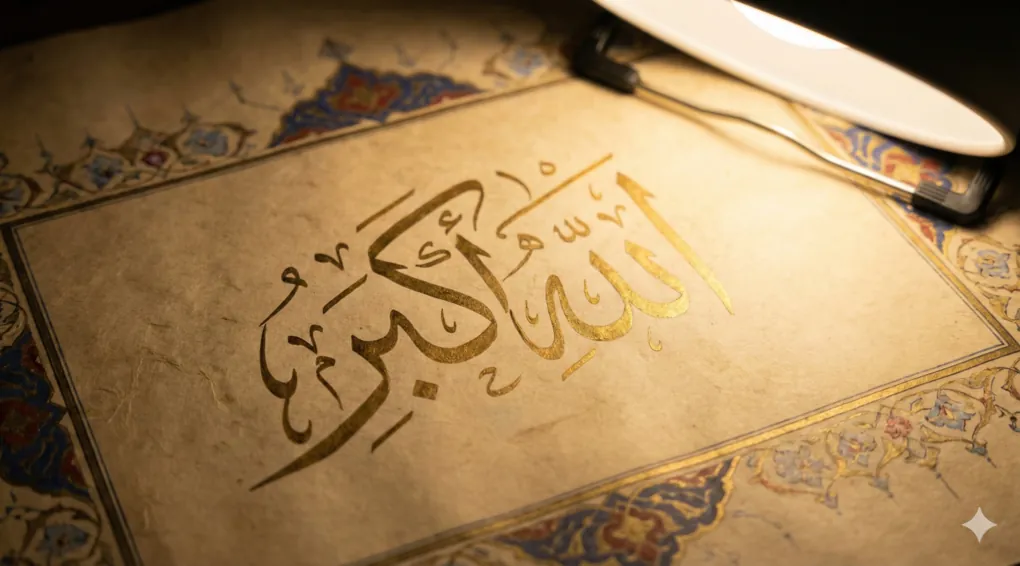
The legislated phrase is highly specific. It is impermissible to substitute it with any other phrase, even one that shares the same meaning of glorifying Allah.
The Standard Phrase
The Arabic text for takbiratul ihram is:
اللهُ أَكْبَرُ
The transliteration is: Allāhu Akbar
The meaning is: “Allah is the Greatest.” The pronunciation must be audible to oneself, clear, and firm.
Permissible Variations
According to Kashifah as-Saja, it is permissible to insert an attribute of Allah within the phrase, provided it does not unduly prolong it. Examples of valid variations include “Allāhu Al-Akbar” or “Allāhu ‘Azza wa Jalla Akbar.” However, the standard phrase “Allāhu Akbar” remains the most preferred and superior form.
17 Conditions for a Valid Takbiratul Ihram (According to Kashifah as-Saja)
This section constitutes the core of the topic. Many inquire about the correct method of takbiratul ihram, focusing solely on the physical movements, while the conditions for its validity lie primarily in its utterance. Jurisprudential references enumerate 16 (or even 17) specific conditions. If even one is omitted, the prayer is not contractually established (ghayr mun’aqid).
We have categorized these conditions for easier comprehension:
A. Conditions Related to Physical State and Time




- Performed While Standing Upright: For obligatory (fardh) prayers, the takbir must be articulated while the body is in a completely upright standing position (for those physically able). It is invalid to pronounce it while rising from a sitting position.
- Facing the Qiblah: It must be performed with the chest facing the direction of the Qiblah.
- Entering the Prayer Time: For obligatory prayers or time-restricted sunnah prayers (muwaqqat), the takbir must occur after the prayer time has begun.
- Audibility to Oneself: When pronouncing the phrase, one’s own ears must hear it (assuming normal hearing ability and the absence of overwhelming noise). This is a crucial aspect of all verbal pillars.
Just as there are conditions for the opening of prayer, there are also specific prerequisites for purification. Review the 13 conditions for a valid wudhu to ensure your wudhu is correct.
B. Conditions Related to Wording and Language
- In Arabic: It is obligatory to use the Arabic language for those capable of doing so. The transliteration is solely for learning purposes.
- Using the Name “Allah”: It is invalid to substitute it with another name, such as saying “Ar-Rahmān Akbar.”
- Using the Word “Akbar”: It is invalid to substitute it with a synonym, such as “Allāhu Kabīr.”
- Proper Sequence (Tartib): It must be in the order “Allāhu Akbar.” Reversing it to “Akbarullāh” is invalid.
C. Prohibitions in Pronunciation (Fatal Errors)
This is a critical section. A valid takbiratul ihram is one free from the following sound-altering errors, which can change the meaning and invalidate the prayer:
- Do Not Elongate the Hamzah of “Allah”: Do not say “Āāāllāhu…”. This changes the statement into a question (“Is Allah the Greatest?”), thereby invalidating the prayer.
- Do Not Elongate the ‘Ba’ in “Akbar”: Do not say “Allāhu Akbār.” This is a fatal error, as Akbār (plural of kabar) can mean “great drums,” or Ikbar can refer to menstrual blood.
- Do Not Add Tasydid (Emphasis) to the ‘Ba’: Do not pronounce it as “Allāhu Akbbar.”
- Do Not Add a Waw (Static or Voweled) in Between: It is impermissible to say “Allāhu-w-Akbar.”
- Do Not Add a Waw at the Beginning: It is impermissible to say “Wallāhu Akbar.”
- No Long Pause: There should be no significant pause (waqf) between the words “Allāhu” and “Akbar.”
- Do Not Corrupt the Letters: One must not change any letter, for example, changing the hamzah into an ‘ain.
D. Special Conditions for Imam-Follower & Intention
- Follower’s Takbir After the Imam Completes: A follower (makmum) must not begin their takbir until the imam has completely finished articulating the “r” sound in “Akbar.” If they coincide even slightly, the follower’s prayer is invalid.
- Without a “Sharif” (Intention Diverter): This specifically applies to a latecomer (masbuq). When performing the takbir, the intention must be purely to enter the prayer (ihram). If the intention is mixed with transitioning (intiqal) to the bowing position or is hesitant, the prayer is invalid.
Physical Movements and Procedure of Takbiratul Ihram

Once the utterance is correct, we address the physical aspect. The most famous action associated with takbiratul ihram is the raising of the hands. What is the legal status of this action?
The ruling is Sunnah (Recommended). This means raising both hands during the takbiratul ihram is a recommended act that perfects the reward, but if omitted, the prayer remains valid.
Once you have successfully entered the prayer, the next major physical pillar is bowing. Learn the correct procedure for how to perform ruku’ in prayer.
The Perfect Hand Position During Takbiratul Ihram
- Start Simultaneously: Begin raising the hands exactly when the mouth starts pronouncing the “A” (in Allāhu).
- Peak Position: The palms should be open, facing the Qiblah. The tips of the fingers should be parallel to the top of the ears, the thumbs parallel to the earlobes, and the palms parallel to the shoulders.
- End Simultaneously: The hands should finish lowering to the folded position on the chest exactly when the mouth finishes pronouncing the “Bar” (in Akbar).
Shaykh Nawawi al-Bantani, quoting Imam al-Bajuri, issues a reminder: The common habit of raising the hands first and then pronouncing the takbir (or vice versa) is contrary to the preferred sunnah method (khilaf as-sunnah), even though the prayer remains valid. The most excellent way (afdhal) is for the action and utterance to be simultaneous.
Frequently Asked Questions (FAQ)
Is it obligatory to raise hands during takbiratul ihram?
No, raising the hands is a Sunnah (recommended act). The prayer is valid without it, but performing it earns greater reward. The obligatory part is pronouncing “Allāhu Akbar.”
Can I say the takbiratul ihram in my heart?
No, the takbiratul ihram is a verbal pillar (rukun qauli). It must be pronounced with the tongue so that you can hear yourself. Saying it only in the heart invalidates the prayer.
What if I mispronounce the takbir, like saying “Allāhu Akbār”?
If you make a fatal pronunciation error that changes the meaning (like elongating the ‘ba’ to “Akbār”), your prayer does not start. You must correct your pronunciation and repeat the takbiratul ihram properly to enter the prayer validly.
Conclusion
Mastering the Arabic pronunciation of takbiratul ihram, avoiding errors in vowel elongation, and synchronizing the physical movements are the keys to a high-quality prayer. By practicing the takbiratul ihram correctly according to the guidelines in Kashifah as-Saja, we can, insha’Allah, ensure the validity and acceptance of our prayers.
For further in-depth study of Shafi’i fiqh texts, you may explore resources such as Ketab Online.
References & Footnotes
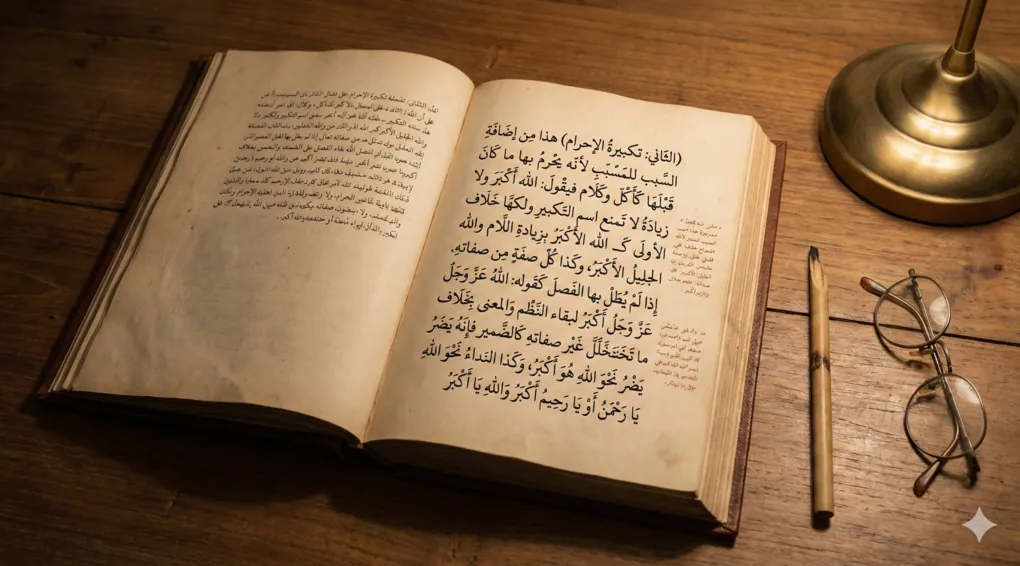
- قوله: (الثاني: تكبيرة الإحرام) هذا من إضافة السبب للمسبب لأنه يحرم بها ما كان حلالاً قبلها كأكل وكلام فيقول: الله أكبر ولا تضر زيادة لا تمنع اسم التكبير ولكنها خلاف الأولى ك الله الأكبر بزيادة اللام والله الجليل الأكبر، وكذا كل صفة من صفاته تعالى إذا لم يطل بها الفصل كقوله: الله عز وجل أكبر لبقاء النظم والمعنى بخلاف ما تخلل غير صفاته كالضمير فإنه يضر نحو الله هو أكبر، وكذا النداء نحو الله يا رحمن أو يا رحيم أكبر والله يا أكبر”
Muḥammad bin ‘Umar Nawawī al-Jāwī al-Bantanī, Kāsyifah as-Sajā fī Syarḥ Safīnat an-Najā (Beirut: t.p., t.t.), p. 140. - شروط تكبيرة الإحرام ستة عشر… (أن تقع حالة القيام في الفرض)… (وأن تكون بالعربية)… (وأن تكون بلفظ الجلالة)… (وكونها بلفظ أكبر)… (الترتيب بين اللفظين)… (أن لا يمد همزة الجلالة)… (عدم مد باء أكبر)… (أن لا يشدد الباء)… (أن لا يزيد واواً ساكنة أو متحركة بين الكلمتين)… (أن لا يزيد واواً قبل الجلالة)… (أن لا يقف بين كلمتي التكبير)… (أن يسمع نفسه جميع حروفها)… (دخول الوقت)… (إيقاعها حال الاستقبال)… (أن لا يخل بحرف من حروفها)… (تأخير تكبيرة المأموم عن تكبيرة الإمام)” Ibid, p. 159.
- فيبتدىء الرفع فيها مع ابتداء التكبير وينهيه مع انتهائه… وقال الباجوري: فابتداؤهما كذلك فما يقع الآن من الرفع قبل التكبير خلاف السنة وإن فعله كثير من أهل العلم… والسنة تحصل بأي رفع كان وأكمله أن يرفع كفيه مقابل منكبيه” Ibid, p. 166.


