

Have you ever felt absolutely certain you could resolve a problem entirely on your own, only to find the situation becoming increasingly entangled? We frequently harbor the illusion that with sufficient intellect, wealth, or social networking, every issue can be seamlessly settled. Yet, there are inevitably moments when all earthly doors slam shut, human logic utterly stalls, and the heart feels suffocatingly constricted.
Those are the “warning lights” from Allah. We are being profoundly reminded of human fragility.
In Islam, the sentiment of “I can do this independently” is a subtle, perilous trap. The Messenger of Allah ﷺ imparted a magnificent supplication through the noble companion Abu Bakrah (may Allah be pleased with him). This prayer transcends a mere request for provision; it is a brutally honest confession that we desperately require Allah’s intervention every single microsecond.
Let us meticulously dissect this supplication, frequently categorized as Da’watul Makrub (The Supplication of the Distressed). Our primary academic reference for this exposition is the monumental work Al-Adhkar by Imam al-Nawawi.
The Original Text and Translation of Abu Bakrah’s Dua Prayer
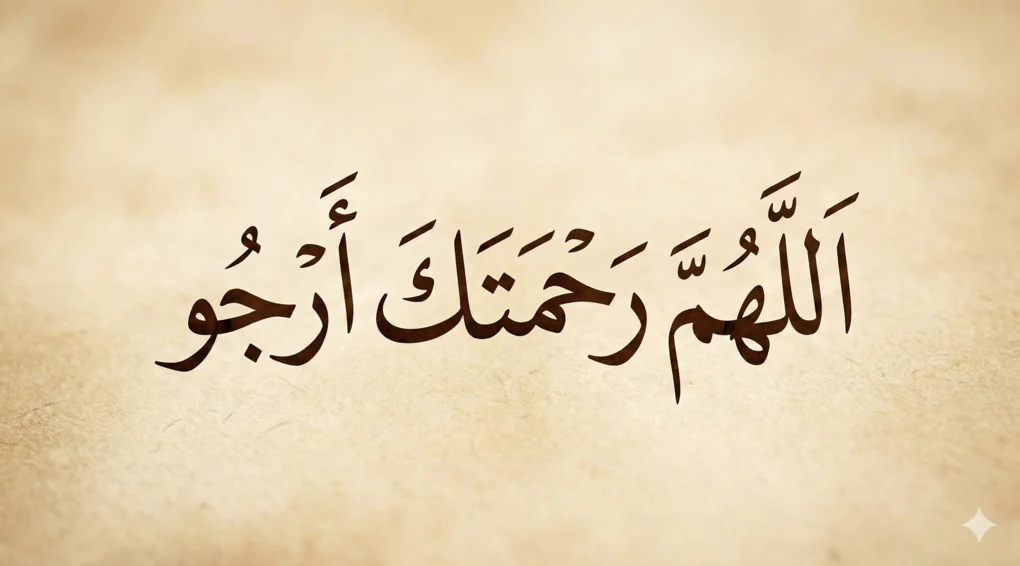
Imam al-Nawawi includes this authentic hadith as number 349 within the chapter concerning Supplications for Distress (Du’a Al-Karb). Here is the complete formulation:
We narrate in the “Sunan of Abu Dawud” from Abu Bakrah (may Allah be pleased with him), that the Messenger of Allah ﷺ said: “The supplications of the distressed are:
اللَّهُمَّ رَحْمَتَكَ أَرْجُو فَلاَ تَكِلْنِي إِلَى نَفْسِي طَرْفَةَ عَيْنٍ, وَأَصْلِحْ لِي شَأْنِي كُلَّهُ, لاَ إِلَهَ إِلاَّ أَنْتَ
International Transliteration: Allahumma rahmataka arju, fa la takilni ila nafsi tarfata ‘ayn, wa aslih li sha’ni kullahu, la ilaha illa Anta.
English Meaning: “O Allah, it is Your mercy that I hope for, so do not leave me to myself even for the blink of an eye, and rectify for me all of my affairs. There is no deity except You.”
This specific Rahmataka Arju dua is merely one of the numerous spiritual weapons taught by the Prophet. To explore a comprehensive collection, you can read our master guide: Collection of prayers to remove sadness and life’s difficulties.
Analytical Breakdown: Why is this Dua So Powerful?
The phrasing of this prayer is extraordinarily concise, yet its semantic depth is staggering when reflected upon word by word. There are three foundational pillars constituting the immense power of this supplication.
1. “It is Your Mercy that I Hope For”
The opening declaration, Allahumma rahmataka arju, instantly positions us as entirely impoverished servants before Allah. We do not approach Him leveraging our righteous deeds. We do not approach Him boasting of our social status. We approach Him carrying nothing but a desperate hope for His divine mercy (rahmah).
This establishes the supreme etiquette of making dua: humble the heart entirely before making any requests. The moment we acknowledge that solely His mercy can salvage us, the ego residing within the heart gradually dissolves.
2. “Do Not Leave Me to Myself”
This is the absolute core of Abu Bakrah’s narration. The phrase fa la takilni ila nafsi is the ultimate anti-arrogance declaration.
Contemporary motivational speakers frequently urge us to “believe in ourselves” to an excessive, borderline narcissistic degree. Islamic theology teaches the exact opposite paradigm: believe entirely in Allah, not in yourself. Why? Because the human self (nafs) is inherently weak, saturated with base desires, easily exhausted, and severely limited in vision.
If Allah were to abandon us to manage our own lives without His divine intervention, we would undoubtedly face ruin. We would make disastrous decisions, choose the wrong life partners, or mismanage our wealth. Begging not to be surrendered to one’s own devices is the highest manifestation of Tawakkal (absolute reliance on Allah).
3. “Even for the Blink of an Eye”





Observe the meticulous detail of the phrase tarfata ‘ayn. The Messenger of Allah ﷺ did not say “do not leave me alone for a day” or “for an hour.” He utilized the fastest conceivable measurement of human time: the blink of an eye.
This signifies that we require Allah’s guidance every single millisecond. Our hearts beating, our lungs expanding, our blood circulating—all of these physiological miracles require Allah’s instantaneous permission. If Allah were to withdraw His support for even one second, we would perish. This acute awareness cultivates a perpetual state of spiritual poverty (iftiqar) towards Him.
The Peril of Relying Exclusively on Logic
Why was the Messenger of Allah ﷺ so profoundly concerned about us relying on ourselves?
When an individual feels entirely capable of resolving their problems independently, a dangerous spiritual disease typically emerges: ‘Ujub (self-amazement or vanity). This trait drastically hardens the heart. When problems inevitably persist or worsen, the self-reliant individual is highly prone to severe stress, clinical depression, and bitterly blaming their circumstances.
Conversely, an individual who recites the Rahmataka Arju dua with deep contemplation develops psychological armor. They acutely know they are weak, but they possess an Omnipotent support system. When their earthly efforts fail, they are not shattered because they possess absolute certainty that Allah is orchestrating the optimal scenario (His mercy) for them.
Comparison Table: Self-Reliance vs. The Mindset of a Servant
To facilitate a clearer comprehension of these paradigms, let us analyze the stark differences between a self-reliant mindset and the mindset cultivated by this prophetic prayer.
| Aspect | Relying on Oneself | Practicing the “Rahmataka Arju” Dua |
| When Problems Arise | Panics, frantically searches for logical loopholes. | Remains calm, prioritizes prayer before physical effort. |
| Source of Strength | Intellect, wealth, social connections. | The boundless mercy and aid of Allah. |
| Response to Failure | Severe stress, profound disappointment, self-blame. | Patience, certainty that it is part of His divine plan. |
| Ultimate Goal | Satisfying the ego and personal desires. | Attaining divine rectification of all affairs from Allah. |
| Condition of the Heart | Restless, constantly chased by worldly targets. | Tranquil, completely surrendered (Tawakkal). |
How to Implement This Dua in Daily Life
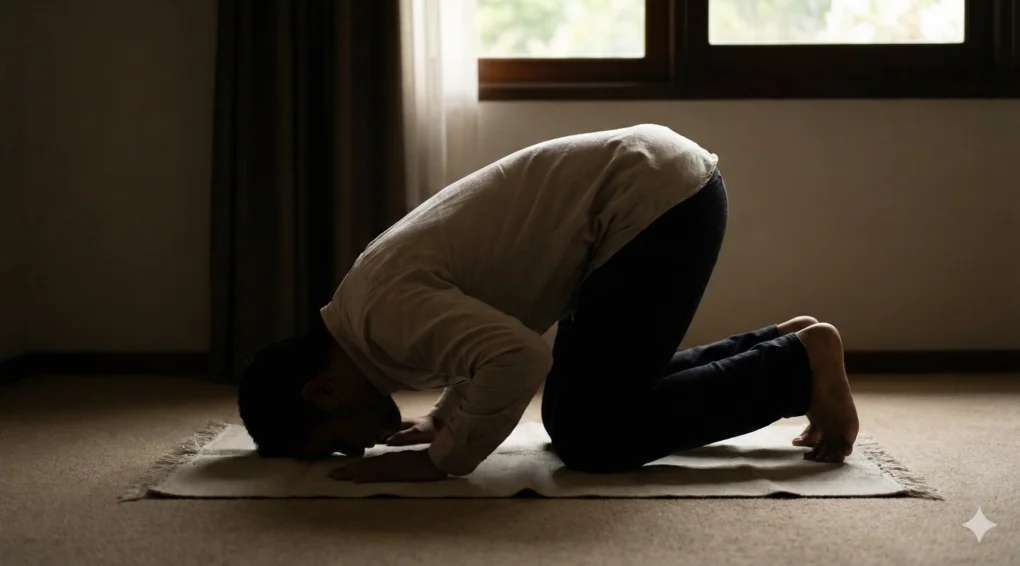
This narration from Abu Bakrah is not merely an emergency incantation reserved solely for desperate times. We must integrate it as a daily litany (wird) to ensure our hearts remain perpetually connected to the Heavens.
- Recite During Morning and Evening: Integrate this prayer into your daily morning and evening dhikr routine. These transitional periods of the day are when we require maximum spiritual protection.
- Before Crucial Decisions: Before signing a major contract, accepting a job offer, or finalizing a significant life choice, recite this dua. We are actively begging that the decision be guided by Allah, not merely the byproduct of our flawed human cognition.
- When Feeling “Deadlocked”: When you feel you have exhausted every earthly avenue but the results remain zero, recite this prayer repeatedly. Internalize its profound meaning: “O Allah, my intellect has reached its absolute limit; I surrender the entirety of this matter to You.”
Frequently Asked Questions (FAQ)
Is this dua exclusively for people who are currently sad?
Although Imam al-Nawawi categorizes it within the chapter of distress (karb), this supplication is entirely relevant at all times. We are in desperate need of Allah’s mercy during moments of joy just as much as during moments of hardship. In fact, habitually reciting it during times of ease ensures that Allah will bestow His mercy upon us when we eventually face constriction.
Is it permissible to recite it during sujud (prostration)?
It is highly recommended. Sujud is the physical position where a servant is closest to their Lord. Verbalizing a confession of profound weakness while your forehead touches the dust is the absolute epitome of perfect servitude (‘ubudiyyah).
How does this differ from the Prayer of Prophet Yunus?
Both are incredibly powerful prayers for overcoming severe difficulties. The distinction is that the Prayer of Prophet Yunus (La ilaha illa Anta subhanaka…) primarily focuses on the confession of sin and seeking repentance (tawbah). Conversely, this Abu Bakrah dua focuses on the confession of inherent human weakness and the desperate plea for divine guidance (tawakkal). Seamlessly combining both in your daily supplications is highly encouraged by scholars.
Conclusion
Life in this world is inherently fraught with surprises, many of which are profoundly unpleasant. However, as believers (mu’min), we possess the extraordinary privilege to confide in and rely entirely upon the Sovereign of the Universe.
Do not allow your ego to dominate your soul with the illusion of “I can do this alone.” Starting today, memorize and consistently practice this magnificent Rahmataka Arju dua narrated by Abu Bakrah (may Allah be pleased with him). Whisper it with utmost humility: “O Allah, do not leave me alone, not even for the blink of an eye.”
Experience the profound spiritual shift. The crushing burdens on your shoulders will feel exponentially lighter because you are no longer arrogantly attempting to carry them alone. If you wish to diversify your supplications by invoking the majestic Beautiful Names of Allah (Asma al-Husna), actively practice the virtues of the dhikr Ya Hayyu Ya Qayyum, which is also incredibly potent. Furthermore, conclude your daily prayers by requesting comprehensive goodness in this world and the Hereafter utilizing the virtues of the comprehensive Sapu Jagat prayer to perfect your package of supplications.
Wallahu a’lam bi al-sawab.
Referensi
Al-Nawawī, Yaḥyā ibn Sharaf. Al-Adhkār. Edited by ʿAbd al-Qādir al-Arnaʾūṭ. New revised edition. Beirut: Dār al-Fikr, 1994.


