
Every single day, we perform the routine of opening our wardrobes, selecting a garment, and putting it on. While this activity may feel automatic and mundane, Islam transforms the simple act of dressing into a profound source of spiritual reward when performed with mindfulness and adherence to the prophetic tradition.
Imam al-Nawawi, a prominent authority in the Shafi’i school of jurisprudence, meticulously compiled authentic and sound narrations regarding this daily etiquette in his phenomenal work, Al-Adhkār. Within this classical text, there lies a subtle yet meaningful distinction between the general Dua for wearing clothes daily and the specific supplication recited when experiencing the joy of a new garment. This article explores these juristic distinctions based directly on references from Al-Adhkār (pages 20–22), enabling us to implement the Sunnah with greater precision and academic understanding.
The Fundamental Principle: Starting with the Basmalah
Before delving into specific supplications, a foundational principle must be established. Imam al-Nawawi opens this chapter with a universal juristic rule:
يستحب أن يقول: بسم الله, وكذلك تستحب التسمية في جميع الأعمال.
“It is recommended to say: ‘Bismillah’ (In the Name of Allah). Likewise, pronouncing the Name of Allah is recommended at the beginning of all actions.” (Al-Adhkār, p. 20)
Therefore, whether you are donning a well-worn shirt or a newly tailored outfit, the initial step remains identical. To elevate our routine into a recognized act of worship, it is highly recommended to internalize the profound secrets of the Basmalah before initiating the action. This serves as the primary key to unlocking divine blessings in every mundane endeavor of a Muslim.
The Authentic Dua for Wearing Clothes Daily

Initiate every routine of selecting your daily attire with the Basmalah and a supplication for divine protection. When taking a garment from the hanger—whether it is a professional work shirt, casual attire, or a customary Thobe—the Prophet Muhammad ﷺ taught a specific invocation. This general Dua for wearing clothes encompasses a holistic plea for the inherent good of the garment’s function.
Based on a narration transmitted by Imam al-Nawawi from the compilation of Ibn al-Sunni (Hadith No. 43), the esteemed companion Abu Sa’id al-Khudri (may Allah be pleased with him) detailed the Prophet’s ﷺ habit. He noted that when the Messenger of Allah ﷺ put on a garment, he would explicitly name the item (e.g., shirt, cloak, or turban) and then supplicate.
Arabic Text, Transliteration, and Meaning
Below is the supplication the Prophet ﷺ recited for general garments:
اللَّهُمَّ إِنِّي أَسْأَلُكَ مِنْ خَيْرِهِ وَخَيْرِ مَا هُوَ لَهُ، وَأَعُوذُ بِكَ مِنْ شَرِّهِ وَشَرِّ مَا هُوَ لَهُ
Transliteration: Allāhumma innī as’aluka min khayrihi wa khayri mā huwa lahu, wa aʿūdhu bika min sharrihi wa sharri mā huwa lahu.
Meaning: “O Allah, I ask You for the goodness of this garment and the goodness of that for which it was made. And I seek refuge in You from the evil of it and the evil of that for which it was made.”
This supplication carries significant theological depth. We petition Allah for the garment to fulfill its righteous purpose: covering the ‘awrah (intimate parts) and physically protecting the body. Simultaneously, we seek refuge from its potential harms, such as garments that might incite arrogance or be worn in places of disobedience. Seeking this divine safeguard for our daily affairs is conceptually aligned with reciting the Prophet’s prayer to avert the evil eye (Ain), ensuring our protection remains comprehensive.
The Etiquette and Dua for Wearing New Clothes
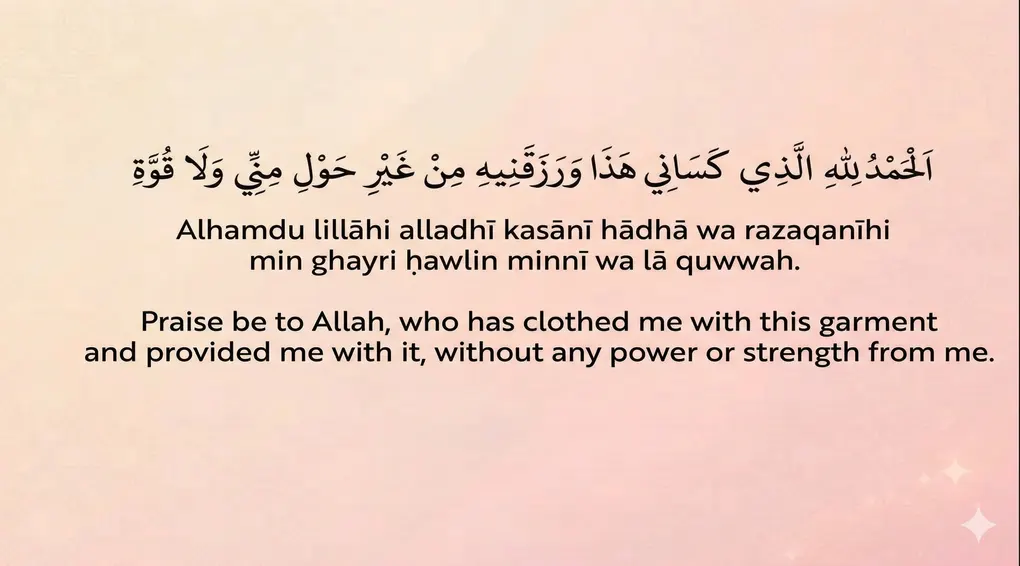
Experiencing a newly acquired garment naturally evokes feelings of gratitude and joy. The Islamic tradition acknowledges these human emotions and prescribes a slightly different supplication that emphasizes profound thankfulness. Imam al-Nawawi dedicated a specific section to this: (Chapter on what is said when wearing a new garment, sandals, or the like).
The classical texts present two prominent options for this specific occasion.
Option 1: A Specific Expression of Gratitude
In Hadith No. 45, Abu Sa’id al-Khudri reports that when the Prophet ﷺ acquired a new garment (istajadda thawban), he would name it and then supplicate with phrasing similar to the daily prayer, but prefaced with a specific doxology of praise:
اللَّهُمَّ لَكَ الْحَمْدُ أَنْتَ كَسَوْتَنِيهِ، أَسْأَلُكَ خَيْرَهُ وَخَيْرَ مَا صُنِعَ لَهُ، وَأَعُوذُ بِكَ مِنْ شَرِّهِ وَشَرِّ مَا صُنِعَ لَهُ
Transliteration: Allāhumma lakal-ḥamdu anta kasawtanīhi, as’aluka khayrahu wa khayra mā ṣuniʿa lahu, wa aʿūdhu bika min sharrihi wa sharri mā ṣuniʿa lahu.
Meaning: “O Allah, to You belongs all praise. You have clothed me with it. I ask You for its goodness and the goodness of that for which it was made, and I seek refuge in You from its evil and the evil of that for which it was made.”
Recorded by Abu Dawud, al-Tirmidhi, and al-Nasa’i, Imam al-Tirmidhi graded this as a Hasan (sound) hadith. The primary distinction lies in the opening phrase, “Allāhumma lakal-ḥamdu…” This is a direct application of the true essence of Hamdalah and gratitude, serving as an explicit theological acknowledgment that the new clothing is a direct provision from Allah the Almighty.
Option 2: The Key to the Forgiveness of Sins



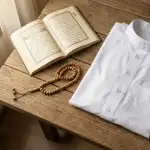
This is a very special prayer and has extraordinary virtues. Based on the narration of Mu’adh bin Anas radhiyallahu ‘anhu (Hadith No. 44), the Messenger of Allah ﷺ said that whoever wears new clothes and then reads this prayer, then:
غفر الله له ما تقدم من ذنبه
“Allah forgives his past sins.”
Here is the prayer wording which is quite short but powerful:
الْحَمْدُ لِلَّهِ الَّذِي كَسَانِي هَذَا وَرَزَقَنِيهِ مِنْ غَيْرِ حَوْلٍ مِنِّي وَلَا قُوَّةٍ
Transliteration: Alḥamdulillāhil-ladhī kasānī hādhā wa razaqanīhi min ghayri ḥawlin minnī wa lā quwwatin.
Meaning: “All praise is due to Allah who has clothed me with this and provided it for me without any might or power on my part.”
This prayer cultivates absolute humility by negating one’s own power (hawla) and strength (quwwah). It serves as a reminder that a new garment is not acquired merely through personal financial prowess, but purely through divine sustenance. This sincere, humble acknowledgment is the exact mechanism that invites divine forgiveness.
Key Differences: What Makes It Different?
From the explanation above, we can see the difference in focus between the prayer for ordinary clothes and new clothes:
- Focus of Daily Prayer: More focus on the function of clothing as protection and a request to be protected from the negative impacts of wearing it in daily activities.
- Focus of the Prayer for New Clothes: Strongly emphasizes the aspect of gratitude (thankfulness) and the acknowledgement that the new blessing comes solely from Allah.
- Virtue (Fadhilah): The prayer for new clothes narrated by Mu’adh bin Anas has a very significant specific promise, namely the forgiveness of past sins, which is not explicitly mentioned in the ordinary clothing prayer.
A Rewarding Sunnah: Donating Your Old Clothes
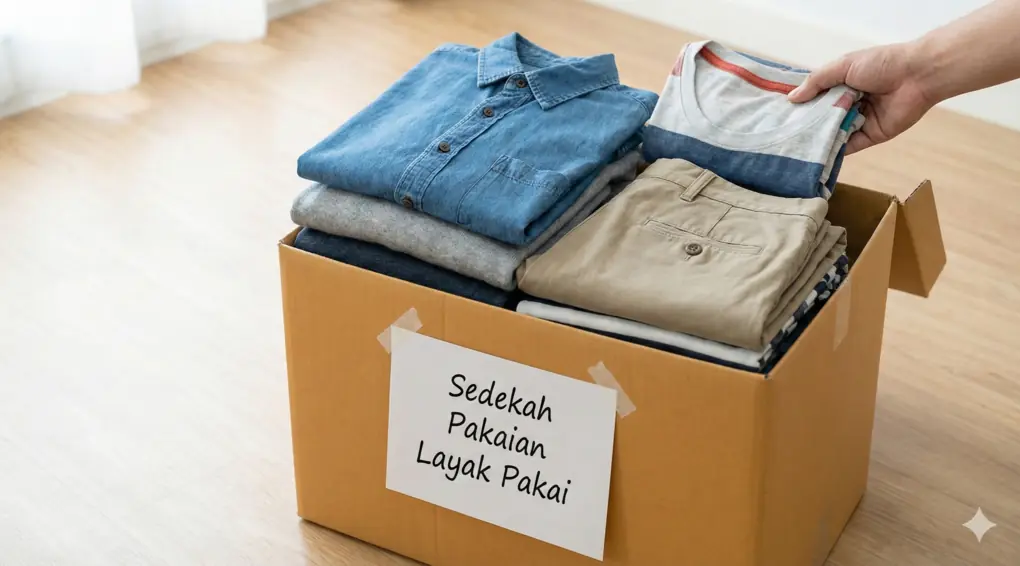
As a complementary etiquette to acquiring new apparel, an intriguing narration from Umar ibn al-Khattab (Hadith No. 46) highlights a highly rewarding charitable practice.
He reported hearing the Messenger of Allah ﷺ declare that whoever wears a new garment, praises Allah using the prescribed supplications, and then intentionally takes their worn-out clothes (khaliq) to give them in charity, that individual will reside:
فِي حِفْظِ اللَّهِ وَفِي كَنَفِ اللَّهِ عَزَّ وَجَلَّ، وَفِي سَبِيلِ اللَّهِ حَيًّا وَمَيِّتًا
“In the safekeeping of Allah, under the protection of Allah the Almighty, and in the path of Allah, both in life and in death.”
Therefore, when upgrading your wardrobe, it is a highly recommended Sunnah to donate older garments, thereby securing this extraordinary guarantee of divine protection.
Summary of Differences (Table)
To make it easier to understand, here is a summary table of the differences between the two types of supplication:
| Aspect | Everyday Dua for Wearing Clothes | Dua for Wearing New Clothes |
| Foundation (Sunnah) | Reciting the Basmalah. | Reciting the Basmalah. |
| Primary Reference | Hadith No. 43 (Abu Sa’id al-Khudri). | Hadith No. 44 & No. 45. |
| Core Supplication | Allāhumma innī as’aluka min khayrihi… | Alḥamdulillāhil-ladhī kasānī… OR Allāhumma lakal-ḥamdu… |
| Theological Emphasis | Requesting the functional goodness of the garment & seeking refuge from its harms. | Profound gratitude and the declaration of human powerlessness (relying solely on Divine provision). |
| Specific Virtue | Daily protection from physical and spiritual harm. | The forgiveness of past sins (specifically for the Mu’adh ibn Anas narration). |
Frequently Asked Questions (FAQ)
Must I mention the specific name of the garment before supplicating?
Based on Hadith No. 43 and 45 in Al-Adhkār, the texts explicitly state that the Prophet ﷺ named the garment (sammāhu bismihi). This is a recommended Sunnah. You may simply say, “Bismillah, I am wearing this shirt,” and then proceed with the Arabic supplication.
Can I recite the supplication for new clothes when wearing my everyday garments?
Yes, it is permissible and inherently good. The supplication “Alḥamdulillāhil-ladhī kasānī hādhā…” is a profound expression of gratitude that is valid at any time. However, the prophetic narrations specifically link the magnificent virtue of the forgiveness of sins to the momentum of wearing a brand-new garment.
What should I do if I forget to recite the Dua for wearing clothes before getting dressed?
If you remember while you are in the process of dressing or immediately after finishing, you should recite it right then. The remembrance of Allah (Dhikr) and supplication in this specific context are not rigidly constrained by time, and the intention to fulfill the Sunnah is highly valued.
Conclusion
By comprehending these subtle juristic distinctions, our routine of dressing transcends mere habit. It transforms into a continuous spiritual connection with Allah, the Supreme Provider. For a holistic understanding of the entire sequence of dressing etiquettes from start to finish, including entering and exiting the home, you may refer to our comprehensive guide on the complete Sunnah supplications for dressing.
Reference
Al-Nawawī, Yaḥyā ibn Sharaf. Al-Adhkār. Edited by ʿAbd al-Qādir al-Arnaʾūṭ. New revised edition. Beirut: Dār al-Fikr, 1994.


