Faith in Allah: Understanding the Meaning and Importance as the First Pillar of Iman

Silhouette of a person praying with hands raised toward a golden sunrise on a coastal hill, next to a balanced stone cairn symbolizing a strong spiritual foundation.

Faith in Allah (Iman billah) constitutes the paramount pillar within Islamic doctrine, forming the very bedrock of a Muslim’s existence. As the first pillar of Iman (Rukun Iman), faith in Allah not only dictates the direction of worship but also profoundly shapes one’s entire worldview and approach to daily life. With unwavering faith, a Muslim … Read more


Environmental Protection in Islam: Why Planting Trees is an Act of Worship

Close-up photo of soiled hands planting a small green date palm shoot into dark soil during a golden sunrise, symbolizing Islamic environmental stewardship and hope.

The earth is our shared home—the sacred ground where we reside, develop, and perform our acts of worship. However, we often forget that environmental protection in Islam is not merely a modern “green” lifestyle trend; it is a profound trust (amanah) bestowed by the Creator. Islam does not solely regulate the vertical relationship between humanity … Read more

Farḍ al-Wuḍūʾ: The 6 Essential Pillars for Valid Worship We Must Understand

A six-panel photo collage illustrating the 6 fardu (obligatory pillars) of wudu in sequence: niyyah (top left), washing the face, washing arms, wiping the head, washing feet, and an illustration of tartib/order (bottom right).

Wuḍūʾ (ablution) is the indispensable key to the validity of various fundamental acts of worship in Islam, such as prayer (ṣalāh), circumambulation of the Kaaba (ṭawāf), and touching the muṣḥaf of the Qur’an. Without a correctly performed wuḍūʾ, these acts of worship will not be accepted by Allah. A question frequently arises: how many obligatory … Read more

The Meaning of Fiqh: Understanding Islamic Law in Daily Life

An open classical Islamic manuscript resting on a carved wooden rihal (book stand) with prayer beads, illuminated by sunlight through a patterned window.

Understanding the meaning of Fiqh is a crucial first step for every Muslim striving to deepen their religious knowledge. Fiqh serves as one of the most fundamental pillars of Islamic scholarship, functioning as a practical guide for navigating every aspect of life. Naturally, this outward practice must be rooted in sincere faith in Allah. To … Read more

The Meaning of Intention: The Soul of Every Action in Islam

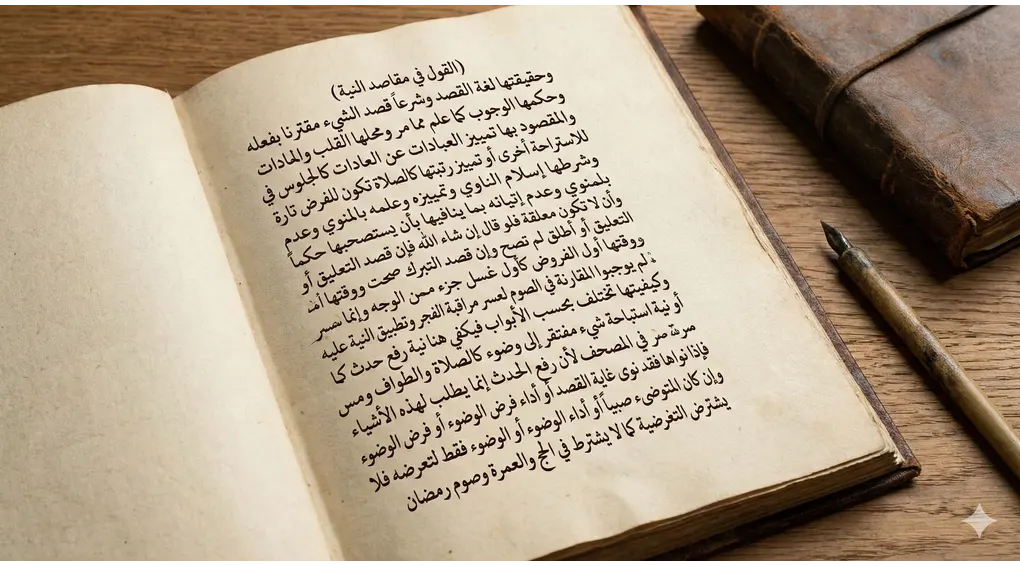
An open antique Islamic fiqh manuscript on a wooden table, displaying Arabic text explaining the linguistic and legal definitions of intention (niyyah).

In every step of life, whether visible to the world or hidden deep within the heart, there is one crucial element that determines its true weight and direction: intention (niyyah). The phrase “everything depends on intention” is not just a passing proverb; rather, it is a fundamental jurisprudential principle that underlines the essence of every … Read more

Rules, Conditions, and Method of Ghusl in Shafi’i Fiqh (Kaifiyah al-Ghusl)

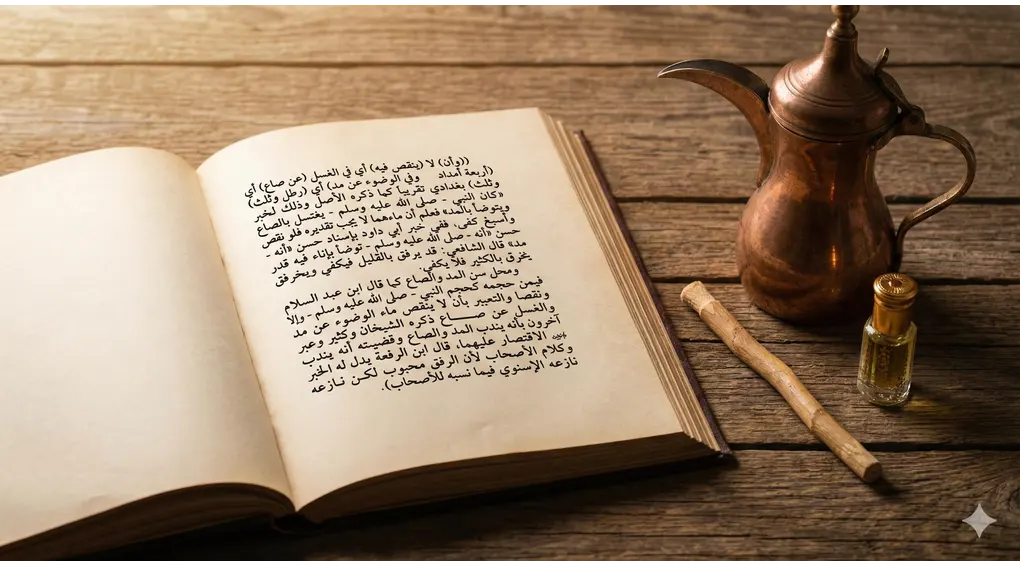
An open classical fiqh manuscript showing Arabic text on water quantity for ghusl, next to a copper pitcher, miswak, and perfume bottle on a wooden table.An open classical fiqh manuscript showing Arabic text on water quantity for ghusl, next to a copper pitcher, miswak, and perfume bottle on a wooden table.

Purity is the foundational pillar in the establishment of worship within Islamic law. Understanding the profound meaning of thaharah is not merely a physical routine, but rather a theological gateway for a servant to commune with the Creator. When a person is in a state of major ritual impurity (hadath akbar), the binding obligation is … Read more

The Mandatory Pillars of Ghusl: 2 Obligatory Conditions in Shafi’i Fiqh

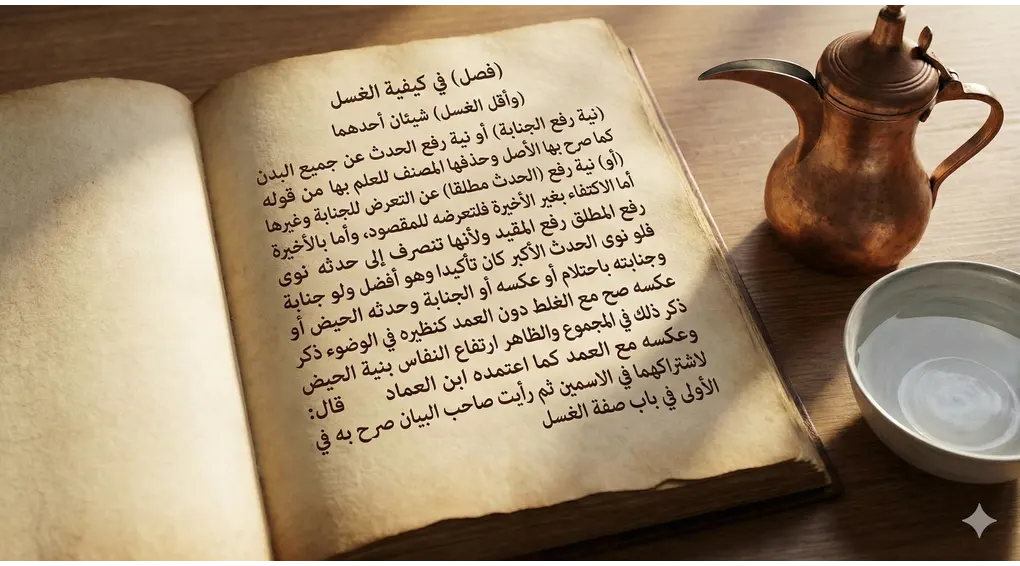
An open antique Arabic manuscript discussing Ghusl pillars next to a traditional copper pitcher and a bowl of clear water on a wooden table.

Within Islamic teachings, elevating oneself from a state of major ritual impurity (hadath akbar) through the process of Thaharah (purification) is an absolute necessity before a servant stands before Allah in prayer. This practice of purification, known academically as Ghusl or the major ritual bath, possesses a highly precise jurisprudential framework. Frequently, Muslims find themselves … Read more

The Believer and Disbeliever Fishing Story: Understanding Worldly Tests and Istidraj

Illustration comparing a patient believer praying with an empty net and an arrogant disbeliever experiencing istidraj with a boat full of fish.

People often measure a person’s nobility in the sight of Allah through the abundance of their worldly wealth. However, the true measure of a servant’s status lies not in the riches they accumulate, but in their maqām (spiritual station) and sincerity (ikhlāṣ) in accepting the decree (qaḍāʾ and qadar) of Allah Azza wa Jalla. Misunderstanding … Read more

The Immense Reward of Providing Iftar: Liberation from Hellfire & Special Supplications

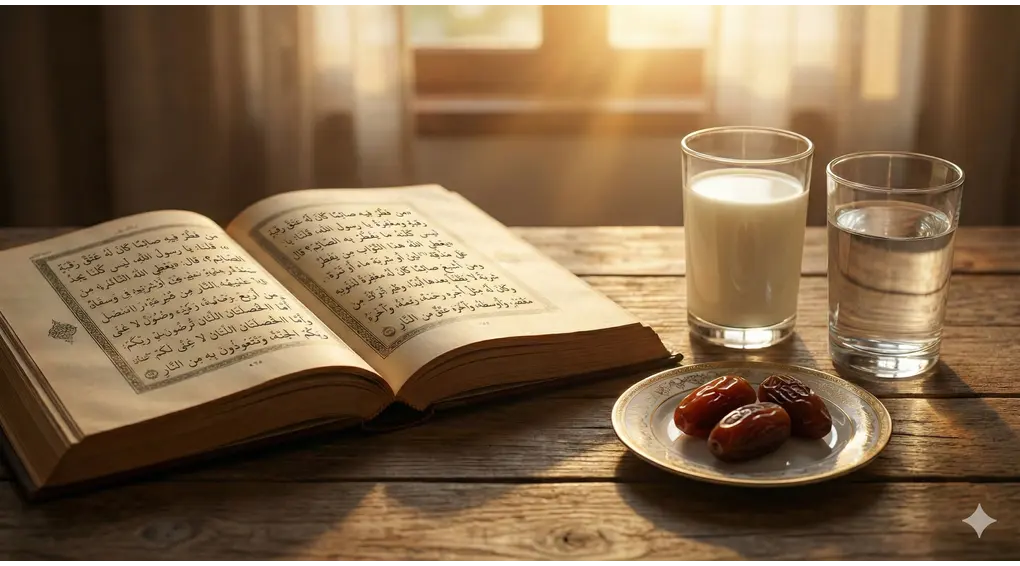
An open antique Islamic manuscript next to a glass of milk, a glass of water, and three dates on a wooden table at sunset.

The holy month of Ramadan serves as a spiritual madrasa that educates every Muslim to sharpen their inner spiritual acuity and social sensitivity. One significant manifestation of this sensitivity is the practice of muwasah (empathy and caring) toward fellow servants of Allah who are observing the fast. Within classical Islamic literature, particularly in the book … Read more

Prophet’s Ramadan Sermon: The Hadith of Salman al-Farisi & the Virtues of Fasting

An open antique Islamic manuscript resting on a carved wooden bookstand, with an arched mosque window in the background revealing a glowing crescent moon at twilight.

The holy month of Ramadan holds a majestic position in Islamic law (Shari’ah). The pious predecessors (ulama salaf) paid profound attention to the spiritual preparation required to welcome this blessed month. One primary reference containing authentic proofs regarding the practices of the fasting month is the book Kanz al-Najah wa al-Surur. Within its pages lies … Read more