How Many Pillars of Fasting Are There? A Complete Guide According to Safinatun Naja (Shafi’i Fiqh)
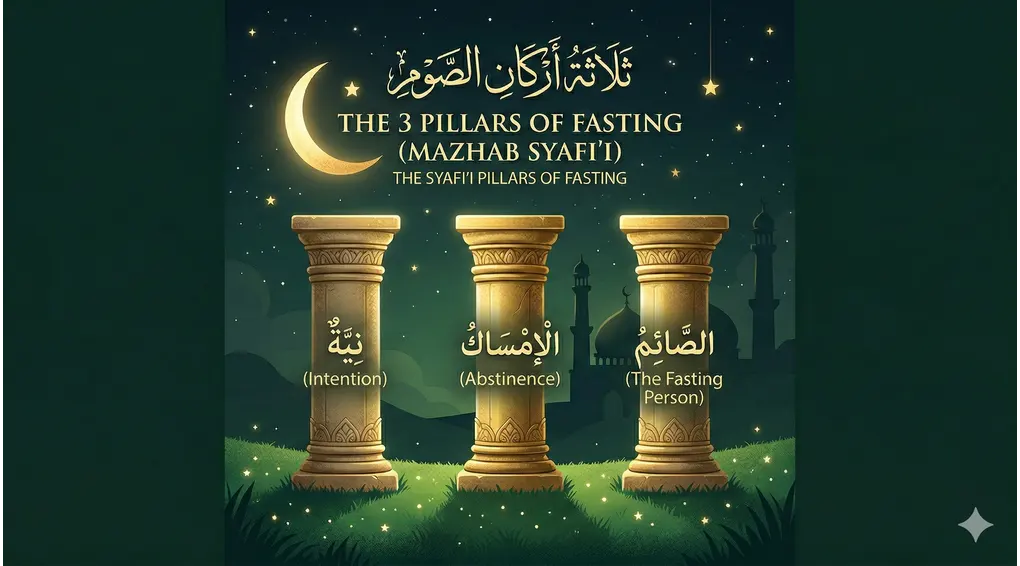
An illustrated scene under a starry night sky with a mosque silhouette. Three golden classical pillars stand in a green field. Arabic text at the top says "ุซูŽู„ุงูŽุซูŽุฉู ุฃูŽุฑู’ูƒูŽุงู†ู ุงู„ุตูŽู‘ูˆู’ู…ู" with English translation: "THE 3 PILLARS OF FASTING (MAZHAB SYAFI'I)". Each pillar is labeled with Arabic text and an Indonesian translation in parentheses: (Niat), (Menahan Diri), (Orang yang Berpuasa). Smaller text says "Rukun Puasa Syafi'i".

The holy month of Ramadan or days of voluntary fasting often raise fundamental questions for us: exactly how many pillars of fasting are there? Is it enough simply to endure hunger and thirst? Or are there other foundational elements that determine the validity of our worship? Many people assume there are only two pillars of … Read more


Salah or Fasting: Which is the Best Physical Worship According to Fiqh?

Illustration comparing prayer and fasting as acts of worship in Islamic jurisprudence, symbolized by a balance scale with the Quran and dates.

Have you ever wondered, when you have free time, whether it is better to perform more voluntary prayers or observe more voluntary fasting? When seeking closeness to Allah, many believers wonder what constitutes the best physical worship. This question frequently arises in the minds of those who wish to elevate their spiritual rank but feel … Read more

Prophet’s Teaching Method in Hadith Jibril: Analysis of Al-Fath Al-Mubin

Silhouetted figures of a man and a young boy sitting respectfully on prayer mats inside a quiet mosque, facing each other for learning.

In the vast landscape of Islamic pedagogy, the method of delivering knowledge (uslub at-taโ€™lim) holds a position as vital as the knowledge itself. One of the most monumental events recording the high-level Prophet’s teaching method is the arrival of the Archangel Gabriel (Jibril) at the gathering of the Prophet ๏ทบ. This event, famously known as … Read more

Conditions of Taubat Nasuha: Imam Nawawi’s Guide to True Repentance

A silhouette of a Muslim praying with raised hands on a mountain at sunrise, symbolizing hope within the requirements of sincere repentance (taubatan nasuha).

In a servantโ€™s (sฤlik) spiritual journey towards Allah SWT, human nature, prone to error, requires a path of return. This mechanism, in Islamic legal terminology, is known as repentance (taubat). Understanding the conditions for the validity of sincere repentance (taubat nasuha) is not merely theoretical knowledge, but an urgent need so that the process of … Read more

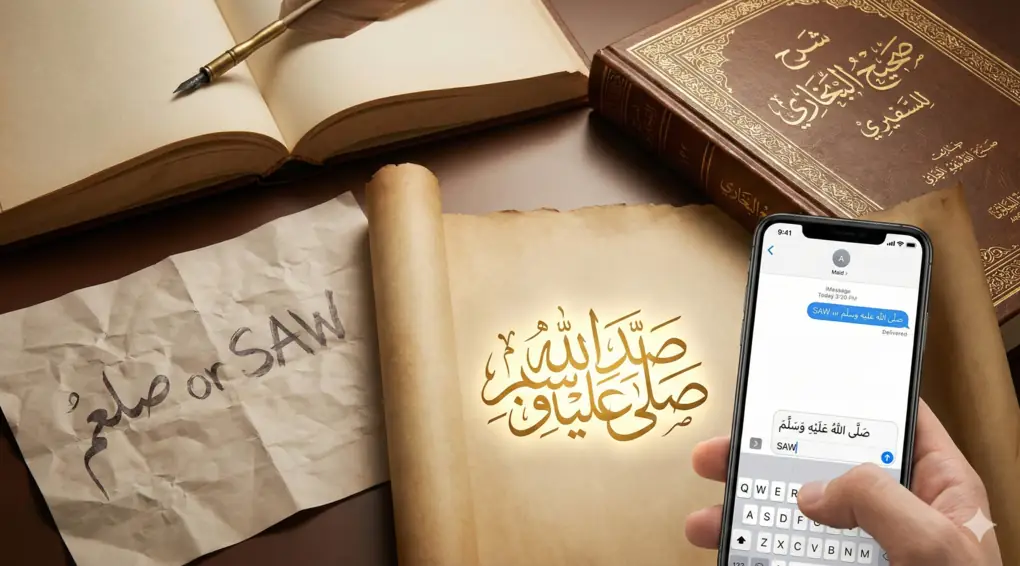
The Ruling on Abbreviating SAW: The Etiquette of Writing Salawat

A conceptual illustration contrasting the abbreviated writings โ€œSAWโ€ or โ€œุตู„ุนู…โ€ on a worn piece of paper with the elegant Arabic calligraphy of **โ€œแนขallallฤhu สฟalayhi wa sallam.โ€** A hand is seen holding a smartphone displaying a full *แนฃalawฤt* autotext option, set against a backdrop of the classical book **Sharแธฅ แนขaแธฅฤซแธฅ al-Bukhฤrฤซ** and a feather quill pen.

Have you ever found yourself in a rush while taking study notes or replying to a message, resorting to abbreviating the Salawat upon Prophet Muhammad ๏ทบ to “SAW,” “PBUH,” or simply “S.A.W”? This habit seems trivial and has become widespread in our society. The reason is usually simple: to save time and character counts. However, … Read more

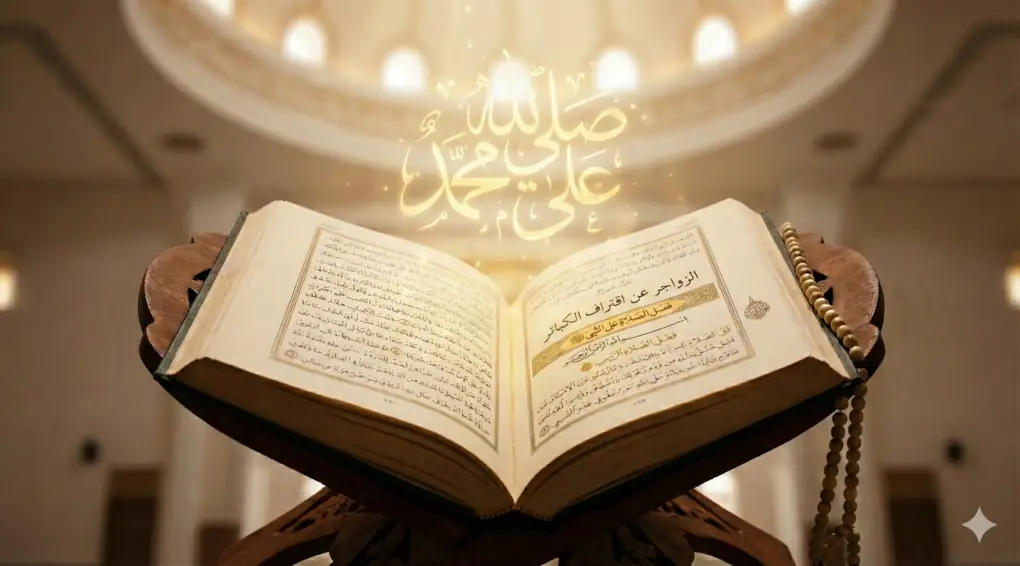
The Virtues of Salawat: Authentic Hadiths from Kitab Al-Zawajir

A photograph of the antique book **Al-Zawฤjir สฟan Iqtirฤf al-Kabฤสพir** by **Ibn Hajar al-Haytami**, opened on a wooden *rehal* inside a mosque. Radiant golden Arabic calligraphy reading **โ€œแนขallฤ Allฤhu สฟalฤ Muแธฅammadโ€** rises from the pages, symbolizing the blessings and spiritual light of sending แนฃalawฤt upon the Prophet.

Many believers occasionally feel as though their supplications remain suspended in the heavens, or that life’s burdens are too overwhelming to articulate in prayer. However, classical Islamic scholarship reveals a profoundly simple yet frequently overlooked practice that opens the doors of divine mercy. This practice is sending blessings upon the Prophet Muhammad ๏ทบ. In the … Read more

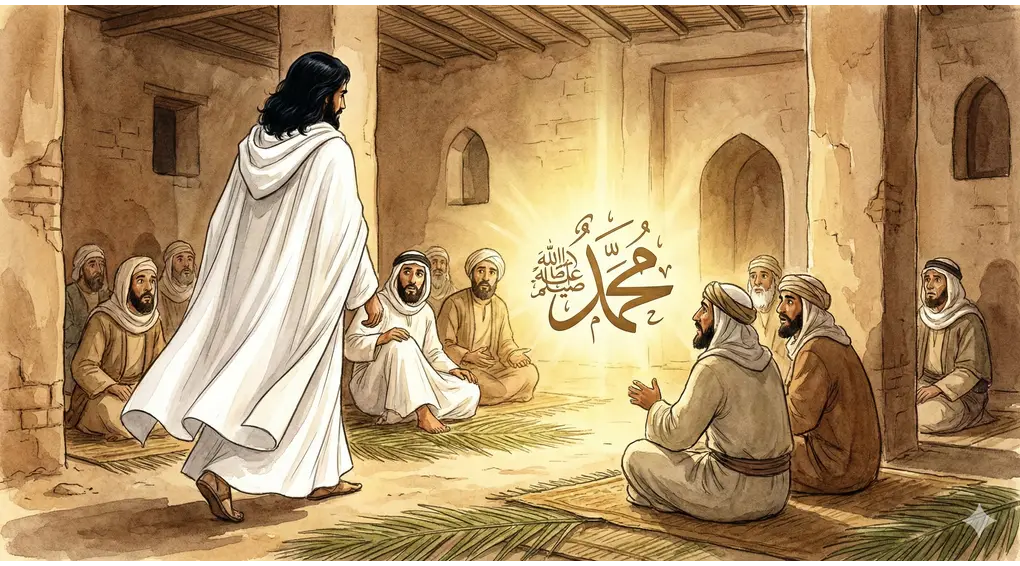
Who is the Man in White? Analysis of Jibril in Hadith (Al-Fath Al-Mubin)

Ilustrasi lelaki misterius berbaju sangat putih dan rambut hitam pekat mendatangi majelis Nabi Muhammad SAW, dialah Malaikat Jibril

In the rich tradition of Hadith studies, there is a famous narration known as Umm al-Sunnah (The Mother of the Sunnah). This profound narration begins with the sudden arrival of a mysterious figure who astonished the Companions in the gathering of Prophet Muhammad ๏ทบ. This figure was not an ordinary guest but the definitive key … Read more

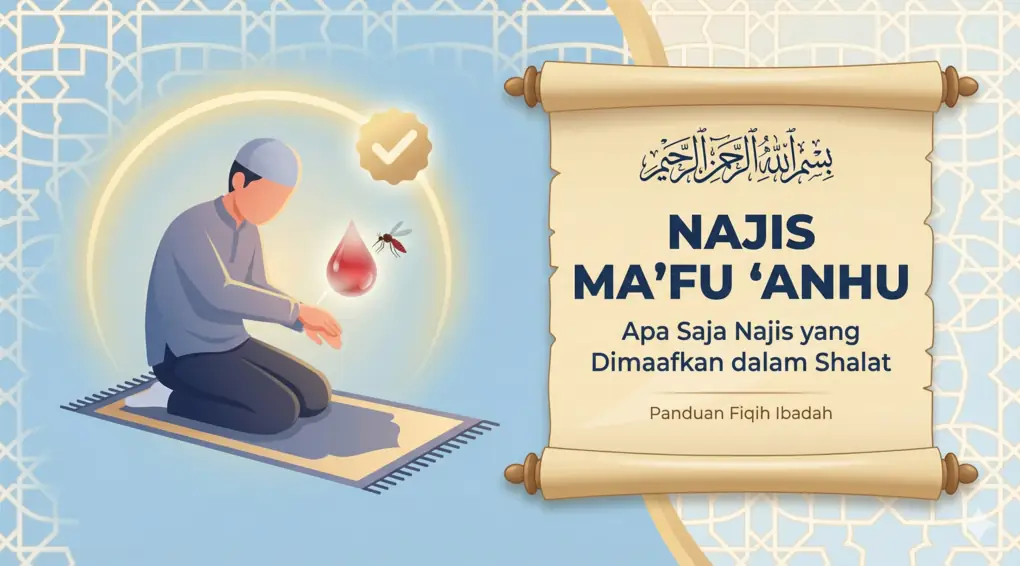
Excused Najis in Prayer: What Impurities Are Pardoned According to Al-Iqna’?

Ilustrasi muslim sedang shalat dengan teks Najis Ma'fu 'Anhu, panduan fiqih tentang darah nyamuk dan jerawat yang dimaafkan

Have you ever felt anxious right before praying because you noticed a tiny bloodstain from a mosquito bite on your sleeve? Or perhaps a pimple on your face popped unexpectedly during Wudu, leaving you confused about whether you must wash your entire face again or simply ignore it? In the study of Fiqh, specifically within … Read more

Is Intention (Niyyah) Required for Istinja? Fiqh Ruling & Explanation

Is Intention Required for Istinjฤสพ?

Istinjฤ’, or cleansing the private parts and anus after urination or defecation, is an important part of แนญahฤrah (ritual purity) in Islam. It is an initial step before a Muslim can perform acts of worship that require purity from แธฅadath, such as แนฃalฤt. However, a question arises in the minds of some people: does Istinjฤ’ … Read more

Sexual Intercourse During Ramadan: Fiqh Ruling & Kaffarah (Asna al-Matalib)

An analog wall clock shows the time for **Fajr** in front of a window with soft bluish dawn light, with an open fiqh book and prayer beads resting on a wooden table.

In the Islamic Jurisprudence (Fiqh) and Spirituality, fasting (al-แนขawm) is not merely abstaining from food and drink. Its essence is al-Imsฤk, a strict mechanism of self-control from everything that invalidates it, including biological desires. Among the many things that invalidate a fast, the legal ruling regarding sexual intercourse while fasting or having sexual relations during … Read more