
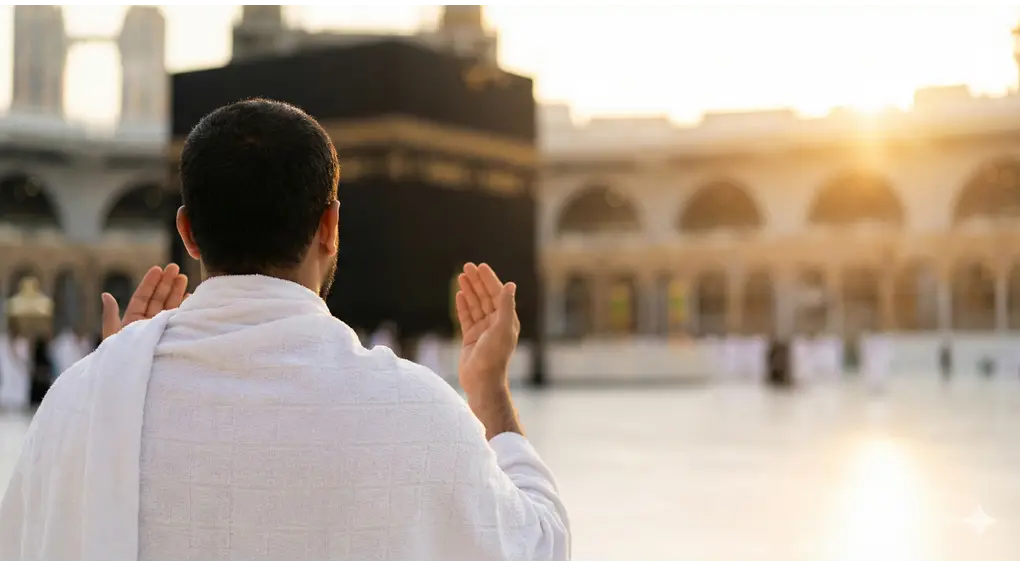
We often witness touching scenes when friends, neighbors, or family members bid farewell before departing for the Holy Land. Beyond wishing them a safe journey, one phrase is almost universally spoken: “Please do not forget to pray for me there!” The habit of requesting dua during Umrah is deeply rooted in our society. However, does this practice possess a solid legal foundation in Islamic jurisprudence? Is it permissible to burden those focusing on their worship with our personal supplications?
Fortunately, this is not merely a cultural pleasantry. There is robust evidence from the practices of the Companions and the Prophet Muhammad ﷺ himself regarding the recommendation to ask travelers (musafir) for their prayers, especially those embarking on spiritual journeys.
Let us comprehensively examine the theological evidence, the inherent virtues, and the proper etiquette for entrusting our prayers to pilgrims without causing them undue hardship.
Prophetic Evidence for Requesting Dua During Umrah
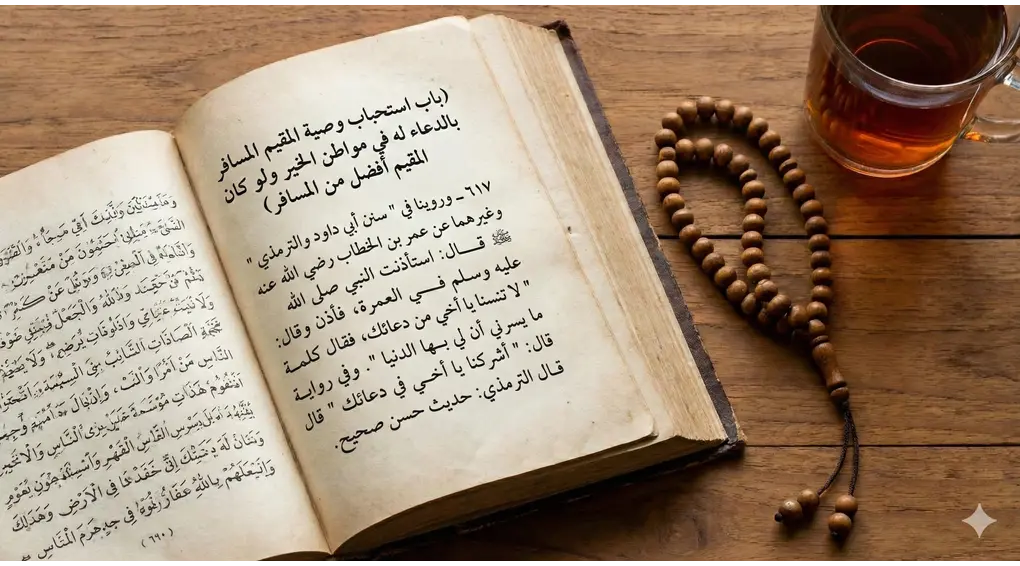
The foundation of this practice is not a mere fabrication. Imam al-Nawawi, a highly prominent scholar within the Shafi’i school of jurisprudence, allocated a specific discussion to this topic in his universally acclaimed book, Al-Adhkar.
He established a dedicated chapter titled: “Chapter on the Recommendation for the Resident to Request the Traveler to Supplicate for Him in Sacred Places, Even if the Resident is Superior to the Traveler”.
The primary legal text supporting the act of requesting dua from Umrah pilgrims is a profound narration involving Umar bin al-Khattab.
The Arabic Text and Translation
As narrated in the Sunan of Abu Dawud and At-Tirmidhi, Umar bin al-Khattab (may Allah be pleased with him) recounted:
اسْتَأْذَنْتُ النَّبِيَّ صَلَّى اللَّهُ عَلَيْهِ وَسَلَّمَ فِي الْعُمْرَةِ, فَأَذِنَ وَقَالَ: ” لا تَنْسَنَا يَا أَخِي مِنْ دُعَائِكَ “
“I asked the Prophet ﷺ for permission to perform Umrah. He granted me permission and said: ‘Do not forget us, my brother, in your supplications.'”
In another narration, the wording is recorded as:
” أشركنا يا أخي في دعائك “
“Include us, my brother, in your supplications.”
Umar bin al-Khattab subsequently commented on the Prophet’s request, stating: “He said a word that I would not exchange for the whole world (meaning, that phrase was more precious to me than the entire world).” (This Hadith is graded as Hasan Sahih by At-Tirmidhi).
Academic Lessons from the Hadith
From the narration above, we can extract profound theological lessons. Consider this: the Messenger of Allah ﷺ—the most noble of creation whose prayers are unequivocally answered—specifically asked Umar bin al-Khattab to pray for him as Umar departed for Umrah.
This establishes two critical principles:
- Humility: We should never feel ashamed to ask others for prayers, even if we perceive our own knowledge or spiritual rank to be higher. This aligns beautifully with understanding the concept of tawassul (seeking a means of nearness to Allah) through the supplications of righteous believers.
- The Virtue of the Traveler: A person currently traveling (safar), particularly for the sake of worship like Umrah, occupies a highly privileged position in the sight of Allah.
Why Seek Supplications in the Holy Land?
One might rationally ask, “Can I not just pray at home? Allah is All-Hearing.” This is entirely true; Allah hears all. However, Islamic theology acknowledges that certain conditions, times, and locations serve as catalysts for prayers to ascend more swiftly to the heavens.
This is precisely why requesting dua during Umrah is a highly sought-after opportunity:
1. The Virtue of the Traveler’s Prayer




The Prophet ﷺ explicitly stated that there are three types of supplications that are never rejected, one of which is the prayer of the traveler (da’watul musafir). When individuals embark on a journey fulfilling the fundamental legal basis of Hajj and Umrah, they simultaneously hold the status of travelers and the honorable Guests of the Most Merciful (Dhuyufurrahman).
2. Places Where Prayers are Answered (Mustajab)
Mecca and Medina are adorned with specific locations historically recognized as places where supplications are unequivocally answered. When our friends or family are there, we naturally hope our names are mentioned in these sacred spots:
- The Multazam: The area of the Kaaba wall located between the Black Stone (Hajar al-Aswad) and the door of the Kaaba.
- Hijr Ismail: The semi-circular wall adjacent to the Kaaba.
- The Raudhah: The profoundly blessed area between the Prophet’s noble chamber and his pulpit inside the Prophet’s Mosque in Medina.
- During the rites of Sa’i and Tawaf.
Securing a prayer in these holy precincts is a golden spiritual opportunity.
Proper Etiquette for Requesting Dua (Avoiding Burden)
While Islamic law permits and even encourages asking for prayers, we must adhere strictly to the proper etiquette of making dua and interacting with others. Our requests must never become an emotional or physical burden for the pilgrims, who are already engaged in physically demanding rituals.
Here is an essential guide to the etiquette of entrusting your prayers:
Avoid Providing a “Shopping List” of Supplications
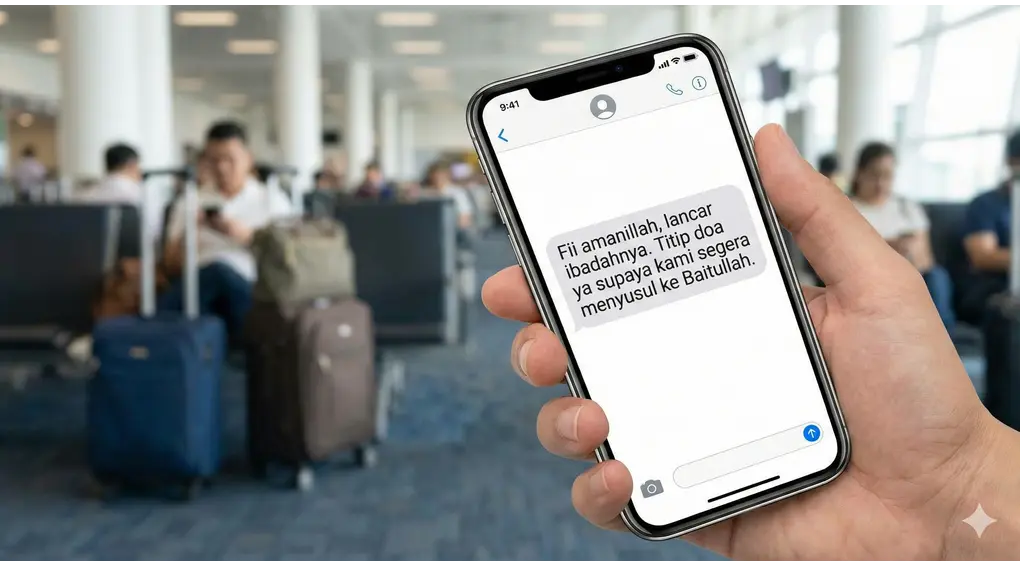
Refrain from sending lengthy text messages that read like a novel, detailing your wishes from A to Z. Pilgrims performing Tawaf in massive crowds will find it nearly impossible to read extensive texts on their phones. Keep your requests precise and focused.
Utilize Concise Language
Instead of writing: “O Allah, please give me a spouse who is tall, wealthy, lives in a specific city, and has a good heart…” It is far more appropriate to summarize: “Please pray that Allah grants me the best, most pious spouse soon.”
Be Considerate of Their Situation
Evaluate the condition of the departing pilgrims. If they are elderly or traveling with young children, minimize their mental load. In such cases, it is best to simply ask them to invoke the virtues of the comprehensive prayer, which inherently covers all goodness in this world and the Hereafter.
Table: Do’s and Don’ts When Requesting Prayers
| The Dos (Recommended) | The Don’ts (To Avoid) |
| Ask for general blessings (health, provision, pious spouse). | Request overly detailed and excessively long supplications. |
| Send your prayer requests via text so they can read it during free time. | Call them persistently while they are performing rituals. |
| Mutually pray for their safety and a blessed journey in return. | Force them to pray at one highly specific, crowded spot (e.g., “You must say this exactly at the Multazam!”). |
| Maintain sincerity if they accidentally forget to mention your name. | Become angry or disappointed if they do not provide photographic “proof” of the prayer. |
Example Messages for Requesting Dua
To facilitate a polite exchange, you may use the following templates when messaging a departing pilgrim:
For Close Friends:
“Brother/Sister, wishing you a blessed Umrah. May your rituals go smoothly and be accepted. If you have a free moment, please kindly mention my name in front of the Kaaba, praying that Allah eases my affairs regarding [mention a brief need, e.g., paying off debt]. Thank you so much, fii amanillah (may you be in Allah’s protection)!”
For Elders or Respected Figures:
“Sir/Madam, wishing you a safe journey. May you achieve an accepted (mabrur) Umrah and remain in good health. If it pleases you, I humbly request a small prayer for our family, that we always remain under Allah’s divine protection. Jazakumullah khairan.”
FAQ: Popular Questions About Requesting Prayers
Here are some frequently asked questions that appear on search engines related to this topic:
Are entrusted prayers guaranteed to be answered by Allah?
There is no absolute 100% guarantee, as answering prayers is Allah’s sole prerogative. However, praying through the mediation of a pious person or in a highly blessed location is a strongly recommended spiritual endeavor (ikhtiar) that significantly increases the likelihood of acceptance.
What if the pilgrim forgets to convey my specific prayer?
There is absolutely no sin upon them, and you should not be troubled. Your pure intention has already been recorded by Allah. Pilgrims have a massive amount of personal worship to focus on, so it is entirely normal if some requests slip their minds. The most important element is our sincerity in asking and our reciprocal prayer for their well-being.
Should I give money (sadaqah) when requesting a prayer?
It is not an Islamic obligation. However, if you provide some pocket money as a heartfelt gift, or to assist them in buying Zamzam water as a souvenir, it acts as a beautiful gesture of love that strengthens kinship (silaturahmi). Gifts bring joy to the heart, and a joyful heart often supplicates with far greater sincerity.
Closing
The act of requesting dua during Umrah is a beautiful tradition supported by solid roots in Islamic jurisprudence. The historical account of Umar bin al-Khattab and the Prophet Muhammad ﷺ stands as a profound testament that mutually praying for one another is the very essence of Muslim brotherhood.
Therefore, do not hesitate to ask for prayers from those traveling to the Holy Land. However, always remember to do so with utmost courtesy, avoiding any form of coercion or burden. Most importantly, never forget to reciprocate by praying for their safety, health, and spiritual success during their sacred journey.
May this article serve as a beneficial guide. For those of you currently holding specific needs in your hearts, may Allah grant them swiftly, whether through your own earnest prayers or through the blessed supplications of our brethren in the Holy Land. Ameen.
Reference
Yahya ibn Sharaf al-Nawawi, al-Adhkar, ed. Abd al-Qadir al-Arna’ut (Beirut: Dar al-Fikr, 1994), 219


