
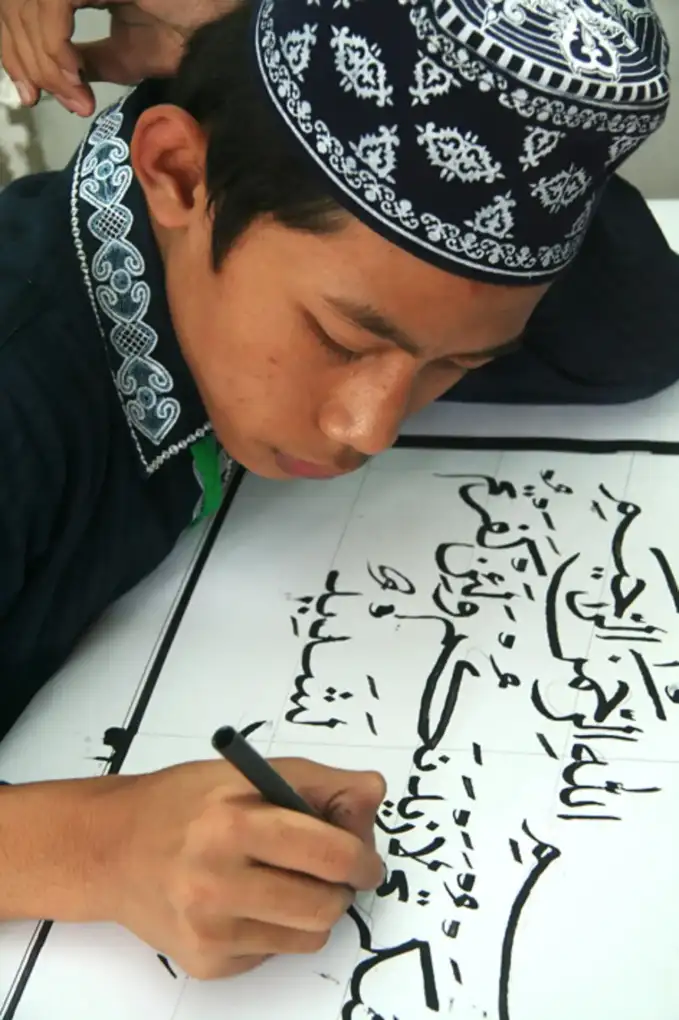
We frequently hear advice from parents or teachers to always begin our actions with Bismillah. This brief utterance holds profound meaning and nuanced rules within Islamic jurisprudence. Reciting it is not merely a cultural habit, but an act of worship carrying significant weight in Islamic law.
Many Muslims wonder about the exact ruling on reciting Basmalah. Is it always a recommended Sunnah? Surprisingly, no. The ruling fluctuates depending on the action accompanying it. Let us examine the comprehensive guidelines surrounding this noble phrase. For deeper spiritual insights before we begin, you can also explore the secrets of Basmalah.
The Meaning and Virtues of Starting with Bismillah
Uttering Bismillahir-rahmanir-rahim (بِسْمِ اللَّهِ الرَّحْمَنِ الرَّحِيم) translates to “In the name of Allah, the Entirely Merciful, the Especially Merciful.” By declaring this, a servant actively seeks divine assistance, blessings, and protection from Allah SWT for their impending task.
Any virtuous activity initiated with the name of Allah becomes infinitely more valuable. Consequently, uttering this phrase attracts immense goodness, which is firmly rooted in a Muslim’s core belief in Allah. The Prophet Muhammad (ﷺ) stated that any matter of importance not commenced with Bismillah is severed—meaning it lacks divine blessing and perfection.
Understanding the Term Basmalah
What exactly does this term mean? Linguistically, it stems from a unique Arabic morphological process known as An-Naḥt (sculpting), where a new word is carved from a longer phrase.
This linguistic phenomenon is elaborated in classical Arabic dictionaries, such as Al-Ma’ani:
بَسمَلَ : (فعل) بسملَ يبسمل ، بَسْمَلَةً ، فهو مُبسمِل بَسْمَلَ بَسْمَلَةً: قال: بسم الله الرحمن الرحيم، أو كتبها
The explanation above clarifies that the verb basmala refers specifically to the active deed of saying or writing Bismillahir-rahmanir-rahim. Thus, it has its own distinct terminology within the Arabic lexicon, which is a crucial concept to grasp when studying the definition of Fiqh and classical legal texts. This differs slightly from Tasmiyah, which generally refers to pronouncing the name of Allah in a broader sense.
The 5 Rulings on Reciting Basmalah in Shafi’i Fiqh
How many rulings apply to this phrase? According to scholars of Islamic jurisprudence, particularly within the Shafi’i school of thought (Ahlus Sunnah wal Jama’ah), the ruling on reciting Basmalah falls into all five categories of Islamic legal rulings (Al-Ahkam Al-Khamsah).
The diversity of these rulings depends entirely on the context of the action being performed. Detailed explanations are documented in classical treatises, such as I’anat at-Thalibin (Vol. 1, p. 9), which provides a very clear guideline:
والحاصل أنها تعتريها الأحكام الخمسة: الوجوب، كما في الصلاة عندنا معاشر الشافعية – والاستحباب عينا: كما في الوضوء والغسل، وكفاية: كما في أكل الجماعة، وكما في جماع الزوجين… والتحريم في المحرم الذاتي، والكراهة في المكروه الذاتي، والإباحة في المباحات التي لا شرف فيها، كنقل متاع من مكان إلى آخر، كذا قيل
Based on this foundational text, the phrase is subject to obligation, recommendation, prohibition, dislike, and permissibility:
1. Obligatory (Wajib)
The recitation becomes strictly obligatory (Wajib) when reading Surah Al-Fatihah during the daily prayers (Salah). This is the dominant and authoritative view in the Shafi’i madhhab, which categorizes the Basmalah as the first, inseparable verse of Al-Fatihah. Omitting it completely invalidates the recitation of the chapter, and consequently, the prayer itself.
2. Recommended (Sunnah)
This is the most universally recognized ruling. It is highly recommended (Sunnah) to recite it before initiating any virtuous act deemed significant by the Shari’ah. Examples include:
- Performing ablution (Learn more about the definition of Wudu linguistically and terminologically).
- Taking a major ritual bath (See the complete guide to performing Ghusl according to the Shafi’i school).
- Eating and drinking.
- Studying, teaching, or traveling.
This Sunnah can be individual (Fardh ‘Ain), such as when a person makes Wudu, or communal (Fardh Kifayah), such as when a group of people begins eating together and one person recites it aloud for the group.
3. Prohibited (Haram)




The ruling severely shifts to prohibited (Haram) if the phrase is uttered to commence an action that is inherently forbidden by Islamic law (Muharram ad-Dhati). Examples include:
- Reciting it before committing adultery (Zina).
- Reciting it before stealing.
- Reciting it before consuming intoxicants.
Invoking the sacred name of Allah to initiate a conscious sin is considered a grave mockery of the religion and is strictly forbidden.
4. Disliked (Makruh)
It becomes disliked (Makruh) if spoken right before engaging in an inherently disliked act (Makruh ad-Dhati). Classical jurists provide examples of actions that, while not strictly forbidden, are frowned upon by the Shari’ah, such as reciting it right before looking at one’s spouse’s private parts.
5. Permissible (Mubah)
Finally, it is merely permissible (Mubah or Jaiz) for neutral, everyday actions that carry no specific religious merit, honor, or prohibition. A common example mentioned by the scholars is moving an ordinary object from one place to another. In such cases, one may choose to say it or remain silent without incurring sin or reward.
Applying the Rulings in Daily Life and Worship
As demonstrated above, the application is highly contextual. In ritual prayer, its position is absolute. In daily life, forming the habit of saying it before good deeds transforms routine actions into acts of worship, provided one has the correct understanding of intention.
Conversely, a Muslim must exercise extreme caution never to attach Allah’s name to forbidden or disliked actions.
The Spiritual Benefits of Reciting Basmalah
Beyond fulfilling a Sunnah and adhering to Fiqh, there are profound spiritual benefits to this practice:
- Attaining Barakah: Affairs started with Allah’s name yield blessed and fruitful results.
- Protection from Shaytan: The devil is actively blocked from participating in activities initiated with this protective phrase.
- Cultivating Tranquility: Remembering Allah at the onset of tasks brings immediate peace to the heart.
- Elevating the Mundane: Worldly activities, like working or eating, become rewarded acts of worship through proper intention and invocation.
Conclusion
The brief phrase Bismillahir-rahmanir-rahim is governed by meticulous jurisprudential rules. The ruling is not uniformly Sunnah; it dynamically shifts to obligatory, prohibited, disliked, or permissible based entirely on the nature of our actions. Grasping this fiqh empowers us to venerate Allah’s name properly, ensuring that our daily endeavors are not only completed but are heavily enveloped in His divine grace and blessing.
Frequently Asked Questions (FAQ)
Is the Basmalah considered an actual verse of Surah Al-Fatihah?
Yes. According to the Shafi’i school of thought (madhhab), it is officially the first verse of Surah Al-Fatihah. Therefore, its recitation is absolutely obligatory (Wajib) during Salah to ensure the prayer is valid.
What happens if someone intentionally says Bismillah before doing something haram?
Reciting it before an inherently prohibited act (like stealing or drinking alcohol) is strictly haram. Scholars consider this a severe offense as it mocks Allah’s sacred name and the principles of the Shari’ah.
Do I need to say the full Bismillahir-rahmanir-rahim every single time?
For most daily activities like eating, drinking, or entering a house, saying the shorter “Bismillah” (Tasmiyah) is legally sufficient to fulfill the Sunnah. However, reciting the full phrasing (Basmalah) yields greater rewards and blessings.
References
- Al-Maany Dictionary, entry “basmala,” Almaany.com dictionary entry for بسملة, accessed 26 June 2025.
- Al-Maany Dictionary, entry “tasmiyah,” Almaany.com, accessed 26 June 2025, https://www.almaany.com/ar/dict/ar-ar/تسمية/.
- ʿUthmān bin Muḥammad Shattā ad-Dimyāṭī (al-Bakrī), Iʿānat aṭ-Ṭālibīn ʿalā Ḥall Alfāẓ Fatḥ al-Muʿīn (Beirut: Dār al-Fikr, 1997), juz 1, hlm. 9.


