

The establishment of legal rulings in Islamic Shariah always rests on a solid foundation of arguments (ḥujjah). There is not a single obligatory act of worship for Muslims that does not possess clear textual roots from the primary sources of the religion. For those studying the core tenets of the faith, exploring the zakat obligation evidences is a highly essential academic step.
This article will elucidate the textual arguments from the primary sources of Shariah, dissecting Quranic verses on zakat and its position within the prophetic traditions. The following explanation is structured by referring purely to the classical literature Asnā al-Maṭālib Volume 1 by the prominent expert in Islamic jurisprudence (fiqh), Sheikh Zakariyā al-Anṣārī. Grasping these proofs will strengthen your comprehension when reading about the basic laws, obligatory conditions, and sanctions of zakat, or when exploring a comprehensive zakat guide.
The Absolute Status Before Scholarly Consensus
In the discipline of Uṣūl al-Fiqh (methodology of Islamic law) and its four primary sources, the consensus of all mujtahid scholars in a given era (ijmāʿ) occupies the third position after the Quran and the Sunnah. Scholars across various madhhabs have reached a definitive consensus regarding the obligation of this financial worship.
However, Sheikh Zakariyā al-Anṣārī provides a highly meticulous theological assertion. He emphasizes that the original foundation of this obligation held an absolute (qaṭʿī) status long before the formation of any scholarly consensus. He writes:
والأصل في وجوبها قبل الإجماع آيات كقوله تعالى… وأخبار
Meaning: “And the original foundation (al-aṣl) regarding its obligation, prior to the existence of ijmāʿ, are verses such as the word of Allah the Exalted… and also various hadith narrations (akhbār).”
This statement places the worship in the most fundamental position. The Shariah does not depend merely on the rational or juridical agreements of scholars; rather, it relies absolutely on divine revelation. The existence of ijmāʿ here serves as a reinforcement of the revealed texts that have been practiced since the prophetic era.
Zakat Obligation Evidences from the Quran
The Quran, as the ultimate guide for Muslims, contains numerous commands regarding wealth distribution. Scholars of the Shafi’i madhhab summarize the Quranic verses that explicitly demonstrate the structure of a mandatory command (fiʿl amr).
Sheikh Zakariyā al-Anṣārī cites two primary verses as the axis of his argument:
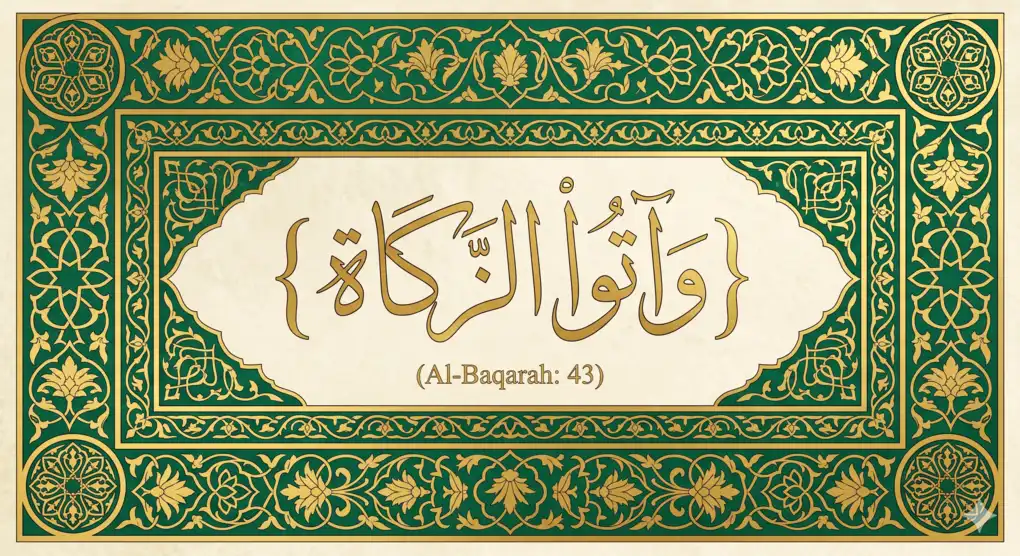
آيات كقوله تعالى {وآتوا الزكاة} [البقرة: ٤٣] وقوله {خذ من أموالهم صدقة} [التوبة: ١٠٣]
Surah Al-Baqarah, Verse 43
The word of Allah ﷻ, “{Wa-ātū al-zakāta}” which translates to “And establish zakat.” The use of the imperative verb (amr) in Arabic grammar and Uṣūl al-Fiqh carries the legal consequence of obligation (al-amr yufīd al-wujūb), unless there is another evidence that redirects it. In this verse, the command to pay is addressed directly to all individual Muslims whose wealth has met the criteria of Shariah eligibility.
Surah At-Taubah, Verse 103
The word of Allah ﷻ, “{Khudh min amwālihim ṣadaqah}” which translates to “Take from their wealth a charity.” The word ṣadaqah in this verse is unanimously interpreted by exegetes (mufassirūn) and jurists as obligatory zakat, not recommended charity (taṭawwuʿ). This verse is directed at the Prophet Muhammad ﷺ as the leader of Islamic authority, providing legality for the state or institutional ʿāmil (collectors) to proactively collect the rights of the poor from the wealth of the muzakkī (those obliged to pay zakat).
Prophetic Traditions Establishing the Pillars

Serving as an explanation for the Quranic texts, the Sunnah (Hadith) provides the operational framework and legal status of an action. The Prophet ﷺ established this worship as a vital instrument that maintains the uprightness of a person’s religion, which is essential for understanding the pillars of Islam.
In Asnā al-Maṭālib, this is explained with the quote:
وأخبار كخبر «بني الإسلام على خمس» (هي أحد أركان الإسلام)
Meaning: “And (its foundations are) hadith narrations such as the report, ‘Islam is built upon five (pillars).’ Thus, this worship is one of the pillars of Islam.”
This famous hadith from the companion Ibn Umar (may Allah be pleased with them both) analogizes Islam according to linguistic and Shariah definitions as a sturdy building supported by five main pillars: the declaration of faith, prayer, zakat, fasting in Ramadan, and the Hajj pilgrimage. If one of these pillars is intentionally destroyed or neglected, the perfection of that person’s religious structure collapses.
The mention of this financial worship alongside physical (badaniyyah) rituals indicates that a servant’s piety is not judged solely by physical rituals, but also by their submission in managing divinely entrusted wealth according to the path of Shariah.
The Theological Weight: Zakat as Equivalent to Prayer
Its designation as a pillar of Islam carries immense theological and jurisprudential consequences for anyone who denies it. In the disciplines of Islamic creed (ʿaqīdah) and fiqh, matters that are absolutely known to be essential in the religion (maʿlūm min al-dīn bi-al-ḍarūrah) leave no room for tolerance regarding denial.
Sheikh Zakariyā al-Anṣārī equates the status of this denial with the denial of the obligatory prayer:
لهذا الخبر (يكفر جاحدها) وإن أتى بها وزاد قوله (كالصلاة) ليستغني عن استثناء الجاهل المتقدم نظيره في الباب قبله وأنت تعلم مما مر أن هذا خارج بالجحود فلا حاجة لما زاده (ويقاتل الممتنعون) من أدائها
The text above details three highly crucial legal statuses:
- Disbelief for the Denier (Jāḥid): A person who denies (jāḥid) this obligation is judged to have left Islam (yakfuru jāḥiduhā). Furthermore, their status of disbelief remains even if they disburse a portion of their wealth as if paying zakat. Denying the explicit texts of the Quran and mass-transmitted (mutawātir) hadiths nullifies one’s faith.
- Absolute Equivalency (Ka-al-ṣalāh): The denial of this financial obligation is equated with the denial of prayer. This equivalency negates the excuse of ignorance (jahl), because the command for this worship has spread so massively among the Muslim community.
- Sanctions for the Withholder (Mumtaniʿ): For someone who believes that this worship is obligatory but withholds their wealth (mumtaniʿūn) due to stinginess, the legitimate ruler holds the authority to fight them and confiscate it forcefully.
This equivalent status to prayer demands that every Muslim treat their wealth with utmost care, accurately calculate their niṣāb (minimum threshold), and disburse it on time according to the guidance of the scholars.
Summary Table of Evidences
| Source of Law | Textual Evidence (Arabic) | Meaning & Fiqh Implications |
|---|---|---|
| Al-Qur’an | {وآتوا الزكاة} (Al-Baqarah: 43) | Absolute command (amr) to fulfill financial obligations for individual Muslims. |
| Al-Qur’an | {خذ من أموالهم صدقة} (At-Taubah: 103) | Legality for the government/ʿāmil to collect the rights of the poor from the muzakkī. |
| Prophetic Hadith | «بني الإسلام على خمس» | Affirmation of the worship’s status as one of the five pillars supporting one’s Islam. |
| Scholarly Ijmāʿ | (Consensus of all Mujtahids) | Absolute reinforcement that this Shariah law applies universally without dispute among madhhab scholars. |
Frequently Asked Questions (FAQ)
Why does the Quran use the word “ṣadaqah” to mean zakat in Surah At-Taubah?
In Arabic terminology during the era of revelation, the word ṣadaqah meant a giving that proves the honesty (ṣidq) of a person’s faith. Exegetes and jurists agree that ṣadaqah in Surah At-Taubah verse 103 represents a specific obligatory command (zakat), rather than merely a recommended charity (sunnah).
Do the zakat obligation evidences apply equally to all types of wealth?
The Quranic evidences and the hadith of the pillars of Islam establish the principle of obligation universally. The specific details regarding which types of wealth are subject to zakat (gold, silver, agricultural produce, livestock, trade goods), the niṣāb thresholds, and calculation methods are derived more specifically from detailed prophetic hadiths codified in fiqh literature.
What happens if a Muslim acknowledges the obligation of zakat but refuses to pay out of stinginess?
According to Shafi’i fiqh, a person who believes zakat is obligatory but refuses to pay it (mumtaniʿ) remains a Muslim but commits a major sin. The legitimate Islamic authority has the right to enforce the collection of the zakat forcefully, though the individual does not fall into disbelief (kufr) unless they outright deny the obligation itself.
Conclusion
The exploration of the zakat obligation evidences proves that Islamic Shariah is constructed upon definitive (qaṭʿī) texts. The sequence of textual arguments from the Quran, such as the command wa-ātū al-zakāta, alongside the affirmations in the hadith regarding the pillars of Islam, places this financial worship (māliyyah) in a central position equivalent to prayer. Obeying this command is not merely discharging a sociological duty toward the poor; rather, it is a manifestation of monotheistic submission (Tawhid) to Allah ﷻ that was clearly codified long before any consensus was reached by Islamic legal experts.
Light Conceptual Reference:
For academic purposes, the discussions above draw heavily from the foundational Shafi’i text “Asnā al-Maṭālib fī Sharḥ Rawḍ al-Ṭālib” by Zakariyā al-Anṣārī (Vol 1, p. 338).


