

The obligation to fulfill zakat does not end at calculating the nisab (minimum threshold) and haul (lunar year cycle). As a fundamental pillar for Muslims who are striving to master the pillars of Islam, the Shari’ah pays strict attention to the distribution procedure of this wealth. Misdirecting zakat funds to the wrong beneficiaries can invalidate the worship entirely. Therefore, identifying the 8 Asnaf of Zakat (eligible receivers or mustahiq) based on rigorous Islamic criteria is an absolute necessity for every practicing Muslim.
To delve deeper into the core of this obligation, readers may refer to the basic rulings of zakat, mandatory conditions, and sanctions. Meanwhile, for a holistic view of this financial worship structure, please consult the comprehensive zakat guide.
Authoritative texts within the Shafi’i school of thought, specifically the book Asna al-Matalib by Sheikh Zakariya al-Ansari, meticulously dissect the parameters for each receiver category. This article elucidates the exact definitions of fakir, miskin, riqab, gharimin, mu’allaf, and the legal rulings on transferring zakat to other cities (naql al-zakat) based purely on classical academic literature.
The Fundamental Difference Between the Destitute (Fakir) and the Poor (Miskin)
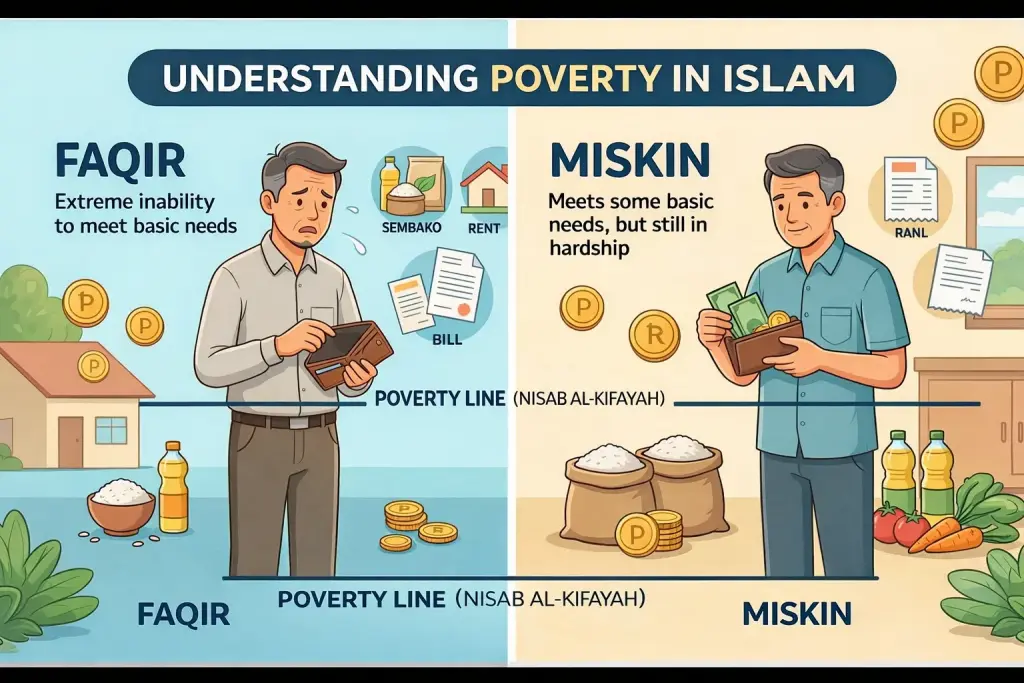
In daily conversation, people often use the terms destitute (fakir) and poor (miskin) interchangeably. However, for scholars focused on the proper understanding of fiqh, these two represent distinct categories (asnaf) with precise mathematical criteria. Sheikh Zakariya al-Ansari distinguishes them through the level of fulfillment of basic needs (kifayah).
1. Criteria for the Destitute (Al-Fuqara)
Fakir denotes the most severe state of financial incapacity. Shafi’i fiqh defines the fakir category with the following text:
قوله: (وهو الذي لا مال له ولا كسب يقع موقعا من كفايته) مطعما وملبسا ومسكنا وغيرها مما لا بد له منه
This means a fakir is someone who has absolutely no wealth or employment, or they possess an income, but it falls drastically short of covering their basic necessities, such as food, clothing, shelter, and other primary needs for themselves and their dependents.
To simplify the measurement, Asna al-Matalib provides a numerical analogy:
فمن يحتاج عشرة ولا يجد إلا درهمين أو ثلاثة فقير
If an individual requires ten dirhams for a decent living but only secures two or three dirhams from their labor, they legally hold the status of fakir. This group is highly entitled to receive a portion of the zakat wealth to cover their basic deficit.
2. Criteria for the Poor (Al-Masakin)
Unlike the destitute, the miskin demographic experiences slightly better financial conditions but still falls short of an ideal sufficiency level.
(وهو من يملك أو يكتسب ما يقع موقعا ولا يكفيه كمن يحتاج عشرة وعنده ثمانية لا تكفيه الكفاية اللائقة بالحال من المسكن والملبس والإنفاق من غير تقتير ولا إسراف)
A miskin is a person who possesses wealth or a job that covers the majority of their needs, yet remains insufficient. For instance, if they require ten dirhams for a moderate standard of living (without being overly stingy or extravagant), but they only have eight dirhams, their legal status is miskin. A person categorized as miskin does not lose their right as a mustahiq zakat even if they own a modest house, daily clothing, or an assistant to serve them.
Comparison Table: Fakir vs. Miskin
| Assessment Aspect | The Destitute (Fakir) | The Poor (Miskin) |
| Wealth/Job Condition | None at all or extremely minimal. | Exists, covers the majority of basic needs. |
| Needs Illustration | Needs 10 dirhams, only has 2 or 3. | Needs 10 dirhams, has 7 or 8. |
| Priority Status | Higher priority due to severe deficiency. | Granted a share to complete the threshold of sufficiency (kifayah). |
The Mu’allaf Criteria Among the 8 Asnaf of Zakat
Common understanding often restricts the mu’allaf strictly to new converts to Islam. In reality, classical fiqh texts detail this category into more specific sub-groups to serve the greater good (maslahah) of Islamic propagation.
A firm ruling emphasized in the Shafi’i school is that non-Muslims are no longer given a portion of zakat simply to persuade them.
قوله: (فإذا كانوا كفارا) يتألفون لخوف شرهم أو لترغيبهم في الإسلام لميلهم إليه (لم يعطوا)
Zakat for the mu’allaf is exclusively reserved for the Muslim community. This group is further divided into specific typologies:
- Weak Intentions (Dha’if an-Niyyah): Individuals who recently embraced Islam and whose faith remains unstable.
قوله: (وهم إما ضعيف النية) في الإسلام (فيعطى ليقوى إسلامه).
They receive zakat to fortify their Islamic conviction. - Influential Figures (Syarif): A prominent community leader who embraces Islam. By giving them zakat, it is anticipated that their relatives or followers will also convert
قوله: (أو شريف) في قومه (يتوقع بإعطائه إسلام نظائره). - Preventers of Harm: A Muslim residing in border regions who acts as a buffer against the interference of hostile groups or those who refuse to pay zakat
قوله: (أو كاف) لنا (شر جيرانه) أي من يليه (من الكفارة ومانعي الزكاة).
Allocating zakat to them is deemed more beneficial and cost-effective than deploying a state military force.
Riqab: Emancipating Slaves (Mukatab)
Historically, the riqab category served as a primary channel for dismantling the institution of slavery through Islamic economic frameworks. In Shafi’i fiqh, riqab specifically targets mukatab slaves—servants who have established a legal contract (kitabah) with their masters to purchase their freedom through installments.
قوله: (وهم المكاتبون كتابة صحيحة) لا فاسدة لأنها غير لازمة من جهة السيد (فيعطون) ولو بغير إذن سيدهم (ما يؤدون) من النجوم
The absolute condition is that the kitabah contract must be legally valid under Shari’ah (kitabah sahihah). These individuals are entitled to receive zakat funds to help pay off their emancipation debts. This right is granted directly to them, and it is even permissible to hand over the funds before the installment due date (qabla hulul an-najm). This demonstrates Islam’s inherent drive to eradicate slavery and promote human liberty.
Gharimin: The Category of People in Debt

The gharimin or arbab ad-duyun are individuals heavily burdened by debt. Islamic law provides them with social security through zakat distribution. Scholars categorize the gharimin into three distinct types:
قوله: (الغارمون وهم أرباب الديون) يعني من لزمتهم الديون وهي ثلاثة أضرب دين لزمه لمصلحة نفسه ودين لزمه لضمان لا لتسكين فتنة ودين لزمه لتسكينها وهو إصلاح ذات البين
- Debt for Permissible Personal Needs: Someone who borrows money for survival necessities, such as buying food, building a modest home, or medical expenses. The primary condition is that the debt was not incurred for sinful acts. If they borrowed money for disobedience (e.g., purchasing alcohol), they forfeit their right to receive zakat unless they have sincerely repented.
- Debt from Guaranteeing Others (Dhaman): An individual who acts as a guarantor for someone else’s debt during hardships. If this guarantor falls into poverty as a result of honoring the guarantee, they possess the right to be assisted using zakat funds.
- Debt to Reconcile Disputes (Ishlah Dzat al-Bain): This represents a form of social heroism. If a severe conflict or property dispute arises between two factions, and a community leader assumes the financial penalty (diyat) or compensation on their own behalf to broker peace between the two sides. This leader is entitled to receive zakat to clear that specific debt, even if they are personally wealthy.قوله: (يعطي مع الغني ولو في غير دم) كتحمل قيمة مال متلف لعموم الآية
The Remaining Three Mustahiq Zakat Categories
To complete the 8 Asnaf of Zakat, the Qur’an and Shafi’i fiqh establish three additional categories along with their specific rights:
1. Zakat Administrators (Amil Zakat)




Official zakat managers appointed by the ruling governmental authority. Sheikh Zakariya al-Ansari provides a breakdown of who qualifies as an amil:
قوله: (ويدخل في اسمه الساعي) وهو الذي يبعثه الإمام لأخذ الزكوات (والكاتب) وهو من يكتب ما يؤخذ ويدفع (والقاسم والحاشر) وهو الذي يجمع أرباب الأموال (والعريف)
These include the sa’i (collector), katib (scribe), qasim (distributor), hasyir (gatherer), and ‘arif (investigator who identifies the mustahiq). They are entitled to a wage from the zakat funds commensurate with the fair value of their labor, even if they are wealthy. However, the head of state, judges, or high-ranking government officials are prohibited from taking this share.
2. In the Path of Allah (Fi Sabilillah)
Military volunteers or irregular soldiers (الغزاة المتطوعون) who do not receive a routine salary from the state treasury. Shafi’i fiqh pays close attention to their needs. They are entitled to funding for their outbound and return journeys, living expenses at the borders, financial support for the families they leave behind, and even the cost of horses and combat equipment if necessary.
قوله: (يعطى النفقة والكسوة ذهابا وإيابا وإقامة في الثغر)… (وقيمة الفرس) إن كان ممن يقابل فارسا وإلا فلا (و) قيمة (آلة الحرب)
3. The Wayfarer (Ibn Sabil)
A traveler undertaking a permissible long-distance journey (من ينشئ سفرا مباحا) who runs out of provisions en route. They are provided with just enough funds to safely reach their destination, even if they possess substantial wealth back in their hometown. This also includes providing loans or renting a vehicle for them if they are physically unable to continue on foot.
قوله: (ويعار أو يستأجر) أو يملك (له ما يحمله) في سفره (إن عجز عن المشي أو طال السفر)
Rules and Rulings on Transferring Zakat to Another City (Naql al-Zakat)

A recurring issue in fund management by zakat institutions is the legal ruling on transferring zakat wealth from the locality where the wealth resides to another region (naql al-zakat).
The Shafi’i school of fiqh enforces remarkably strict regulations regarding this matter. In principle, transferring zakat out of town is strictly prohibited as long as there are still eligible beneficiaries residing in the original city.
قوله: (نقل الزكاة وإن قربت المسافة) مع وجود الأصناف أو بعضهم (لا يجوز ولا تجزئ) الزكاة (معه) أي مع نقلها
The text explicitly states: “Transferring zakat, even if the distance is short, while the asnaf (beneficiary categories) or some of them still exist in that area, is impermissible and the zakat is invalid along with its transfer.”
The legal rationale behind this prohibition is the preservation of local social justice. The impoverished individuals in the area where the wealth was generated typically pin their hopes on the affluent members of their immediate environment. Relocating that wealth elsewhere would breed disappointment and trigger social fractures within the local community.
Legal Exceptions (Rukhshah): Transferring zakat is only legally permissible if the area where the wealth resides is completely devoid of individuals from the 8 Asnaf of Zakat, or if their needs have been entirely fulfilled and surplus zakat funds remain.
قوله: (فإن عدمت الأصناف) من البلد (أو فضل عنهم) شيء (نقل كل) … (إلى جنسه) أي جنس مستحقه (بأقرب بلد) إلى بلد الزكاة
If no mustahiq groups are found locally, or a surplus remains after all local rights are discharged, the remaining funds must logically be transferred to the closest adjacent region (aqrab balad) from the borders of the city where the zakat was originally collected.
Conclusion
The designation of the 8 Asnaf of Zakat is an absolute mandate from Islamic Shari’ah that cannot be arbitrarily expanded. Each category, ranging from the destitute to the debt-ridden, operates under strict definitional boundaries. Adhering to the fiqh guidelines documented in authoritative texts like Asna al-Matalib provides spiritual tranquility for every muzakki (zakat payer). Understanding the precise destination of this wealth is just as critical as recognizing the obligation to disburse it.
Frequently Asked Questions (FAQ)
Is it permissible to give zakat to orphans?
The status of an “orphan” does not independently constitute one of the 8 Asnaf of Zakat. However, if the orphan happens to be in a state of destitution or poverty, they are highly entitled to receive the funds under the category of fakir or miskin.
Can zakat money be used to finance the construction of a mosque?
In the orthodox view of the Shafi’i school, the term Fi Sabilillah is strictly confined to unpaid military volunteers (ghazah mutathawwi’in). Consequently, constructing physical infrastructures like bridges or mosques cannot be financed using zakat funds. Instead, it is highly recommended to utilize infaq, sadaqah, or waqf funds for such developmental purposes.
What happens if I accidentally give my zakat to someone who looks poor, but it turns out they are wealthy?
If you personally distribute the wealth and it is later proven that the recipient is actually affluent, according to Shafi’i fiqh, your obligation has not been legally discharged, and you are required to replace and repay it.
قوله: (بخلاف المالك) لا يسترد إلا إن بين أنها زكاة
However, if the distribution was executed by the Imam (a legitimate government or official amil), the zakat remains valid and does not need to be repeated. Therefore, utmost precision in identifying a mustahiq is demanded when distributing it independently.
Reference
Zakariyā al-Anṣārī, Asnā al-Maṭālib fī Sharḥ Rawḍ al-Ṭālib, with a ḥāshiyah by Aḥmad al-Ramlī, edited by Muḥammad al-Zuhrī al-Ghamrāwī (Cairo: al-Maṭbaʿah al-Maymānīyah, 1313 AH; repr. Dār al-Kitāb al-Islāmī), vol. 1, p. 393.


