
The diverse array of supererogatory (nāfilah) acts of worship in Islamic law serves as the primary gateway for a spiritual seeker (sālik) to ascend to the station (maqām) of proximity to Allah the Exalted. These acts of worship possess a dual function: as a patch for the deficiencies in obligatory acts of worship and as an inner shield against the disease of showing off (riyāʾ) and spiritual lethargy (futūr). Among the numerous supererogatory prayers, the Tasbīḥ and Awwābīn prayers occupy a special place due to their unique procedures and immense virtues (faḍīlah).
This academic article dissects the procedures, scriptural evidence, and debates among Shāfiʿī scholars regarding the Tasbīḥ and Awwābīn prayers, referencing directly the authentic text of Asnā al-Maṭālib (Volume 1) by Shaykh al-Islām Zakariyyā al-Anṣārī. As a foundational literacy, you are highly encouraged to read the complete guide to supererogatory (taṭawwuʿ) prayers to map the position of these two prayers among other acts of worship.
Tasbīḥ Prayer: Procedure and Primary Evidence
The Tasbīḥ prayer is a four-rakʿah supererogatory prayer heavily laden with the recitation of tasbīḥ 300 times. Shaykh al-Islām Zakariyyā al-Anṣārī details its technical execution as follows:
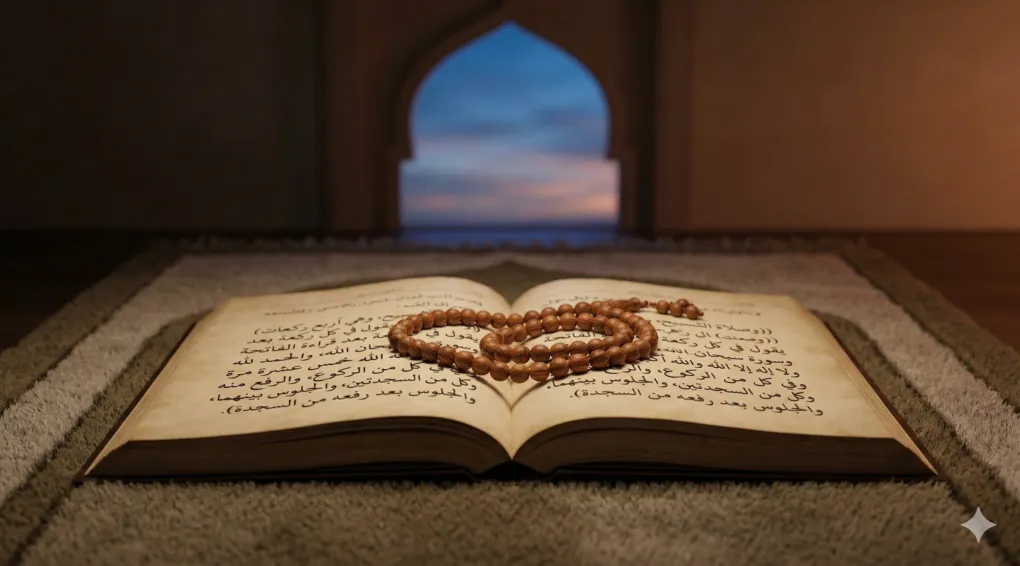
قوله: (وصلاة التسبيح، وهي أربع ركعات) يقول في كل ركعة بعد قراءة الفاتحة وسورة سبحان الله، والحمد لله ولا إله إلا الله والله أكبر خمس عشرة مرة وفي كل من الركوع، والرفع منه وكل من السجدتين، والجلوس بينهما، والجلوس بعد رفعه من السجدة الثانية عشر مرات فذلك خمس وسبعون مرة في كل ركعة
Translation: (And the Tasbīḥ prayer, which is four rakʿahs). A person says in each rakʿah after reciting al-Fātiḥah and a sūrah: “Subḥān Allāh, wa-al-ḥamdu li-Llāh, wa-lā ilāha illā Allāh, wa-Allāhu akbar” fifteen times. Then, in each bowing (rukūʿ), when rising from bowing (iʿtidāl), in both prostrations (sujūd), while sitting between the two prostrations, and while sitting for a rest after rising from the second prostration, it is recited ten times each. Thus, the total is seventy-five times in every rakʿah.
Accumulatively, the four rakʿahs will yield 300 tasbīḥ recitations. The practical evidence for this relies on the teaching of the Prophet ﷺ to his uncle, al-ʿAbbās (may Allah be pleased with him), through the narration chain of Ibn ʿAbbās.
علمها النبي – صلى الله عليه وسلم – للعباس كما رواه ابنه عبد الله – رضي الله عنهما -، وهو في سنن أبي داود وصحيح ابن خزيمة
Translation: The Prophet ﷺ taught it to al-ʿAbbās as narrated by his son, ʿAbd Allāh (may Allah be pleased with them both), and this hadith is found in the Sunan of Abū Dāwūd and the Ṣaḥīḥ of Ibn Khuzaymah.
The virtue of this prayer is immensely profound, acting as a means of expiating sins. It is mentioned in a narration by al-Ṭabarānī, “Even if your sins were as abundant as the foam of the sea or as massive as a heap of sand, Allah would surely forgive you.” The nuance of repentance in this Tasbīḥ prayer aligns perfectly if complemented with the practice of the prayer of sincere repentance (tawbat naṣūḥā) covering its evidence, procedure, and supplication so that a servant truly achieves the state of genuine repentance (tawbah naṣūḥā). You can further explore the essence of repentance in Islam, its definition, evidence, and how to perform tawbat naṣūḥā. Before practicing, ensure you understand the definition of prayer (ṣalāh).
The Dynamic Views of Scholars: Al-Majmūʿ vs. Tahdhīb
Although the procedure is clear, Shāfiʿī scholars hold dynamic views regarding its recommended (sunnah) status. Ibn al-Ṣalāḥ and Imām al-Nawawī (in the book Tahdhīb al-Lughāt) established that the Tasbīḥ prayer is a sunnah because its hadith is graded as sound (ḥasan) and its transmission chains strengthen one another.
However, Imām al-Nawawī revised his view when authoring his magnum opus of fiqh, al-Majmūʿ Sharḥ al-Muhadhdhab. Asnā al-Maṭālib records this change in jurisprudential reasoning (ijtihād):
لكنه قال في المجموع بعد نقل استحبابها عن جمع وفي هذا الاستحباب نظر؛ لأن حديثها ضعيف وفيها تغيير لنظم الصلاة المعروف فينبغي أن لا تفعل، وكذا قال في التحقيق حديثها ضعيف
Translation: However, he (al-Nawawī) said in al-Majmūʿ after quoting its recommendation from a group of scholars: “There is critical scrutiny (objection) regarding this recommendation; because its hadith is weak (ḍaʿīf), and within its procedure, there is an alteration to the known structure of prayer (there is an additional sitting solely for tasbīḥ), therefore it should not be performed.” He also stated in al-Taḥqīq that its hadith is weak.
This difference in assessment demonstrates the vastness of the ocean of fiqh knowledge. Some scholars practice it in pursuit of the virtues of deeds (faḍāʾil al-aʿmāl), while others exercise caution (iḥtiyāṭ) to maintain the standard form of prayer. To delve deeper into where the Tasbīḥ prayer stands when compared to other acts of worship, you can examine the study on the order of priority of supererogatory prayers.
Awwābīn Prayer: Guarding the Spiritual State During the Time of Heedlessness
Moving on from the Tasbīḥ prayer, Shāfiʿī fiqh literature also places significant emphasis on the time between the Maghrib and ʿIshāʾ prayers. This transitional period frequently distracts people from remembering Allah. Therefore, the Awwābīn prayer was legislated.
قوله: (وصلاة الأوابين) وتسمى صلاة الغفلة لغفلة الناس عنها واشتغالهم بغيرها من عشاء ونوم وغيرهما (وهي عشرون ركعة بين المغرب، والعشاء) قاله الماوردي والروياني
Translation: (And the Awwābīn prayer). It is also called the prayer of heedlessness (al-Ghaflah) due to people’s heedlessness towards it and their preoccupation with other things such as dinner, sleep, and so forth. (And this prayer consists of twenty rakʿahs between Maghrib and ʿIshāʾ) as stated by al-Māwardī and al-Rūyānī.
Worship during the time of ghaflah demands a high level of sincerity (ikhlāṣ). A servant strives to guard their spiritual state (ḥāl) when the majority of people are relaxing. There is a hadith narrated by al-Tirmidhī mentioning that whoever performs a six-rakʿah prayer between Maghrib and ʿIshāʾ, the reward of twelve years of worship will undoubtedly be recorded for them.
As an academic note, the term “Awwābīn” in Sharīʿah terminology has a dual meaning. Besides referring to this worship between Maghrib and ʿIshāʾ, the term Awwābīn was also used by the Messenger of Allah ﷺ to name the morning worship when the sun begins to heat up, the details of which we have discussed in the guide to Ḍuḥā prayer.
Comparison Table: Tasbīḥ and Awwābīn Prayers
| Parameter | Tasbīḥ Prayer | Awwābīn (Ghaflah) Prayer |
| Time of Execution | Flexible (day or night) | Specifically between Maghrib and ʿIshāʾ |
| Number of Rakʿahs | 4 Rakʿahs | 6 to 20 Rakʿahs |
| Primary Characteristic | Reciting 300 tasbīḥ in a structured manner | Enlivening the time of human heedlessness |
| Legal Status (al-Nawawī) | Differing views (Tahdhīb: Sunnah, Majmūʿ: Weak/Best avoided) | Sunnah (Highly recommended) |
As a complement, if your free time between Maghrib and ʿIshāʾ coincides with a moment of confusion in choosing a life path, you can fill those rakʿahs by elevating the supplication of Istikhārah prayer. Alternatively, if the heart is filled with hope for achieving a worldly or afterlife need, executing the rules in the complete guide to Ḥājah prayer during this auspicious time is a very wise decision.
Conclusion
The treasury of Shāfiʿī fiqh, particularly the works of Shaykh al-Islām Zakariyyā al-Anṣārī, spreads a wide path for Muslims to sip the mercy of Allah. Enlivening the Tasbīḥ and Awwābīn prayers is not merely accumulating coffers of reward, but a systematic method to subdue desires and fortify the foundation of faith. Remain steadfast (istiqāmah) under the shade of the Sunnah, adhere to the jurisprudential guidelines formulated by authoritative scholars, and make every bowing and prostration a means (wasīlah) to behold the pleasure of the Creator. Wa-Allāhu aʿlam bi-al-ṣawāb (And Allah knows best).
FAQ (Frequently Asked Questions About Tasbīḥ and Awwābīn Prayers)
If performing the Tasbīḥ prayer at night, are the 4 rakʿahs combined or separated?
According to the view of ʿAbd Allāh b. al-Mubārak quoted in the book al-Adhkār, if the Tasbīḥ prayer is performed at night, it is preferable to separate them (saying the concluding salām every two rakʿahs). If during the day, it is permissible to perform four rakʿahs with one salām directly, or two rakʿahs by two rakʿahs.
Does the tasbīḥ recitation replace the regular bowing and prostration recitations?
No. The tasbīḥ recitation (Subḥān Allāh, wa-al-ḥamdu li-Llāh…) is read after you complete the standard recitation for bowing (Subḥāna Rabbiy al-ʿAẓīm) or prostration (Subḥāna Rabbiy al-Aʿlā).
What is the maximum number of rakʿahs for the Awwābīn prayer?
Although al-Māwardī mentions 20 rakʿahs, the hadith narrated by al-Tirmidhī provides the basis for performing a maximum of 6 rakʿahs to attain the virtue of twelve years of worship.
Reference
Zakariyyā al-Anṣārī, Asnā al-Maṭālib fī Sharḥ Rawḍ al-Ṭālib, with the ḥāshiyah by Aḥmad al-Ramlī, edited by Muḥammad al-Zuhrī al-Ghamrāwī (Cairo: al-Maṭbaʿah al-Maymānīyah, 1313 H; repr. Dār al-Kitāb al-Islāmī), vol. 1, pp. 205-206.


