

Prophet Adam AS is the first human being created by Allah SWT and the father of all mankind. As a prophet, he possessed an extraordinary spiritual closeness to Allah, which was profoundly expressed through his supplications and prayers.
One of his most renowned supplications is the Dua of Prophet Adam for forgiveness, which is eternally recorded in the Holy Quran. Additionally, there is a profound, secret prayer narrated in the classical text I‘ānat aṭ-Ṭālibīn, which begins with the phrase “Allahumma innaka ta‘lamu sirri wa ‘alāniyati”.
These prayers are not merely a reflection of the First Man’s humility, but they also serve as a priceless spiritual heritage within the collection of the prayers of the prophets. Muslims worldwide practice these prayers to seek divine forgiveness, blessings, and financial relief. This article will thoroughly explore the complete Dua of Prophet Adam (in Arabic and English transliteration), uncover its virtues as a magnet for sustenance, and address the popular myths surrounding a specific dua to attract his wife, Hawa (Eve).
The Complete Dua of Prophet Adam (Arabic, Transliteration, and Meaning)
There are two primary supplications closely associated with the spiritual journey of Prophet Adam AS:
1. The Dua for Forgiveness (Quran, Al-A’raf: 23)
This prayer was uttered by Prophet Adam and Siti Hawa (Eve) after they realized their grave mistake of violating Allah’s prohibition by eating from the forbidden tree in Paradise. It is the ultimate manifestation of sincere repentance (tawbah nasuha) filled with immense humility:
رَبَّنَا ظَلَمْنَا أَنْفُسَنَا وَإِنْ لَمْ تَغْفِرْ لَنَا وَتَرْحَمْنَا لَنَكُونَنَّ مِنَ الْخَاسِرِينَ
Rabbanā ẓalamnā anfusanā wa in lam taghfir lanā wa tarḥamnā lanakūnanna mina al-khāsirīn.
Meaning: “Our Lord, we have wronged ourselves, and if You do not forgive us and have mercy upon us, we will surely be among the losers.”
2. The Prayer of Adam: Allahumma Innaka Ta‘lamu Sirri
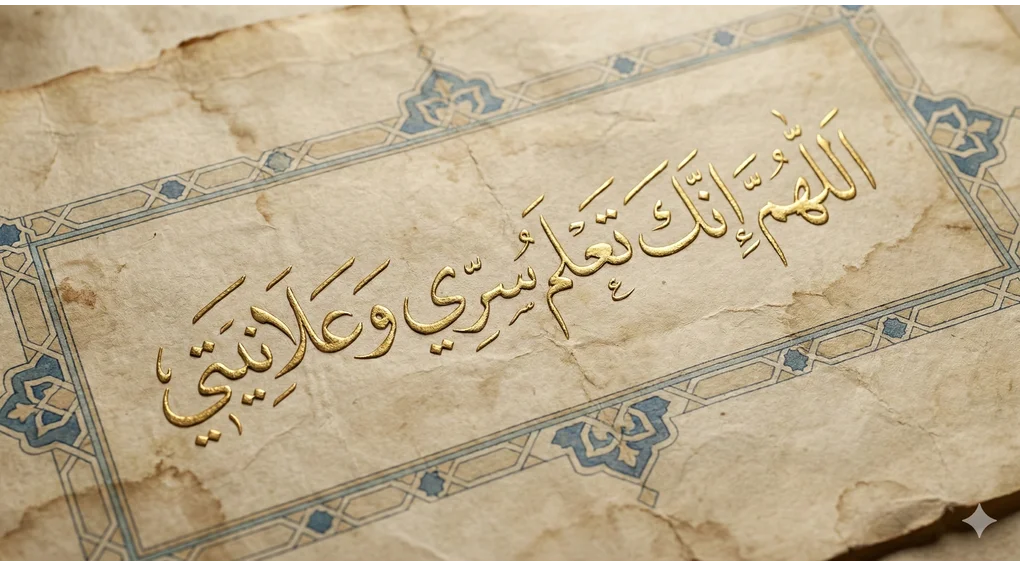
This second prayer holds tremendous virtues (fadhilah) for achieving peace of mind and an abundance of sustenance. Its detailed narration is recorded by Shaykh al-Bakri ad-Dimyathi in the book I‘ānat aṭ-Ṭālibīn:
اللَّهُمَّ إِنَّكَ تَعْلَمُ سِرِّي وَعَلَانِيَتِي، فَاقْبَلْ مَعْذِرَتِي. وَتَعْلَمُ مَا فِي نَفْسِي فَاغْفِرْ لِي ذُنُوبِي. وَتَعْلَمُ حَاجَتِي فَأَعْطِنِي سُؤْلِي. اللَّهُمَّ إِنِّي أَسْأَلُكَ إِيمَانًا يُبَاشِرُ قَلْبِي، وَيَقِينًا صَادِقًا حَتَّى أَعْلَمَ أَنَّهُ لَا يُصِيبُنِي إِلَّا مَا كَتَبْتَ لِي، وَالرِّضَا بِمَا قَضَيْتَ عَلَيَّ
Allāhumma innaka ta‘lamu sirrī wa ‘alāniyatī, faqbal ma‘dhiratī. Wa ta‘lamu mā fī nafsī faghfir lī dhunūbī. Wa ta‘lamu ḥājatī fa-a‘ṭinī su’lī. Allāhumma innī as’aluka īmānan yubāshiru qalbī, wa yaqīnan ṣādiqan ḥattā a‘lama annahu lā yuṣībunī illā mā katabta lī, wa al-riḍā bimā qaḍayta ‘alayya.
Meaning: “O Allah, You know my secrets and what I show openly, so accept my excuse. You know what is in my soul, so forgive my sins. You know my needs, so grant me my request. O Allah, I ask You for faith that touches my heart, and true certainty so that I know nothing will afflict me except what You have decreed for me, and grant me contentment with what You have judged for me.”
The Story Behind the Dua at Al-Multazam
Specifically, the prayer “Allahumma innaka ta’lamu sirri” possesses an extraordinary depth of Tawhid (monotheism). The opening sentence is a profound form of a servant’s total surrender before their Creator.
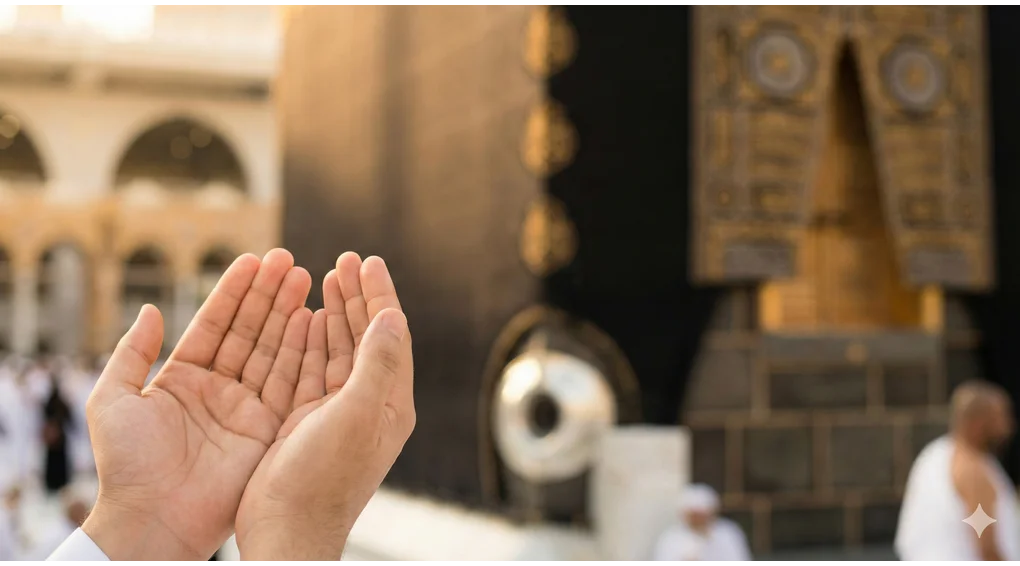
In the book I‘ānat aṭ-Ṭālibīn ‘alā Ḥalli Alfāẓ Fath al-Mu‘īn, Abdullah bin Sulaiman narrates the context (asbab al-nuzul) of this prayer. After Prophet Adam AS descended to earth, he traveled to Mecca. He performed the Tawaf, circumambulating the Kaaba seven times, and then established a two-rak’ah voluntary prayer.
Following this, he approached Al-Multazam (the sacred area between the Black Stone and the door of the Kaaba) and fervently recited this specific dua. Al-Multazam is widely recognized in Islamic tradition as one of the most mustajab (answered) places on earth to make a supplication.
The Virtues: The Opener of Sustenance and Worldly Blessings





Why is this specific prayer highly recommended by classical scholars? After Prophet Adam finished praying at Al-Multazam, Allah the Exalted immediately revealed a magnificent promise to him:
“O Adam, you have prayed to Me with these words, and I have answered them for you. There is no one from your offspring who prays with this dua except that I will: 1. Remove their anxiety and sorrow, 2. Erase their hardships, 3. Uproot poverty from their hearts, 4. Place wealth right before their eyes, 5. Provide them with sustenance from avenues they never expected, and 6. The world will come to them humbly, even if they do not desire it.”
The narration above affirms that this supplication is not merely a tool for repentance, but a highly effective Dua of Prophet Adam to open the doors of wealth. Allah guarantees to “uproot poverty” and “make the world come to them.” This demonstrates a powerful dimension of jalb al-rizq (attracting sustenance), making it the perfect practice for anyone suffering from economic hardship.
(For specific prayers to overcome severe life pressures, you can also practice the guidance in this link: A Collection of Duas to Remove Grief and Extreme Life Hardships)
Is There a Specific Prophet Adam Dua to Attract Hawa (Eve)?
A topic frequently searched by the public is the validity of a specific Prophet Adam dua to attract his wife, Siti Hawa. Academically and from a fiqh perspective, we have not found any authentic (sahih) narrations—whether in the Quran, Hadith, or authoritative classical texts—that explicitly mention a special prayer formula used to magically “attract” or charm a spouse.
In various oral traditions, it is indeed mentioned that Prophet Adam pleaded with Allah to grant him a life companion when he felt lonely in Paradise. However, that prayer was a manifestation of seeking the fulfillment of basic human nature, not a romantic spell to magically bind someone’s heart.
Nevertheless, the prayer “Allahumma innaka ta‘lamu sirri wa ‘alāniyati,” which includes the plea “You know my needs, so grant me my request,” can absolutely be intended to ask for a good spouse or harmony in marriage. Allah is All-Knowing of what is hidden within His servant’s chest.
How and When to Practice the Dua of Prophet Adam
Because the core of this prayer is an admission of one’s absolute weakness, it is excellent to practice at any time, especially when we face dead-ends in worldly or spiritual matters. Here is a guide on how to practice it:
- The Best Times: Recite it after completing your obligatory prayers or the prayer of need (Salat al-Hajat). It would be incredibly powerful if you have the opportunity to recite it directly at Al-Multazam while performing the pillars of Hajj and Umrah. The last third of the night is also a golden moment to chant this prayer.
- Etiquette of Supplication: Ensure you have fulfilled the conditions of spiritual purity (Thaharah), such as performing Wudu, before raising your hands.
- Presence of Heart: Read it slowly, internalize its profound meaning, and present a sense of ultimate humility and neediness before Allah.
- Opening and Closing: Begin your supplication with Tahmid (praising Allah) and Salawat upon Prophet Muhammad ﷺ, and close it with Salawat once again.
(Read also: Knowing the 5 Mustajab Nights and the Best Times to Pray)
Conclusion
The Dua of Prophet Adam AS is an extraordinary spiritual legacy and role model for all Muslims. Both the prayer for forgiveness in the Quran and the secret prayer “Allahumma innaka ta‘lamu sirri” teach us the true essence of tawadhu’ (humility), cultivate our faith in Allah, and instill absolute reliance on the Creator of the universe.
By consistently practicing this prayer, Insha’Allah, we will not only attain forgiveness and inner peace but also be blessed with sustenance that arrives from unexpected avenues. Let us emulate the sincerity of the father of humanity, so that our lives may always be enveloped in His divine mercy.
References
- Abū Bakr ʿUthmān bin Muḥammad Shattā ad-Dimyāṭī (al-Bakrī), Iʿānat aṭ-Ṭālibīn ʿalā Ḥall Alfāẓ Fatḥ al-Muʿīn (Beirut: Dār al-Fikr, 1997), vol. 2, p. 340.
- The Holy Quran, Surah Al-A’raf, verse 23.


