
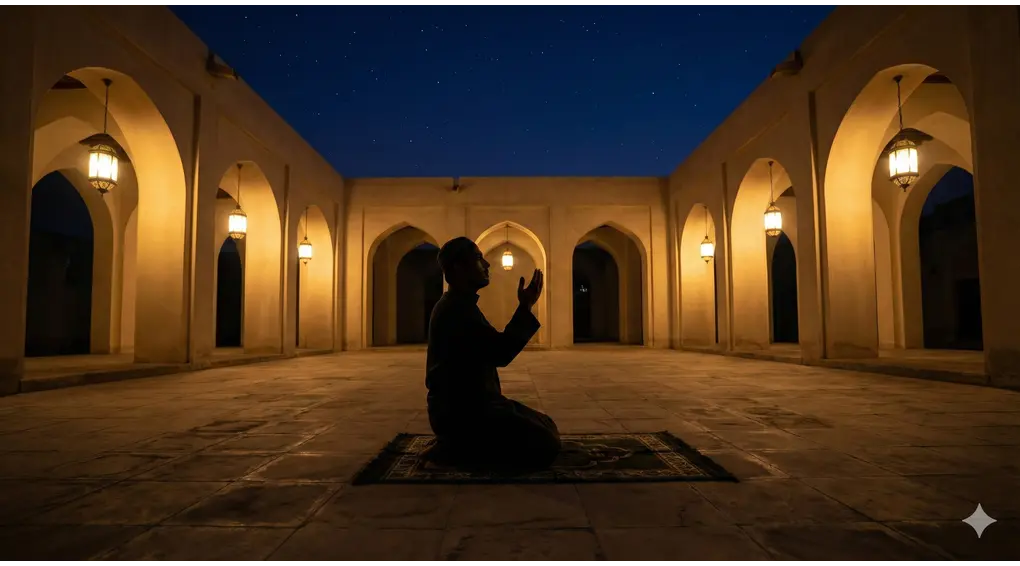
Every human being undoubtedly experiences desires and faces challenges. Sometimes, physical effort alone feels insufficient without knocking on the doors of heaven. This is where the profound significance of Salatul Hajah (The Prayer of Need) comes into play. For those seeking a way out of a difficult situation or yearning for a specific blessing, this act of worship serves as the most intimate medium of communication between a servant and their Lord.
Fundamentally, the definition of Salah in the context of Hajah refers to a voluntary (Sunnah) prayer performed specifically to beseech Allah SWT to fulfill a need, whether it pertains to worldly matters or the Hereafter. What exactly can Salatul Hajah be used for? The scope is vast: from requesting smooth sustenance and a righteous spouse, to seeking protection from calamities, or hoping for one’s good deeds to be accepted.
In this article, we will thoroughly dissect the complete procedure based on authoritative texts in Shafi’i Islamic jurisprudence (fiqh) and the spiritual insights of Tasawwuf.
The Timing for Salatul Hajah
One of the most frequently asked questions is: when is the best time to perform Salatul Hajah? Unlike the five obligatory daily prayers which have strict schedules, the timing for Salatul Hajah is highly flexible. You may perform it during the day or night, as long as it does not fall within the prohibited times for prayer (such as exactly after Fajr until sunrise, or after Asr until sunset).
1. Can it be performed in the morning or daytime? Yes, absolutely. For instance, if you perform it at 9:00 AM, it coincides with the time of Dhuha. In the classical text Nihayat az-Zain, it is explained that the intention for Salatul Hajah can be combined with obligatory prayers or other Sunnah prayers, similar to the prayer of greeting the mosque (Tahiyatul Masjid). Therefore, whether you are praying Dhuha or performing a voluntary prayer after the entry of the time of Dhuhr prayer until its end, you can simultaneously include the intention for Salatul Hajah.
2. When is the most Mustajab (answered) time? Although it is permissible during the day, the majority of scholars highly recommend performing this worship when the atmosphere is perfectly still. If we discuss the virtues of specific times, the last third of the night is the absolute best moment. The tranquility of the night allows the heart to achieve deeper focus (Khushu’), making the supplication feel more connected to the heavens.
3. Do you have to sleep first? Many people are confused about this. The answer is: No, you do not. Unlike the Tahajjud prayer, which strictly requires prior sleep for its validity, Salatul Hajah can be performed at any time without that condition.
4. The sequence with other night prayers If you wake up in the middle of the night, which should come first: Salatul Hajah or Tahajjud? The order is entirely up to you. However, the sequence of night worship is typically concluded with the Witr prayer. Thus, an ideal sequence would be: Tahajjud, followed by Salatul Hajah, and finally sealed with Witr before the time for Fajr begins.
(Read also: The Meaning of Niyyah: The Soul of Every Action)
The Scriptural Evidence (Dalil) for Salatul Hajah
Academically, we must understand the legal foundation of this practice. The most famous evidence for Salatul Hajah originates from a hadith narrated by Imam Tirmidhi and Ibn Majah. The Messenger of Allah ﷺ said:
مَنْ كَانَتْ لَهُ حَاجَةٌ إِلَى اللَّهِ تَعَالَى، أَوْ إِلَى أَحَدٍ مِنْ بَنِي آدَمَ فَلْيَتَوَضَّأْ، وَلْيُحْسِنِ الوُضُوءَ، ثُمَّ لِيُصَلِّ رَكْعَتَيْنِ، ثُمَّ لِيُثْنِ عَلَى اللَّهِ عَزَّ وَجَلَّ، وَلْيُصَلِّ عَلَى النَّبِيِّ صَلَّى اللَّهُ عَلَيْهِ وَسَلَّمَ ثُمَّ لِيَقُلْ…
Meaning: “Whoever has a need from Allah the Exalted, or from any of the children of Adam, let him perform wudu and perform it well, then pray two rak’ahs, then praise Allah ‘Azza wa Jalla, and send blessings upon the Prophet ﷺ, and then say (the dua)…”
Even though some scholars of Hadith classify the chain of this narration as dhaif (weak), prominent fiqh scholars—such as Shaykh al-Islam Zakariyya al-Ansari in his book Asna al-Matalib—assert that this prayer is not disliked (Makruh) and is highly recommended to be practiced under the category of Fada’il al-A’mal (virtuous deeds).
How to Perform Salatul Hajah & Its Intention
Regarding the number of rak’ahs, the vast majority of fiqh scholars hold the view of 2 rak’ahs. This is the easiest, most common, and lightest method to practice daily. Meanwhile, from a spiritual (Tasawwuf) perspective, Imam Al-Ghazali mentions in his masterpiece Ihya’ ‘Ulum al-Din that this prayer can be performed up to 12 rak’ahs.
Here are the practical steps for a 2-rak’ah Salatul Hajah:
- Purification: Ensure you are free from both major and minor impurities, as this is one of the acts of worship that require wudu.
- Face the Qibla and Make the Intention: Recite the following intention in your heart simultaneously with the opening Takbir (Takbiratul Ihram) when raising your hands:
أُصَلِّيْ سُنَّةَ الْحَاجَةِ رَكْعَتَيْنِ لِلَّهِ تَعَالَى > Transliteration: Uṣallī sunnatal-ḥājati rak‘atayni lillāhi ta‘ālā. > Meaning: “I intend to perform the Sunnah prayer of Hajah, two rak’ahs, for the sake of Allah the Exalted.” - Reciting Surahs: After reciting Surah Al-Fatihah, recite short chapters from the Quran. There is no strict rule, but it is highly recommended to recite Ayatul Kursi or Surah Al-Kafirun in the first rak’ah, and Surah Al-Ikhlas in the second rak’ah.
- Completing the Pillars: Proceed to how to perform Ruku correctly, rise for standing in I’tidal with tranquility (Tuma’ninah), followed by the proper method of Sujud (prostration), until the final Salam.
The Complete Dua and Dhikr for Salatul Hajah
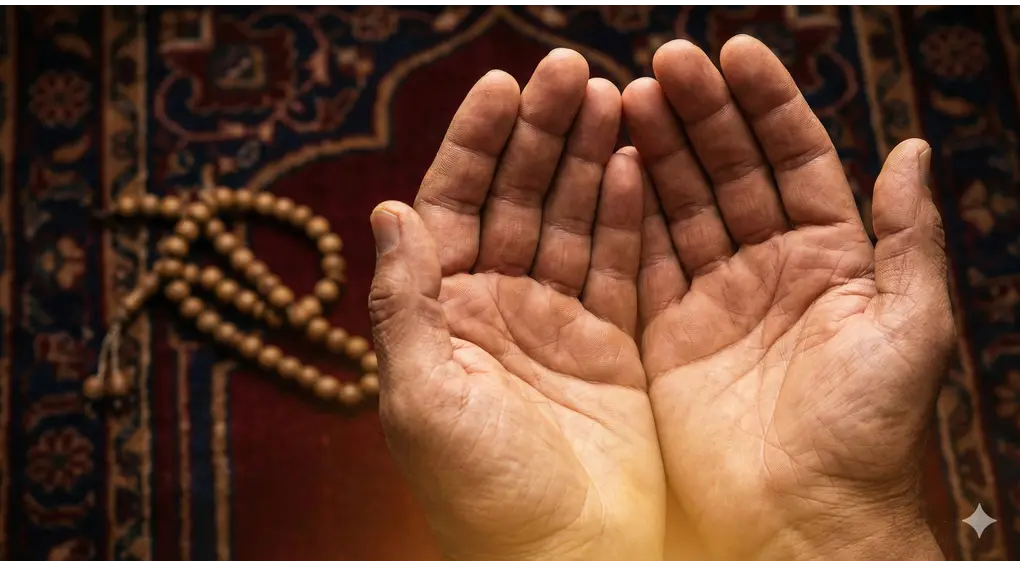
After the Salam, do not rush to leave your prayer mat. The very essence of this worship lies in the supplication that follows. Based on the guidance from the texts Asna al-Matalib and Nihayat az-Zain, here is the sequence of the post-prayer litany (Wird):
1. Praising Allah and Sending Salawat Begin by chanting Tahmid and Tasbih. You can also weave this dhikr with Prophet Yunus’s prayer in the belly of the whale, which is proven to be incredibly potent, or insert the virtues of Hauqolah (La hawla wa la quwwata illa billah), and then close it with Salawat upon Prophet Muhammad ﷺ.
2. Reciting the Ma’tsur Dua (According to the Sunnah) Next, recite the specific dua taught directly in the hadith narrated by Tirmidhi:
لاَ إِلَهَ إِلاَّ اللهُ الحَلِيمُ الكَرِيمُ، سُبْحَانَ اللهِ رَبِّ العَرْشِ العَظِيمِ، الحَمْدُ لِلَّهِ رَبِّ العَالَمِينَ، أَسْأَلُكَ مُوجِبَاتِ رَحْمَتِكَ، وَعَزَائِمَ مَغْفِرَتِكَ، وَالْغَنِيمَةَ مِنْ كُلِّ بِرٍّ، وَالسَّلاَمَةَ مِنْ كُلِّ إِثْمٍ، لاَ تَدَعْ لِي ذَنْبًا إِلاَّ غَفَرْتَهُ، وَلاَ هَمًّا إِلاَّ فَرَّجْتَهُ، وَلاَ حَاجَةً هِيَ لَكَ رِضًا إِلاَّ قَضَيْتَهَا يَا أَرْحَمَ الرَّاحِمِينَ
Transliteration: Lā ilāha illā Allāhu al-Ḥalīmu al-Karīmu,
Subḥāna Allāhi Rabbi al-ʿArshi al-ʿAẓīmi,
al-Ḥamdu lillāhi Rabbi al-ʿĀlamīna,
asʾaluka mūjibāti raḥmatika,
wa ʿazāʾima maghfiratika,
wa al-ghanīmata min kulli birrin,
wa as-salāmata min kulli ithmin,
Lā tadaʿ lī dhanban illā ghafartahu,
wa lā hamman illā farrajtahu,
wa lā ḥājatan hiya laka riḍan illā qaḍaytahā,
yā arḥama ar-rāḥimīna..
Meaning: “There is no deity but Allah, the Forbearing, the Generous. Glory be to Allah, Lord of the Magnificent Throne. All praise is due to Allah, Lord of the worlds. I ask You for that which warrants Your mercy, and the determination that guarantees Your forgiveness, and a share of every good, and safety from every sin. Do not leave for me any sin except that You forgive it, nor any anxiety except that You relieve it, nor any need that meets Your pleasure except that You fulfill it, O Most Merciful of the merciful.”
3. State Your Specific Need After reciting the Arabic dua above, directly present your specific request to Allah. You are free to use your native language, while being mindful to observe the etiquettes of making dua (such as lowering your voice, being full of hope, and having absolute certainty that it will be answered).
An Important Note from Imam Al-Ghazali
In the book Ihya’ ‘Ulum al-Din, when Imam Al-Ghazali explained the 12-rak’ah version of Salatul Hajah, whose dua is extraordinarily powerful, he issued a stern warning: “Do not teach this dua to the foolish (sufaha’), lest they use it to assist one another in sin.”
The moral message is crystal clear: Salatul Hajah and its supplications may only be used for noble, lawful (Halal) purposes that seek the pleasure of Allah SWT. Never taint this sacred act of worship with malicious intentions or the desire to harm others.
May this guide bring immense benefit to you who are currently presenting a need before Allah. Rest assured that sincere prayer is the sharpest weapon of a believer.
Fiqh References & Footnotes:
- Muḥammad bin ‘Umar Nawawī al-Jāwī al-Bantanī, Nihāyat az-Zain fī Irsyād al-Mubtadi’īn (Beirut: Dār al-Fikr, 1st ed., n.d.), p. 105. (Explains that the intention for Salatul Hajah can be combined with obligatory or other sunnah prayers, as well as the text for the dua).
- Zakariyā al-Anṣārī, Asnā al-Maṭālib: Syarḥ Rauḍ aṭ-Ṭālib, with annotations by Abū al-‘Abbās Aḥmad al-Ramlī, edited by Muḥammad Muḥammad Tāmīr (Beirut: Dār al-Kutub al-‘Ilmiyyah, 1st ed., 2001 CE), vol. 1, pp. 582–583. (Discusses the foundation of the Tirmidhi hadith, scholarly consensus regarding its status, the recommendation of performing 2 rak’ahs, and Imam Al-Ghazali’s view in the Ihya’).


