
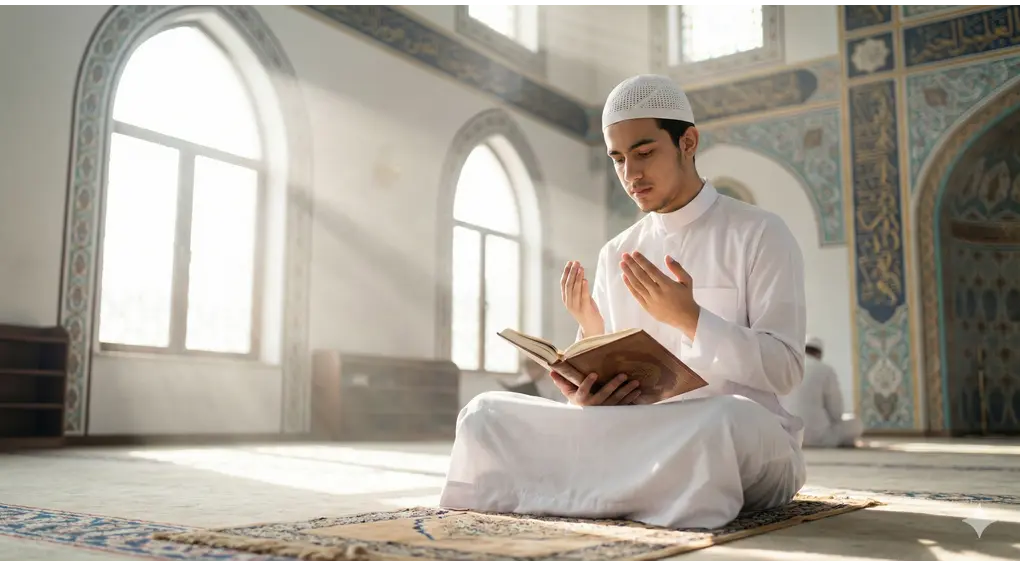
The assembly of knowledge is a garden of paradise on earth; a place where blessings descend and where the angels spread their wings of pleasure for those who seek it. Therefore, attending an assembly of knowledge is not the same as attending an ordinary gathering. There are ethics (adab) and manners that must be observed, both inwardly and outwardly.
Within the treasury of Islamic knowledge, the primary reference regarding the ethics of clothing for those seeking knowledge (muta’allim) is beautifully recorded in Hadith Jibril. This event is not merely a theological dialogue about the Pillars of Islam and Faith. Long before the angel’s tongue inquired, its visual form had already provided a very profound lesson in fiqh.
Through the book Al-Fath Al-Mubin (pages 141-142), Sheikh Ibn Hajar Al-Haitami expounds on the istinbath (derivation) of Islamic law from the manner of dress of the Angel Jibril when he met the Messenger of Allah ﷺ. This article will dissect the secrets behind white clothing, cleanliness, and fragrance as a standard of adab (etiquette) for every seeker of knowledge.
A Visual Portrait of the Mysterious Questioner
The companion Umar bin Khattab may Allah be pleased with him narrated the arrival of the figure with a very detailed physical description, which was in stark contrast to the typical desert environment.
In the manuscript Al-Fath Al-Mubin, the following wording is written:
طلع علينا رجل شديد بياض الثياب , شديد سواد الشعر , لا يرى عليه أثر السفر
“A man appeared before us with extremely white garments, very black hair, and showed no signs of travel whatsoever.”
Shaykh Ibn Hajar enriches this description by quoting a narration from Imam An-Nasa’i through the chain of Abu Hurairah and Abu Dzar radiyallahu ‘anhuma, which adds the elements of fragrance and an aura of sanctity:
أحسن الناس وجها , وأطيب الناس ريحا , كأن ثيابه لا يمسها دنس
“He was the most handsome of men in appearance, the most fragrant in scent, as if dirt had never touched his clothes.”
This physical condition astonished the companions. Someone undertaking a long journey (safar) in the Arabian land is typically dusty, with disheveled hair, and dirty clothes. However, this figure appeared immaculate. From this visual anomaly, scholars drew comprehensive legal conclusions regarding the etiquette of a study session, encompassing everything from the manner of dress to the proper way of interacting with a teacher.
The presence of a mysterious figure freed from the dust of travel certainly sparked great questions in the minds of the companions. Theological analysis regarding the essence of the angel’s tasyakkul (transformation) can be examined in depth in a special discussion about who the man in white clothes is from the perspective of the creed of Ahlussunnah wal Jamaah.
Deriving Legal Rulings: The Islamic Jurisprudence of Cleanliness for Students of Knowledge
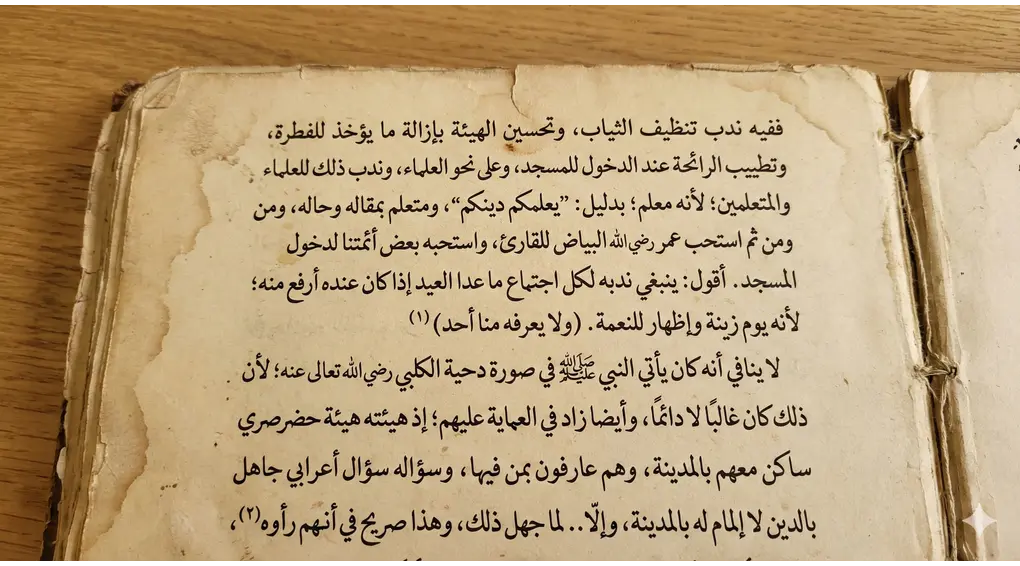
Shaykh Ibn Hajar al-Haytami did not allow the physical description of Jibril to pass merely as a historical narrative. He made it evidence for the sunnah of maintaining cleanliness when approaching centers of goodness. He wrote:
ففيه ندب تنظيف الثياب , وتحسين الهيئة بإزالة ما يؤخذ للفطرة , وتطييب الرائحة عند الدخول للمسجد , وعلى نحو العلماء
“Therefore, it contains an encouragement (sunnah) to cleanse clothing, improve one’s appearance by removing natural impurities (such as cutting nails and tidying hair), applying perfume when entering the mosque, and when visiting scholars.”
Let us dissect the three pillars of etiquette in this appearance:
1. Cleaning Clothes and Fulfilling the Sunan al-Fitrah
A seeker of knowledge is obligated to maintain the purity of their clothing from impurities and dirt. Moreover, it is recommended for them to improve their appearance (tahsinul hai’ah). This includes performing the sunnahs of fitrah, such as trimming the mustache, cutting the nails, and grooming the hair (“his hair was very black” is a kinayah of neatness and vitality). A well-maintained body shows respect for the knowledge one seeks to attain.
2. Applying Perfume (Tathayyub)
A pleasant body fragrance (“the most pleasant fragrance”) provides comfort for teachers and fellow students in the assembly. Mosques and majlis taklim (religious gatherings) are places where Muslims and angels of mercy gather. An unpleasant odor will disrupt the solemnity of talaqqi (the process of receiving knowledge). Therefore, applying perfume (tathayyub) is a highly recommended sunnah (practice) before stepping into the mosque.
3. The Virtue of White Clothing for Students of Knowledge




The color white symbolizes purity, cleanliness of the heart, and clarity of intention (free from the characteristic of Riya’). Sheikh Ibn Hajar affirmed that this recommendation applies to both parties: teacher and student.
وندب ذلك للعلماء والمتعلمين ; لأنه معلم ; بدليل : ” يعلمكم دينكم “, ومتعلم بمقاله وحاله . ومن ثم استحب عمر رضي الله عنه البياض للقارئ , واستحبه بعض أئمتنا لدخول المسجد
“And this is recommended for scholars and students; because he [Jibril] is a teacher, based on the evidence of the Prophet’s saying: ‘He taught your religion,’ and he is also positioned as a student through his speech and state. Therefore, Umar radiyallahu ‘anhu liked the color white for a Qari (reciter of the Qur’an/seeker of knowledge), and some of our imams liked it for entering the mosque.”
Wearing a koko shirt, dishdashah, or a clean white shirt while reciting the Qur’an is a form of ittiba’ (following) the footsteps of Sayyidul Malaikat and the Salafus Shalih.
Fiqhi Exceptions: Adornment on Festive Days
There is a very valuable fiqh note from Sheikh Ibn Hajar regarding the use of white clothing. Although white is highly recommended for study gatherings and daily routines, there are conditions in which a Muslim is encouraged to wear other, more beautiful garments.
He gave ta’liq (personal comment):
أقول : ينبغي ندبه لكل اجتماع ما عدا العيد إذا كان عنده أرفع منه ; لأنه يوم زينة وإظهار للنعمة
“I said: This sunnah (white clothing) should apply to every gathering except for festivals, if one possesses garments of higher value; for the festival is a day of adornment (zīnah) and a day to display the blessings of Allah.”
If you have clothes made of silk fabric (specifically for women) or other expensive fabrics that are better than ordinary white clothes, then wearing them on the holidays of Eid al-Fitr or Eid al-Adha is more preferable. This is an expression of gratitude (idzharun ni’mah) for the blessings of Allah. However, for daily religious gatherings, white remains the crown of simplicity and dignity.
Outward Purity as a Reflection of the Inner Self
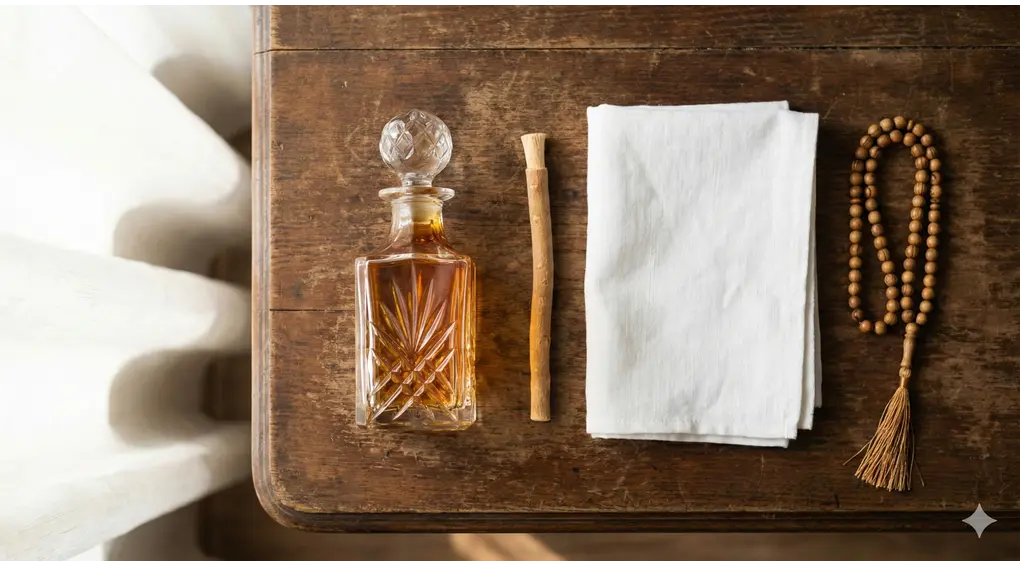
From the perspective of Sufism, outward etiquette is never separated from one’s inner state. Clean and white clothing symbolizes the heart that must be purified of sin through Taubat Nasuha. A fragrant scent symbolizes noble character and sincerity (Ikhlash) that must emanate from the tongue of a muta’allim.
If the outward self is not prepared to receive the light of knowledge by maintaining cleanliness, how can the inward self be prepared to receive the Sirr (divine secret) from the teacher?
Besides maintaining the purity of clothing and body scent, the perfection of talaqqi in a learning assembly also greatly depends on the student’s physical posture. This is perfectly reflected in the etiquette of facing a teacher, where the Angel Jibril directly practiced the sitting position Jalsatul Muta’allim by pressing his knees against the Prophet Muhammad ﷺ’s knees.
Summary Table: Etiquette of Appearance for Students of Knowledge
| Aspect of Appearance | Evidence from the Appearance of Jibril | Law & Sharia Application |
| Clothing | Very white (Syadidu Bayadh) | It is Sunnah to wear white clothes for Qari, scholars, and students going to the mosque. |
| Condition of Fabric | Without traces of travel / dirt | Maintaining purity from impurities and dirt. |
| Hair & Physique | Jet black & neat hair | Performing the Sunnah of Fitrah (cutting nails, tidying hair). |
| Aroma | The most fragrant aroma | It is Sunnah to use perfume (tathayyub) when attending a gathering of knowledge. |
| Exceptions | – | It is permissible to wear more expensive colored clothes specifically on festive days (Zinah). |
FAQ: About Clothing and Etiquette in the Assembly of Knowledge
Is it permissible to seek knowledge without wearing white clothing?
Of course, it is valid and knowledge can still be obtained. Wearing white clothing is sunnah (recommended) based on the reports of the companions and the etiquette of Jibril, but it is not a requirement for the validity of the assembly. The most important thing is that the clothing is clean, pure, and completely covers the aurat.
Is it permissible for a woman to wear perfume when going to the mosque or a gathering for knowledge?
Unlike men, Islamic law prohibits women from wearing strong perfumes (tabarruj) when leaving the house, including to the mosque, as it can invite temptation. For women, it is sufficient to ensure the body is clean and free from unpleasant body odor. The desirability of tathayyub in this ḥadīth is more emphasized for men.
Why is Jibril referred to as both a teacher and a student in the explanation of the book above?
Gabriel positioned himself as a student through his ḥāl (state) and polite questioning. However, in reality, he was a facilitator who taught the companions, as the Prophet ﷺ stated at the end of the ḥadīth: “He came to teach your religion.” Therefore, Gabriel’s adab applies to both teachers and students.
Shaykh Ibn Ḥajar affirmed that Gabriel positioned himself as both a teacher and a student through his ḥāl (state) and speech. This unique pedagogical tactic is an integral part of the Prophet’s teaching method, where intelligent questions were deliberately designed to facilitate the descent of knowledge to a more lay audience.
Conclusion
The Hadith of Jibril teaches that physical preparation is the gateway to spiritual readiness. Wearing clean white clothing, grooming oneself, and using fragrance when stepping into the mosque or facing a teacher is not merely a matter of fashion. It is an act of worship, a manifestation of high adab (etiquette), and the practice of istinbath (deduction) of the Sharia as directly exemplified by the angel who brings revelation.
Prepare your outward appearance, and surely Allah ﷻ will prepare your inner self to receive the light of His knowledge. And Allah knows best.
Reference
Aḥmad ibn Muḥammad Ibn Ḥajar al-Haytamī, al-Fatḥ al-Mubīn bi-Sharḥ al-Arbaʿīn, edited by Aḥmad Jāsim Muḥammad al-Muḥammad, Quṣayy Muḥammad Nūrūs al-Ḥallāq, and Anwar al-Shaykhī al-Dāghistānī, 1st ed. (Jeddah: Dār al-Minhāj, 2008), 141-142.


